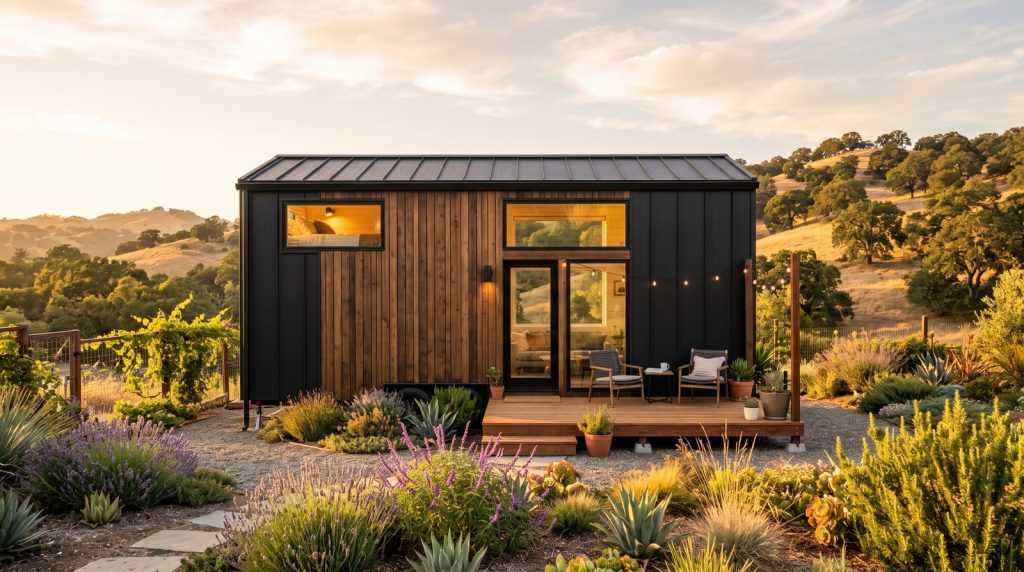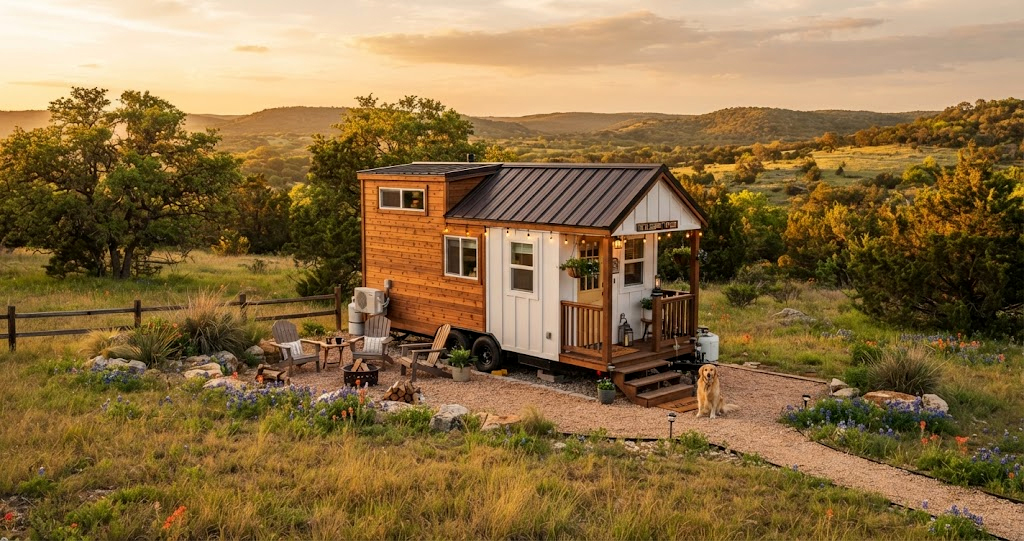
Texas is the most complicated state to put a tiny house – and somehow also one of the best.
That contradiction sits at the heart of tiny living in the Lone Star State. Thinking about tiny houses in Texas means navigating a patchwork of county-by-county rules with no statewide building code to guide you – what’s perfectly legal in one ZIP code is technically forbidden in the next. But that same regulatory freedom has spawned some of the country’s most creative tiny house communities, the most builder-friendly metros in the South, and stretches of rural land so affordable they make the whole thing feel genuinely possible.
If you’re considering tiny houses in Texas, here’s what you actually need to know.
Table of Contents
What Do Tiny Houses in Texas Cost?
The honest answer: anywhere from $15,000 to $150,000, depending on how much you’re willing to do yourself and what you consider non-negotiable.
| Build Type | Cost Range | Best For |
|---|---|---|
| DIY (on wheels) | $15,000-$40,000 | Experienced builders with time to invest |
| Professional THOW | $50,000-$120,000 | Full-time mobile living |
| Foundation-built ADU | $60,000-$140,000 | Permanent backyard placement |
| Park model | $50,000-$100,000 | Community living, full-time residency |
DIY builds run $15,000-$40,000 in materials. That gap is wide because it depends entirely on your finish choices, whether you’re building on a trailer or a foundation, and how many weekends you’re willing to sacrifice. Expect 500+ hours of labor. The savings are real – 30 to 60 percent less than hiring out – but this path only makes sense if you have genuine construction experience.
Professional builds from a certified Texas builder typically run $50,000-$120,000. That range covers everything from a no-frills 200-square-foot THOW to a fully appointed 400-square-foot park model with quartz countertops and a lofted bedroom. The national average sits around $45,000, but Texas builders skew slightly higher given demand.
Land and lot rent add another layer. Rural Texas land can be surprisingly cheap, sometimes under $10,000 per acre. But if you’re placing your home in an established community, expect monthly lot rent of $300-$600 in rural areas and $600-$1,000+ in Austin.
One cost people overlook: delivery. Most Texas builders charge $2-$4 per mile to haul a finished THOW to your property. Factor that in before comparing quotes from builders across the state.
Laws and Zoning: The Complicated Part
Texas has no statewide residential building code. That sounds like freedom – and sometimes it is – but it means zoning authority falls entirely to individual cities and counties, and the rules vary wildly. For a full breakdown of Texas-specific regulations, Nolo’s Texas tiny house guide is a reliable starting point.
Austin is one of the most tiny-house-forward cities in the state. Its “HOME” initiative allows up to three dwelling units on most single-family lots, which explicitly includes tiny homes under 400 square feet. The city has adopted IRC Appendix Q and offers a Tiny House Request for Modification form to speed up permitting. The catch: Austin classifies any THOW as an RV. You can own one, but you can’t legally live in it full-time on a residential lot outside an RV park.
San Antonio has gone further than most cities with its “casita” ordinance. Detached ADUs up to 1,100 square feet are allowed on single-family residential lots, provided they’re on a permanent foundation and connected to city utilities. The city even runs a Casita Incentives Pilot Program offering no-interest loans, fee waivers, and permit-ready plans.
Houston is the exception to most rules – it’s one of the only major American cities without traditional zoning. That means a tiny home on a permanent foundation is generally legal on most residential lots, as long as it meets building code minimums. THOWs are classified as RVs and restricted to designated parks.
Unincorporated counties are often the most permissive. If you’re buying rural land in a county with no building department, you may face almost no restrictions at all – but it requires research on a county-by-county basis before you buy land.
Builders Worth Knowing in Texas
Texas has a deep bench of tiny house builders. A few that stand out for anyone researching tiny houses in Texas:
Indigo River Tiny Homes (Dallas) – Veteran-owned and detail-obsessed, Indigo River has become one of the most respected names in North Texas. They emphasize eco-friendly builds and their military-precision quality control shows in the finished product.
Nomad Tiny Homes (Austin) – The go-to for budget-conscious buyers who still want quality. Nomad builds everything from compact 16-foot THOWs to 30-foot models with full-size kitchens and separate sleeping areas.
Texas Tiny Homes (Luling) – One of the originals. Texas Tiny Homes focuses on park models and foundation-built homes, ideal if you’re planning a permanent placement rather than a life on wheels.
Decathlon Tiny Homes (Dallas) – If certification matters for insurance rates, financing, or community placement, Decathlon builds to both ANSI and HUD code standards. Their park model line is designed specifically for full-time living in Texas communities.
Tiny House Communities in Texas
One of the best arguments for tiny houses in Texas? The communities.
Village Farm Austin – Lot rent around $600/month on the east side of Austin. One of the most established tiny house communities in the state with a strong sense of neighborhood.
Lake Dallas Tiny Home Village – North of Dallas, lot rent $500-$550/month. The city of Lake Dallas created its own “Tiny House Park” zoning ordinance – a rare and valuable thing.
Community First! Village (Austin) – A master-planned community housing formerly homeless adults across 51 acres. A national model for what tiny house living can accomplish.
Lakewalk Tiny Home Community (near Conroe/Houston) – Wooded lots north of Houston with lot rent starting around $450-$650/month depending on size and utilities.
By The Creek (Weatherford, near Fort Worth) – Peaceful living about 30 minutes from Fort Worth in Parker County’s more relaxed regulatory environment.
Boxwood Tiny Homes (Kingsland) – A 14-home community on the edge of Lake LBJ in the Hill Country. Walking distance to town, half a mile from the lake.
Frequently Asked Questions
Is it legal to live in a tiny house in Texas?
Yes, but the rules depend entirely on your city and county. Foundation-built tiny homes are legal in most Texas cities if they meet local building codes. Tiny houses on wheels (THOWs) are classified as RVs and require placement in a licensed RV park or tiny house community for full-time residency.
What counties in Texas allow tiny houses?
Most unincorporated counties are permissive because they have no formal building department. West Texas, East Texas, and rural Hill Country counties are popular for this reason. Cities like Austin and San Antonio have specific ordinances allowing tiny homes on permanent foundations as ADUs.
Can I put a tiny house on my own land in Texas?
If your land is in an unincorporated county without a building department, often yes. Within city limits, you’ll need to check local ADU and zoning rules for your specific address before purchasing.
Are tiny houses on wheels legal in Texas?
THOWs are legal to own and build in Texas but are classified as RVs. Full-time residency requires placement in a licensed RV or tiny house community – not on a standard residential lot.
Where to Start
Texas rewards research. The difference between a smooth tiny house experience and a costly mistake is usually knowing your county’s rules before you sign anything.
If you’re still mapping out where in Texas makes sense for your build – or whether Texas is the right state at all – use our Tiny House Legality Tool to look up zoning rules by state and find your legal path before you buy land or break ground.