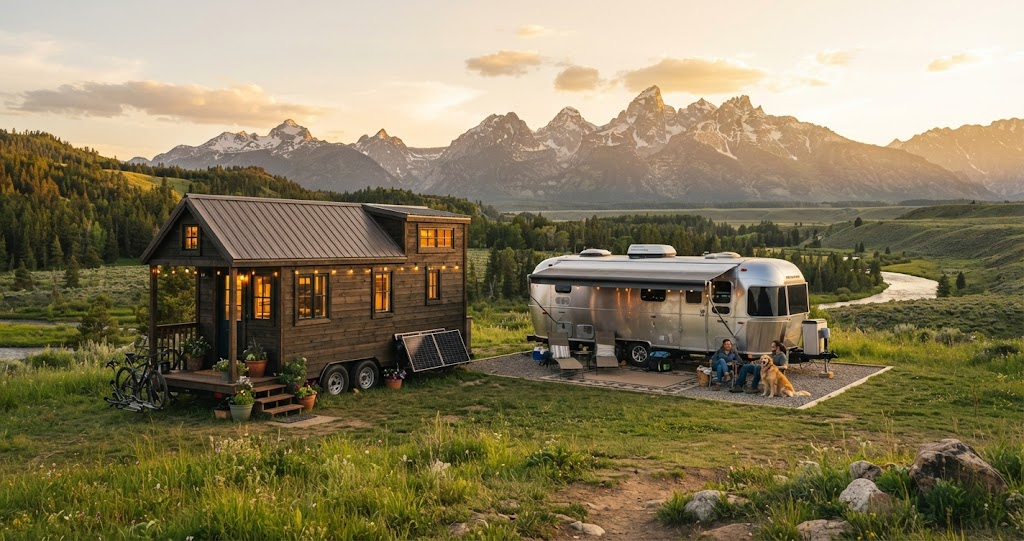
If you’re weighing tiny house vs RV for full-time living, you’re really choosing between two very different philosophies: a home that happens to move, or a vehicle you happen to live in. Both get you into a smaller, cheaper, more mobile life – but they diverge sharply on cost, durability, resale value, and where you’re legally allowed to park them.
Here’s an honest, numbers-first breakdown to help you decide.
Table of Contents
Tiny House vs RV at a Glance
| Factor | Tiny House (THOW) | RV |
|---|---|---|
| Upfront cost | $40,000-$150,000 | $15,000-$80,000 |
| Monthly cost (own land) | Under $500 | $825-$3,000 |
| Lifespan | 30-50 years | 10-15 years |
| Value after 5 years | Keeps 70-85% | Loses ~50% |
| Insulation | R-13 to R-21 | R-5 to R-11 |
| Insurance/year | $400-$1,500 | $800-$1,500 |
| Best for | Staying put, long-term living | Travel, frequent moves |
Upfront Cost: RV Wins
There’s no contest on the sticker price. A used travel trailer in decent shape runs $15,000-$30,000, and even a new one lands between $30,000 and $80,000. A professionally built tiny house, by comparison, typically costs $60,000-$150,000, with bare-bones models starting around $40,000.
If your only question is “what’s cheapest to get into today,” the RV is the clear answer. But upfront cost is the one round the RV wins – and the rest of this comparison explains why that low entry price can be misleading.
Monthly Cost of Living: Tiny House Wins
This is where the tiny house pulls ahead fast. A tiny house owner who owns their home outright and parks on their own land can often live for under $500 a month. RV living is more expensive month to month: travel trailer life runs $825-$1,750, and a Class C motorhome can cost $1,500-$3,000 once you factor in campground fees, fuel, and constant upkeep.
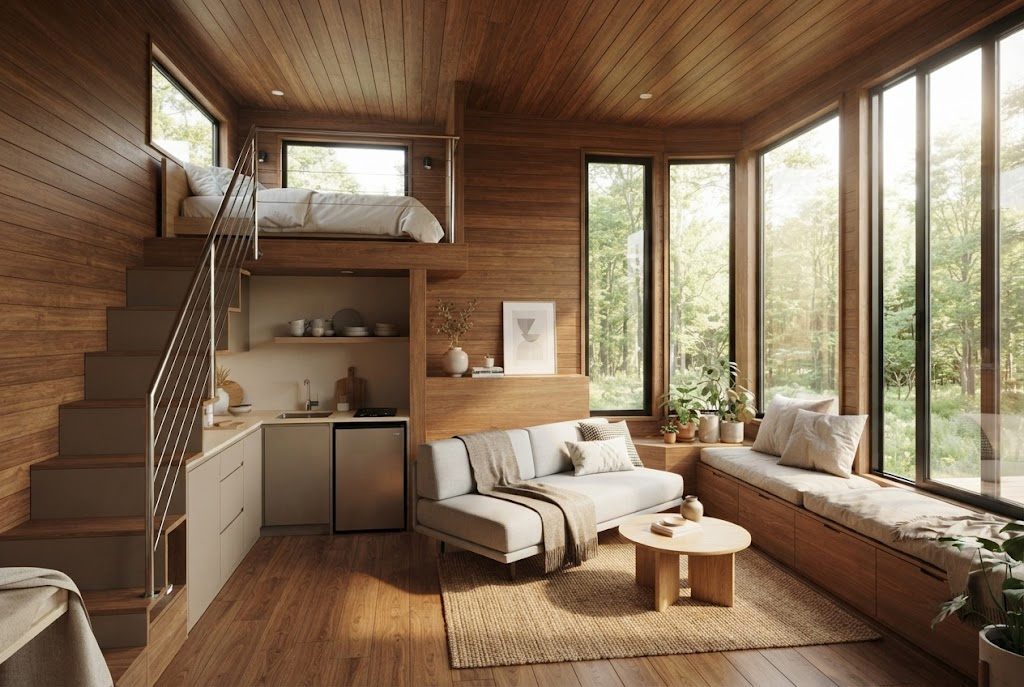
Insulation is a big hidden driver. Tiny houses are built with R-13 to R-21 insulation versus an RV’s R-5 to R-11. In a cold climate, heating an RV can cost $300-$500 per month, while a well-insulated tiny house might run just $50-$100. Over a winter, that gap alone is real money.
Depreciation and Resale Value: Tiny House Wins
An RV depreciates like a car. A new RV loses 20-30% of its value in the first year and keeps shedding 8-10% every year after. A $50,000 RV might be worth only $25,000 after five years.
Tiny houses hold value far better – a well-maintained tiny house on wheels keeps 70-85% of its value over the same five years. And a tiny house on a permanent foundation, on land you own, can actually appreciate 5-15%, because the rising value of the land offsets any wear on the structure. That’s the one scenario in this entire comparison where your home makes you money instead of losing it.
Durability and Maintenance
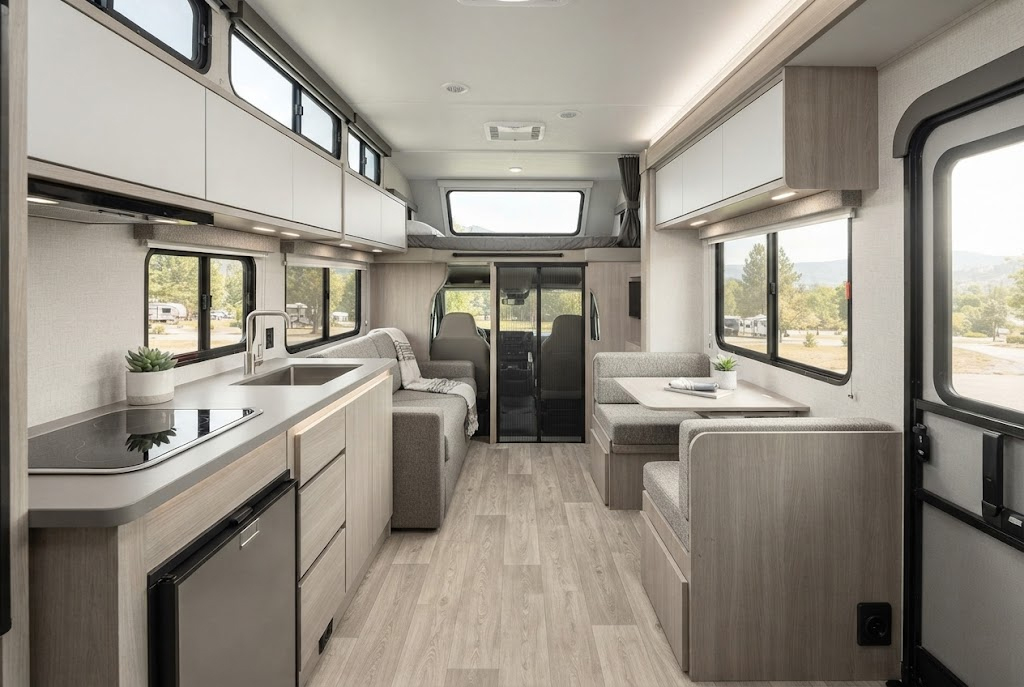
A professionally built tiny house is designed to last 30-50 years with proper care. Most RVs last 10-15 years – and about 40% of RV owners report significant problems in the very first year. Budget at least $150-$200 a month for RV upkeep: roof seals, slide-out mechanisms, tires, and water systems all wear out on a schedule.
Tiny houses need maintenance too, but less often – closer to the rhythm of a traditional house than a vehicle.
Insurance and Financing
RVs qualify for established RV loans with 10-20 year terms and 5-8% interest. A tiny house on wheels is trickier: it may qualify for an RV loan if it’s RVIA-certified, otherwise you’re often looking at a personal loan with a shorter term and higher rate. A tiny house on a foundation, however, can qualify for a traditional mortgage – the best financing of the bunch.
On insurance, RV coverage for a tiny house on wheels runs about $800-$1,500 a year, while homeowners-style insurance for a foundation tiny house is $400-$1,200.
Legal Parking and Zoning: The Deciding Factor
This is where many people’s decision is actually made for them. RVs can stay in RV parks, campgrounds, and sometimes private property – but most areas cap RV living at 30-180 days in one spot, so full-time RV life often means staying on the move.
Tiny houses on wheels face similar zoning hurdles but have a path RVs don’t: in many cities they can qualify as an accessory dwelling unit (ADU) on a residential lot. A tiny house on a foundation follows normal residential building codes and can be placed permanently on land you own where zoning allows. If your goal is to plant roots legally in one place, the tiny house has more routes to “yes.”
Because these rules vary so much by state and county, check your specific area before you commit either way. Our Tiny House Legality Tool lets you look up the rules state by state.
So Which Should You Choose?
Choose an RV if you want the lowest possible entry cost and you genuinely want to travel – moving with the seasons, chasing work, or exploring full-time. The RV is built to roll, and that’s its real advantage.
Choose a tiny house if you want a real home that holds its value, costs far less month to month, lasts decades, and can put down legal roots – especially on land you own. Over a 10-year horizon, the tiny house almost always costs less despite the higher sticker price.
The short version of the tiny house vs RV question: an RV is cheaper to buy, a tiny house is cheaper to live in – and far cheaper to own over time.
Frequently Asked Questions
Is it cheaper to live in a tiny house or an RV?
Month to month, a tiny house is cheaper – often under $500 if you own your land, versus $825-$3,000 for RV living. An RV is only cheaper at the moment of purchase. Over 5-10 years, the tiny house’s lower depreciation, better insulation, and reduced maintenance make it the cheaper option overall.
Do tiny houses hold their value better than RVs?
Yes, significantly. RVs lose 20-30% in the first year and around 50% within five years. A well-built tiny house retains 70-85% of its value over five years, and a foundation tiny house on owned land can even appreciate.
Can you live in an RV or tiny house full-time legally?
Both face zoning restrictions. RVs are usually limited to 30-180 days in one location outside licensed parks. Tiny houses on wheels can sometimes qualify as ADUs, and foundation-built tiny houses follow residential codes – giving tiny houses more legal paths to permanent living. Always check your local rules first.
Which lasts longer, a tiny house or an RV?
A tiny house lasts far longer – 30-50 years with proper maintenance, compared to 10-15 years for a typical RV.
The Bottom Line
If you dream of the open road, buy the RV. If you dream of a home – one that’s affordable to live in, holds its value, and can legally stay put – the tiny house is the smarter long-term investment.
Not sure your state even allows full-time tiny living? Start with our Tiny House Legality Tool before you buy anything, and read our guide on the real costs of tiny houses in Texas for a state-level example of how the numbers play out.