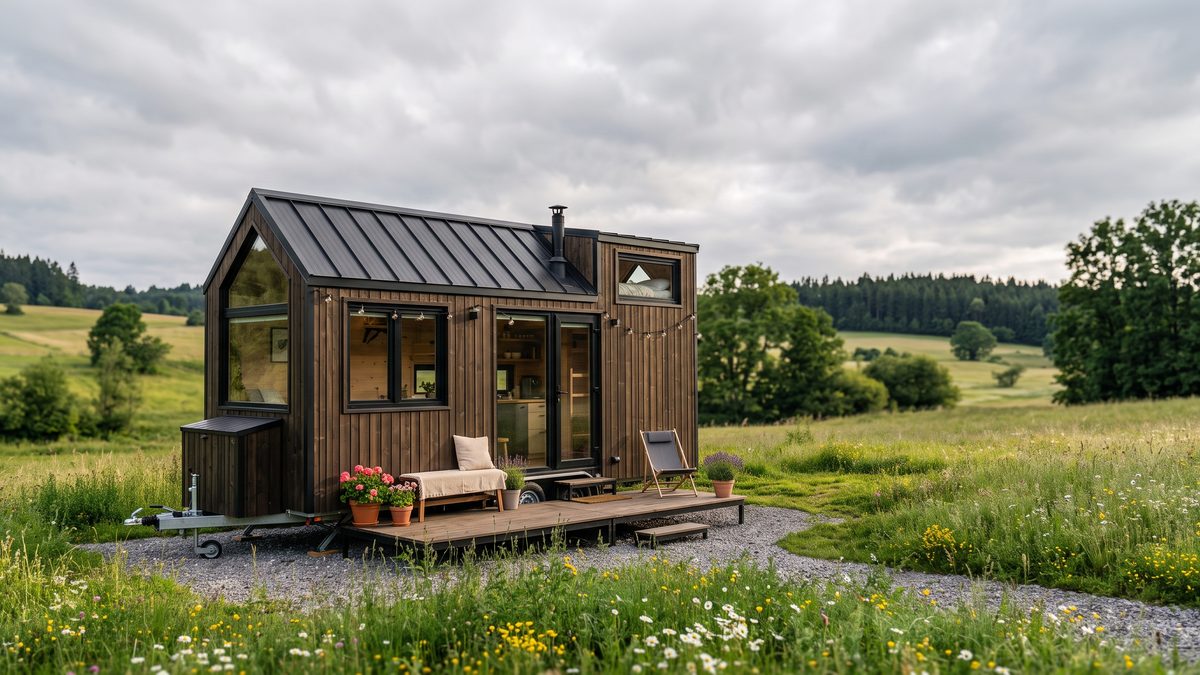
Tiny house insurance cost in 2026 runs $500–$1,500 per year, with the national average landing around $850 per year (roughly $70 a month). Tiny houses on wheels typically run $500–$1,000 annually on RV-style policies, while foundation-built tiny homes cost $800–$1,500 through specialty or standard homeowners coverage. Your exact premium comes down to three things: whether your home is certified, where it sits, and how much it would cost to replace.
Table of Contents
Tiny House Insurance Cost at a Glance
| Policy type | Best for | Typical annual cost |
|---|---|---|
| RV insurance (RVIA-certified THOW) | Tiny houses on wheels, professionally built | $500–$1,000 |
| Specialty tiny home policy | Foundation homes, park models | $800–$1,500 |
| Standard homeowners (HO-3) | Foundation homes built to local code | $400–$1,200 |
| Specialty DIY/off-grid coverage | Self-built homes without certification | $1,000–$1,800 |
| Bare-bones named-peril policy | Minimal coverage, low-value builds | From $125 |
Compare that with the U.S. average for a conventional house — typically $1,800–$2,500 a year — and insurance is one more line item where tiny living costs a fraction of the traditional path.

What Determines Your Premium
1. Wheels vs. foundation
This is the fork in the road. A tiny house on wheels (THOW) is insured like a travel trailer or park model RV: the policy covers the structure, your belongings, and liability, with an optional trip endorsement (around $150 per policy term) covering the home while it’s being towed. A foundation-built tiny home is insured like a small house — and if it was permitted and built to local code, you may qualify for a standard homeowners policy, usually the cheapest and broadest option.
2. Certification
Insurers care enormously about who built your home. RVIA- or NOAH-certified builds from professional builders qualify for mainstream RV programs (Foremost, Progressive, American Family) at the low end of the price range. An uncertified DIY build is the hardest and most expensive thing to insure — most mainstream carriers will simply decline it, pushing you to specialty agencies that write DIY and off-grid risks at a premium of roughly 30–80% more.
3. Location
Geography moves premiums more than any other factor. In tornado alley and coastal hurricane zones, rates can run 200% above the national average; wildfire-exposed areas of the West see similar loading. As a reference point, Arkansas — squarely in severe-weather territory — averages about $1,177 per year, roughly 68% above baseline. A THOW parked in a low-risk inland state might insure for a third of what the identical home costs on the Gulf Coast.
4. Replacement value and deductible
A $35,000 shell costs far less to insure than a $120,000 custom build. Raising your deductible from $500 to $1,000–$2,500, or switching to a percentage-based deductible, can trim premiums meaningfully — up to 19% in some states.
What a Tiny House Policy Actually Covers
A proper tiny home policy mirrors conventional home insurance in miniature. Expect four buckets: dwelling coverage (the structure itself, ideally at replacement cost rather than actual cash value), personal property (contents, typically $10,000–$30,000 in limits), liability (usually offered at $50,000, $100,000, or $300,000 — take the $300,000; the price difference is small), and additional living expenses if a covered loss makes the home unlivable. Full-timer packages add loss assessment and higher liability for people living in the home year-round — important, because a plain RV policy often assumes recreational use and can deny claims for full-time residents.
Who Insures Tiny Houses in 2026
Foremost remains the biggest name for stationary tiny homes and park models, with a dedicated program covering personal property, additional living expenses, and full-timer use. American Family is a strong pick for tiny houses on wheels and offers the transit endorsement for moving days. Progressive writes RV policies for certified THOWs. For DIY, off-grid, and skoolie-adjacent builds, specialty brokers such as Strategic Insurance Agency write risks in states including Arizona, California, Colorado, Idaho, North Carolina, New Mexico, Oregon, Tennessee, and Washington. Expect to provide build photos, certification paperwork, and an appraisal or build-cost breakdown when you apply.
How to Pay Less
Certification is the single biggest lever — a NOAH inspection on a DIY build (a few hundred dollars) can unlock mainstream carriers and pay for itself in the first year. Beyond that: park the home outside flood and high-wind zones where you can, choose fire-resistant materials (metal roofing and fiber-cement siding both earn credits), bundle with an auto policy, install smoke/theft monitoring, and raise the deductible to the highest figure you could comfortably pay tomorrow. If your home is legally sited — check your state with our free tiny house legality tool — you’ll also avoid the nastiest surprise of all: a claim denied because the home wasn’t lawfully placed.
The Hidden Costs Nobody Quotes You
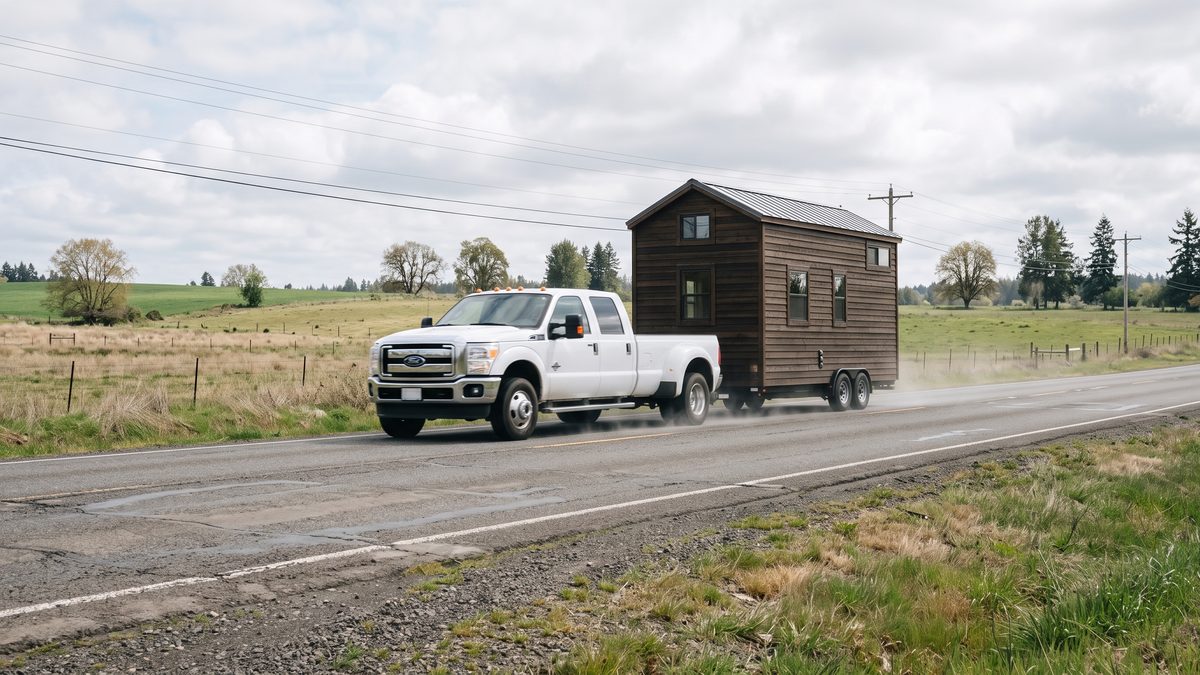
Two items catch new owners off guard. First, moving day: your standard policy usually excludes transit damage, so budget the trip endorsement — and note that professional moves themselves cost real money (see our breakdown of what it costs to move a tiny house in 2026). Second, underinsurance: many owners insure the purchase price, not the replacement cost. With builder prices still climbing, a home bought for $60,000 in 2021 might cost $85,000 to rebuild today. Review your dwelling limit annually — our guide to what tiny homes are really worth explains how values have shifted.
Three Real-World Pricing Scenarios
Here is what tiny house insurance cost actually looks like in practice, across three common builds:
Certified THOW in Tennessee: a $75,000 RVIA-certified home from a professional builder, parked full-time in a legal tiny home community, insured as a park model with a $1,000 deductible and $300,000 liability — expect roughly $650–$900 per year, plus $150 for a trip endorsement in any year you move it.
Foundation ADU in a backyard: a $110,000 permitted, code-built tiny home on a slab qualifies for standard homeowners or a dwelling-fire policy at roughly $700–$1,200 per year in a low-risk area — more like $1,500–$2,200 in a Florida wind zone.
Uncertified DIY build in Colorado: a $45,000 self-built THOW with no certification will be declined by most mainstream carriers. Through a specialty broker, expect $1,100–$1,600 per year — or spend a few hundred dollars on a NOAH inspection and cut that figure by a third.
FAQ
How much is tiny house insurance per month?
Roughly $40–$125 per month in 2026. THOWs on RV policies average $40–$85/month; foundation homes and DIY builds trend toward $70–$125/month.
Can you insure a DIY tiny house?
Yes, but options narrow sharply. Most mainstream carriers require professional construction or RVIA/NOAH certification. Specialty agencies insure self-builds in select states, typically at 30–80% higher premiums. Getting a NOAH certification inspection on your DIY build is usually the cheapest fix.
Is tiny home insurance legally required?
No state requires it the way auto liability is required. But lenders require coverage on any financed home, most tiny house communities and RV parks require proof of liability, and towing an uninsured $80,000 asset down the highway is a risk few owners should take.
Does regular homeowners insurance cover a tiny house?
Only if the home is on a permanent foundation and built to local building code. A tiny house on wheels never qualifies for a standard HO-3 policy — it needs an RV or specialty policy.
What’s the cheapest way to insure a tiny house on wheels?
Buy a certified home from an RVIA-member builder and insure it as a travel trailer/park model with a carrier like Progressive or Foremost — typically $500–$800 per year, less if you bundle with auto.
Does insurance cover my tiny house while it’s being towed?
Usually not by default. You need a trip or transit endorsement (around $150 per term). Your tow vehicle’s auto liability covers damage you cause to others while towing, but not damage to the tiny house itself.
Why did my quote come back so high?
The usual culprits: an uncertified DIY build, a high-risk location (hurricane, tornado, or wildfire zone), full-time occupancy on a policy priced for recreational use, or a high replacement value. Fixing certification and shopping specialty brokers usually helps most.