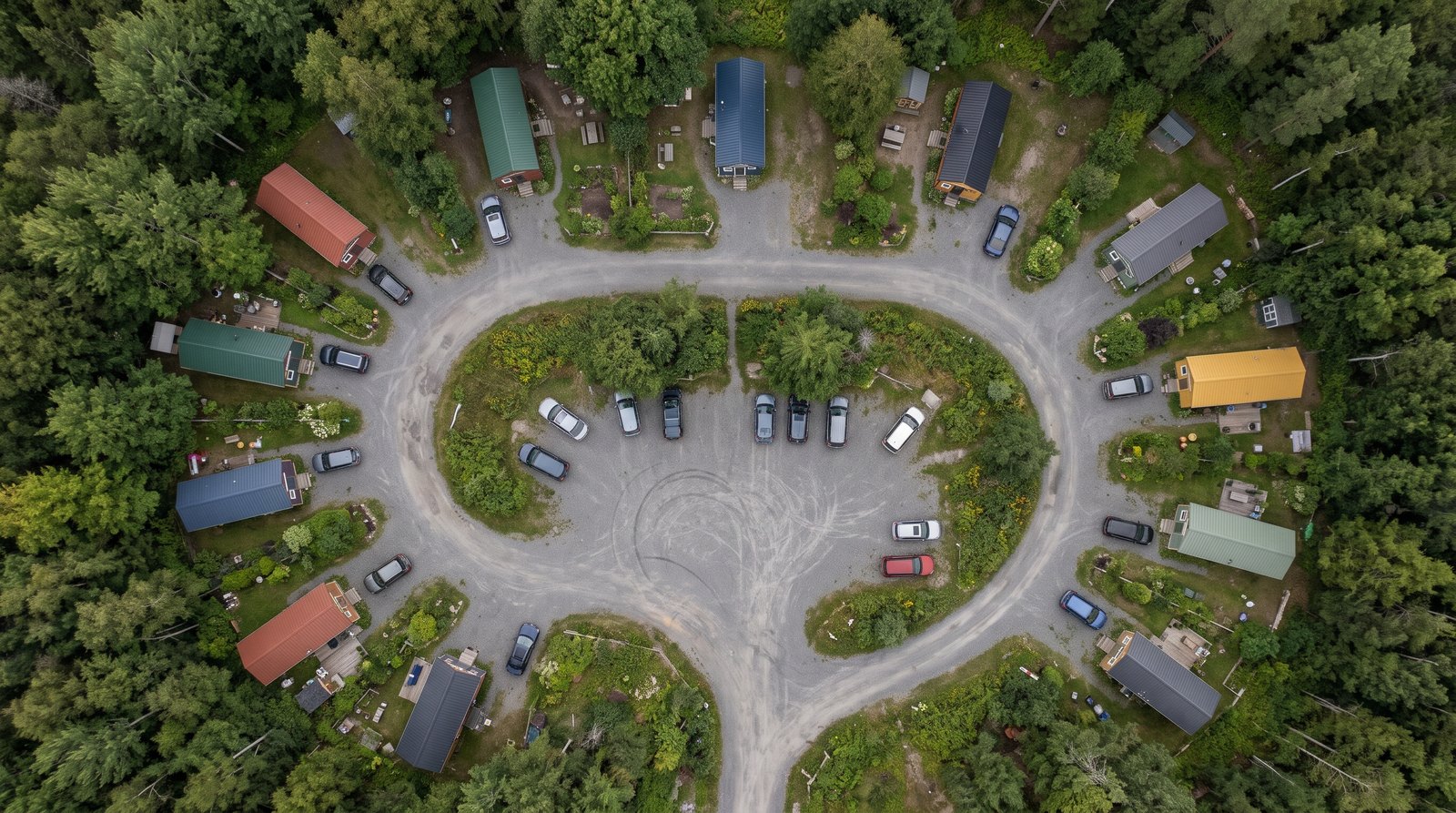
You can park a tiny house in an approved tiny-house community, a compatible RV park, a permitted backyard location, or suitable private land. The workable choice depends on your house classification, intended length of stay, local land-use rules, utility approvals, and the property owner’s written permission. Secure the site before buying the house.
Table of Contents
Quick answer by situation
Start with the kind of stay you need, then look for properties that accept your exact house. A vacation campsite, a residential lot lease, and a backyard dwelling arrangement solve different problems. Ask about year-round occupancy directly, because an advertised monthly rate does not establish permission to make a site your permanent home.
- You already own a tiny house on wheels: Contact communities and parks with its dimensions, photos, construction documents, and certification details.
- You want neighbors and existing services: Begin with a tiny-house community that accepts outside homes.
- You need a temporary stop: Ask RV parks about the exact vehicle type, stay limit, seasonal closures, and delivery access.
- A relative has a backyard: Check the local route for an occupied movable unit or a permitted accessory dwelling.
- You want rural privacy: Investigate lawful residential use, road access, water, and wastewater before committing to land.
- You want a permanent foundation: Treat the project as a dwelling approval and site-development project from the beginning.
Prepare a one-page house summary before making calls. Include overall towing length, width, height, weight, electrical service needs, plumbing connections, and whether the home is factory-built or owner-built. This gives a manager something concrete to approve and prevents an expensive misunderstanding on delivery day.
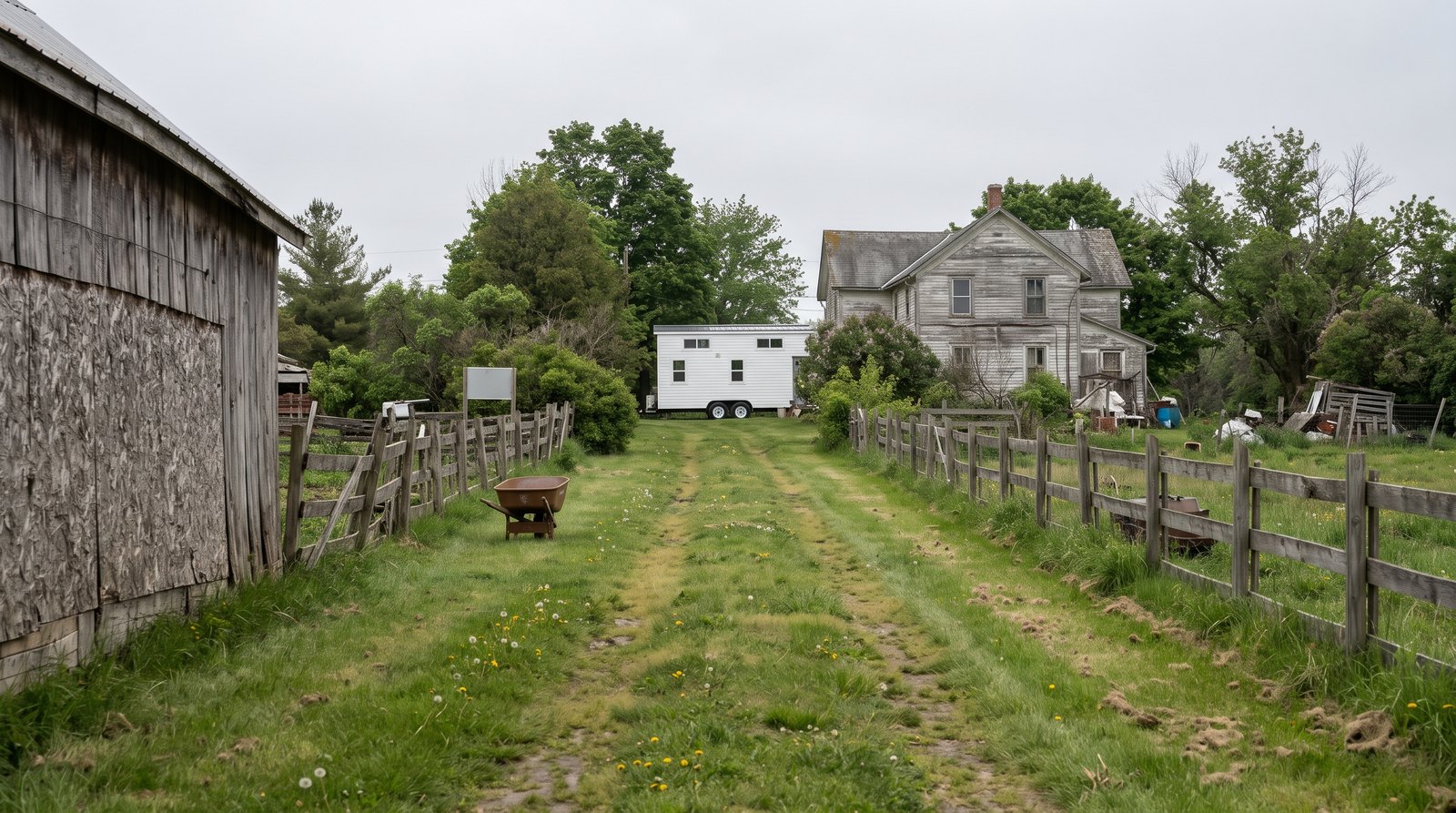
Backyards need a clear permission path
A backyard can work when the local jurisdiction allows your proposed dwelling or occupied vehicle and the property can meet its site requirements. The owner’s invitation is only one part of the decision. Confirm the house classification, occupancy conditions, required permits, utility connections, and private restrictions before paying for a pad or moving.
Describe the arrangement accurately to planning staff: a house on wheels occupied throughout the year, a seasonal vehicle, or a small dwelling on a foundation. Ask which approval process applies to the actual parcel. Calling everything an ADU can create confusion if the local accessory dwelling rules cover buildings but not movable units.
For example, Portland’s current occupied-vehicle guidance allows one occupied RV, including a tiny house on wheels, on qualifying developed residential lots. It excludes undeveloped lots and distinguishes these units from foundation-built ADUs. That is a local example, not a rule that follows your trailer across city lines.
Once the planning route is clear, discuss practical boundaries with the owner. Where will your car go? Who receives deliveries? Can visitors stay overnight? Who maintains the access path and pays for additional waste service? A family arrangement benefits from these answers just as much as a commercial rental does.
Tiny-house communities and RV parks have different filters
A dedicated community can simplify the search by offering prepared lots and residents with similar needs, while an RV park may be useful for an approved shorter stay. Neither label guarantees acceptance. Get written approval for your specific home and occupancy plan before arranging transport, and read the current rules rather than relying on directory listings.
Ask whether the community accepts homes purchased elsewhere. Some locations sell their own homes or limit incoming units to particular dimensions or construction categories. Others welcome outside builders but require documentation, an inspection, and approval of the exterior condition. A vacant space on a map is not a confirmed reservation.
Policies can be restrictive. Lake George RV Park’s published policies exclude tiny homes. Meanwhile, La Bohemia Villas advertises lots for RVIA-certified tiny homes on wheels. These examples show why a general claim that RV parks accept tiny houses is unreliable.
Certification also has limits. The RV Industry Association describes RV standards as covering recreational, seasonal, and temporary use rather than permanent housing. A seal can help establish construction documentation for a park, but it does not grant residential zoning permission. Our tiny house versus RV comparison explains the broader ownership tradeoffs.
Request the rules on unit age, appearance, pets, children, guests, decks, skirting, sheds, and vehicle parking. Ask whether an age restriction allows a photo review or inspection. Confirm the maximum continuous stay and any required time away. A monthly payment schedule and permission for uninterrupted year-round occupancy are separate questions.
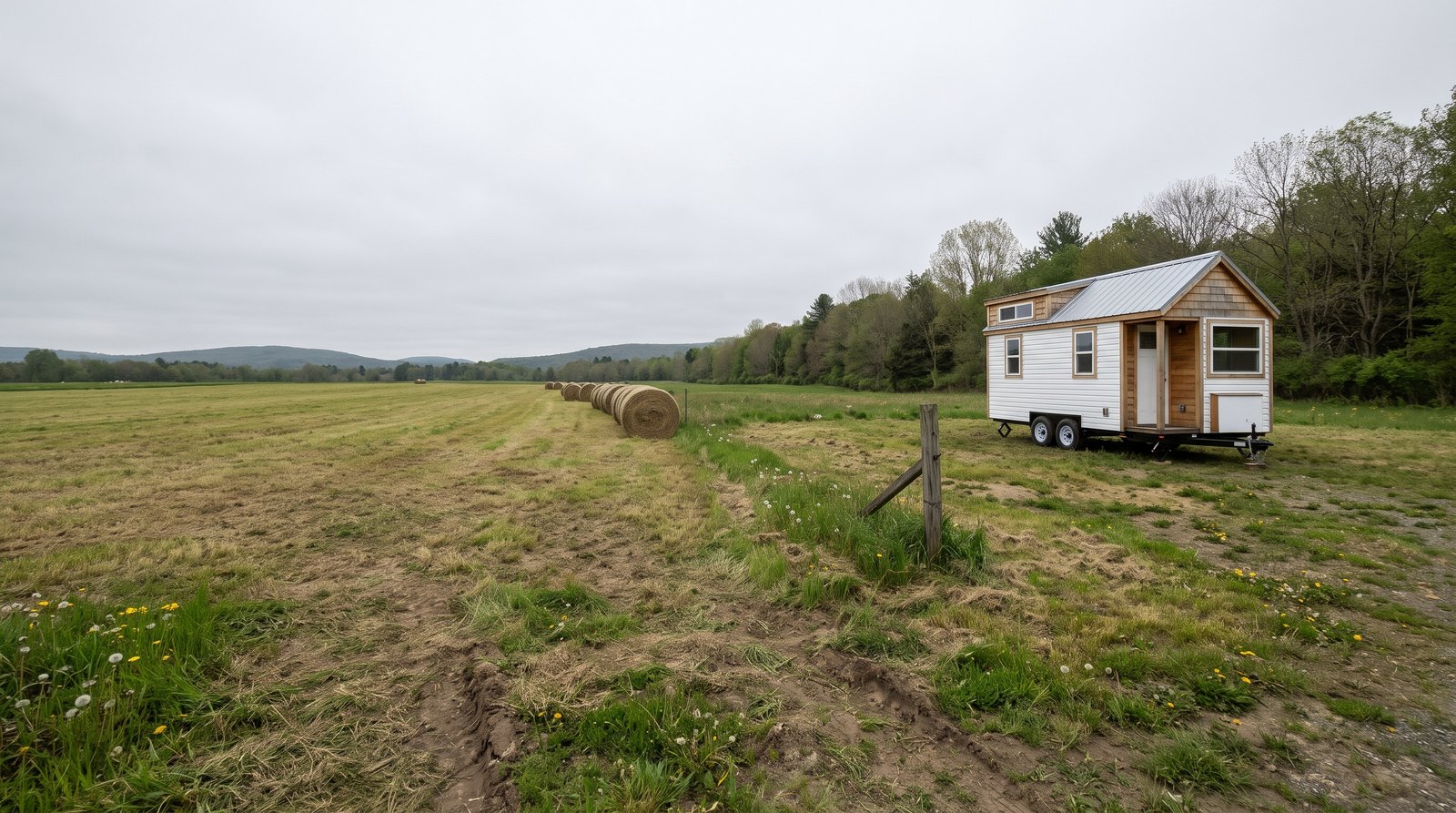
Rural land and farm leases require more homework
Rural land gives you more physical space, but it can also leave you responsible for every service and access problem. Before buying or leasing, establish whether the intended occupancy is allowed, whether a dwelling can be approved, and how water, wastewater, power, emergency access, and a future move would actually work.
Use the parcel number when contacting the city or county. Ask about the permitted use, dwelling limits, setbacks, floodplain review, and any rules specific to an occupied trailer. Check recorded access rights and deed restrictions separately. A road visible on a map does not establish your right to drive a delivery truck over it.
On farmland, spell out the proposed arrangement. Renting a corner of a field for independent residential use may be treated differently from a permitted farm-related use. Do not assume that helping with chores creates an exemption. Have the relevant planning office identify the process before either party invests in connections.
Walk the delivery route with the mover. Look at gate width, overhead branches, sharp turns, soft shoulders, slopes, and space to disconnect the towing vehicle. Visit after rain if possible. A site that is reachable in dry weather can still become difficult to leave when you need repairs, a move, or emergency access.
Manufactured-home parks need the right home category
A manufactured-home park may be worth contacting, but a small trailer-mounted house does not automatically qualify for one of its spaces. Ask the manager which construction categories the park is approved to accept, which documents are required, and what installation standards apply. Obtain acceptance for your exact unit before treating an available lot as an option.
HUD explains that manufactured homes are built to the HUD Code and carry certification labels. A park model RV, a custom tiny house, and a HUD-code manufactured home should not be treated as interchangeable because they share a compact footprint or arrived by truck.
Send the manager the actual manufacturer’s paperwork rather than a sales description. Ask about installation contractors, foundations or supports, utility work, community approval, and exterior requirements. Also establish whether the park accepts homeowner-owned units or only offers homes already installed on its lots.
Compare the full parking bill
Compare the total monthly site cost, the money needed to move in, and the cost of leaving. Published lot rents are useful starting points, but included utilities and lease terms differ. Treat the following operator prices as examples checked in November 2026, then request a written quote for your particular house and dates.
- Boxwood, Kingsland, Texas: Its website lists rent from $550 a month on an annual lease, including water service, wastewater, trash, land taxes, and grounds maintenance. Electricity and internet are separate. Its spaces are designed for 399-square-foot park model homes. See Boxwood’s current terms.
- La Bohemia Villas, Cumby, Texas: Its lot page lists $595 a month for a 12-month lease on a 20-by-50-foot lot, including electricity, water, and septic service. Ask about current availability, utility conditions, and rates for other terms.
These two examples are not a national price range. Neither proves what a nearby backyard lease, urban community, or rural parcel should cost. Compare local offers with the same occupancy period and service assumptions, including any application fees, deposits, connection charges, pet fees, and cancellation conditions.
For a simple planning example, assume $600 rent, $100 electricity, $60 internet, and $40 set aside for a future move each month. That totals $800 monthly, or $9,600 annually, before the house payment, insurance, repairs, and initial delivery. Those are illustrative inputs, not quoted market averages.
Obtain transport and setup quotes before signing. A cheaper site can lose its advantage if access requires special equipment or you must move again after a short stay. Our tiny-house moving cost guide helps identify the transport items to include.
Inspect utilities and put the agreement in writing
A workable parking site needs services that suit the house, a clear maintenance arrangement, and a written agreement covering the actual stay. Inspect the connections before delivery and clarify who pays for installation, repairs, and interruptions. Photograph the pad and shared areas so both parties have a record of their starting condition.
Have a qualified electrician confirm compatibility and capacity at the proposed supply. Ask who supplies potable water, whether service remains available in freezing weather, and where wastewater can legally discharge. A nearby outlet, garden tap, or pipe is not enough evidence that the site is ready for occupancy.
For septic arrangements, request confirmation from the local permitting authority and an appropriate professional that the additional use is acceptable. EPA guidance explains that system selection depends on factors including soil, slope, occupancy, and local rules. Keep the house and delivery vehicles away from the drainfield.
The agreement should identify the exact space, permitted home, occupants, lease term, total charges, utility billing, maintenance duties, and notice procedures. Address access for repairs, rules for additions, and what happens if permits are denied or the property changes hands. Consider local legal review before committing substantial setup money.
Ask your insurer about the actual location and use before the move. Parking at a different address or using a house as a full-time residence can affect the coverage you need. Review our tiny-house insurance guide, then have your provider confirm the policy details.
Frequently asked questions
The most useful parking answers are tied to a particular house and parcel. Keep a folder containing approval correspondence, construction documents, the site agreement, utility details, and insurance confirmation. Use these questions to start conversations with managers and local officials, then ask them to confirm the conditions that apply to you.
Can I park a tiny house on my own land?
Possibly, but land ownership does not settle occupancy or building requirements. Ask the local planning department whether your exact house type and intended use are allowed on that parcel. Confirm access, wastewater, water, and required approvals before purchasing land or moving the house onto an undeveloped property.
Can I live in a tiny house in an RV park all year?
Only if the park accepts your specific unit and the intended occupancy is allowed under its approvals and local rules. Check the maximum stay, seasonal closures, certification requirements, and lease terms. A monthly rate, an RV-style connection, or a construction seal alone does not establish permission for permanent residence.
What should I budget for tiny-house lot rent?
Start with written quotes from places that accept your home. The operator examples above begin at $550 and $595 monthly under specified annual terms, but they are not national averages. Add separately billed utilities, deposits, setup, transport, and any required improvements to compare the actual cost of each option.
Can a friend rent me a backyard parking spot?
A friend can offer space, but both parties still need to confirm whether the proposed occupancy and connections are allowed. Put rent, utility billing, privacy, access, maintenance, and departure arrangements in writing. Ask the city or county which permits or approvals apply before spending money on site preparation.
Should I buy the house or find parking first?
Find and verify parking first whenever possible. The site’s accepted construction category, dimensions, utility supply, and occupancy conditions can rule out an otherwise appealing house. Secure written conditional acceptance, understand the costs, and coordinate the delivery route before making a purchase that depends on that location working.


