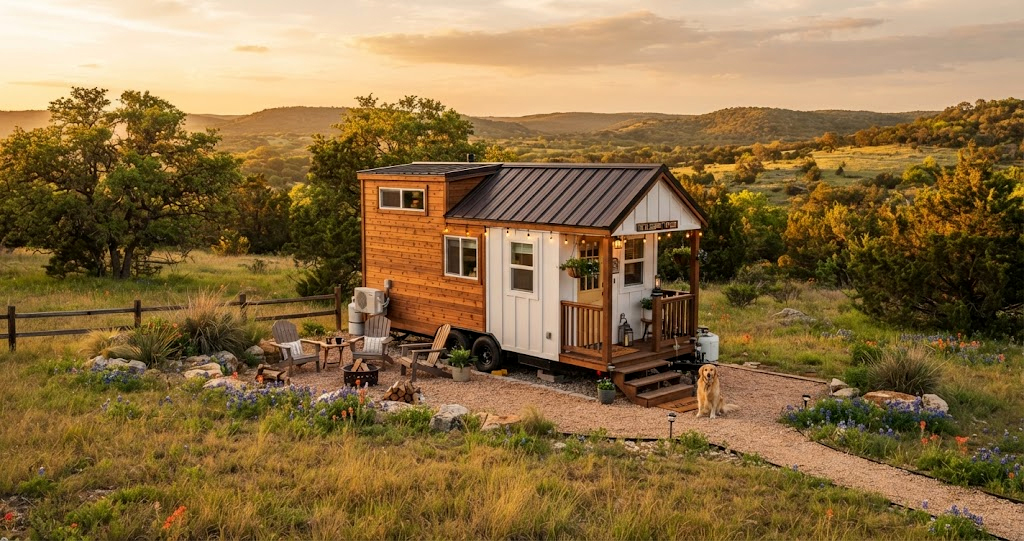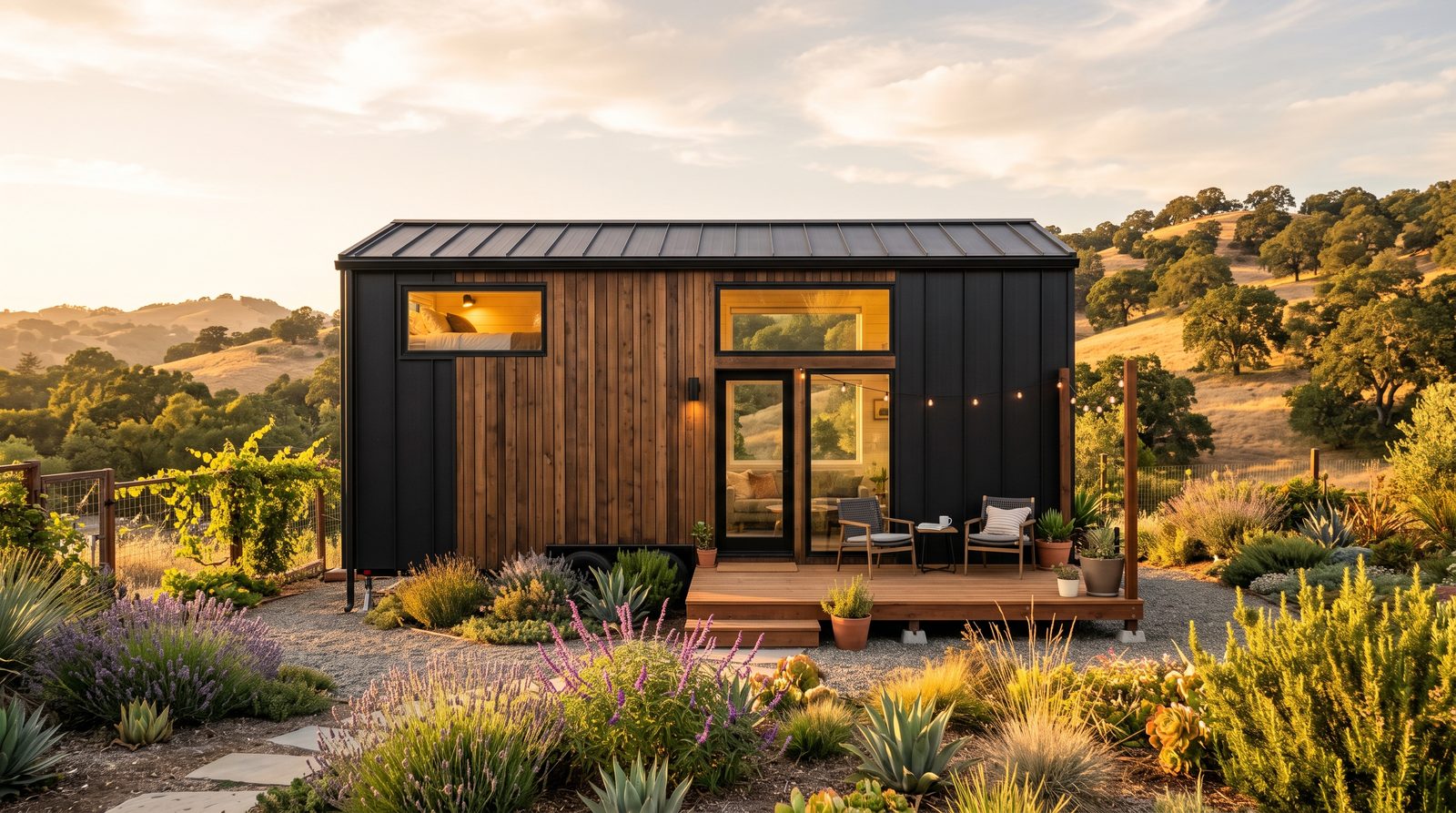
Yes, tiny houses are legal in California, but how you build and place one decides everything. A tiny house on a permanent foundation can qualify as an accessory dwelling unit under statewide ADU law. A tiny house on wheels is treated as an RV and needs local approval, which varies by city and county.
The catch is that “legal” depends less on the state and more on your specific city or county. California has some of the most tiny house friendly rules in the country, especially for backyard units, but the details shift block by block. Here is how the categories work and what you actually need to live in one legally.
Table of Contents
The three legal categories of tiny houses in California
California treats tiny houses in three practical categories: a tiny house on wheels (THOW), a tiny house on a permanent foundation, and a tiny house used as an accessory dwelling unit (ADU). Each falls under a different set of rules, and the category you choose decides your permits, your placement, and whether you can live in it full time.
A foundation tiny house is a small permanent home built to the California Residential Code. A tiny house on wheels keeps its trailer and is classified as a recreational vehicle. An ADU is a legal second home on a lot that already has a house, and a tiny house can qualify as one on a foundation or, increasingly, on wheels. If you are unsure which path fits your plan, our tiny house legality tool is a fast way to narrow it down before you spend money.
Quick answer by situation:
- On a permanent foundation, 400 sq ft or less: legal statewide as an ADU or a primary home if it meets the California Residential Code and its tiny house appendix, plus a building permit.
- On wheels, used as an ADU: allowed in a growing list of cities (Los Angeles, San Diego, San Jose, Fresno) if it carries an ANSI A119.5 or NFPA 1192 certification seal and is registered with the DMV.
- On wheels, in an RV park or special occupancy park: usually legal for the stays that park allows, though permanent full time living depends on local rules.
- On rural or agricultural land: often possible as a caretaker or agricultural dwelling, but always confirm with the county first.
- As a full time home with no permit, parked in a random backyard or lot: not legal, and code enforcement can order you to move.
California’s ADU laws and why they matter for tiny houses
California’s statewide ADU laws are the single biggest reason tiny houses are viable here. Since 2020, every city and county must allow an accessory dwelling unit on most single family lots. That means a homeowner has a legal right to add a small second home in the backyard, and a foundation tiny house can slot directly into that category.
The state law (built on AB 68 and related bills) strips away many old barriers. Cities cannot ban ADUs outright, cannot require owner occupancy for new units, and cannot charge impact fees on units under 750 square feet. An ADU can run up to 850 square feet for a studio or one bedroom, and up to 1,000 square feet for two or more bedrooms, which is larger than most tiny houses need.
Two other laws work alongside ADU rules. SB 9 lets some homeowners split a single family lot or add a duplex, and SB 450 (effective January 1, 2025) extended SB 9 to charter cities after a court challenge. These are less about tiny houses directly and more about creating extra buildable space, but they widen your options for where a small home can legally sit.
How tiny houses on wheels are classified in California
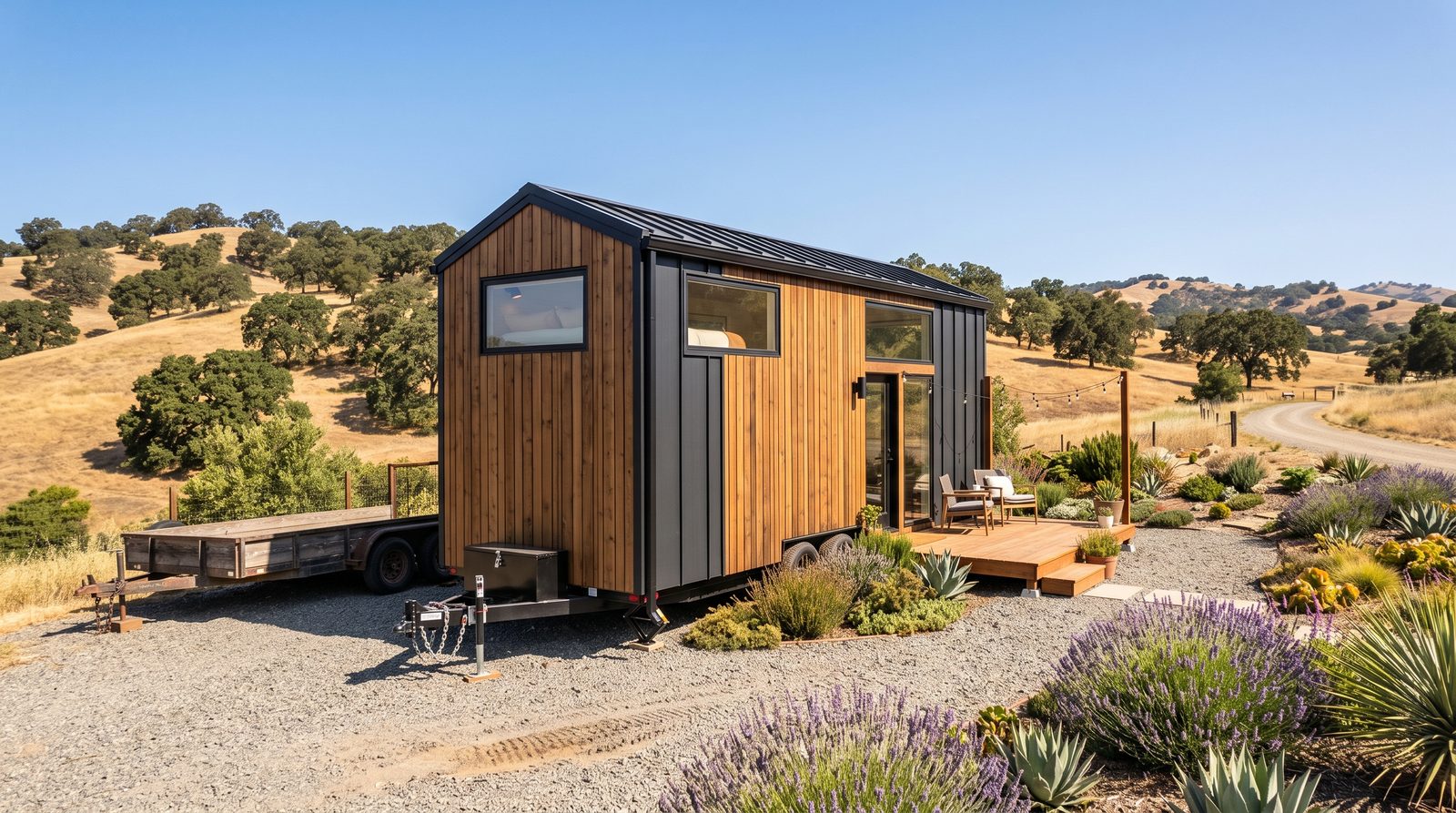
A tiny house on wheels is not treated as a house at all under state rules. California’s Department of Housing and Community Development (HCD) classifies a THOW as a recreational vehicle. To be street legal and placeable, it generally must carry a certification seal showing it meets ANSI A119.5 or NFPA 1192 standards, and it must be registered with the DMV like any other RV.
This classification is the root of most confusion. Because a THOW is an RV, you cannot simply park it anywhere and call it a permanent residence. There is also a wrinkle worth knowing: if a manufacturer markets its units specifically as permanent homes, HCD may decline to treat them as RVs at all, which pushes them toward building code territory instead.
The practical takeaway is that a THOW lives or dies on local rules and certification. A certified, DMV registered unit gives you the most options, including the movable tiny home ADU programs several cities now run. An uncertified, owner built THOW is much harder to legalize as a full time dwelling. If you are weighing a THOW against a traditional RV for daily living, our tiny house vs RV comparison breaks down the trade offs.
Getting a permit for a foundation tiny house (Appendix Q)
A foundation tiny house is the most clearly legal path in California, and it runs through the building permit process. The California Residential Code includes a tiny house appendix (based on the widely used Appendix Q) that applies to dwellings of 400 square feet or less. It relaxes several standard requirements so a very small home can still pass inspection.
The tiny house appendix adjusts rules that would otherwise be impractical in a compact space. It sets workable standards for sleeping lofts, ladders and stairs to reach them, minimum ceiling heights, and emergency escape openings. Because it is part of the state residential code, a foundation tiny house built to it is a real, permitted dwelling rather than a gray area structure.
To get permitted, you submit plans to your local building department, pay fees, and pass inspections for the foundation, framing, electrical, plumbing, and final occupancy. If the tiny house is going in as a backyard ADU, you also clear the planning side: setbacks, height limits, and parking where required. It is more paperwork than a THOW, but the result is a home you can legally live in full time and even finance. Speaking of which, getting a mortgage on a tiny house is far easier when the home sits on a permitted foundation.
Where you can actually put a tiny house in California
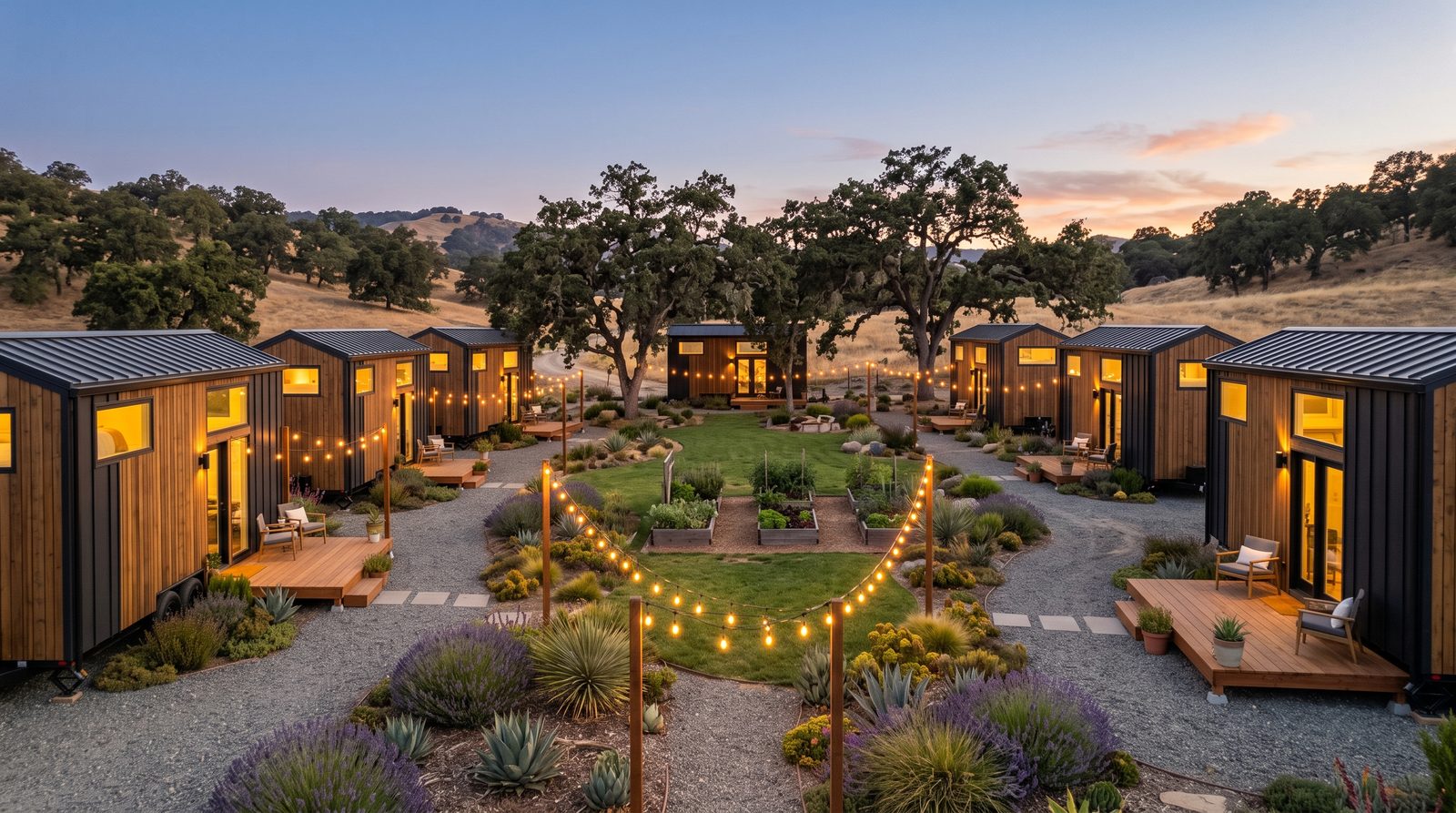
Legal placement usually comes down to four options: a backyard ADU on a lot you own or rent, a permitted tiny house community, an RV or special occupancy park, or rural and agricultural land. Each has different rules, and the backyard ADU route is the most reliable for full time living because state law protects it.
A backyard ADU is the workhorse option. If you or the property owner has a single family lot, you can add a foundation tiny house as an ADU almost anywhere in the state, and a movable tiny home in cities that allow it. A tiny house community gives you a purpose built spot, though these usually operate as RV parks, special occupancy parks, or approved developments, so check the long term stay rules.
RV and special occupancy parks can host a certified THOW, but many cap how long you can stay, which matters if you want a permanent address. Rural and agricultural land sometimes allows a tiny house as a caretaker or farm worker dwelling, and counties tend to be more flexible than dense cities. In every case, the deciding factor is the local zoning code, not your intentions.
City examples: Fresno, San Jose, Los Angeles, and San Diego
City rules differ sharply, and a few California cities have led the country on tiny houses. Fresno was the first to formally allow tiny houses on wheels as backyard second dwellings, and Los Angeles, San Diego, and San Jose have since adopted movable tiny home ADU ordinances. Each has its own conditions, so never assume one city’s rules apply next door.
Fresno made history by writing THOWs into its development code as permanent second dwellings, not just caregiver units. Owners generally must skirt the wheels and meet a minimum lot size. Los Angeles (city and county) was among the first major metros to welcome certified movable tiny homes as ADUs, driven largely by the housing shortage.
San Diego and San Jose followed with their own movable tiny home ADU ordinances, both modeled on the LA approach. In each, the movable unit typically needs an ANSI A119.5 or NFPA 1192 certification seal and DMV registration to qualify. The pattern is clear: certification plus a local movable tiny home program is the cleanest path to a legal THOW, and more jurisdictions keep adding rules, including counties like Nevada County that adopted dedicated THOW ordinances in 2025.
Realistic next steps to place a tiny house legally
Start by calling your city or county planning department before you buy or build anything. Ask two direct questions: does the jurisdiction allow tiny houses on foundations as ADUs, and does it allow movable tiny homes on wheels as ADUs. The answers determine your entire plan, and staff will tell you the exact permits and standards that apply to your address.
From there, match your build to the rules you confirmed. If your city only recognizes foundation homes, plan for a permitted ADU under the tiny house appendix. If it runs a movable tiny home program, buy a unit with an ANSI A119.5 or NFPA 1192 seal so it qualifies. Keep every certification document and permit, because those papers are what make the home legal, insurable, and financeable. When rules are unclear or you are comparing two cities, get the answer in writing from the planning office rather than relying on a builder’s promise.
Frequently asked questions
Can I live in a tiny house on wheels full time in California?
Sometimes. A tiny house on wheels is classified as an RV, so full time living depends on local zoning. Cities like Los Angeles, San Diego, San Jose, and Fresno allow certified movable tiny homes as backyard ADUs. Elsewhere you may be limited to RV parks or shorter stays. Always confirm with your city planning department.
Do I need a permit for a tiny house in California?
Almost always yes. A foundation tiny house needs a building permit under the California Residential Code. A tiny house on wheels used as an ADU needs local planning approval, a certification seal, and DMV registration. Skipping permits risks fines and removal orders, so check the requirements before you build or place one.
Can I put a tiny house in my backyard in California?
Often yes. State ADU law lets homeowners add a tiny house as a backyard ADU on most single family lots, either on a foundation or, in a growing number of cities, on wheels. You still need permits, setbacks, and code compliance, and the exact rules vary by city and county.
Are tiny house communities legal in California?
Yes, in the right zoning. Tiny house communities usually operate as RV parks, special occupancy parks, or planned developments approved by the local jurisdiction. Some are purpose built for tiny homes, others convert existing parks. Legal, permitted communities exist across the state, but availability and long term stay rules vary by location.
How big can a tiny house be in California?
A tiny house is generally 400 square feet or less under the California Residential Code tiny house appendix. As an ADU, a tiny home can be larger, up to 850 square feet for a studio or one bedroom and up to 1,000 square feet for two or more bedrooms.