In most cases, no — you cannot get a traditional mortgage on a tiny house. Banks require a home to be permanently affixed to a foundation, classified as real property, and typically at least 400 square feet, which rules out the majority of tiny homes on wheels. Instead, most buyers in 2026 finance with RV loans (rates from roughly 6.5% APR), chattel loans (6.9%–9.5%), or personal loans (7.9%–14%+) — and a $60,000 tiny house works out to about $447–$556 per month on a secured loan.
Here’s exactly when a mortgage is possible, what each financing option costs, and how to pick the right one.
Table of Contents
Why Banks Won’t Mortgage Most Tiny Houses
A mortgage is a loan secured by real property — land and the permanent structure attached to it. Most tiny houses fail that test in three ways:
1. No permanent foundation. A tiny house on wheels (THOW) is legally a vehicle or personal property, not real estate. No foundation, no mortgage — full stop.
2. Loan amounts are too small. Most mortgage lenders set minimum loan amounts around $50,000–$75,000, and many won’t bother underwriting anything under $100,000 because the fixed costs of origination don’t pay off. A $35,000 tiny home simply isn’t worth the paperwork to them.
3. Appraisals fall apart. Even a tiny house on a permanent foundation needs comparable sales for the appraisal. In most markets there are no recent sales of 300–500 sq ft permanently affixed homes, so the appraiser can’t complete a standard valuation — and the loan dies in underwriting.
When You CAN Get a Real Mortgage on a Tiny House
A conventional mortgage becomes realistic when all of the following are true:
- The house sits on a permanent foundation (slab, crawlspace, or basement) on land you own or are buying
- It’s titled as real property, not a vehicle
- It meets local building codes — many jurisdictions use the IRC Appendix Q standard for tiny homes
- It’s roughly 400+ square feet, the informal floor most lenders and appraisers work with
- Comparable sales exist in your market (easiest in tiny-home-friendly areas of Texas, Colorado, Oregon, and North Carolina)
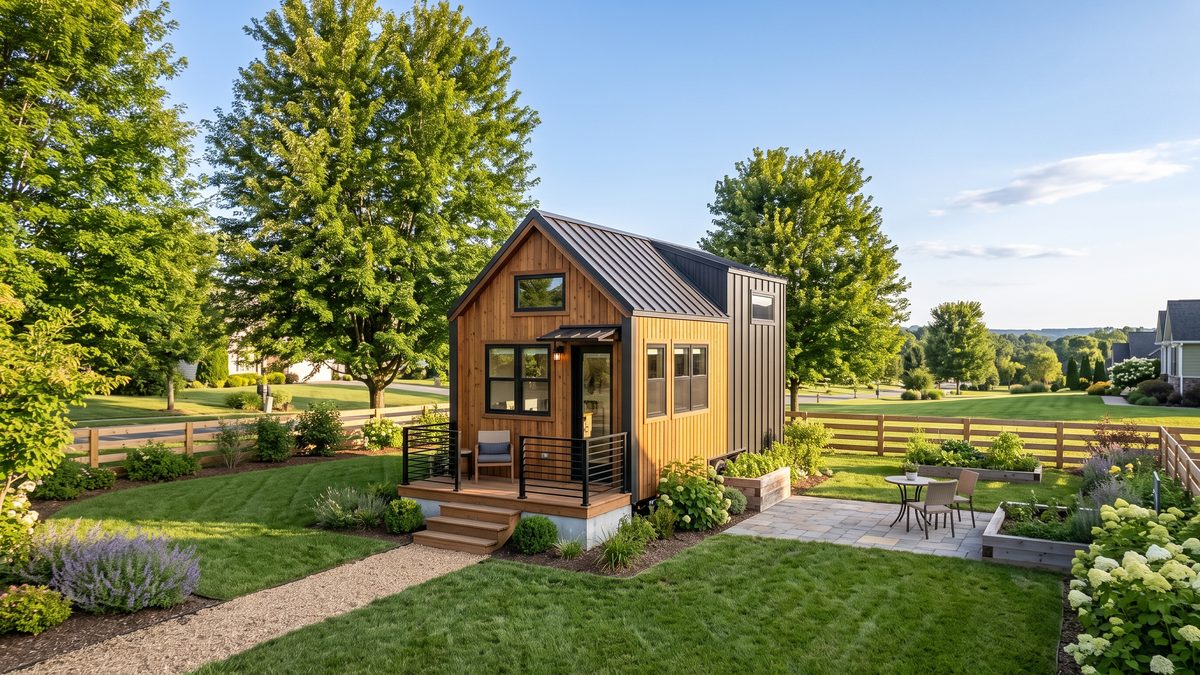
Foundation-built tiny homes financed as ADUs (accessory dwelling units) on an existing property are the other big exception — lenders handle those through a cash-out refinance, HELOC, or renovation loan on the main house rather than a standalone mortgage. Before betting on the foundation route, check what your state actually allows with our free Tiny House Legality Tool.
Tiny House Financing Options Compared (2026)
| Financing option | Typical APR (2026) | Term | Down payment | Best for |
|---|---|---|---|---|
| RV loan | 6.5%–11% | 10–20 years | 10%–20% | RVIA-certified tiny homes on wheels |
| Chattel loan | 6.9%–9.5% | 15–25 years | 5%–20% | Factory-built homes in communities or on leased land |
| Personal loan | 7.9%–14%+ (up to 36%) | 2–7 years | $0 | DIY builds, small amounts, fast closing |
| Home equity loan / HELOC | 7%–10% | 5–30 years | None (needs 15–20% equity) | Homeowners adding a tiny house or ADU |
| Builder financing | Varies (often 8%–12%) | 5–23 years | 5%–20% | Buying new from a builder with lending partners |
| Conventional mortgage | 6%–7% | 15–30 years | 3%–20% | Foundation builds, 400+ sq ft, owned land |
RV Loans: The Default Choice for Tiny Homes on Wheels
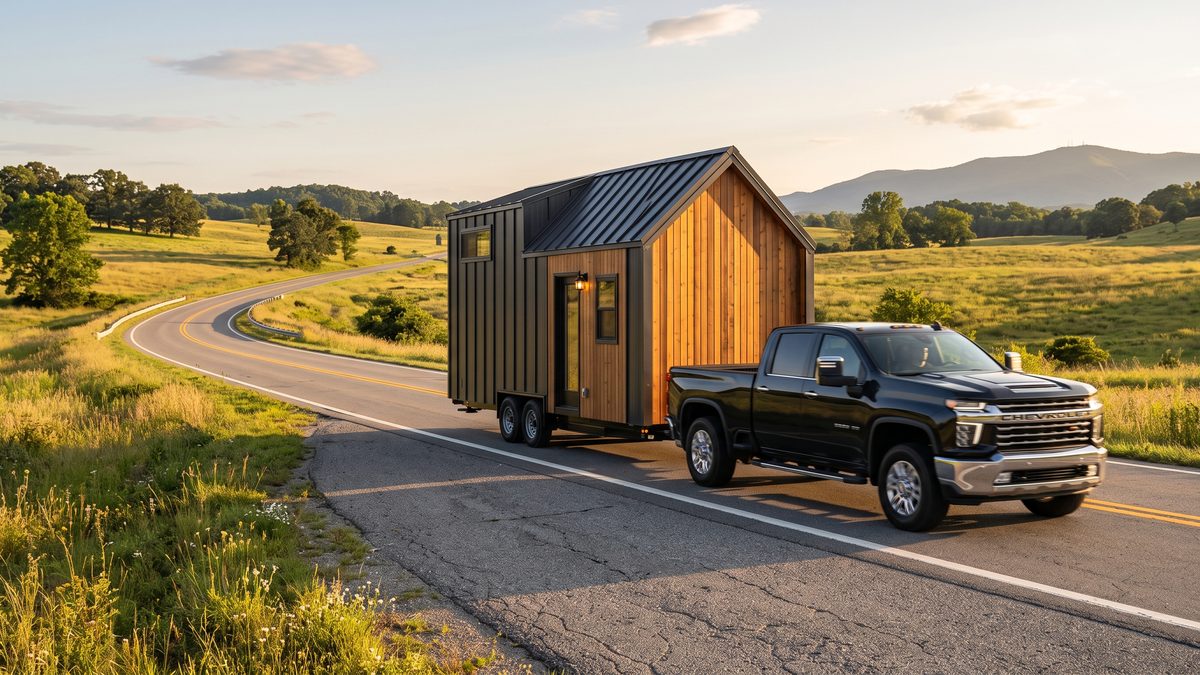
If your tiny house is certified by the RV Industry Association (RVIA) — most professional THOW builders arrange this — it qualifies for RV financing. In 2026, RVIA-certified homes see rates as low as 6.5% APR from lenders like LightStream (which lends $5,000–$100,000 with terms up to 20 years and a 0.50% autopay discount). Expect a 10%–20% down payment and a credit score of about 660+ for the best pricing. The long terms are what make payments livable: $60,000 over 20 years at 6.5% is about $447/month.
Chattel Loans: The Middle Ground
A chattel loan is secured by the home itself while treating it as personal property — the same structure used for manufactured homes. Rates in 2026 run about 6.9%–9.5%, higher than a mortgage but well below unsecured personal loans. Most chattel lenders want a 575–640 minimum credit score, 5%–20% down, two years of stable employment, and a debt-to-income ratio at or below 43%. One caveat: FHA’s Title I chattel program (5% down with 580+ credit) only covers HUD-certified manufactured homes built after June 1976 — most tiny houses don’t carry HUD certification, so don’t count on it unless you’re buying a certified park model.
Personal Loans: Fast but Expensive
Unsecured personal loans need no certification, no appraisal, and no collateral — which makes them the go-to for DIY builds. The trade-off is cost: good-credit borrowers (650+) see 7.9%–14% APR in 2026, weaker credit can hit 36%, and terms are short at 2–7 years. Financing $60,000 over 5 years at 11% costs about $1,305/month — more than double the RV-loan payment. Personal loans make the most sense for smaller amounts ($15,000–$35,000) you can retire quickly.
Home Equity: The Cheapest Route If You Already Own
Homeowners with 15%–20% equity can tap a home equity loan or HELOC at 7%–10% and use the cash for a tiny house — no certification requirements at all. This is the standard play for backyard ADUs and rental units. The risk is real: your primary home is the collateral.
Builder Financing
Many established builders partner with lenders (or lend directly) and quote payments alongside the purchase price, with terms as long as 23 years. Convenient, but always compare their APR against an outside RV-loan quote — dealer-arranged financing frequently carries a 1–2 point markup.
What a $60,000 Tiny House Actually Costs Per Month
| Loan type | Rate / term | Monthly payment | Total interest paid |
|---|---|---|---|
| RV loan | 6.5% / 20 yr | $447 | ~$47,300 |
| RV loan | 7.5% / 15 yr | $556 | ~$40,100 |
| Chattel loan | 8.5% / 20 yr | $521 | ~$65,000 |
| Personal loan | 11% / 5 yr | $1,305 | ~$18,300 |
Notice the pattern: longer terms buy you a lower payment but dramatically more total interest. If you can handle the higher payment, shorter terms win. And remember the loan isn’t the whole budget — tiny house insurance adds $500–$1,500 per year, plus parking, utilities, and maintenance.
How to Improve Your Approval Odds
Buy RVIA-certified if you’re buying a THOW. It’s the single biggest unlock for cheap financing — non-certified DIY builds are limited to personal loans and cash.
Get your credit to 660+. That’s the threshold where secured rates drop meaningfully; 700+ gets you the advertised “as low as” rates.
Put 15%–20% down. Bigger down payments offset the lender’s resale-value worry on an asset class they can’t easily liquidate.
Keep DTI under 43%. Standard across chattel and RV lenders; some stretch to 50% with strong compensating factors.
Get quotes from at least three lender types — an RV lender, a chattel lender, and your own bank or credit union — because pricing on tiny-home loans varies far more than on mortgages. Before you commit to any of it, make sure the numbers beat your alternatives: see our full breakdown of tiny house construction costs and how tiny houses compare to RVs for full-time living.
Frequently Asked Questions
Can you get a 30-year mortgage on a tiny house?
Only if it’s on a permanent foundation, titled as real property, roughly 400+ sq ft, and appraisable with local comps. Tiny houses on wheels never qualify for 30-year mortgages; the longest common alternative is a 20–25 year RV or chattel loan.
What credit score do you need to finance a tiny house?
About 575–600 minimum for chattel loans, 650+ for decent personal-loan rates, and 660–700+ for the best RV-loan pricing. Below 580, expect to need a larger down payment or a co-signer.
Can you use an FHA loan for a tiny house?
Generally no. FHA requires the home to be real property on a permanent foundation, and FHA’s Title I chattel program only covers HUD-certified manufactured homes — a certification most tiny houses don’t have. A foundation-built tiny home of 400+ sq ft on owned land is the rare exception.
How long can you finance a tiny house?
Personal loans run 2–7 years, RV loans up to 20 years (long terms usually require $50,000+ borrowed), and chattel loans 15–25 years. Longer terms roughly halve the payment but can double the total interest.
Do tiny house loans require a down payment?
Personal loans don’t. RV loans typically want 10%–20% down, and chattel loans 5%–20% depending on credit. On a $60,000 home, plan for $6,000–$12,000 down plus taxes and delivery.
Is it hard to finance a used tiny house?
Harder, yes. Lenders want documentation — RVIA certification, build records, and a clear title. A used certified home from a known builder can still get RV financing; a used DIY build usually means a personal loan or cash.
Can I get a loan for a DIY tiny house build?
Yes, but your options narrow to personal loans (funds in days, no inspections) or home equity if you own property. No RV or chattel lender will finance an uncertified self-build.
Does financing a tiny house build equity?
Only foundation-built homes on owned land reliably appreciate. Tiny houses on wheels depreciate more like RVs, so equity mostly comes from paying down principal — another reason to avoid stretching to a 20-year term on a wheeled home.