A tiny house can use a greywater system, but only when the local plumbing, health, and wastewater authorities allow the specific design. Sink and shower water is still wastewater. Most legal systems send it to an approved sewer, septic system, holding tank, or subsurface irrigation area instead of dumping it on the ground.
Table of Contents
What counts as greywater in a tiny house?
Greywater usually means wastewater from showers, bathroom sinks, bathtubs, and sometimes clothes washers. It does not include toilet waste. Kitchen sink and dishwasher water may also be excluded because grease and food increase the health and clogging risks. The exact definition comes from the code adopted where the house is installed.
This distinction matters more than the toilet technology. A composting or incinerating toilet may remove blackwater from the plumbing plan, but it does not make the remaining water harmless. Soap, skin cells, hair, grease, cleaning products, and microorganisms still leave through the drains. New York, for example, explicitly requires treatment for sink and shower wastewater even when a non-flush toilet is installed.
Model plumbing codes provide a path for engineered reuse. The 2024 International Residential Code includes rules for subsurface greywater soil absorption systems, including approved pipe materials, testing, inspection, and sizing based on connected fixtures and occupants. A model code is not automatically local law, however. Your city, county, or state must adopt it, and local amendments can be stricter.
Ask the authority having jurisdiction which fixtures may enter a greywater line, whether kitchen water is allowed, and whether a separate permit is required. For a tiny house on wheels, also ask whether the site treats the unit as an RV, a dwelling, or a temporary structure. That classification can change the acceptable wastewater connection.
Quick answer by situation
The safest design depends on how the tiny house is classified, where it will sit, and whether the site has an approved wastewater connection. Treat any simple garden discharge idea as a proposal that needs local approval, not as a universal exemption.
- Permanent house with sewer: Send all approved fixture drains to the sewer unless the plumbing official approves a separate reuse system.
- Permanent house with septic: Include greywater in the permitted onsite wastewater design unless the health department approves another method.
- House on wheels at an RV park: Use the park’s designated sewer connection and follow its rules. Do not run a hose into landscaping.
- Remote or off-grid site: Plan a permitted subsurface system, approved holding tank, or full septic system before occupancy.
- Seasonal mobile use: A portable tank may work operationally, but only with lawful disposal at an approved dump point.
If your design uses a composting toilet, compare the complete wastewater plan with the practical limits discussed in tiny house versus RV living. Mobility does not erase wastewater responsibilities, and a site that welcomes an RV may still prohibit any discharge outside its sewer inlet.
Holding tanks are simple, but not always approved
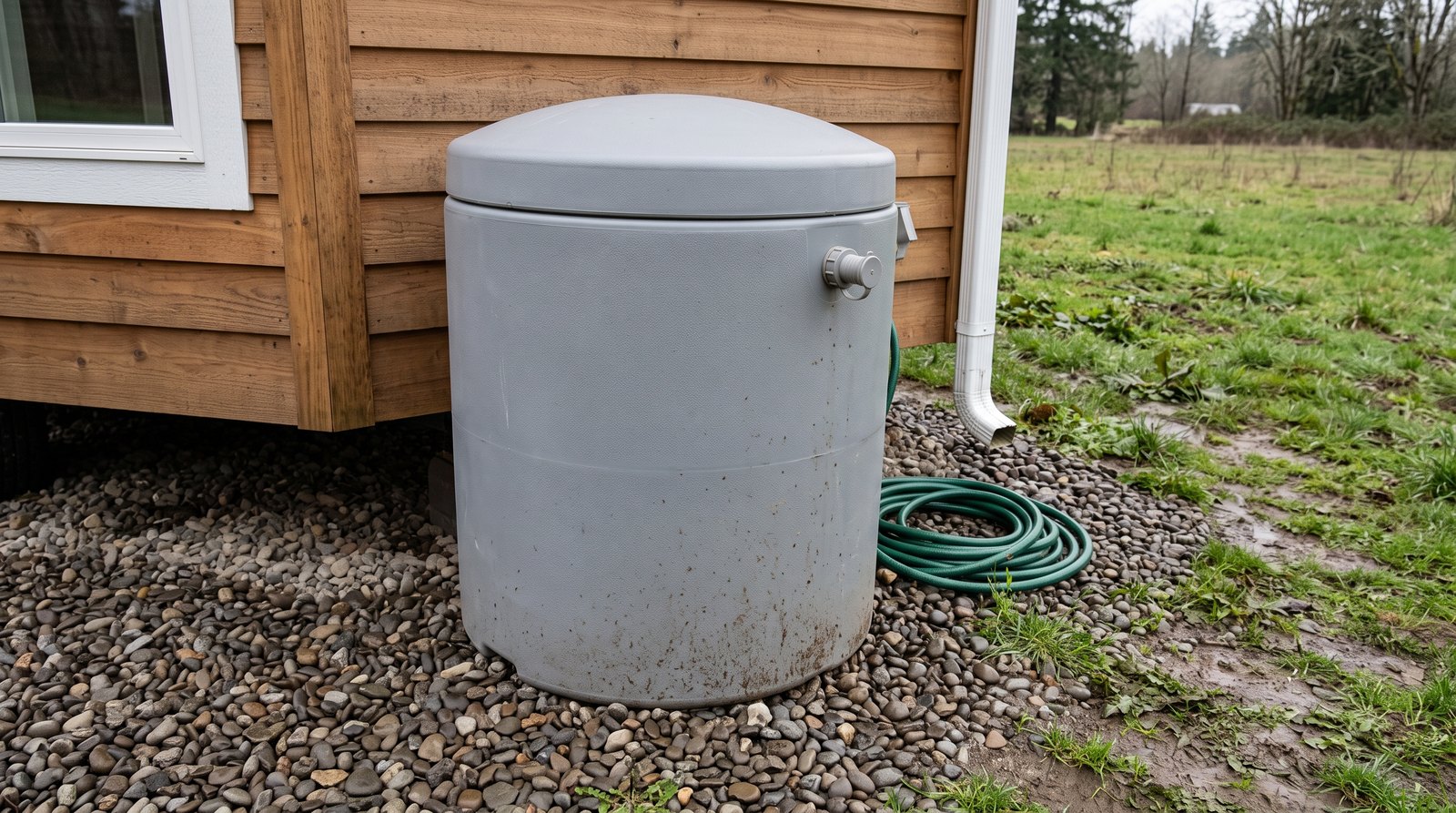
A sealed greywater holding tank is easy to understand: drains feed a tank, and the contents are pumped or emptied at an approved wastewater facility. It can be useful for mobile or intermittent stays, but capacity, venting, freeze protection, alarms, access, and lawful disposal determine whether it works in practice.
Start with actual water use, not the tiny house floor area. One long shower can consume more tank space than several days of careful sink use. A 40-gallon tank may sound adequate until two people shower, wash dishes, and do laundry. Measure fixture flow rates and daily routines, then leave reserve capacity for delays and cold weather.
A tank needs a secure mount, a serviceable vent, an accessible cleanout, and a reliable level indicator. A high-level alarm is valuable because the first sign of an overfilled tank should not be water backing into the shower. On a trailer, include the tank and its contents in axle and gross vehicle weight calculations. Water weighs about 8.34 pounds per gallon, so a full 50-gallon tank adds roughly 417 pounds before counting the tank and hardware.
Do not assume a holding tank is allowed for permanent residential use. Some jurisdictions restrict or prohibit it except for temporary conditions. New York’s residential onsite rules, for example, generally do not accept holding tanks for long-term, year-round homes and require substantial minimum capacity in the limited situations where they are permitted. That illustrates why a generic tank plan cannot replace a local review.
Mulch basins and branched drains need careful design
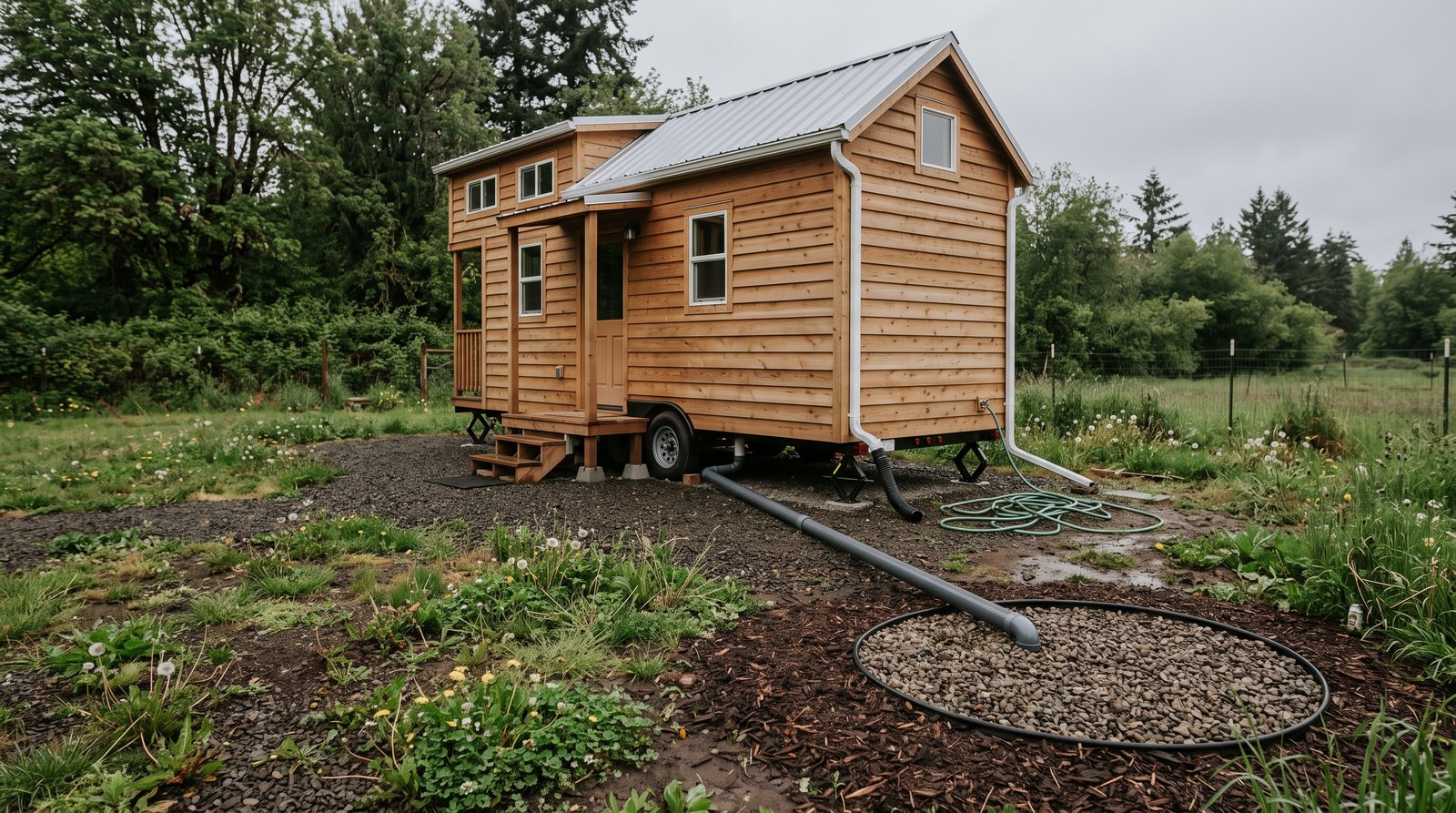
A mulch basin or branched drain can distribute greywater below the surface around suitable plants, but legal approval depends on soil, setbacks, slope, climate, daily flow, and permitted water sources. The system must prevent ponding, runoff, odors, human contact, and any connection that could contaminate potable plumbing.
A basic gravity system separates allowed fixtures, provides a diverter to the sewer or septic line, and sends water through accessible piping to multiple subsurface outlets. Mulch absorbs intermittent flows and supports soil treatment. A branched drain divides flow without pumps, but it needs consistent slope and careful balancing. It is not simply a pipe laid at the edge of the yard.
The irrigation area must be large enough for the expected flow and the soil’s absorption rate. Keep discharge away from foundations, wells, property lines, steep slopes, surface water, edible parts of crops, and places where children or pets can contact it. Exact setbacks vary. A local environmental health or building department should provide the controlling distances and any required soil evaluation.
Subsurface distribution is generally safer than spraying because it reduces contact and aerosols. The 2024 International Residential Code’s soil absorption provisions size flow from connected sources and occupants, and require inspection. That is a useful design framework, but only the locally adopted code and approved plans control your project.
Install accessible cleanouts and design the outlets so roots cannot immediately invade them. Avoid narrow emitters made for clean irrigation water. Greywater carries lint, hair, and soap residue that can block small passages. Use approved pipe, protect it from crushing, and provide a clear route back to the conventional drain when the landscape is saturated, frozen, or under maintenance.
Soap and cleaning products can make or break the system
Products entering a reuse system should be low in salts, boron, chlorine bleach, and compounds that damage soil or plants. Use soap sparingly, choose phosphate-free products, and keep harsh cleaners, paint, solvents, medicines, oils, and disinfectants out of any line that reaches soil. Always follow the approved system’s operating instructions.
Labels such as natural or biodegradable do not automatically mean landscape-safe. Sodium can accumulate and reduce soil structure. Boron can injure plants at low concentrations. A product that is acceptable for sewer disposal may be a poor choice for repeated irrigation in one small area. Check ingredients and rotate discharge zones when the approved design permits it.
Kitchen water is especially troublesome because fats, food particles, and high organic loads create odors and clogs. Even where a jurisdiction calls it greywater, the approved treatment requirements may be more demanding. A grease screen is not permission to discharge kitchen wastewater. Keep the kitchen on the sewer or septic branch unless the approved plan clearly includes it.
Keep the diverter valve accessible. Divert to sewer or septic when using bleach, cleaning a heavily soiled item, treating illness, or working with chemicals. Never create a cross-connection between greywater and drinking-water piping. Indoor reuse for toilet flushing generally requires more treatment, controls, and code compliance than simple subsurface irrigation.
Freeze protection is a system requirement
In a cold climate, exposed greywater pipes and tanks can freeze quickly because a tiny house has short, intermittent drain cycles. Keep piping within the insulated enclosure where possible, maintain drainage slope, eliminate low spots, insulate vulnerable runs, and provide an approved winter diversion instead of relying on a small heat cable alone.
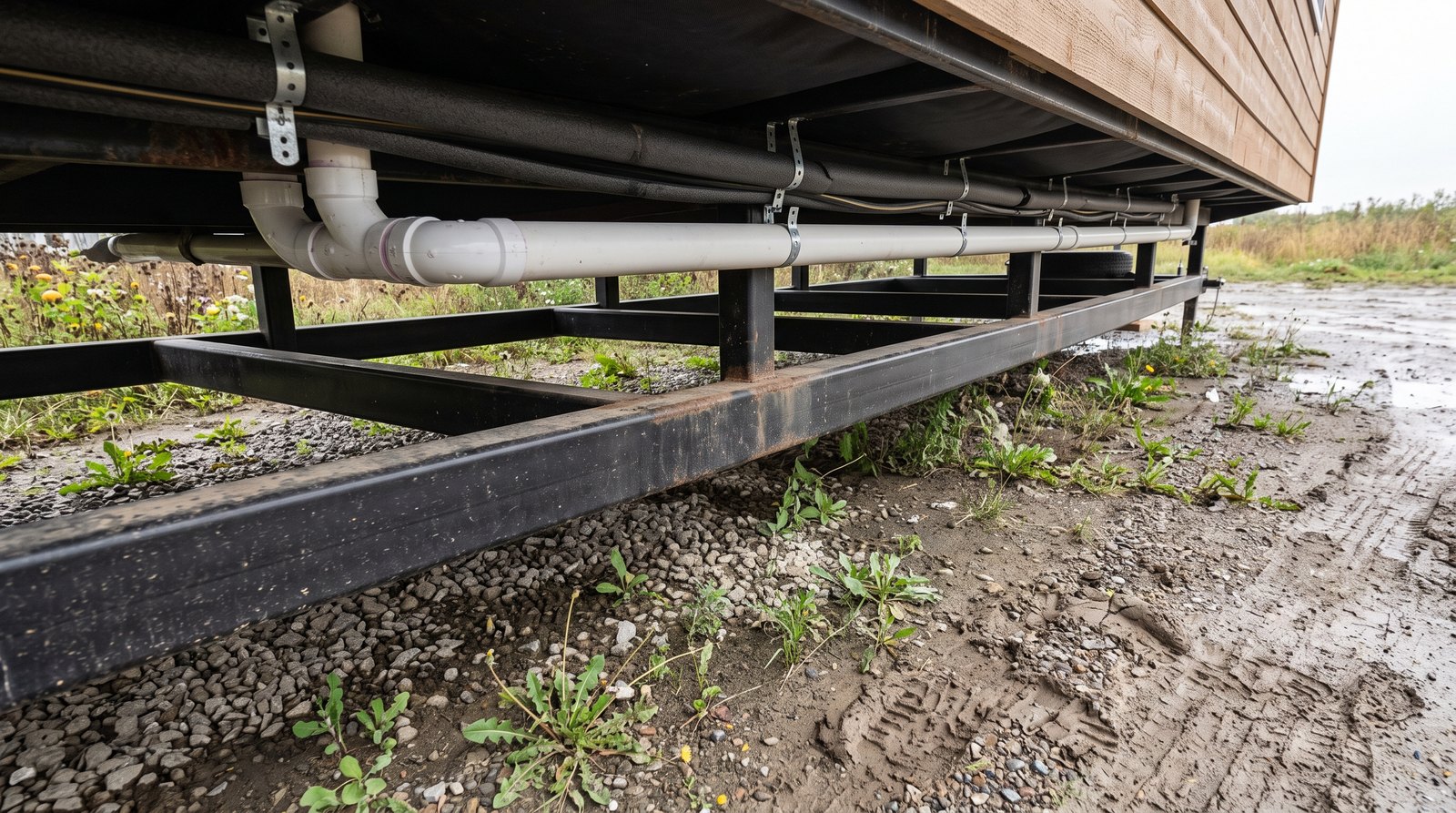
A gravity line should drain completely after each use. Sagging flexible hose traps water, freezes, and then backs up the next shower. Rigid, properly supported pipe usually performs better. Protect valves and fittings, which freeze before a large tank, and make every component accessible for inspection. If the house moves, supports also need to tolerate vibration.
An exterior holding tank may need an insulated enclosure and a listed heating method, but heating wastewater through winter uses meaningful electricity. Include that load when planning an off-grid electrical system. A buried tank or absorption area has different frost-depth and access requirements. Do not bury a portable tank or improvised container.
Seasonal shutdown should include diverting the drains, emptying and rinsing the tank as allowed, clearing distribution lines, and checking traps. Never add automotive antifreeze to a system that will discharge to soil. Use only methods and products accepted by the system manufacturer and local authority.
Why greywater can be harder to permit than the toilet
A listed composting toilet is a recognizable product, while greywater disposal is a site-specific wastewater system. Reviewers must consider flow, soil, groundwater, setbacks, freezing, nuisance conditions, and long-term maintenance. That makes the drain plan, not the toilet purchase, the central permitting question for many off-grid tiny houses.
Begin with the parcel and proposed use. Contact the building department and the agency responsible for onsite wastewater, which may be a county health department, environmental health office, or state agency. Ask for the adopted plumbing code edition, greywater definition, allowed end uses, permit type, design-flow method, setbacks, and whether a licensed designer or installer is required.
Bring a simple plan showing every fixture, pipe route, diverter, tank or soil area, cleanout, vent, property boundary, well, waterway, building, and slope. State whether the house is permanent or mobile and how often it will be occupied. A clear plan gets a better answer than asking whether greywater is legal in general.
Budget for conventional disposal until the alternative is approved. A composting toilet does not guarantee permission for a smaller septic system, and a legal greywater system may still require a reserve area. If you are comparing total ownership costs, remember that wastewater approvals also affect lending, resale, and tiny house insurance.
Maintenance keeps a legal system working
Inspect a tiny house greywater system regularly for slow drains, leaks, ponding, odors, clogged outlets, damaged insulation, and tank level problems. Clean accessible filters on the approved schedule, rotate irrigation zones if designed to do so, and keep a written record of pumping, repairs, and seasonal shutdowns.
Watch the landscape as well as the plumbing. Persistently wet soil, black slime, stressed plants, or water surfacing above an outlet means the system needs attention. Stop discharge to that area and use the approved diversion. Do not solve ponding by extending a hose farther downhill, where it can become runoff or reach a neighbor’s property.
Tank users should arrange disposal before capacity becomes urgent. Verify that the receiving dump station accepts the waste and that the hose, fittings, and caps stay dedicated to wastewater service. After a move, inspect hangers and joints before using the system. For transport planning, include tank emptying alongside the other costs in moving a tiny house.
A good system is deliberately boring. It drains without attention, stays below the surface, produces no odor, and has a conventional backup route. The best time to solve classification, soil, freezing, and disposal questions is before buying tanks or closing the floor, not after the tiny house reaches its site.
Frequently asked questions
Can I dump tiny house shower water on the ground?
Usually not without an approved method. Shower water contains soap, organic matter, and microorganisms, and many jurisdictions regulate it as wastewater. Legal options may include a sewer connection, septic system, sealed holding tank, or permitted subsurface greywater area. Ask the city or county responsible for plumbing and onsite wastewater before discharging anything.
Does a composting toilet eliminate the need for septic?
Not automatically. A composting toilet addresses toilet waste, but sinks, showers, and laundry still create wastewater. The local authority may require that greywater enter a septic system or another approved treatment and disposal system. Some sites can qualify for a reduced design, while others still need a conventional system and reserve area.
How large should a tiny house greywater tank be?
Size it from measured daily use, pickup or dump frequency, required reserve capacity, and local rules. Floor area is not a useful shortcut. Remember that water weighs about 8.34 pounds per gallon. A 50-gallon tank holds roughly 417 pounds of water, which matters greatly on a tiny house trailer.
Can greywater be used to water vegetables?
Rules vary, and direct contact with edible portions is commonly restricted. Subsurface irrigation around appropriate nonfood plants is often the simpler proposal. Never spray untreated greywater or allow it to pond. Ask the local authority which crops and delivery methods are allowed, then follow product and system guidance for soaps and cleaners.
What happens to a greywater system in winter?
It needs a freeze plan. Properly sloped lines should drain after use, exposed components need protection, and the system should have an approved diversion when soil is frozen or saturated. Tanks may require insulation and listed heating equipment. Seasonal systems should be emptied and winterized according to their approved design.