Tiny house water softeners can reduce mineral buildup, but choose one by tested water hardness and daily water use, not floor area. A suitable unit must fit your available space, supply enough flow, and have an approved regeneration drain. Include salt storage, freeze protection and installation work in the decision.
Table of Contents
Does your tiny house need a water softener?
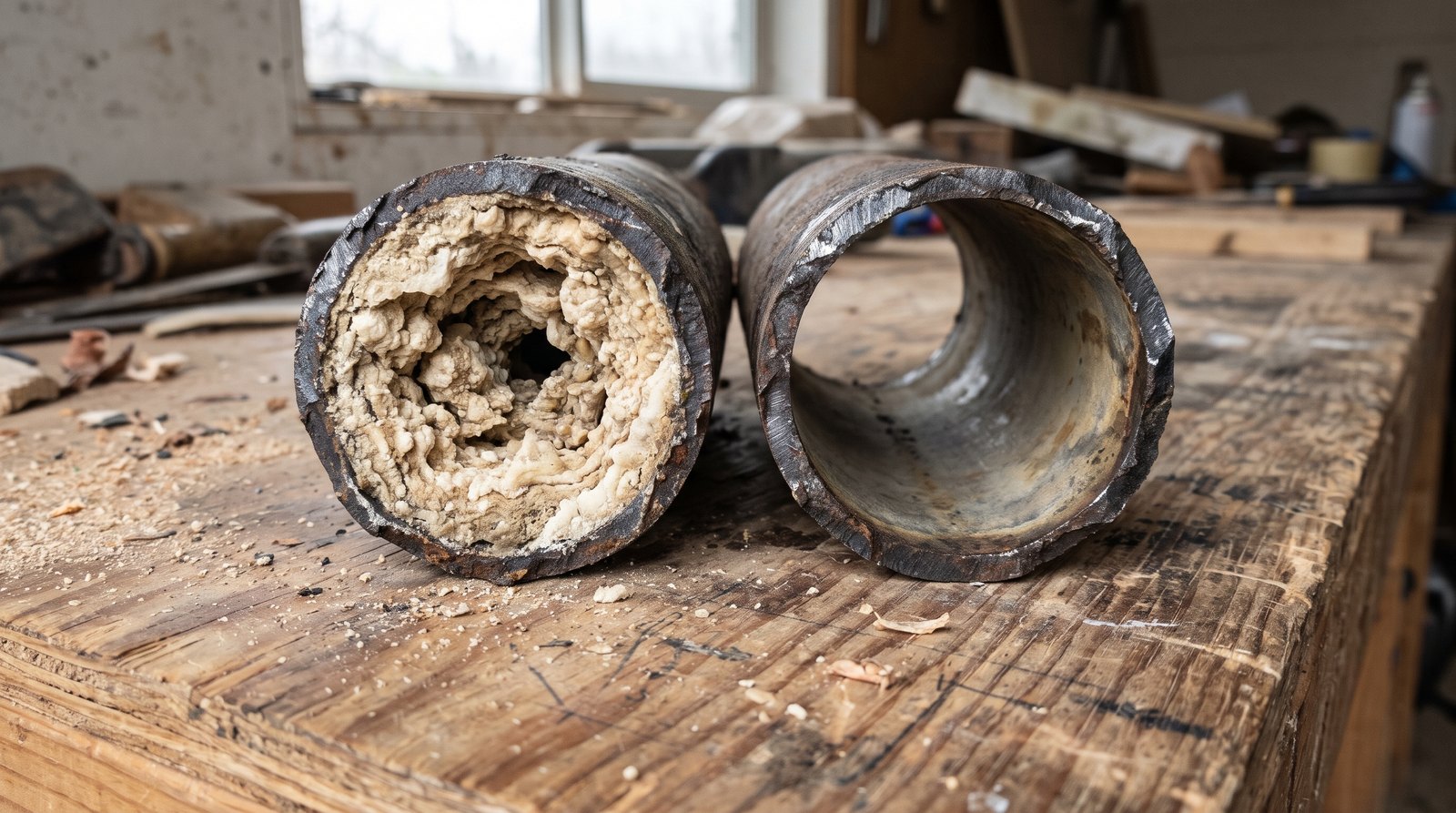
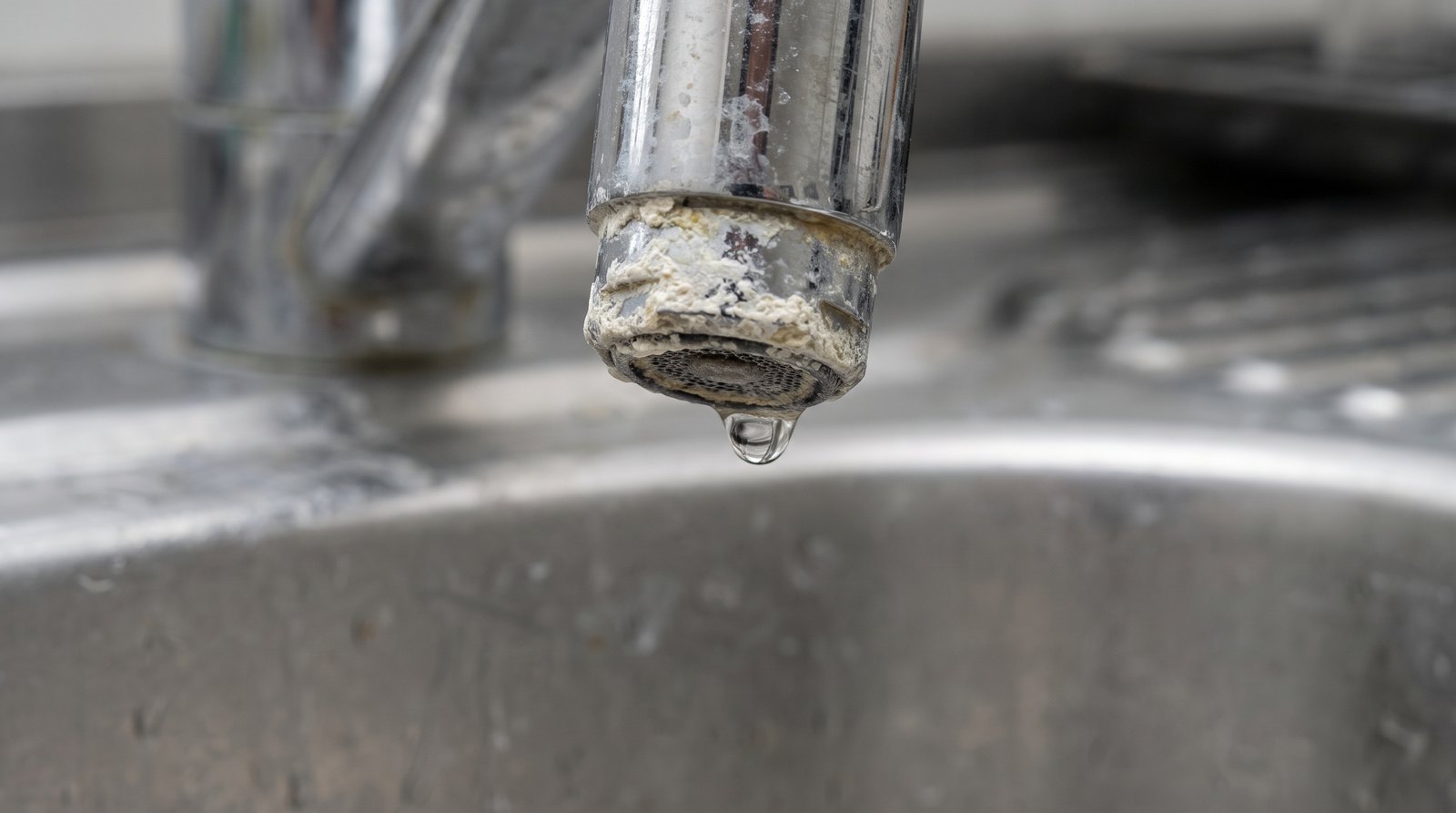
Test the incoming water before buying equipment. A tiny house on already softened municipal water may need nothing, while a home using a hard well supply may benefit considerably. White deposits suggest a problem worth investigating, but a hardness result gives you something useful for choosing and setting a softener.
The USGS hardness classification calls water containing 121 to 180 milligrams per liter of hardness as calcium carbonate hard, and water above 180 very hard. These categories describe the water. They are not universal installation requirements. Ask the utility for current local results or use a suitable hardness test.
A hardness test is also different from a drinking-water safety test. A low hardness reading does not prove that well water is safe. Identify separate concerns before choosing separate treatment.
Quick answer by situation:
- Little hardness and no scale trouble: keep the space and avoid unnecessary equipment.
- Permanent home with hard water: compare compact automatic units and a permanent drain arrangement.
- Frequent moves: consider a portable unit, with a new source-water test at each location.
- Limited stored water or no approved discharge: resolve regeneration logistics before purchasing.
Size capacity from hardness and actual water use
Multiply the hardness in grains per gallon by the gallons you expect to soften each day. That gives an estimated daily hardness load. Then compare the usable capacity at the selected salt setting, the intended regeneration interval and the reserve allowance. A larger advertised grain number does not automatically mean better value.
For an illustrative household using 60 softened gallons daily at 15 grains per gallon, the load is 900 grains each day. Seven days would require 6,300 grains before reserve. These are example inputs, not a national usage estimate. Substitute your own meter readings, household routines and test results.
If your test reports milligrams per liter as calcium carbonate, divide by approximately 17.1 to convert to grains per gallon. Keep the units on your worksheet so that you do not accidentally program a milligram figure as grains.
The On The Go capacity guide illustrates why source hardness matters: its 16,000-grain unit has an estimated capacity of roughly 1,454 gallons at 11 grains per gallon, compared with 275 gallons at 58. Those figures describe capacity between regenerations, not an unlimited daily output.
Ask the supplier to show usable capacity at the proposed salt dose. Report iron and other test results too, because equipment limits and any necessary pretreatment are product-specific. Leave room for guests and laundry days without buying a unit far beyond your normal demand.
Choose between portable and compact automatic units
A portable softener suits someone willing to test output water and regenerate the unit manually. A compact automatic softener suits a permanent installation where a drain and the required power supply are available. Compare the whole routine, including lifting, refilling and winter storage, rather than choosing the smallest tank on display.
For a concrete size reference, the On The Go Double Standard lists a height of 22 inches, diameter of 9.5 inches, weight of 32 pounds and flow rate of 3 gallons per minute. It uses hose connections and does not require electricity. Confirm the exact model and current specifications before ordering.
An automatic cabinet unit packages the resin vessel and salt storage together. That can simplify placement, but its footprint is only part of the space requirement. You still need access to open the lid, add salt, inspect fittings and remove parts for service.
Our tiny house versus RV comparison can help frame the broader choice between a settled home and equipment designed around frequent travel. An RV-style connection alone does not establish that an installation is appropriate for every permanent dwelling.
Budget for salt and regeneration water
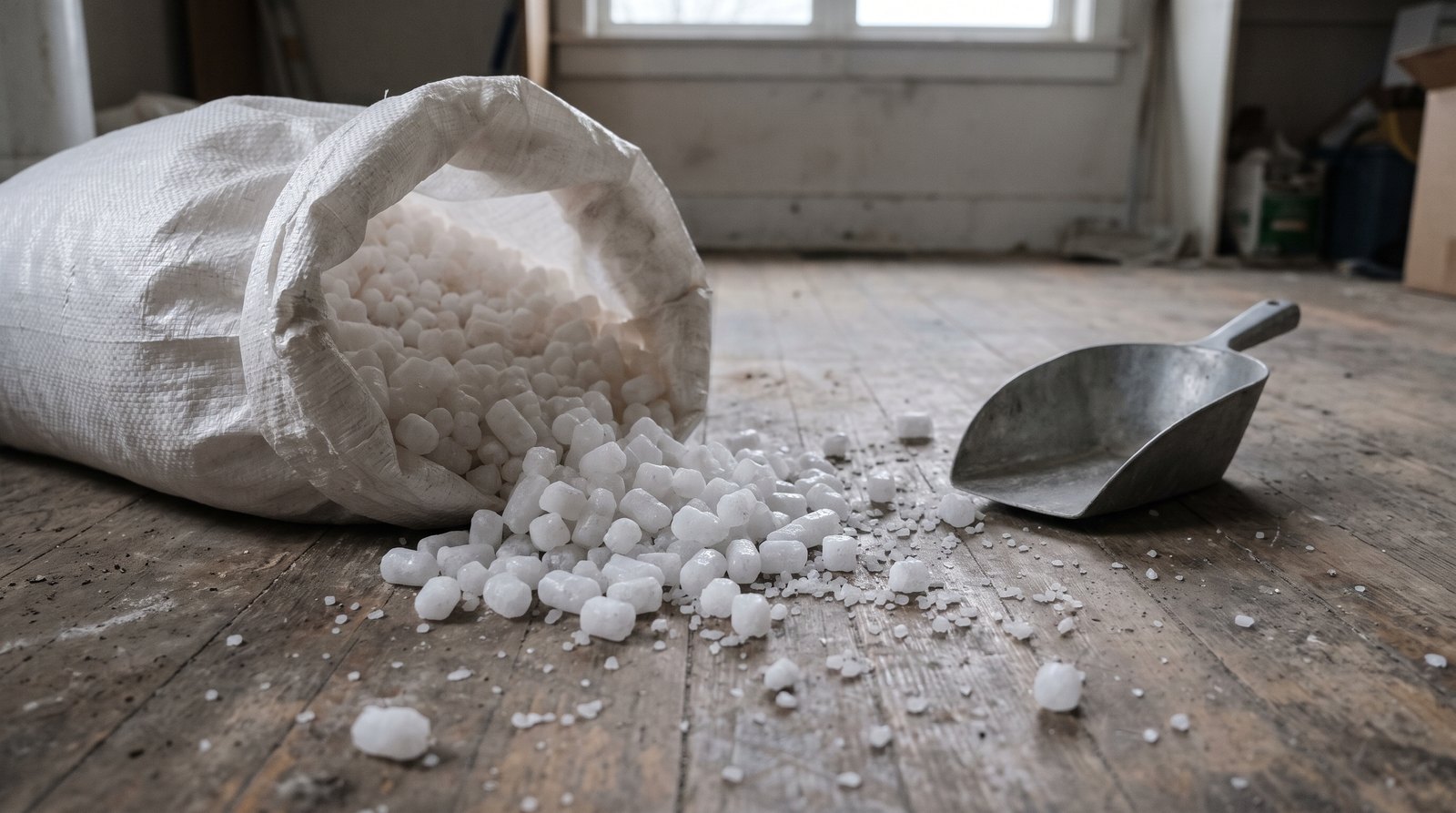
Every salt-regenerated softener needs a plan for replenishing salt and disposing of rinse water. Compare consumption at the settings you will actually use. A compact case does not guarantee a small water bill, and a portable tank still needs regeneration even though it has no automatic controller or separate brine cabinet.
EPA’s May 2026 water-softener guide says a typical softener uses 20 to 70 gallons per regeneration, with variation by design and operating conditions. Treat that as general context, not a specification for a particular portable unit. For an automatic system, demand-initiated regeneration responds to use rather than merely following a calendar.
Follow the exact salt instructions. On The Go’s Double Standard regeneration procedure, for example, specifies two 26-ounce boxes of table salt and separate slow and faster rinse stages. That is a model-specific procedure, not permission to put table salt into any household softener.
For your budget, multiply the documented salt dose by expected cycles per month. Do the same for water. Store the correct salt where it stays clean and dry, with enough room to lift and pour it without dismantling the surrounding furniture.
Resolve the drain, septic and greywater questions first
A softener needs a permitted destination for its regeneration discharge, not simply a hose that reaches outdoors. Check with the local wastewater authority and the installer before buying. For a tiny house using septic treatment or greywater irrigation, ask specifically how salty regeneration water must be handled at that property.
EPA advises checking local restrictions because some jurisdictions limit or prohibit salt-discharging softeners. Its 2026 guide also recommends consulting the septic manufacturer or local service provider about system capacity, warranty and compatibility. A neighbor’s installation does not establish approval for yours.
Keep regeneration discharge separate from an assumed garden-watering plan until that use is specifically assessed. The University of Minnesota Water Resources Center identifies household softening as a source of salt entering wastewater and the environment. Small household size does not make concentrated brine disappear.
A drain connection also needs protection against wastewater backing into the equipment. Whirlpool’s drain guidance specifies an air gap and warns against joining the valve drain and overflow hoses. Its dimensions and routing limits apply to the covered equipment; use your own manual and local requirements. Have the installer show you both discharge paths and demonstrate a complete regeneration without leaks or overflow.
Check service access, pressure and drinking-water routing
Measure the installed space with hoses, fittings and service clearance included. Then check whether the softener can supply your simultaneous fixture demand without excessive pressure loss. Plan which branches receive softened water and how you will bypass the unit for maintenance. These details matter more than squeezing a tank into an unused corner.
A useful mock-up is a cardboard footprint with the lid-opening height marked above it. Open nearby drawers, kneel where connections will sit, and imagine removing the unit. If salt must be poured around an electrical panel or over stored food, choose another location.
Ask for rated service flow and pressure-drop information at that flow. NSF explains that NSF/ANSI 44 testing covers matters including pressure drop, softening capacity, rinse effectiveness, material safety and structural integrity. Verify the exact product listing rather than relying on a generic certification logo.
The Minnesota Department of Health notes that sodium-chloride softening adds sodium and that not every water use needs softening. Discuss an unsoftened cooking and drinking tap if appropriate. A softener is not a universal contaminant-removal device, and hardness certification does not establish that it removes every substance of concern.
Compare the complete installed cost
The complete cost includes the softener, water testing, connection hardware, approved drain work, any electrical work, labor and ongoing supplies. Request an itemized installed quote for your specific tiny house. Equipment prices are useful reference points, but they cannot tell you what a difficult drain route or inaccessible plumbing will cost.
When checked on November 20, 2026, the On The Go product page displayed $192 alongside a $260 reference price for the Double Standard. The WaterBoss 700 page advertised equipment pricing below $700. These are manufacturer price snapshots, not installed quotes or promises that the same offers will remain available.
WaterBoss lists the 700 at 14.75 by 18.75 by 25.75 inches. Compare that cabinet with your measured service space before treating it as a viable alternative. Neither a low purchase price nor a compact footprint compensates for an unsuitable location.
Build your quote checklist around four totals: equipment and delivery; installation and approvals; annual salt and water; and anticipated service. Add freeze-protection work where needed. Ask what the quote excludes and who repairs cabinetry after plumbing changes. This produces a useful total without pretending that one national installation price fits every build.
Maintain the softener and prepare it for travel
Keep a simple record of hardness readings, salt additions and regeneration dates, and inspect accessible fittings for leaks. Follow the manufacturer’s cleaning, storage and winterizing instructions. A softener hidden behind furniture is easily forgotten, so include it in the same routine you use for the rest of the house’s water equipment.
For cold weather, protect the entire installation, including exposed connections. On The Go’s winterizing instructions warn that freezing can damage the tank or internal distribution tube and direct owners to regenerate and drain before storage. Other equipment may require a different procedure. Do not assume that draining a supply hose empties the vessel.
Before towing, follow the equipment instructions for draining, orientation and securing the unit. Account for retained water and stored salt in the loaded house. Our guide to moving a tiny house covers the wider transport planning. On arrival, inspect connections and test the new supply before carrying over old settings.
Frequently asked questions
The right softener depends on the water source and the way your household uses it. These answers address common buying decisions, but the final equipment settings, installation clearances and discharge arrangement must match the actual product and property. Keep the test results and the operating manual together for future reference.
What size water softener does a tiny house need?
Size it from measured hardness and daily softened-water use, then allow for the intended regeneration interval and a reserve. Floor area alone is not useful. Two homes of equal size can need different capacities because their water sources, laundry habits and number of occupants differ.
Can I use a portable RV water softener?
Possibly, if its flow rating, pressure limits and connections suit your installation. You must also be able to perform its manual regeneration and use an approved discharge location. Check with the manufacturer before treating a portable unit as a permanent whole-house solution, especially where freezing or unattended operation is likely.
Will a salt-free conditioner remove hardness?
A scale-control conditioner is not automatically equivalent to an ion-exchange softener. Ask exactly what it reduces and which independent performance claims support that result. If your goal is a lower measured hardness reading, require evidence for hardness removal rather than assuming every product marketed for hard water delivers the same treatment.
Can the regeneration drain empty into my greywater garden?
Do not assume so. Regeneration discharge contains salts, and its permitted destination depends on local wastewater requirements and the design of your system. Obtain an explicit answer from the relevant authority and installer. Approval for ordinary shower or laundry greywater does not establish approval for a softener’s concentrated discharge.
Does installing a softener eliminate water-heater maintenance?
No. Continue the water-heater manufacturer’s inspection, flushing or descaling schedule as applicable, and follow its water-quality requirements. A softener addresses hardness in incoming water; it does not establish that existing deposits are gone or that every cause of heater trouble has been corrected. Keep both appliances on your maintenance checklist.