People leave tiny house living when the home no longer fits their relationships, work, health, budget, or parking situation. Limited privacy and changing family needs can matter more than floor area. Before buying, test an ordinary week in a similar house, confirm a dependable place to live, and price an exit.
Table of Contents
Quick answer by situation
The right response depends on what is making the house difficult to live in. Some problems improve with a different layout or parking location. Others require a larger home. Start with the recurring problem in your own household, then decide whether a practical change can remove it at an acceptable cost.
- You need quiet: Test separate sleeping and working areas before paying for more storage.
- Your family is growing: Map daily routines and future privacy needs, including schoolwork and bedtime.
- Your parking is uncertain: Confirm permission, occupancy requirements, lease terms, and a backup location.
- The house feels damp: Investigate moisture sources and ventilation instead of treating condensation as normal.
- Your costs keep rising: Compare the complete monthly bill with a suitable small apartment or house.
- Access is becoming difficult: Assess steps, sleeping arrangements, bathroom space, and nearby services.
Privacy can become the deciding factor
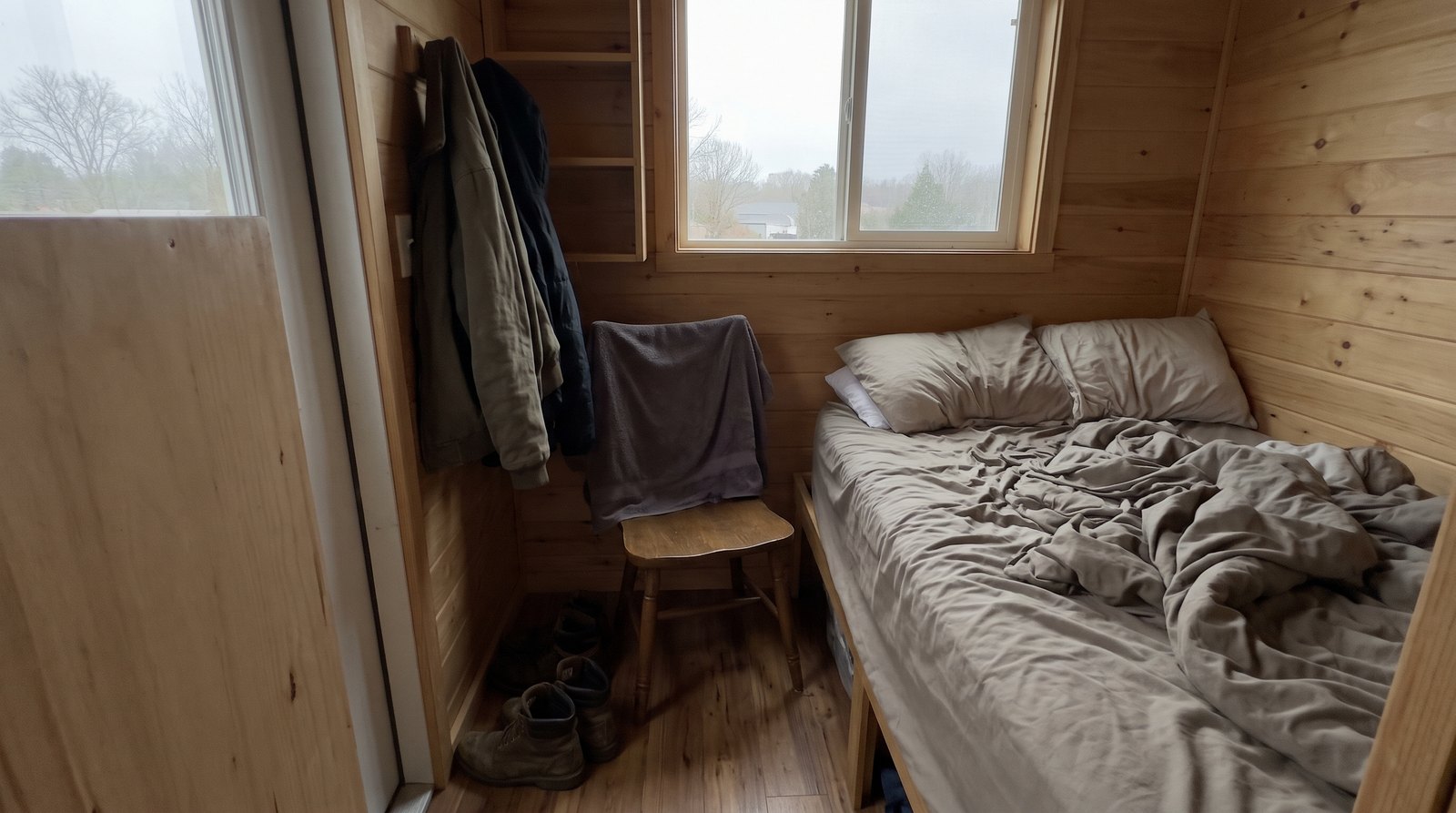
A small home becomes harder to share when one person cannot rest, work, or spend time alone without disrupting someone else. An open loft, curtain, or pair of headphones may provide limited separation. The useful question is whether both residents can control when they interact during an ordinary day at home.
A September 2026 review in Collabra: Psychology discusses privacy and perceived crowding as important considerations in small dwellings. It also distinguishes exploratory tiny-house evidence from broader housing research and theoretical explanations. It does not provide a national percentage of tiny-house owners who quit, and this article does not invent one.
Translate that issue into specific tests. Can one partner take a confidential work call while the other makes lunch? Can an early riser use the bathroom without waking a light sleeper? Is there anywhere to cool down after an argument without leaving the property?
Agree on quiet periods, guest visits, and private storage before moving. A door and a usable second area may help, but sound still travels through lightweight partitions. If your solution depends on one person spending every evening outside, consider what happens during bad weather or illness.
Families and work can outgrow the original plan
A layout that suits two adults on different schedules may stop working after a baby arrives, a child needs a separate study area, or both adults begin working from home. Extra possessions are only part of the issue. Several people may need the same quiet surface or room at the same time.
Sketch a normal weekday rather than an ideal weekend. Include school bags, meal preparation, work equipment, laundry, bedtime, and visits from relatives. Record where each activity happens and which activities overlap. A dining table that becomes a desk is useful until someone needs to eat during a meeting.
Do the same exercise for the next few years. A sleeping nook that works for a young child may offer little privacy later. A temporary guest bed may be inadequate if a relative needs an extended stay. Avoid assuming that every future problem can be solved with another foldaway fixture.
Life changes can also make leaving a positive decision. A tiny home may have supported a period of saving, travel, or independent living. Moving when that phase ends does not erase its value. The relevant test is whether the next home serves the people who will actually live there.
Parking security matters as much as the house
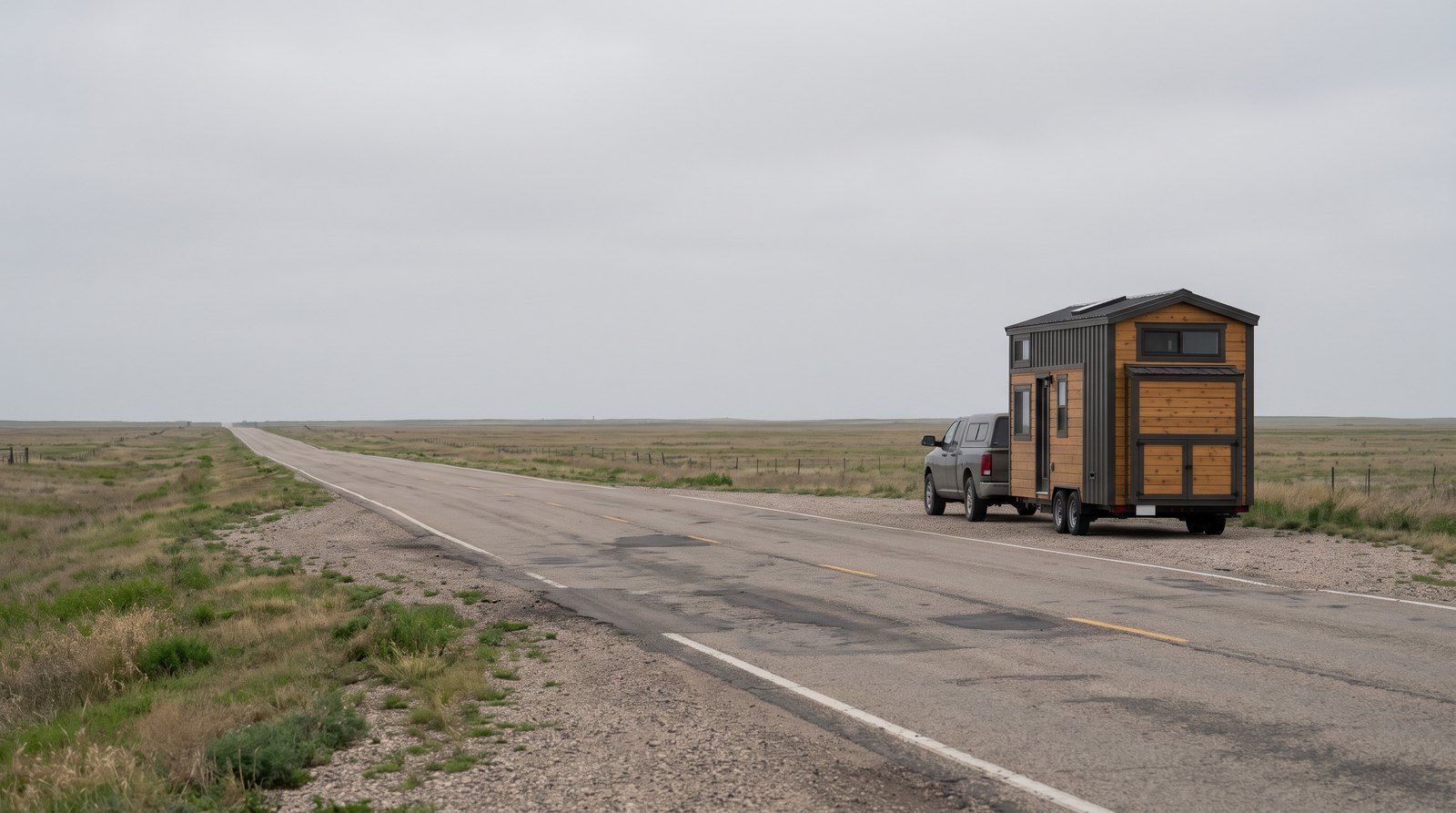
A tiny house on wheels still needs a dependable place to stay, access to necessary services, and permission for the intended use. Losing a site can turn a comfortable home into an urgent moving problem. Before buying, establish how long you can remain and what happens if the arrangement ends unexpectedly.
Ask the city or county about the specific property, house type, and proposed occupancy. Then confirm the landowner’s terms separately. A friendly invitation, a vehicle registration, or a listing that calls a property tiny-house friendly does not answer every occupancy question. Requirements vary, so obtain property-specific answers before committing money.
For a rented site, ask for written terms covering utilities, access, guests, maintenance responsibilities, renewal, and ending the arrangement. Have unclear or consequential terms reviewed locally. Check whether the route onto the lot remains accessible after rain and whether a professional hauler can remove the house later.
Keep a backup plan with actual contacts, availability, and transport estimates. Our guide to moving a tiny house explains the items to discuss with a hauler. Obtain a current quote for your own dimensions, weight, route, and site access. Wheels do not make relocation instant.
The full budget can disappoint
Tiny living saves money only when the complete arrangement costs less than your alternatives. A manageable purchase price can be offset by site rent, financing, utility connections, transportation, insurance, storage, and repairs. Build a budget around the house and location you are considering, with room for irregular expenses and a future move.
Separate startup spending from recurring bills. Startup spending might include delivery, site preparation, steps, connections, and furnishings. Recurring bills include housing payments, site charges, utilities, internet, insurance, and maintenance. Add costs created by the location, such as a longer commute or paid access to a workspace.
Use written quotes where possible. Review our tiny house insurance guide to prepare questions, then ask an insurer about the actual construction, occupancy, address, and transport arrangements. Do not assume coverage for a parked home automatically answers every question about a move.
Resale belongs in the decision too. Asking prices alone do not establish what your house will sell for or how long finding a buyer will take. Ask local sellers or brokers about comparable completed sales, and estimate loan payoff, selling expenses, transport responsibilities, and the cost of maintaining the home while it is listed.
Climate and maintenance can wear people down
A tiny home can become frustrating when comfort depends on daily work the owner did not expect. Condensation, uncomfortable sleeping areas, wet entryways, and difficult service access all affect everyday life. Evaluate the house in the weather you will actually experience, and ask how its systems perform when everyone remains indoors.
The EPA’s mold and moisture guidance recommends keeping relative humidity below 60 percent, ideally between 30 and 50 percent when possible. It emphasizes fixing the moisture problem as part of mold control. Repeated window condensation deserves investigation rather than being accepted as a feature of small homes.
During a visit, inspect accessible areas around windows, beneath sinks, and behind furniture for signs of moisture. Ask about ventilation, leaks, heating and cooling service, and repair records. A qualified inspector can help identify problems that a short walk-through misses.
For longer-term planning, use our guide to tiny house lifespan and maintenance as a starting checklist. Ask how filters, appliances, plumbing connections, and trailer components can be reached for service. An attractive built-in cabinet loses some appeal if removing it is necessary for a routine repair.
Health, mobility, and location needs change
A tiny house should support the way you move through daily life, including periods when climbing, bending, or carrying things becomes difficult. Loft access, narrow circulation, and entry steps deserve attention before purchase. The surrounding location also matters if you need reliable transportation, nearby care, or regular help from family members.
Walk through the route from the parking space to the bed and bathroom. Consider groceries, wet shoes, laundry, and nighttime trips. Assess usable clearances with the equipment you actually need, and get appropriate professional advice for accessibility changes. Floor area alone says little about whether a particular layout works for you.
Think about temporary limitations as well as permanent ones. Where would you sleep if the loft became unusable for several weeks? Could someone help you inside without moving half the furniture? A ground-level sleeping area may address one issue while leaving an awkward entrance or bathroom unchanged.
Location can outweigh the interior. In a March 2026 first-person account published by Business Insider and carried by AOL, Sidra Gifford described plans to sell her Netherlands tiny home while seeking another tiny house elsewhere. Her account linked the move to location-related difficulties, including language and healthcare, rather than rejecting small-home living itself.
Test an ordinary week before buying
A useful trial recreates your daily responsibilities in a house with similar dimensions and facilities. Book a short rental if possible, bring normal work and household supplies, and spend meaningful time indoors. A pleasant vacation shows that a tiny house can be enjoyable; it provides less evidence about whether your routines fit.
- Match the layout: Choose similar sleeping arrangements, bathroom access, storage, and kitchen facilities.
- Cook and clean: Prepare ordinary meals, put supplies away, and manage the dishes afterward.
- Work normally: Test seating, equipment space, connection quality, and simultaneous calls.
- Stay inside: Include an evening when everyone remains home instead of relying on outdoor activities.
- Record friction: Note every repeated move of furniture, bag, shoe, or appliance.
- Compare separately: Have each resident list what worked and what became tiring before discussing the results.
Also tape the proposed room dimensions onto your current floor and place your essential belongings within them. This cannot reproduce the full experience, but it exposes unrealistic furniture and circulation assumptions. Measure storage openings, not just cabinet exteriors, and include the things normally hidden in a garage or spare room.
Set clear decision points before paying a deposit. Examples include a workable private-call arrangement, a suitable sleeping route, verified parking, and a complete budget. If the trial reveals an unresolved daily problem, change the proposed house or delay the purchase. Treat that information as useful progress.
Plan a reasonable exit from the beginning
Leaving becomes easier when you have records, cash reserves, and a realistic alternative. Keep build documents, service history, ownership paperwork, and current measurements together. Review your housing plan periodically, particularly after a job change or family change, so the decision to move can be deliberate instead of being driven by a deadline.
Identify the problem precisely before spending on a solution. If parking is the issue, a different site might preserve the home you enjoy. If two people need separate quiet rooms every day, another organizer probably will not resolve it. Compare a feasible repair or relocation with the full cost of moving on.
Give yourself permission to choose a modest apartment, a slightly larger house, or a different tiny-home layout. Avoid tying a major housing decision to proving that an earlier purchase was correct. Keep the parts of simple living that help you, while choosing enough space and stability for your present needs.
Frequently asked questions
Decisions about staying or leaving depend on household needs, the particular house, and the security of its location. These answers focus on checks you can make before committing to a purchase or major change. Use them alongside a realistic trial stay and quotes for the actual property and services involved.
Why do people stop living in tiny houses?
Reasons include limited privacy, changing family needs, work requirements, uncertain parking, uncomfortable conditions, and costs that exceed expectations. Some residents also move because the home served its original purpose. A move does not necessarily mean tiny living failed; the next stage of life may require a different arrangement.
Do most tiny house owners regret buying?
The sources reviewed here do not establish a reliable national regret rate. Individual stories show different outcomes, and online discussions do not represent every owner. Evaluate your own likely experience through a comparable rental, a complete budget, an inspection, and confirmed parking instead of relying on an unsupported percentage.
Can couples live comfortably in a tiny house?
Couples can find a workable arrangement when their routines, privacy preferences, and layout fit together. Test simultaneous activities, including calls, meals, sleep, and time alone. Agree on boundaries before moving, and do not assume affection will eliminate practical problems caused by incompatible schedules or a lack of separate space.
How long should I try a tiny house before buying?
Try enough ordinary days to include work, cooking, cleaning, and shared downtime. A week is a practical starting point rather than a guarantee. If possible, repeat the test in less comfortable weather and a comparable layout. Record recurring problems instead of judging the experience only by its best moments.
Should I sell or improve my tiny house?
Start by naming the problem and pricing a specific remedy. A different site or accessible sleeping area may solve one issue, while a persistent need for separate rooms may remain. Compare improvement costs, relocation costs, likely sale proceeds, and replacement housing before deciding which option best supports your daily life.