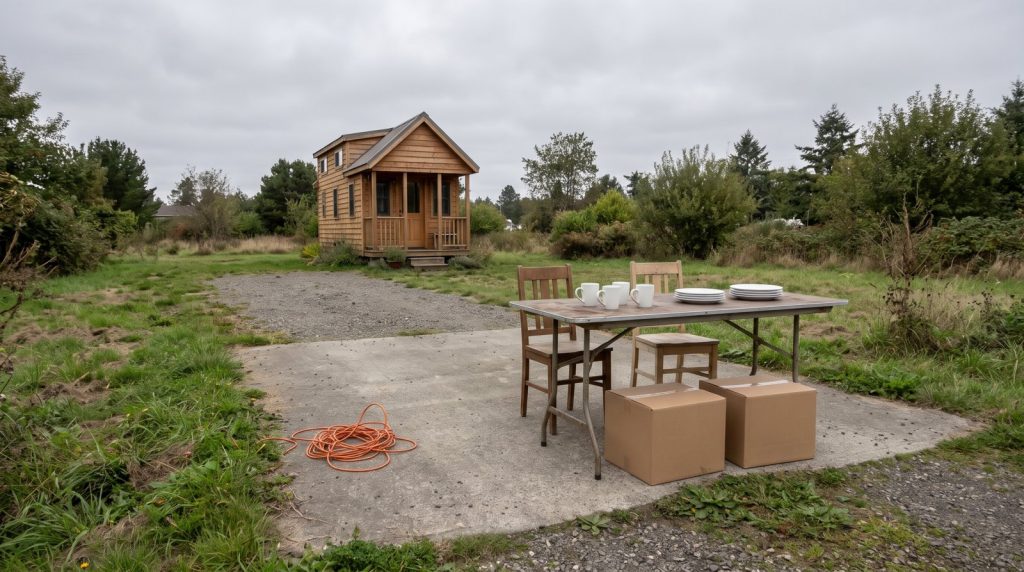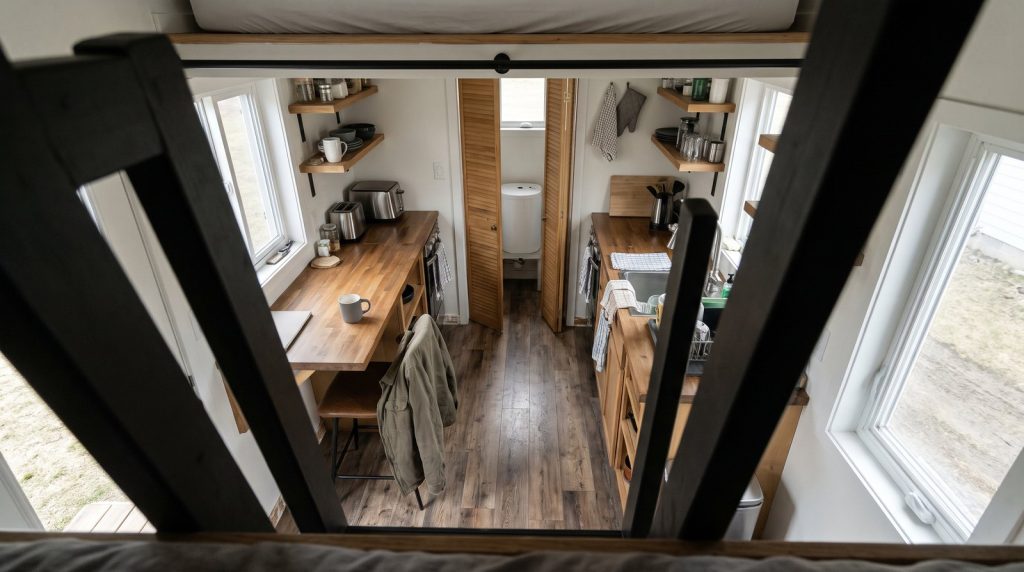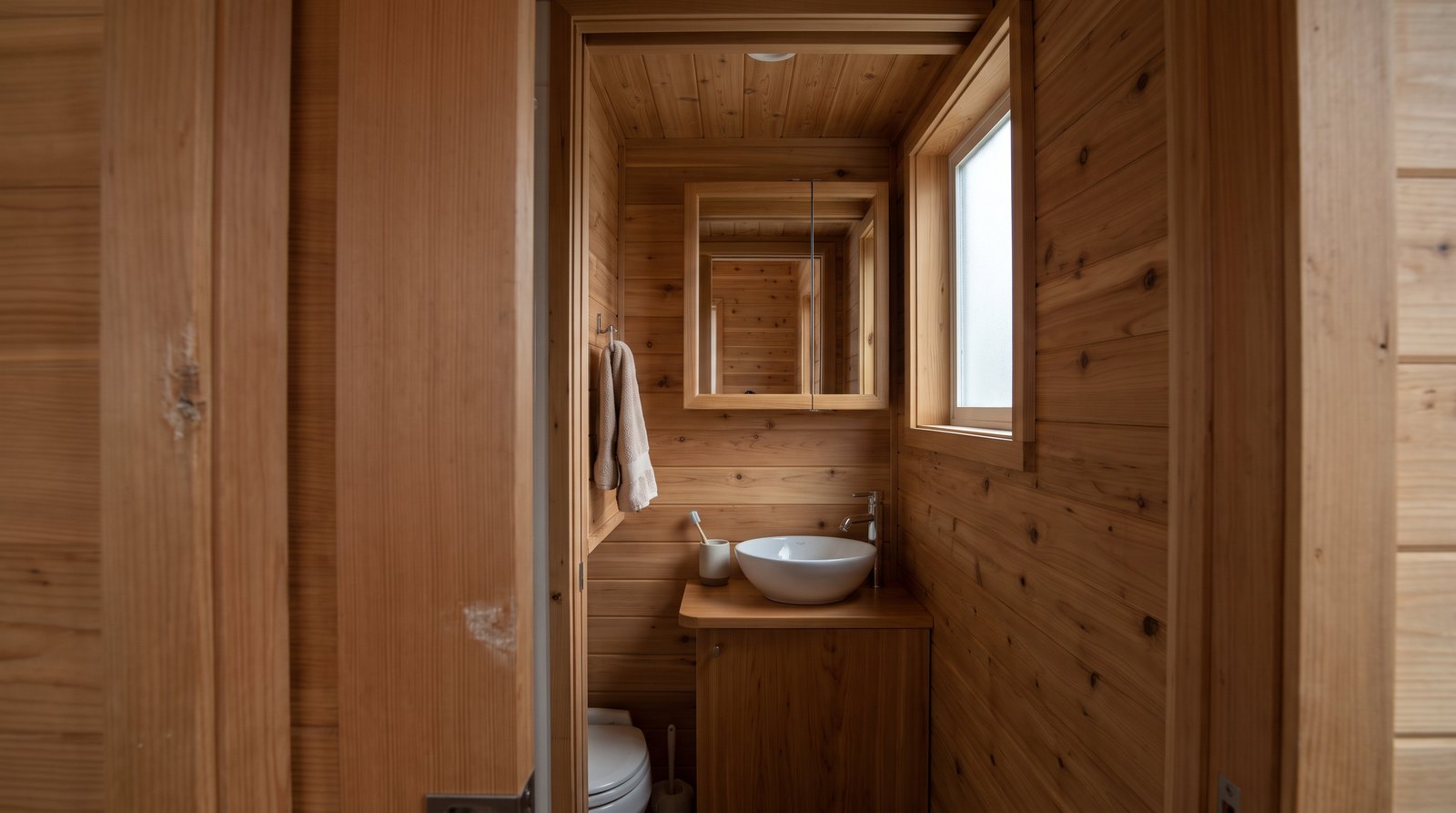
Choose tiny house bathroom mirrors and medicine cabinets by usable sightline, wall support, and door clearance before appearance. A flat mirror suits the tightest rooms; a shallow surface cabinet adds storage without opening the wall. Recess a cabinet only after confirming the cavity, utilities, framing, and moisture details can accommodate it.
Table of Contents
Quick answer by situation
The best option depends on what your bathroom lacks: walking space, everyday storage, or a comfortable view of your face. Start with the simplest product that solves that problem. A large cabinet that crowds the faucet or blocks the doorway can make a small bathroom harder to use.
- The sink is beside the entrance: favor a flat mirror or very shallow cabinet, then test the door swing.
- Toiletries cover the counter: measure those items and choose shelves that actually hold them.
- The wall contains plumbing: consider surface mounting instead of paying to relocate services.
- You are still designing the house: coordinate cabinet blocking and any recess with the builder before the wall closes.
- The house travels: confirm mounting suitability, secure the door, and pack loose or fragile contents separately.
- Children share the bathroom: provide a usable mirror while keeping medicines and sharp items securely elsewhere.
Separate needs from habits. If you already store toiletries in a drawer, a mirrored cabinet may add weight and an awkward moving door without improving your routine. Conversely, a shallow cabinet can free the only dry spot beside a small basin.
Measure sightlines, shelf depth, and moving doors
Measure the usable mirror area and the cabinet with its door open, not just the advertised outside width. Check the shortest and tallest regular users at the sink. Include the faucet, light fixture, nearby wall, and bathroom door in your layout so the installation works during ordinary daily movements.
Tape a paper outline to the wall. Stand where you normally brush your teeth and wash your face. Check whether the frame cuts across your eyes, whether leaning toward the mirror puts your forehead near a cabinet corner, and whether a seated user can see comfortably. Adjust before drilling.
Make a cardboard side profile to represent cabinet depth. Hold it in position and open nearby doors. A pocket door needs its sliding cavity kept clear; it is not an empty bay available for cabinet screws or a recess. Ask the builder where mounting is possible.
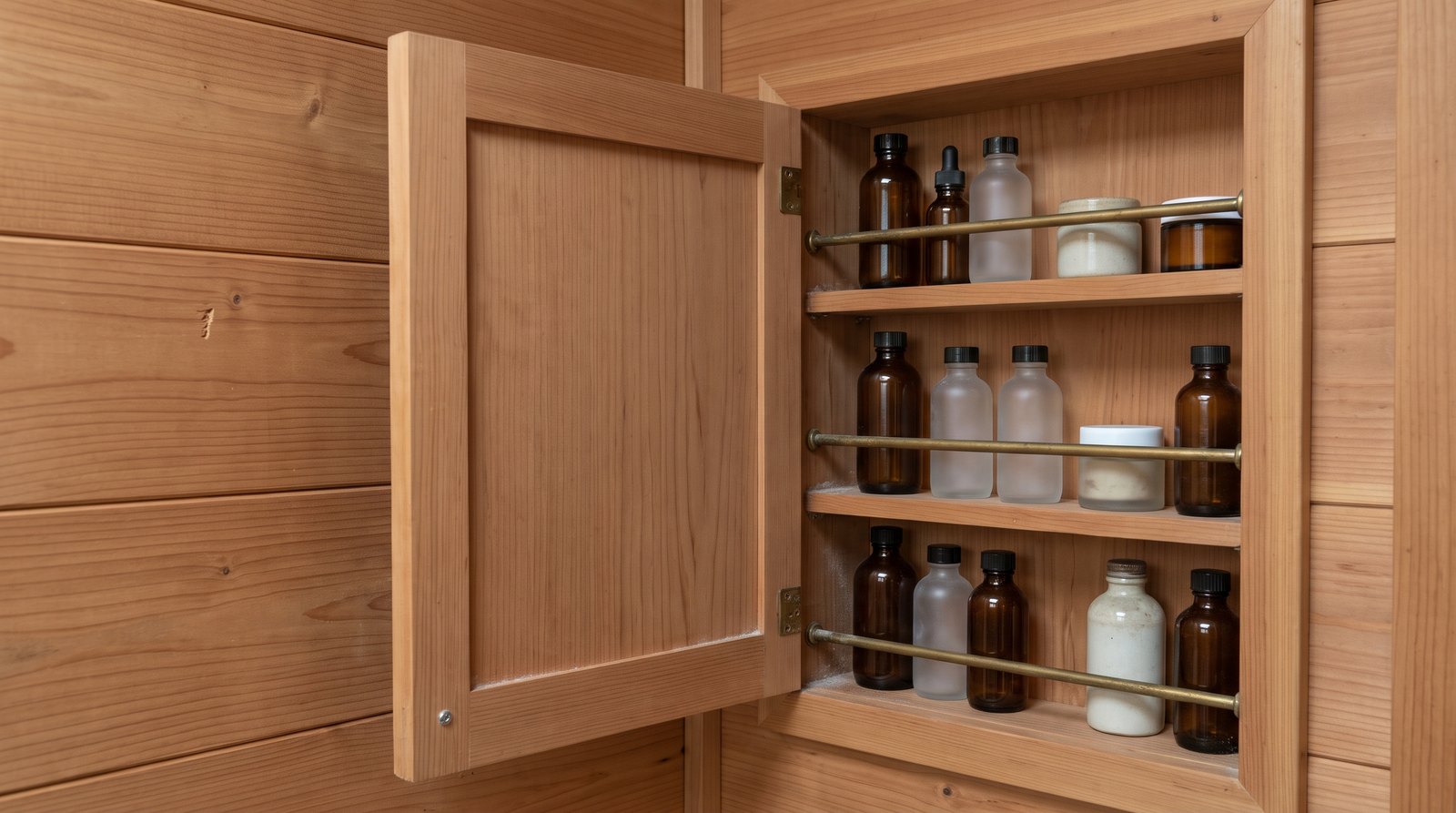
Measure internal shelf depth separately from total cabinet depth. Hinges, door thickness, and shelf supports consume space. Set your largest daily container beside a ruler, including its cap or pump. Leave enough room to lift it out without knocking neighboring items into the sink.
Choose surface mounting or a planned recess
A surface-mounted cabinet is often the simpler retrofit because its storage stays outside the wall. A recessed cabinet saves projection into the room, but requires a suitable opening and supporting construction. Choose between them after checking the wall assembly, rather than assuming every stud bay can accept a cabinet.
One current example shows why exact specifications matter. The Kohler K-11808 specification sheet, dated November 2026, lists a recess cutout 14-1/4 inches wide, 25-1/4 inches high, and 3-11/16 inches deep. The advertised cabinet size alone does not describe that opening.
The same sheet requires framing for recessed installation and calls for professional advice when drain piping, vent piping, or a load-bearing wall is involved. Its clearance requirements belong to that product. Use the instructions supplied with your exact model instead of borrowing dimensions from a similar-looking cabinet.
An exterior-wall recess also changes the space available for insulation and air sealing. Have the designer resolve that assembly before choosing the cabinet. In a completed house, a modest surface cabinet can be a more sensible purchase than opening a wall to recover a few inches.
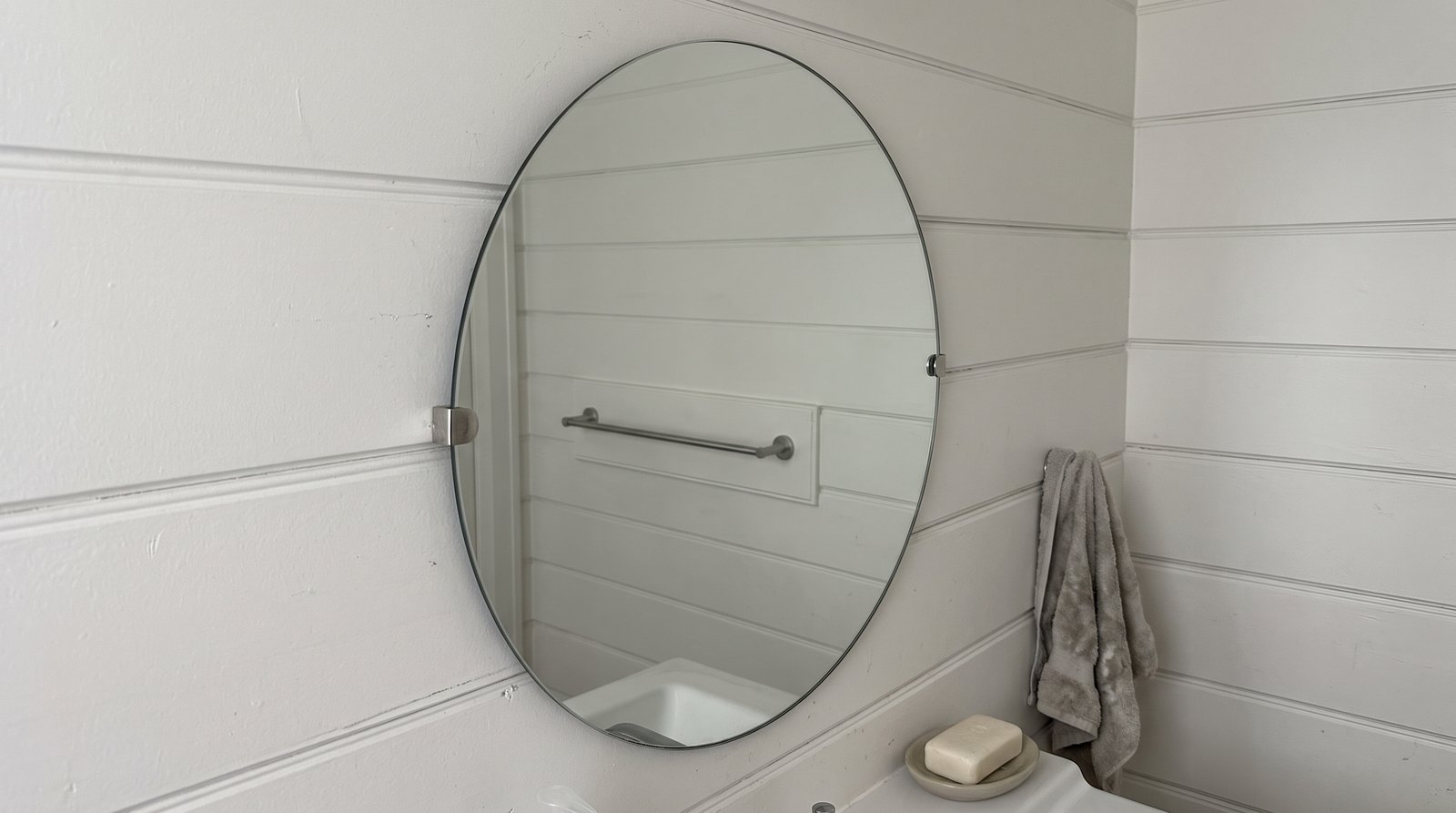
Mount the mirror and cabinet to verified support
Secure mounting starts with knowing what is behind the finish and using hardware approved for the product and wall construction. Thin paneling, decorative boards, and tile do not automatically provide sufficient support. Plan for the loaded cabinet and opening door, and confirm hidden utilities before any drilling or cutting.
Find the builder drawings, construction photographs, or blocking schedule if available. A stud finder is useful information, but do not treat a single reading as proof that a drilling location is clear. Plumbing and wiring may run near the sink, light, and outlet.
Have uncertain conditions checked by a qualified installer. Do not cut a stud, notch framing, or relocate electrical work simply to center the mirror. Local requirements and permit needs vary, so confirm the proposed work with the appropriate city or county office when alterations require it.
For a mirror, follow its specified clip arrangement, mounting rail, or adhesive system. A photograph of clips is not an installation diagram. Confirm whether the manufacturer requires additional concealed support. Do not substitute general-purpose adhesive or tighten hardware against glass beyond the product instructions.
Photograph the completed mounting locations and keep the installation sheet. Those records make replacement easier and support the maintenance habits discussed in our guide to how long tiny houses last.
Control moisture and avoid harsh reflected light
Choose bathroom-suitable materials and manage moisture around the cabinet instead of expecting a closed door to keep everything dry. Test the mirror under the lighting you actually use. A practical setup lets you see your face clearly without a bright lamp, window, or exposed bulb dominating the reflection.
Check raw edges, shelf holes, backing, and hardware when comparing products. Ask how those surfaces should be cleaned and whether the warranty covers the intended location. Keep the cabinet outside direct shower spray unless the manufacturer expressly approves that exposure.
The EPA moisture guide recommends indoor relative humidity below 60 percent, ideally 30 to 50 percent when possible. It also recommends using the bathroom fan or opening a window while showering. A small humidity meter can help you notice persistent dampness rather than guessing from mirror fog alone.
Before buying an illuminated cabinet, compare its service access and replacement parts with a plain mirror and separate light. Check glare at normal standing and seated positions. Have the electrical connection and suitability for its bathroom location reviewed by a qualified electrician; a convenient nearby outlet does not settle those questions.
Use the cabinet for the right contents
Organize a tiny bathroom cabinet around items that tolerate its conditions and are used there every day. Keep the arrangement shallow enough to inspect at a glance. Despite its name, a medicine cabinet in a steamy bathroom is not automatically an appropriate place for prescription drugs, vitamins, or other medicines.
MedlinePlus medicine-storage guidance, reviewed in 2026, explains that bathroom heat and moisture can damage medicines. Follow each medicine label and ask the pharmacist about suitable storage. Keep medicines in their original containers rather than transferring them into attractive unmarked jars.
For children, the CDC recommends keeping medicines and supplements out of reach and sight. A high shelf alone deserves a careful reality check in a room with a climbable toilet or stool. Use suitable secure storage and keep razors and other sharp items inaccessible.
Group ordinary toiletries in a few small, removable containers. Leave room to wipe the shelves and spot leaks. Reserve another location for bulky refills. If a bottle must lie on its side to fit, choose a different shelf arrangement instead of trusting the cap indefinitely.
Prepare a tiny house on wheels for travel
A cabinet that works while the house is parked still needs a transport plan. Confirm with the builder and product manufacturer whether the mounting, mirror, hinges, and latch suit a moving structure. Before towing, remove loose contents and check the installation rather than relying on a door that merely stays shut at rest.
Soft-close hinges slow movement; do not assume they are travel restraints. Ask about a positive latch and any additional retention appropriate to the cabinet. Likewise, a shelf rail may prevent a bottle from sliding forward without preventing it from bouncing upward.
Pack glass containers and removable shelves according to their instructions. Keep heavy items low in suitable secured storage, and include cabinet weight and contents in the overall loading plan. Confirm that any mirror backing or protective treatment is appropriate for the actual product rather than assuming all mirrors behave alike when broken.
After a move, inspect the frame, fasteners, hinges, and glass before returning the contents. Stop using damaged parts until repaired. Include this work in the broader checklist behind planning the cost of moving a tiny house, especially when professional packing or repairs are needed.
Budget for installation and future replacement
Compare the full installed cost, not just the cabinet price. Include mounting hardware, wall preparation, finishing, electrical work when needed, and future access to parts. A less expensive cabinet can become the costly option if fitting it requires moving a pipe or rebuilding a finished wall around an unusual opening.
As a price reference checked for this guide, Kohler lists its CB-CLC1526FS 15-by-26-inch cabinet at $219. That is a product example, not a tiny-house installation estimate. Prices, taxes, shipping, and availability can change; obtain a current quote before ordering.
Request separate costs for the cabinet, installation, and any exploratory or repair work. Compare a flat mirror with existing drawer storage against a surface cabinet and a recessed installation. Include return shipping and restocking terms if the product cannot be checked locally.
Keep the model number, hinge information, and opening measurements. Follow the specific cleaning instructions, apply approved cleaner to a cloth when directed, and dry wet edges. Investigate swelling, loose hinges, or recurring moisture promptly. Before replacement, measure again: an identical advertised size does not guarantee identical mounting holes or recess dimensions.
Frequently asked questions
These answers cover common buying and installation decisions, but the final choice still depends on your room and exact product. Keep measurements, mounting instructions, and builder information together. That makes it easier to compare options, obtain a useful installation quote, and avoid discovering a clearance problem after delivery.
What size mirror works in a tiny house bathroom?
Choose a size that gives every regular user a clear view without crowding lighting, door trim, or adjacent walls. Tape the outline up and test it at the sink. Advertised width is only a starting point; frame thickness and mounting height affect how much useful reflection remains.
Is a recessed medicine cabinet always better?
No. Recessing reduces projection into the room, but only helps if the wall can accommodate the cabinet safely. Hidden utilities, structural framing, and exterior-wall insulation can make the work complicated. A shallow surface-mounted cabinet may provide useful storage with less disruption in an already finished tiny house bathroom.
Can I keep medicines in the bathroom cabinet?
Do not assume the bathroom is suitable simply because the product is called a medicine cabinet. Heat and moisture can damage medicines. Follow their storage labels, retain original containers, and ask your pharmacist about the conditions in your house. Choose secure storage outside the bathroom when those conditions require it.
How do I secure a mirrored cabinet before towing?
Confirm the installation and travel requirements with the builder and cabinet manufacturer. Remove loose or fragile contents, use appropriate door retention, and follow instructions for removable shelves. Do not treat soft-close hinges as a latch. After towing, inspect the mirror, fasteners, frame, and hinges before loading the cabinet again.
Should I buy an illuminated mirror or separate lighting?
Either can work if the lighting is comfortable and the installation suits the bathroom. Compare glare, electrical requirements, repair access, and replacement-part availability. A separate fixture lets you replace the light independently, while an illuminated mirror combines functions. Test the viewing position before committing to either arrangement in your room.