Downsizing to a tiny house works best when you choose belongings around the home you will actually occupy. Measure its usable storage, keep what supports everyday routines, and give everything a specific place. Sell or donate the surplus before moving, while protecting essential documents, meaningful keepsakes, and any trailer weight allowance.
Table of Contents
Start with the house, not a percentage to discard
There is no useful universal rule that you must get rid of a certain percentage of your possessions. A tiny house with generous drawers holds different belongings than one dominated by a sleeping loft. Start with measured spaces, door openings, and daily activities, then decide what earns room in that particular layout.
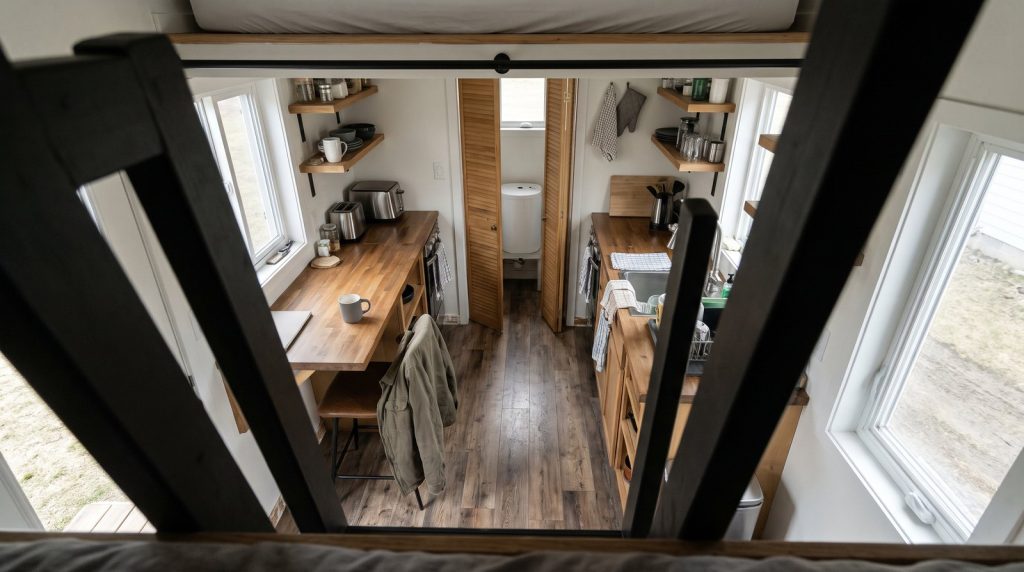
Ask for inside cabinet dimensions, hanging-rail length, under-bed clearance, and the size of the entry door. Exterior dimensions and advertised floor area do not tell you whether a vacuum, winter coat, or favorite pan fits. Account for hinges, plumbing, and the space needed to lift an item out.
Make a simple storage map on paper. Assign kitchenware, clothes, cleaning supplies, paperwork, hobbies, and outdoor gear to actual locations. Leave breathing room so you can remove one thing without dismantling a stack. An empty corner is also useful for moving around.
Keep service panels, exits, windows used for escape, and appliance clearances accessible. Storage that blocks maintenance creates work later. Our guide to how long tiny houses last explains why caring for the building remains part of tiny living.
Sort one room at a time, then compare duplicates
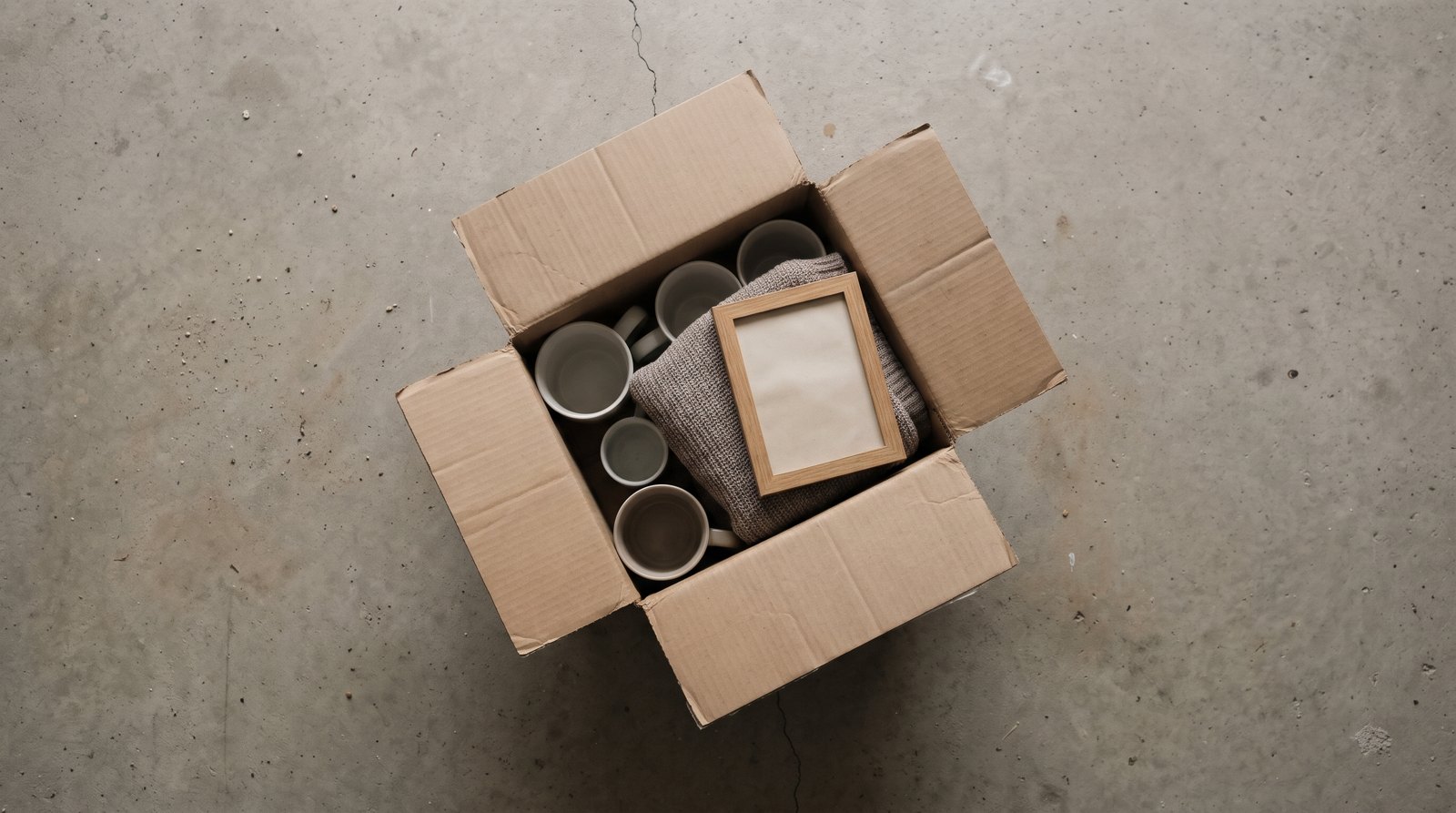
Use four destinations for each room: keep, sell, donate, and recycle or dispose of properly. Finish a manageable area before opening another. Once you have sorted the rooms, compare similar items together, because duplicate scissors, chargers, towels, and cooking tools often hide in different parts of a larger home.
In the kitchen, start with meals you actually cook. Keep the pan that handles your usual dinner, enough dishes for your household, and utensils you use regularly. Test whether nesting cookware works with the new stove and sink. A smaller gadget is not helpful if it replaces nothing.
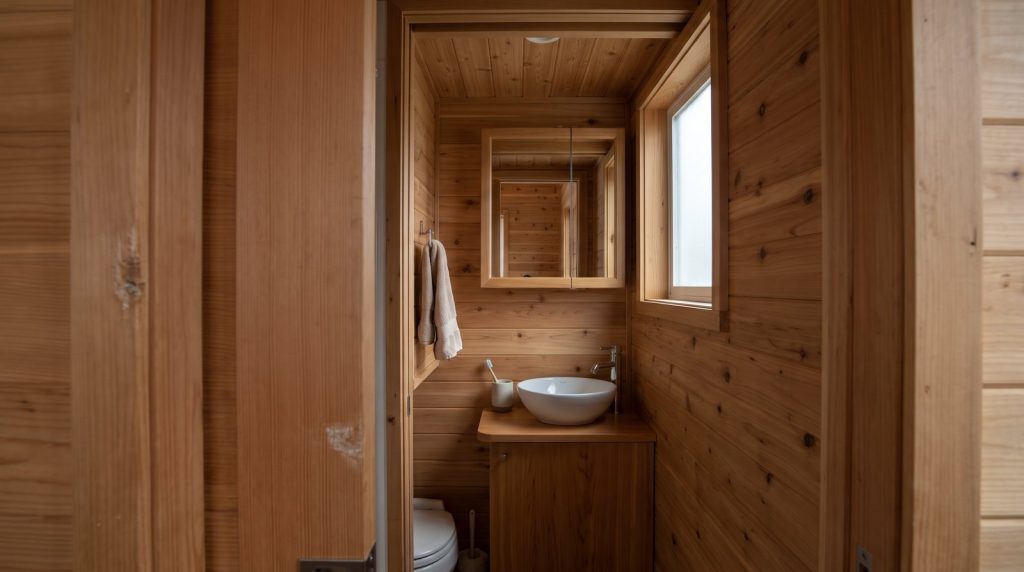
In the bathroom, separate daily supplies from unopened duplicates. Use existing toiletries before buying more. Plan somewhere for damp towels to dry, not just somewhere to fold them. Keep necessary personal-care items easy to reach rather than tucked behind a toilet or under a crowded sink.
In the living area, check furniture against both the floor plan and its moving route. A chair may fit its final spot but fail at a narrow doorway. Books, instruments, sewing supplies, and games should compete for space according to your actual interests, not an imagined minimalist lifestyle.
In the garage or shed, distinguish household maintenance tools from equipment tied to the property you are leaving. Keep what you can safely store and expect to use. Do not assume a future porch, shed, or storage box is allowed until the property owner and relevant local rules confirm it.
Quick answer by situation
Your downsizing priorities should follow how you live, who shares the home, and whether it travels. Start with the routines that would become difficult if you removed the wrong things. These situations offer a practical first filter, but the final keep list still needs to fit your measured storage and budget.
- Living alone: Keep a complete daily setup and a modest guest allowance that fits your space.
- Moving with a partner: Agree on shared items together and give each person protected personal storage.
- Working from home: Reserve room for the equipment, chair, and documents that support your income.
- Living with children: Keep current essentials accessible and set a realistic rotation space for toys and clothing.
- Moving the house regularly: Evaluate weight, secure storage, and travel preparation before adding belongings.
- Keeping a serious hobby: Allocate its space deliberately, then simplify less important categories.
Try a temporary daily-use kit in your current home. Cook, dress, clean, and work from that selection for a week or two. Keep a note of what you retrieve from storage. A rarely used emergency item deserves a different judgment from a second waffle maker.
Build clothing storage around laundry and seasons
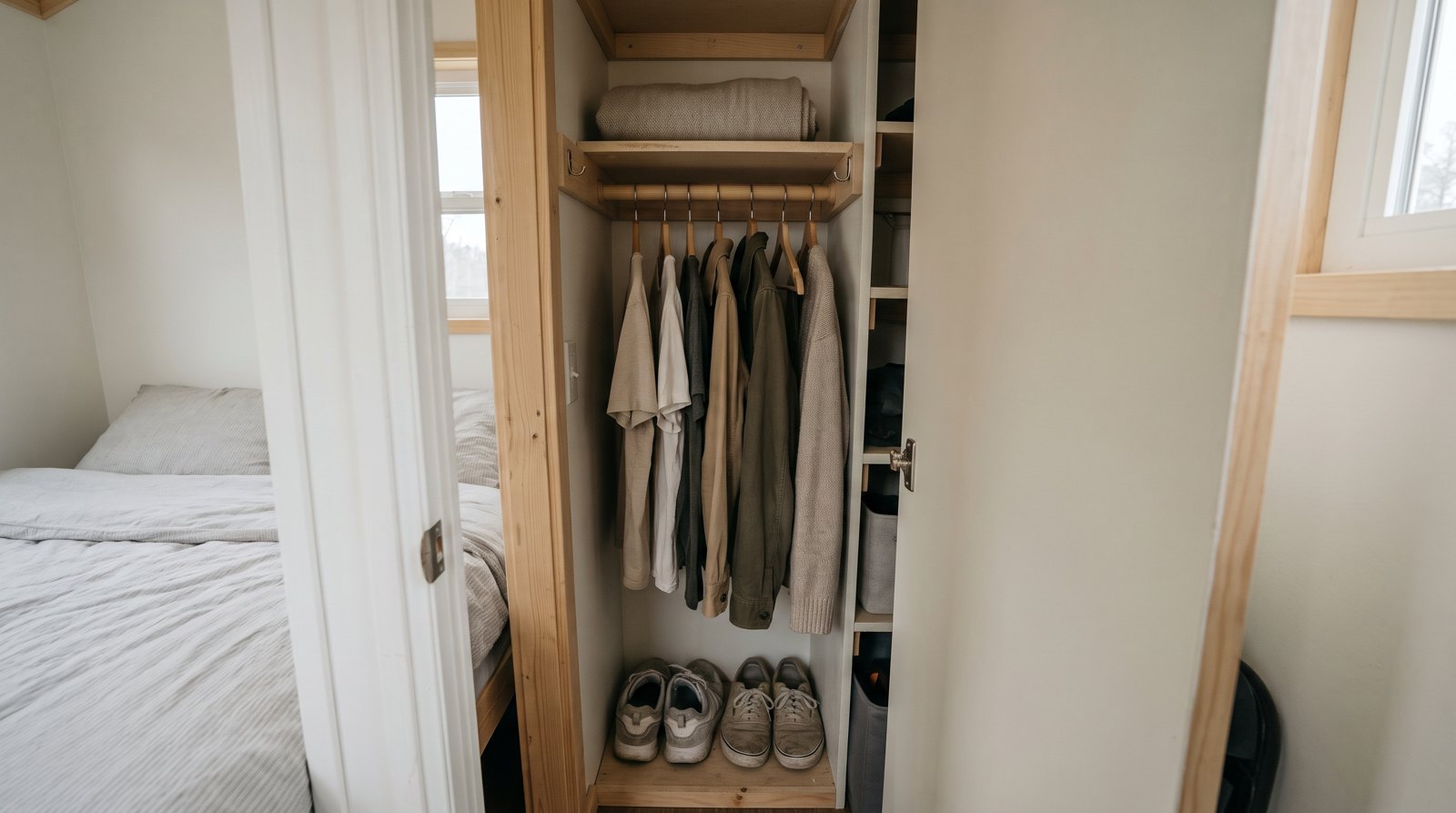
Keep enough clothing for your real laundry schedule, climate, work, and activities. A very small wardrobe becomes inconvenient if laundry is distant or drying takes time. Measure the available hanging and folded space, then test the selection through ordinary days before deciding which remaining clothes can leave permanently.
Start with clothes that fit and are comfortable now. Build combinations around things you already wear. Include weather protection, workwear, and a practical option for occasions that genuinely occur. There is no required number of shirts or shoes that makes a household suitably tiny.
Seasonal rotation works only when the other season has a dry, accessible home. Name that location before packing bins. Vacuum bags reduce bulk for suitable textiles, but they do not reduce weight and should not become a reason to keep everything.
Try the storage with loaded drawers and hanging clothes. Can a door close? Can you reach the back without removing the front row? Leave space for the laundry basket and a coat arriving wet from outside.
Give sentimental possessions a fair decision process
Keep the objects whose presence matters most to you, and set a physical boundary for the rest before sorting. A specific shelf or memory box makes the decision concrete. Photographs and scans can preserve information, but they do not have to replace every meaningful object or force rushed choices.
Handle easy duplicates first and save difficult keepsakes for a separate session. Ask whether you value the object itself, the memory it represents, or the obligation you feel to keep it. A small collection you can enjoy may serve you better than boxes you never open.
Offer family items individually, with a clear collection date and permission to decline. Do not assume relatives will want furniture or an entire collection. If a possession may be valuable, allow time to investigate before including it in a quick clearance sale.
Keep original records where an original may be required. Store a manageable document file securely, make appropriate backups, and separate essential moving paperwork from boxes destined for donation. Test that scanned files are readable before discarding any eligible paper copies.
Use paid storage only with a purpose and end date
A storage unit can bridge a move or hold genuinely seasonal equipment, but it can also preserve every postponed decision. List what will go into it, why each item needs storage, and when you will review it. Compare the full continuing cost with the value and usefulness of those belongings.
Use your actual quote, including required fees and any coverage charges. As an illustration, a unit costing $100 per month adds up to $1,200 a year before other expenses. That is arithmetic, not a national price estimate. An introductory discount does not establish the long-term cost.
Consider access as carefully as price. A winter coat stored hours away is not available when the weather changes. Check the rental terms and whether the conditions suit the items. A unit should solve a defined problem rather than become a second household you pay to maintain.
For temporary uncertainty, use one clearly bounded holding box at home if space allows. Mark a review date on your calendar and record what is inside. Make the next decision before the box grows into a room.
On wheels, check weight as well as volume
A tiny house on wheels can run out of carrying capacity before it runs out of cupboard space. Ask the builder for the relevant ratings and obtain a reliable loaded weight before travel. Include household belongings, installed equipment, and anything else being carried; do not treat empty shelves as proof of safe capacity.
U-Haul explains that trailer GVWR is the maximum total trailer weight, including cargo, set by its manufacturer. It is not an allowance for belongings alone. Tow-vehicle, axle, tire, hitch, and combination limits also matter, so ask a qualified hauler to assess your specific setup.
Books, tools, dishes, and collections can be heavy despite fitting neatly into small boxes. A bathroom scale can help compare possessions during sorting, but it does not replace weighing the complete travel setup. Secure belongings for transport and follow the builder and hauler instructions about their placement.
Discuss loose belongings with your mover before loading. Our tiny house moving guide covers additional transport planning questions. A house that stays on a foundation still needs sensible storage loads and clear access.
Schedule selling, donations, and disposal early
Give unwanted belongings an exit route while you still have time, transport, and room to sort. Sell items worth the effort, donate accepted goods in usable condition, and arrange appropriate recycling or disposal for the rest. A pile labeled for donation does not free space until it actually leaves.
List larger furniture first because finding a buyer and arranging collection can take time. Photograph condition honestly, include dimensions, and set a deadline for reducing the price or changing the plan. For low-value items, weigh the likely return against messaging, packing, and collection time.
Confirm acceptance before loading the car. Goodwill says donation policies vary by location, including furniture rules. Ask about pickup availability rather than assuming it exists. Separate damaged or unacceptable items so they do not delay a useful donation trip.
Before selling or donating a computer, follow the FTC guidance on backing up and removing personal information. For paints, cleaners, batteries, and other potentially hazardous leftovers, check product instructions and your local collection program. The EPA advises keeping hazardous products in their original containers and not mixing leftovers.
Make a timeline that leaves room for a trial run
Work backward from the move and give sorting, collections, and packing their own time. An eight-week outline is a planning example, not a requirement. Start earlier for a large household or difficult decisions, and reduce the number of categories you tackle at once if the process becomes exhausting.
- Weeks one and two: Measure the new home, map storage, and identify large items that will not fit.
- Weeks three and four: Sort rooms, list furniture, and book available donation or disposal services.
- Weeks five and six: Test your daily-use kit and address clothing, hobbies, and sentimental items.
- Week seven: Complete collections, check the remaining belongings against the storage map, and confirm transport arrangements.
- Final week: Pack by destination, keep essentials accessible, and leave time for a final sweep.
After moving, review what is inconvenient before buying organizers. A crowded surface may need fewer objects, a different routine, or one useful shelf. Give the house time to show you which change would actually help.
Frequently asked questions
The best downsizing decisions depend on your home and routines, so fixed item counts rarely answer the whole question. Use these answers as starting points, then check them against available storage, household needs, and moving requirements. A workable home should support your life without making every ordinary task a packing exercise.
How much should I get rid of before moving into a tiny house?
There is no reliable percentage for every household. Measure the storage in your chosen house, assign spaces to essential categories, and test what fits with room for access. Keep possessions that support your routines, then sell or donate the surplus instead of aiming for an arbitrary reduction target.
Should I sell all my furniture before buying a tiny house?
No. Confirm the layout and delivery timing before giving up furniture you still need. Measure useful pieces and the route through the door. Sell items that clearly will not fit first, but keep a practical temporary setup until your move is secure and the replacement arrangements are ready.
Is renting a storage unit a mistake when downsizing?
Not necessarily. It can help with a temporary move or specific seasonal equipment. The problem is paying indefinitely for belongings you never use. Make an inventory, calculate the continuing cost, and set a review date. Keep the unit only while its purpose and cost still make sense.
Can two people downsize without keeping identical amounts?
Yes. Equal respect matters more than identical item counts. Discuss shared storage, work needs, hobbies, and personal priorities before sorting. Give each person a defined private area and agree on shared purchases. Do not discard a partner’s belongings or use minimalism as a reason to override their decisions.
What should stay accessible on moving day?
Keep identification, moving documents, necessary personal items, chargers, basic cleaning supplies, bedding, and a small food-and-dish kit accessible. Add items your household needs immediately, including pet supplies where relevant. Pack this kit separately so you can settle in without unloading every box or searching through travel-secured storage.