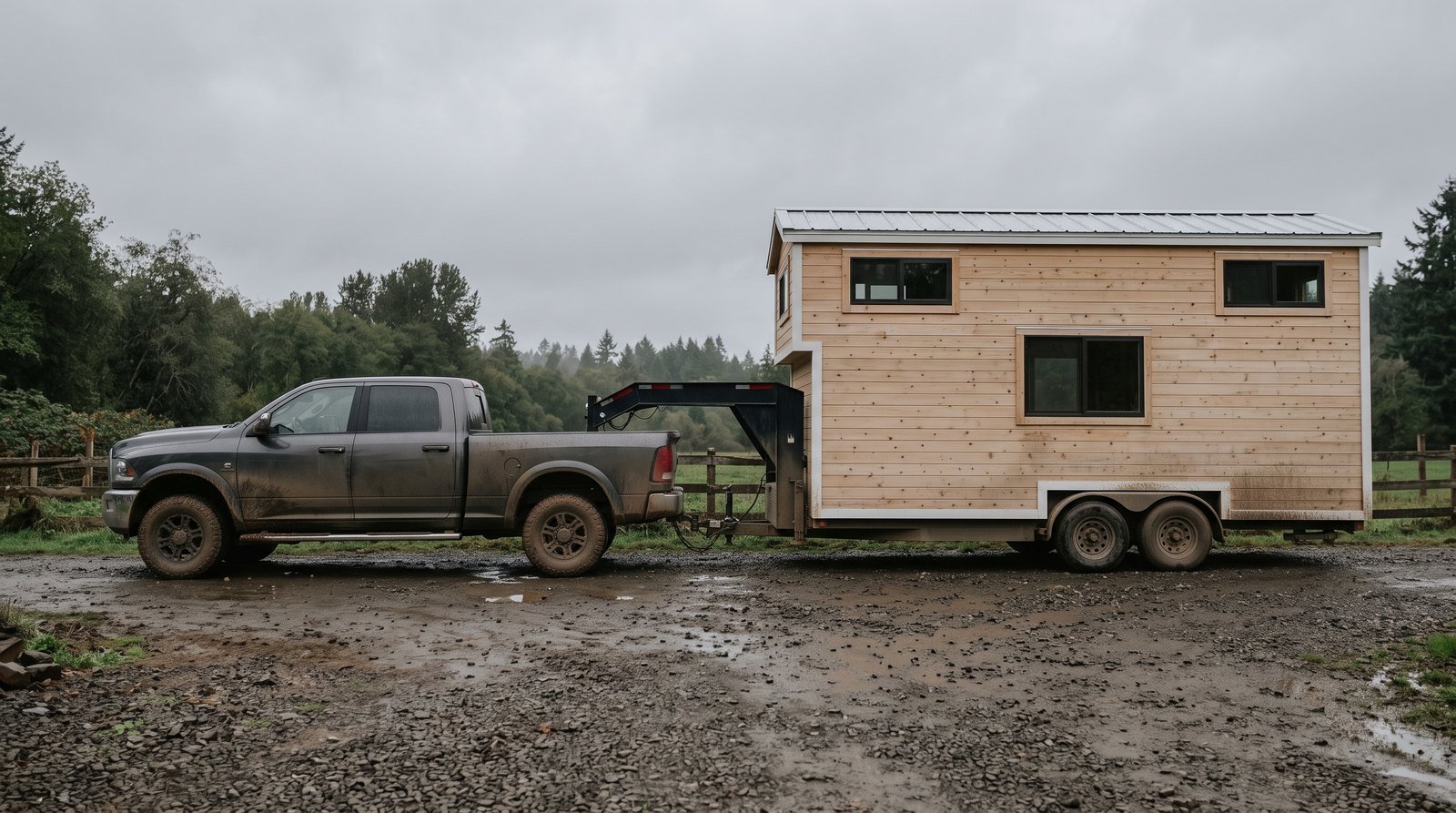
Most tiny houses on wheels weigh 10,000 to 15,000 pounds once they are finished and loaded, which is past what a half ton pickup can safely pull. Plan on a three quarter ton or one ton pickup with the factory tow package, a hitch rated above your loaded weight, and a working trailer brake controller.
Table of Contents
How Much Does a Tiny House Actually Weigh?
A finished tiny house on wheels usually lands between 8,000 and 15,000 pounds. Short builds of 12 to 20 feet often come in around 5,000 to 8,000 pounds. Anything 24 feet and longer, with a loft, a real bathroom and a tile shower, regularly passes 13,000 pounds.
The number that matters is not the one the builder quoted you. Builders publish dry weight, which is the house as it left the shop with nothing in it. Your towing weight is dry weight plus water in the tanks, propane, batteries, tools, furniture, books, and everything you own. Water alone is roughly 8.3 pounds per gallon, so a full 40 gallon fresh tank adds about 330 pounds before you have packed a single box.
Materials drive the rest. Cedar siding, a metal roof, a full length loft, real drywall, a cast iron wood stove and a tile floor all add up fast. Two houses of the same length can be 3,000 pounds apart. That is why the only weight you should trust is a ticket from a certified scale. Pull onto a public truck scale, pay the fee, and get the axle weights printed.
Weigh the house loaded the way you actually travel, with the tanks at travel level and your gear on board. Then weigh it again after any major addition, such as a deck or a bank of batteries. If you are still deciding between a towable house and a coach, our comparison of a tiny house against an RV for full time living covers how much the weight difference changes daily life.
Tongue Weight Is the Number That Picks Your Hitch
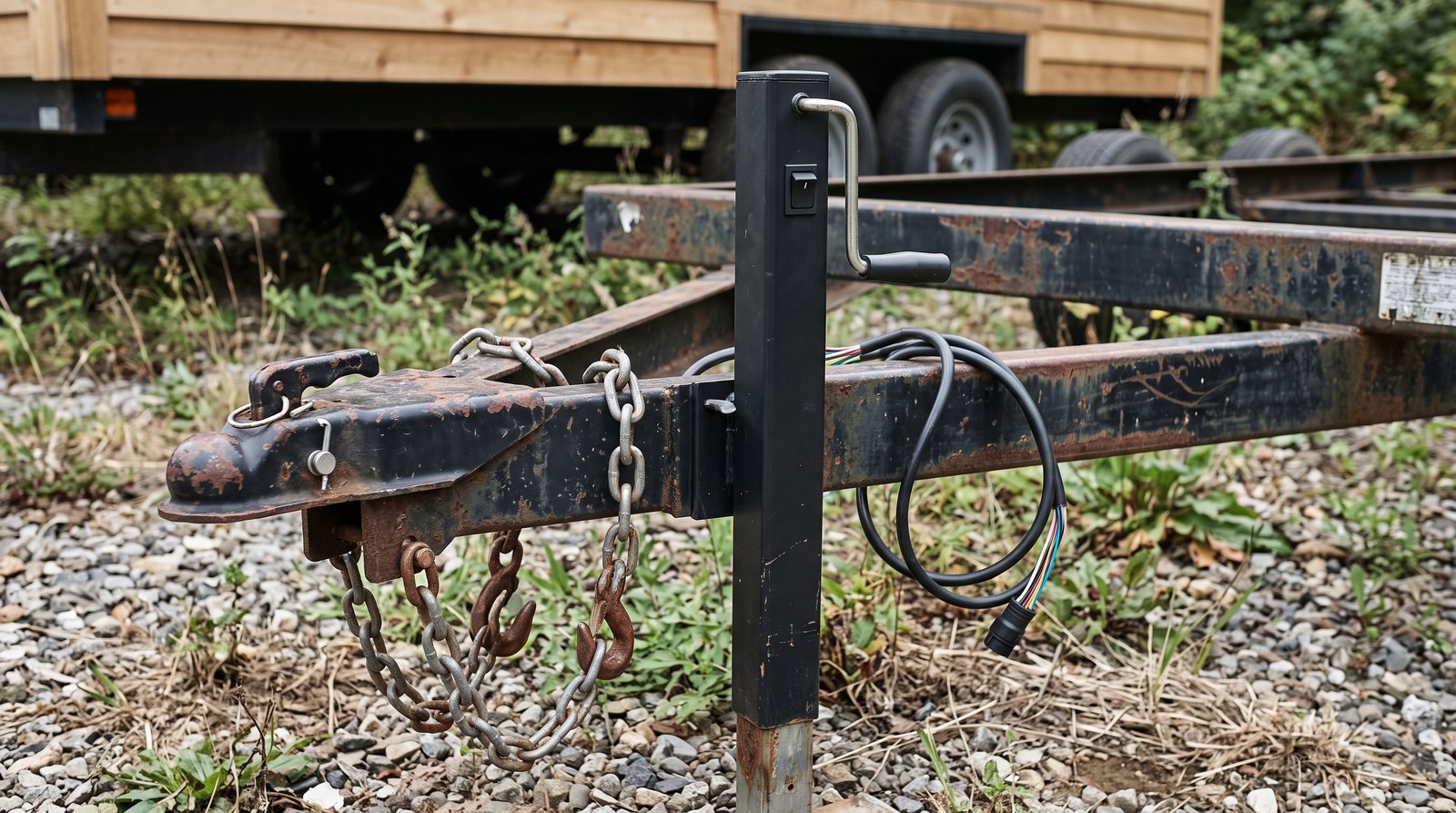
Tongue weight is the downward force the trailer puts on the hitch, and on a bumper pull it should be 10 to 15 percent of the loaded trailer weight. On a 12,000 pound house that is 1,200 to 1,800 pounds pressing straight down on the back of your truck, and that weight comes out of payload, not out of towing capacity.
This is where most towing plans quietly fail. People read the big towing number on the window sticker, decide the truck is fine, and never open the door jamb sticker that lists payload. Tongue weight, passengers, fuel, the hitch hardware and anything in the bed all count against payload. A half ton truck with a 1,700 pound payload is already at its limit from tongue weight alone, before anyone climbs in.
Too little tongue weight is the more dangerous failure. A trailer loaded tail heavy will sway, and sway at highway speed behind a 12,000 pound house is not something you steer your way out of. Too much tongue weight is easier to see: the rear of the truck squats, the headlights point at the trees, and the front tires go light and vague in the steering.
Fix the balance by moving weight, not by adding air bags and calling it done. Air bags and helper springs level the truck, which is worth doing, but they do not raise payload or the axle rating. On a bumper pull, a weight distributing hitch with sway control moves some of that tongue load back onto the front axle and the trailer axles, and on a heavy tiny house it should be treated as standard equipment rather than as an upgrade.
What a Three Quarter Ton Truck Really Handles
A modern three quarter ton pickup, meaning an F-250, a 2500 or a Sierra 2500HD, is the practical entry point for towing a tiny house. Depending on cab, bed, engine and axle ratio, these trucks carry roughly 3,000 to 4,300 pounds of payload and tow 14,000 to 20,000 pounds conventionally, which covers most finished houses.
The spread inside that range is enormous, and it is decided by the exact truck. A crew cab four wheel drive gas model can have less payload than a regular cab two wheel drive diesel, even though both wear the same badge. Sunroofs, heavy trim packages and a topper all eat payload. Read the yellow sticker on the driver door jamb of the specific truck, which states the exact payload for that build, then subtract everything you plan to put in it.
A one ton, the 350 or 3500, buys margin rather than a different driving experience. Payload usually jumps to roughly 4,000 to 7,000 pounds, and dual rear wheel versions add real stability in crosswinds and on crowned roads. If your house is over 14,000 pounds, if you plan to move often, or if you tow through mountains, the one ton is the honest answer.
Diesel against gas matters less than people argue. A modern gas V8 will pull a tiny house fine, it just works harder on grades. Diesel gives you torque, engine braking on long descents and higher tow ratings, at a higher purchase price. If you move the house twice in ten years, gas is the sensible choice. If you move seasonally, the diesel earns its price back in brake wear alone.
Trailer Brakes, Tires and Axles You Cannot Skip
A tiny house trailer needs electric brakes on every axle and a brake controller wired into the truck. Most states require trailer brakes once the trailer passes somewhere between 1,500 and 3,000 pounds, and every tiny house is far above that. A truck on its own cannot stop 12,000 pounds behind it in any distance you would want to measure.
Three quarter ton and one ton trucks with the tow package have an integrated brake controller in the dash, which is the setup you want. An aftermarket proportional controller is the next best option. Avoid time delay controllers on a load this heavy, because they apply trailer brakes on a fixed ramp rather than in proportion to how hard you are braking, and that feels vague exactly when you need precision. Set the gain on a quiet road, then check it again once the house is loaded.
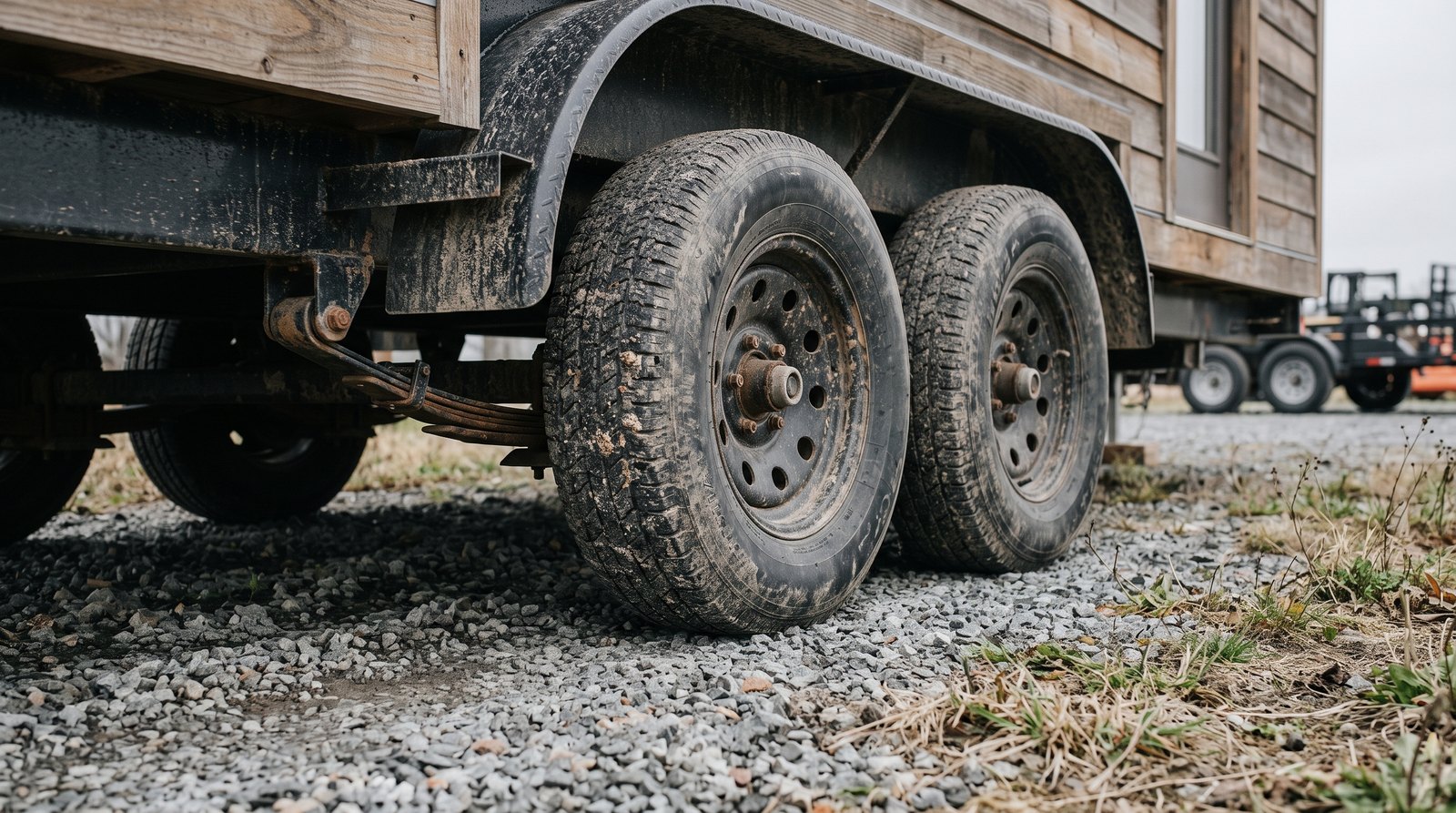
Tires are the most commonly ignored part of the whole setup. Trailer tires carry a load rating per tire, and four tires rated at 2,830 pounds each give you 11,320 pounds of tire capacity, which is not enough for a 13,000 pound house even if the axles are rated for it. Check the load range printed on the sidewall, keep them at sidewall pressure rather than truck pressure, and replace them on age rather than on tread. Trailer tires commonly age out at five to seven years while still looking new, and a blowout on a tiny house usually takes siding and wiring with it.
Check the axle rating stamped on the axle itself, not the number in the trailer brochure. Two 7,000 pound axles give a 14,000 pound rating, which is the common tiny house build. Three 7,000 pound axles, or two 8,000 pound axles, show up on longer houses. Inspect the bearings as well, and repack them before any long move.
Bumper Pull or Gooseneck: Which Setup Do You Need?
A bumper pull uses a receiver hitch behind the rear bumper and works well up to about 12,000 pounds with a weight distributing hitch. A gooseneck puts the pin over the rear axle inside the bed, carries 15 to 25 percent of the trailer weight, and is the better answer above 12,000 pounds or on any house longer than roughly 28 feet.
The physical difference matters more than the numbers suggest. A bumper pull applies its load behind the rear axle, which levers the front of the truck up and makes sway possible. A gooseneck puts the load almost directly over the rear axle, so the truck stays level, the steering stays planted, and sway mostly stops being a topic. Backing is easier too.
The tradeoffs are real. A gooseneck hitch has to be installed in the bed, which costs money and takes the bed out of normal use. Your pin weight now counts fully against payload, so a 13,000 pound house with a 20 percent pin puts 2,600 pounds in the bed, which rules out a lot of three quarter ton crew cabs and points straight at a one ton.
For most people the trailer already decided this. Tiny house trailers are built as one or the other, and converting is a frame level job. If you are buying a house that already exists, match the truck to the trailer. If you are commissioning a build and you know it will be heavy, specify the gooseneck at the start.
Quick Answer by Situation
Different houses and different travel plans point at different trucks. Find the line that matches your situation, then confirm it against the door jamb sticker on the actual truck you are considering.
- Under 8,000 pounds, moved rarely, short trips: a well equipped half ton with the max tow package can do it, but check payload carefully and add a weight distributing hitch.
- 8,000 to 12,000 pounds, bumper pull: a three quarter ton gas or diesel with a weight distributing hitch and an integrated brake controller.
- 12,000 to 16,000 pounds, gooseneck: a one ton, and a dual rear wheel version if you cross mountains or open country with crosswinds.
- Over 16,000 pounds, or wider than 8.5 feet: hire a professional transporter with the right permits rather than buying more truck.
- Moving once, then parked for years: hire a transporter. The truck payment alone will exceed the haul several times over.
- Moving three or more times a year: buy the truck. At that frequency the numbers flip in your favor.
When Hiring a Transporter Beats Buying a Truck
Professional tiny house transporters charge roughly one to four dollars per mile, while a suitable used one ton diesel starts around thirty thousand dollars. If you are moving the house once or twice in its life, hiring out is not a close call. Buy the truck only when you move often enough to spread that cost across many trips.
Run the math honestly and include the parts people forget. A truck brings insurance, registration, tires, maintenance and depreciation whether you tow or not. A transporter brings a rig already rated for the load, commercial insurance on your house while it is moving, existing permits, and the experience to back a 30 foot box into a rural driveway in the rain. Our breakdown of what it costs to move a tiny house walks through real quotes.
Width is often the deciding factor. A trailer up to 8.5 feet wide, which is 102 inches, moves on most highways without an oversize permit. Go wider and you are into permits, restricted travel hours, and possibly pilot cars, which add roughly one and a half to three and a half dollars per mile per escort. Height rules vary by state and most cap at 13.5 or 14 feet, so a tall loft can trigger a route survey. Permits are issued state by state, so confirm the rules for every state on your route with that state department of transportation.
Check your coverage before you choose either option. Many policies treat a house in transit differently from a house parked on a site, and some exclude transit entirely unless a licensed carrier is doing the towing. Read the transit clause in your tiny house insurance policy before the move, not after something goes wrong on an interstate.
Frequently Asked Questions
Can a half ton truck tow a tiny house?
Sometimes, but rarely well. A max tow half ton can pull a light 8,000 pound house on a short trip, and payload runs out before towing capacity does. Once tongue weight, passengers and gear are added, most half tons are already over the payload number on their own door jamb sticker.
Do I need a special license to tow a tiny house?
In most states a standard license covers a personal tiny house under 26,000 pounds combined. Some states require a non commercial class A or a heavy trailer endorsement above that combined weight. Rules vary by state, so confirm with your own department of motor vehicles before your first move.
How fast can you drive while towing a tiny house?
Plan on 55 to 60 miles per hour and stay in the right lane. Some states set lower posted limits for vehicles towing trailers. Trailer tires are commonly speed rated to 65 miles per hour, and heat built up at higher speeds is a leading cause of blowouts on heavy trailers.
What happens if my tiny house is over the axle rating?
You are risking bearing failure, bent axles and a blowout, and an insurer can deny a claim on an overloaded trailer. The fix is to remove weight, add an axle, or have a fabricator upgrade the axles. Weigh at a certified scale before assuming you are under the rating.
Is a gooseneck worth the cost over a bumper pull?
Above 12,000 pounds, yes. A gooseneck puts the load over the rear axle, which nearly eliminates sway and makes backing easier. The cost is bed installation, lost bed space, and pin weight counting fully against payload, which usually pushes you toward a one ton truck.