Choose 30 amp service for a simple, mostly propane tiny house with modest 120-volt loads. Choose 50 amp service when you want electric cooking, electric water heating, larger climate equipment, or fewer load-management compromises. The right tiny house electrical service depends on which appliances must run together, not square footage alone.
Table of Contents
Should You Choose 30 Amp or 50 Amp?
For most all-electric tiny houses, 50 amp service is the more practical long-term choice. A carefully planned 30 amp system can work well for a mobile house with propane appliances and disciplined energy use. Start with the appliance nameplates, identify simultaneous loads, and then choose the supply.
A 30 amp hookup is attractive because the cord and equipment are lighter, it is common at RV sites, and it encourages a lean electrical plan. Its main drawback is a hard total capacity of 3,600 watts at 120 volts. Turn on an induction burner, a small electric water heater, and a mini split together, and that capacity can disappear quickly.
A typical 50 amp RV-style connection supplies two 120-volt legs and can provide up to 12,000 volt-amperes in total when the system and source are designed for it. It offers much more room for electric appliances and can support 240-volt equipment. It also requires a four-wire system, a larger cord, a compatible pedestal or feeder, and proper load balancing.
Quick answer by situation
- Mostly propane, weekend use: 30 amp is often enough if air conditioning and cooking loads are managed.
- Full-time, all-electric living: 50 amp usually provides a better daily experience and room for future appliances.
- Frequent RV park stays: match the house inlet to the sites you expect, and carry only listed adapters approved for your equipment.
- Permanent foundation: ask the local building department and utility what residential service and equipment they require.
- Solar-first system: size the inverter, batteries, shore input, and transfer equipment as one system rather than choosing an inlet alone.
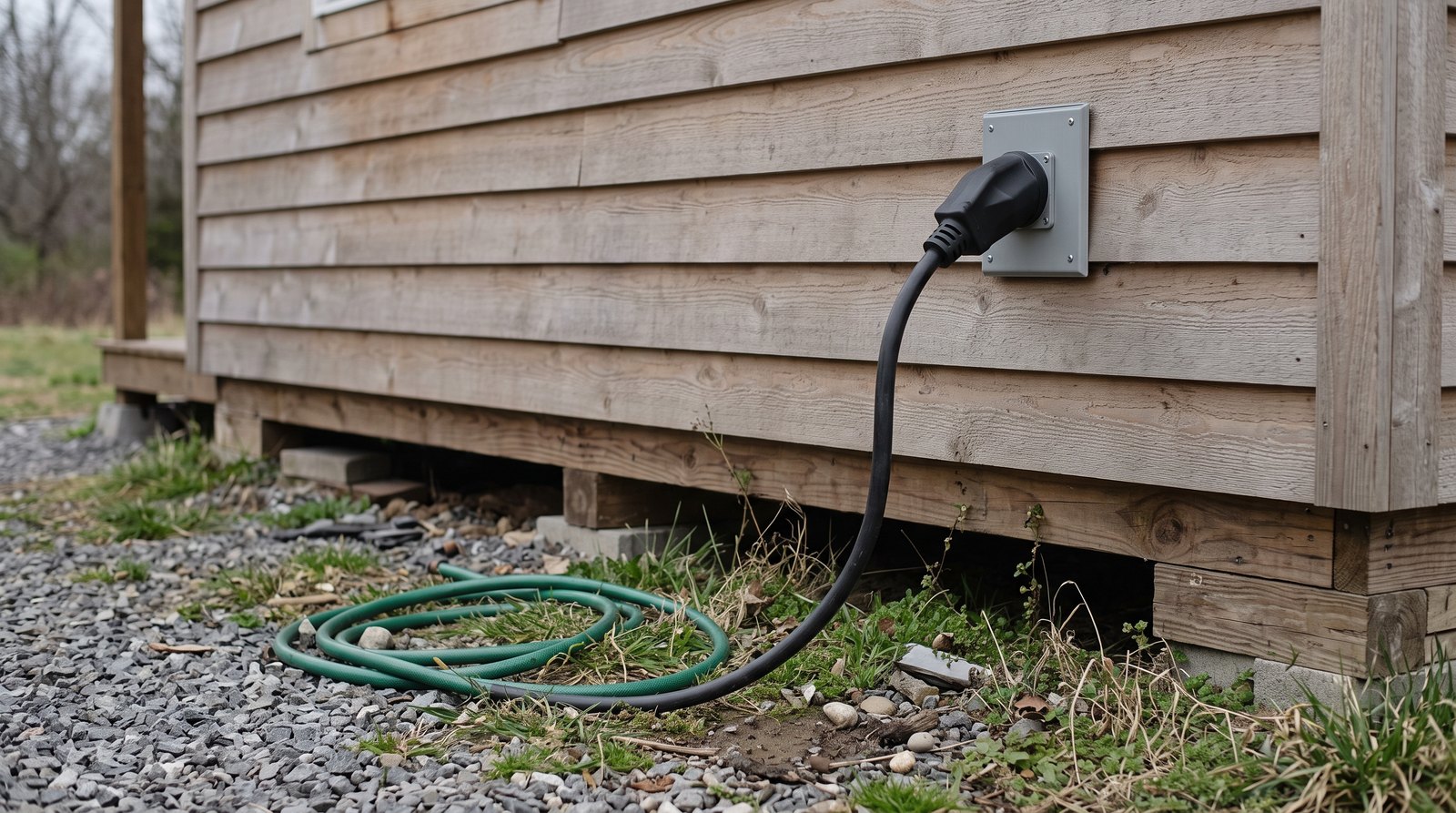
What 30 Amp and 50 Amp Actually Provide
A 30 amp RV connection is normally one 120-volt hot conductor, a neutral, and an equipment ground. A 50 amp RV connection normally has two hot conductors, a neutral, and an equipment ground. That wiring difference matters because 50 amp service is not merely 20 extra amps.
The standard TT-30 receptacle is rated 30 amps at 125 volts, as shown in Leviton’s device specifications. At a nominal 120 volts, the simple capacity calculation is 120 times 30, or 3,600 watts. That is the total available across the tiny house, before allowing a practical operating margin.
A common 14-50 receptacle is rated 50 amps at 125/250 volts with four wires, according to Hubbell’s published rating. Each hot leg can supply 50 amps at 120 volts to neutral, and a 240-volt load connects across both hots. Two 120-volt legs at 50 amps provide 12,000 volt-amperes total.
Do not confuse a 30 amp RV hookup with an older three-wire dryer receptacle, and do not assume every receptacle that looks heavy-duty is wired correctly. The inlet, cord, feeder, breakers, grounding arrangement, and source must all match. Test questionable pedestals with appropriate equipment or have an electrician inspect them before connecting.
Add Up the Loads That Must Run Together
Make a load list from appliance nameplates, then group items that realistically operate at the same time. The service must handle that overlap, not the sum of every breaker rating in the panel. Heating, cooling, water heating, and cooking usually decide whether 30 amp service feels adequate.
Consider a hypothetical 30 amp house with a 900-watt inverter mini split, a 1,440-watt 120-volt water heater, and an 1,800-watt portable induction burner. Those three loads total 4,140 watts before the refrigerator, lights, outlets, battery charger, or ventilation fan. The owner needs load shedding, a different fuel choice, or more service capacity.
The same house might work comfortably on 30 amps if water heating and cooking use propane, or if an energy-management system prevents large loads from overlapping. A conservative 80 percent operating target, about 2,880 watts on a 30 amp supply, is a useful planning buffer. It is not a substitute for the formal calculation required by the applicable electrical code.
Record volts, amps, and watts directly from each nameplate. For a single-phase load, watts are roughly volts multiplied by amps, although motors and power electronics add details an electrician must consider. Include startup behavior, manufacturer-required breaker sizes, hardwired loads, receptacle demand, and any equipment expected to run continuously.
Also plan for tomorrow. An owner may later add a clothes dryer, dehumidifier, second cooking element, larger water heater, EV charging, or workshop tool.
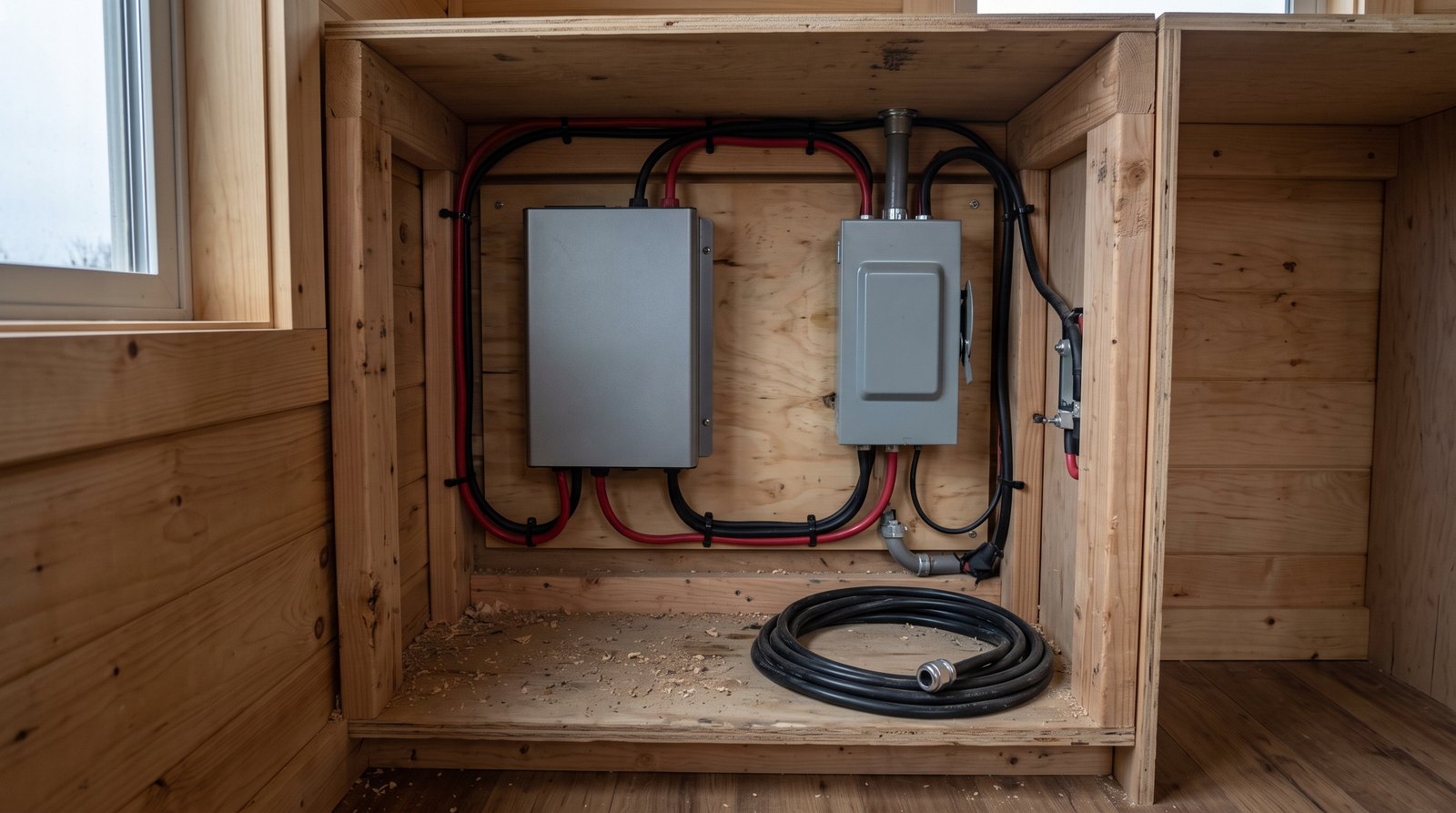
Plan the Panel, Inlet, Cord, and Feeder Together
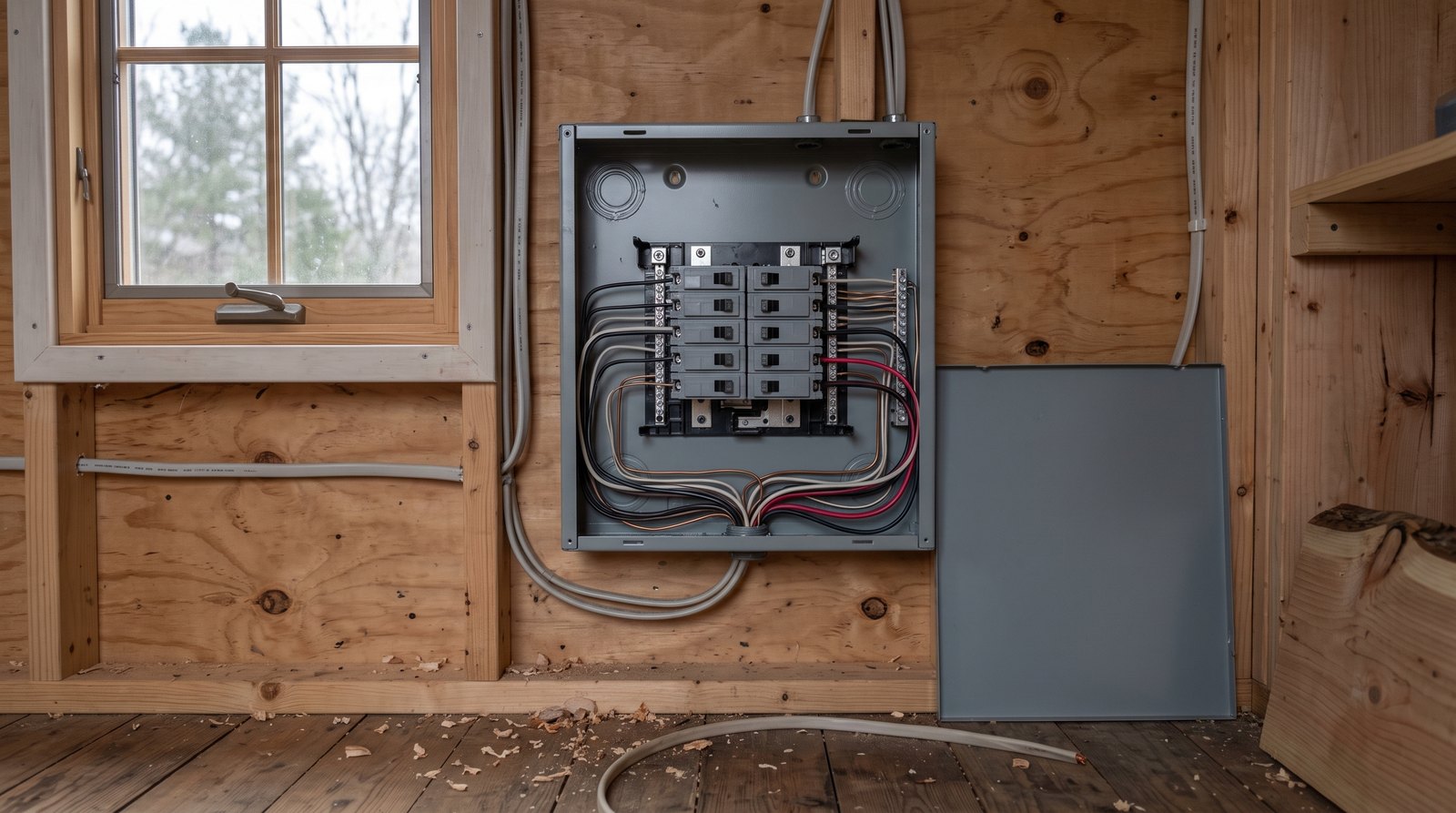
The panel rating alone does not determine usable capacity. Your main overcurrent protection, feeder conductors, inlet, shore cord, receptacle, disconnect, and source must form one coordinated system. A panel with spare spaces is valuable, but a larger label on its door does not increase the supply feeding it.
For 30 amp service, use a listed 30 amp assembly and a main disconnect sized to protect the supply conductors. For 50 amp split-phase service, use a compatible two-pole main and distribute 120-volt branch circuits reasonably across both legs. Large 240-volt loads use both legs and need equipment specifically rated for that voltage.
Neutral and equipment grounding conductors serve different purposes. Where they are bonded, isolated, or switched depends on whether the tiny house is treated as an RV, a dwelling, a feeder-supplied structure, or a separately derived system. This is not a safe place for a generic diagram. The local authority and licensed electrician should approve the arrangement.
Use a listed outdoor cord with the correct ampere and voltage rating. Protect it from traffic, sharp edges, standing water, and doors or windows that can crush the jacket. Inspect plug blades, connectors, and inlet contacts for discoloration, pitting, looseness, or heat damage. A warm connection needs attention before it becomes a failure.
Long runs create voltage drop, especially with high current. Low voltage can make motors and compressors run poorly and can increase heating at weak connections. Do not solve the problem with a string of household extension cords. Have the site feeder and cord length sized for the actual load and distance, then verify voltage under load.
Match Mini Splits, Cooking, and Water Heating
Appliance labels matter more than general online wattage lists. Mini splits, induction equipment, and water heaters come in both 120-volt and 240-volt versions with very different requirements. Choose specific models early, give the electrician their installation instructions, and confirm required circuits before walls and cabinets close.
An inverter-driven mini split may start more gently than an older fixed-speed compressor, but it still has a required circuit size and maximum overcurrent protection on its data plate. A 240-volt unit cannot be powered from a 120-volt TT-30 connection through an ordinary plug adapter. Climate loads also rise during demanding weather.
A single portable 120-volt induction burner can fit a 30 amp plan if other major loads are off. A full induction range commonly needs a substantial 240-volt circuit, which pushes the design toward split-phase service. If cooking is central to daily life, calculate a worst normal meal period rather than assuming only one element will operate.
Electric resistance water heating is another major decision. A small storage unit can be scheduled around cooking, while a whole-house electric tankless heater may demand more power than a small service can reasonably supply. Propane, a compact storage heater, or a properly selected heat pump model can reduce peak electrical demand, but each has space and ventilation considerations.
Do not forget ordinary loads. A microwave, hair dryer, toaster, coffee maker, space heater, and vacuum can each be significant on a 30 amp service. Dedicated circuits prevent conductor overload, but they do not create more total capacity. The main supply still sees everything running at once.
Integrate Generators and Solar Without Backfeeding
A generator or inverter must connect through listed equipment that prevents two power sources from energizing the system at the same time. Match voltage, phase, neutral handling, grounding, and output capacity to the tiny house. Never connect a generator through a receptacle with a male-to-male cord or improvised backfeed arrangement.
A generator with a 30 amp receptacle may still have less than 3,600 watts of continuous output, so use the generator’s actual ratings. A 50 amp receptacle does not guarantee 12,000 volt-amperes. A 120-volt-only generator also cannot operate true 240-volt loads through a simple adapter.
Generac’s current safety guidance warns against direct backfeeding and calls for transfer equipment installed by a qualified electrician. Portable generators must remain outdoors, away from openings, and protected as their manual directs. Carbon monoxide safety is separate from electrical safety, and both matter.
For solar, distinguish power from energy. The shore connection and inverter output are measured in kilowatts, while battery storage is measured in kilowatt-hours. A 10 kWh battery does not guarantee that a 6 kW cooktop can run. The inverter’s continuous and surge ratings, split-phase capability, and transfer or pass-through limit control what loads it can support.
A hybrid inverter may accept shore power, charge batteries, and support loads, but the shore input rating may be lower than the house inlet rating. Configure source limits so the charger does not consume the capacity needed by appliances. Use listed transfer equipment so shore power, inverter power, and generator power cannot conflict.
Permits and Professional Electrical Work
Expect permits and licensed electrical work whenever you install a new site service, feeder, distribution panel, hardwired appliance circuit, generator connection, or solar transfer system. The exact rules depend on the tiny house classification and location, so confirm requirements with the city, county, utility, and inspecting authority before purchasing equipment.
A tiny house on a permanent foundation is generally reviewed as a dwelling under the locally adopted residential and electrical codes. A tiny house on wheels may be built and labeled under an RV or park-model standard, yet its parking location can impose additional requirements. Our guide to tiny houses versus RVs for full-time living explains why classification affects more than the floor plan.
Bring the electrician a complete equipment list, the intended parking or foundation plan, available pedestal or utility details, expected cord or feeder length, and any generator or solar specifications. Ask for a load calculation, panel schedule, one-line diagram, and labeling that a future service technician can understand.
Document permits, inspections, equipment listings, photos before walls close, and final test results. Those records can help with troubleshooting, resale, and coverage questions. Electrical changes may also matter to your carrier, so review the documentation points in our tiny house insurance guide.
Frequently Asked Questions
The safest answers come from the specific appliance labels, supply equipment, and local electrical rules. These short answers cover the most common planning questions, but they do not replace a load calculation or inspection. When a choice affects service conductors, bonding, overcurrent protection, or source transfer, involve a licensed electrician.
Is 30 amp service enough for a tiny house?
Yes, 30 amp service can be enough for a tiny house that uses propane for cooking or water heating and has modest 120-volt loads. It provides about 3,600 watts total at 120 volts. List the appliances that must run together, leave a practical margin, and use load management when necessary.
How much power does 50 amp tiny house service provide?
A standard four-wire 50 amp 120/240-volt connection can provide up to 12,000 volt-amperes total, with 50 amps available on each 120-volt leg. Actual usable capacity also depends on the source, feeder, main protection, transfer equipment, and balanced placement of branch circuits across the two legs.
Can a 30 amp tiny house use a 50 amp pedestal?
It may be possible with a listed adapter made for that exact connection, but the tiny house remains limited by its 30 amp main protection and wiring. Do not improvise an adapter or assume every pedestal is correctly wired. Follow the inlet and cord manufacturers’ instructions and test the source before use.
Can I run a mini split on 30 amp service?
Often yes, if the mini split is a compatible 120-volt model and the remaining loads stay within the service capacity. Check the unit’s nameplate, required circuit, and manufacturer instructions. A 240-volt mini split needs a suitable split-phase source and cannot run from a standard 120-volt TT-30 hookup through a simple adapter.
Do I need an electrician for tiny house electrical service?
Use a licensed electrician for service equipment, feeders, panels, hardwired appliance circuits, generator connections, and solar transfer equipment. Tiny house classification and local code adoption affect the required design and permits. Confirm the plan with the local inspecting authority and utility before buying equipment or closing walls.