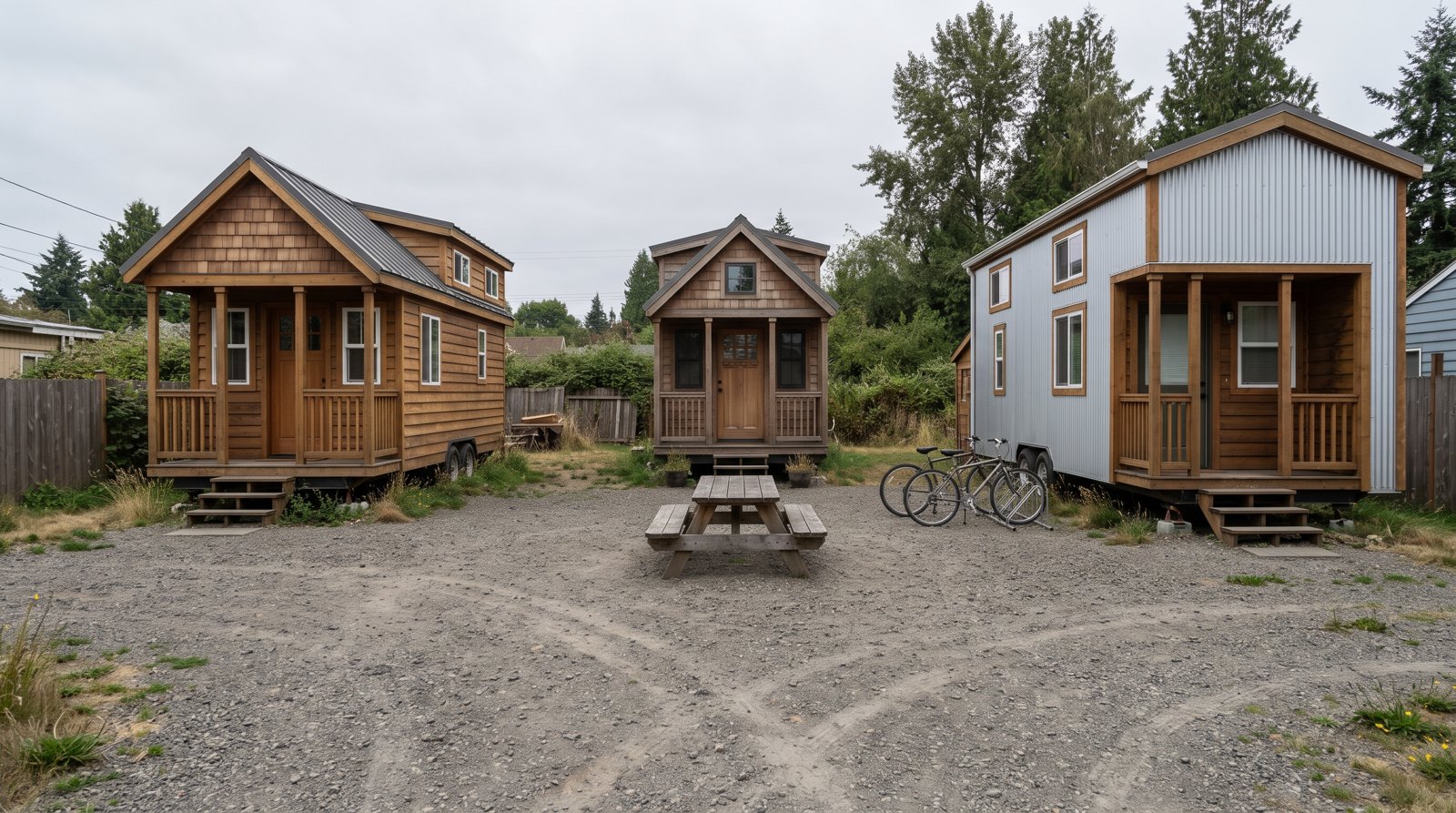
Tiny house community living works best when shared spaces come with clear responsibilities and your home remains private. Before moving in, check laundry access, garden rules, guest limits, quiet hours, pet policies, maintenance contacts, and required chores. Visit during an ordinary week and ask residents how those arrangements work in practice.
Table of Contents
Quick answer by situation
Choose a community around the routines you need to protect, rather than the amenities that photograph well. A shared garden is useful only if you can use it, and a clubhouse adds little if its hours conflict with your schedule. Start with your household, then test the written rules against it.
- You want company without constant commitments: Ask which events are optional and which meetings or work sessions are required.
- You work nights or from home: Check daytime maintenance noise, evening gatherings, internet arrangements, and quiet workspace access.
- You have pets: Get the policy for your specific animals, including visitors with pets and shared laundry restrictions.
- You host family regularly: Confirm overnight limits, parking, facility reservations, and any visitor charges before inviting anyone.
- You need easier physical access: Walk the actual route between your intended lot, laundry, parking, and common buildings.
- You travel frequently: Agree on garden watering, chores, deliveries, and emergency contact arrangements during absences.
Write down three nonnegotiable needs before touring. That keeps an attractive courtyard from distracting you from a laundry room you cannot reach comfortably or a participation schedule you cannot maintain.

Shared gardens and outdoor spaces need clear boundaries
A shared garden needs an agreement about who plants, waters, buys supplies, and harvests. Outdoor seating also needs a distinction between common space and private lots. Ask for a simple site walk that identifies those boundaries, then check whether everyday habits match the explanation you receive from management or residents.
Find out whether garden beds belong to individual households or everyone together. Clarify whether joining is optional, how an unused bed changes hands, and what happens when a participant leaves. A ripe tomato is not automatically available to every resident just because it grows beside a common path.
For shared tools, ask where they belong and who reports breakage. Return borrowed equipment clean and promptly. Discuss watering during vacations before planting a demanding crop. Choose commitments you can sustain through busy weeks, not just during the enthusiasm of moving in.
Privacy matters outdoors too. Acony Bell’s published community guidelines tell residents and guests to avoid walking through occupied sites. That is one community’s policy, but it illustrates a useful question everywhere: which routes are public to residents, and which cross someone’s personal space?
Understand who makes decisions and does the work
Ask whether the community operates through a landlord, resident association, cooperative, or another arrangement, and what that means for your responsibilities. A friendly neighborhood does not automatically require shared labor, while an intentional community may expect substantial participation. Get the actual expectations before deciding whether the social environment suits you.
Request the current agreement and rules, including any separate amenity or participation document. Ask who sets fees, approves changes, schedules work, and handles complaints. Keep a dated copy of what you receive. If an answer is important to your decision, ask for it in writing.
For comparison, Nevada City Cohousing’s participation agreements describe shared meals, maintenance, committees, and community decision-making. That is a cohousing example, not a rule for tiny house parks. It shows why the word community alone tells you little about the time commitment.
Ask what happens when illness, disability, caregiving, or employment prevents someone from completing a task. A workable arrangement should explain how residents request changes or trade duties. Also ask whether paid staff perform specialized repairs. Volunteering to sweep a room is different from agreeing to repair its appliances.
Make shared laundry fit your actual week
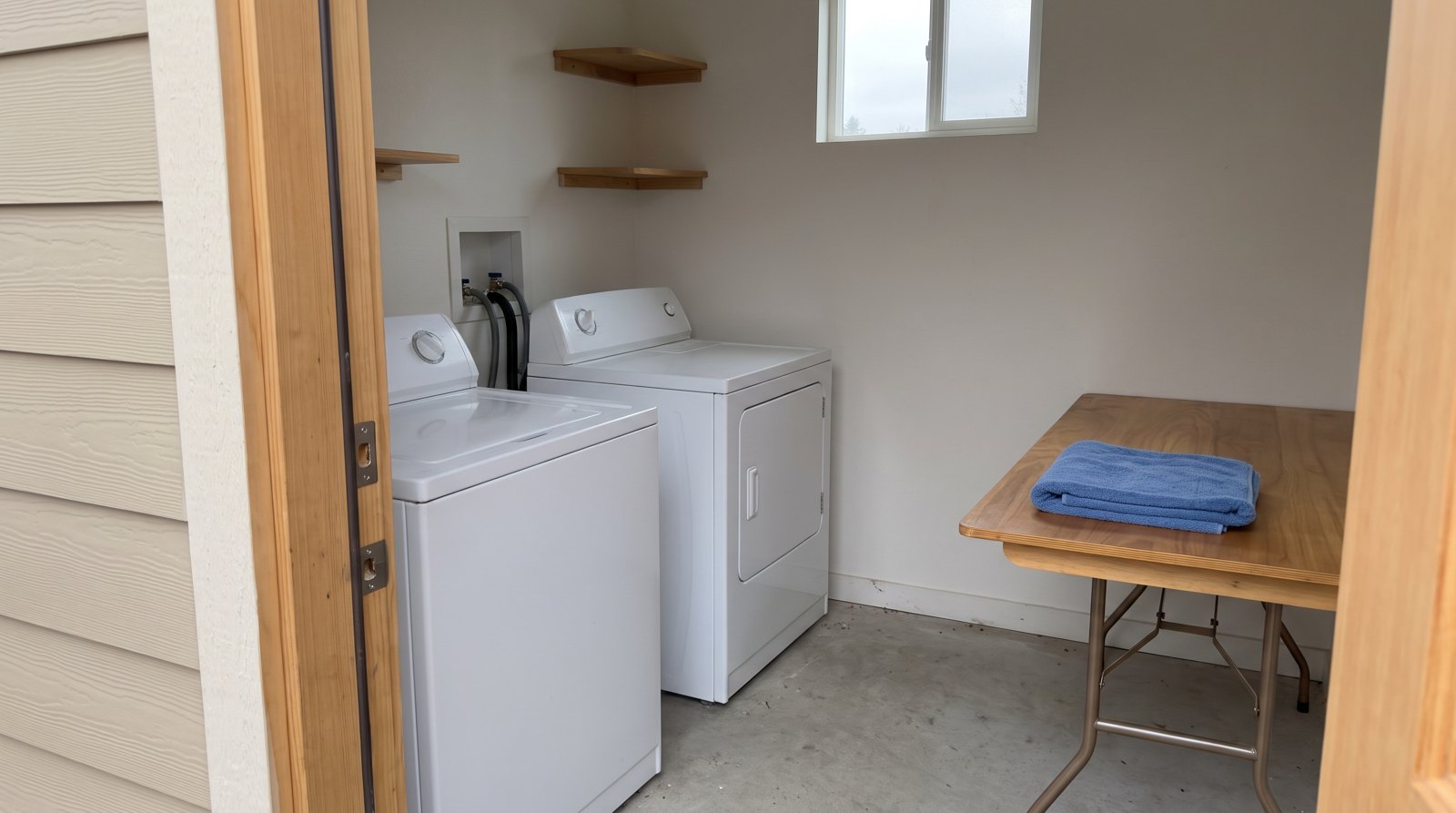
Shared laundry works when machines are available, the room is reachable, and users follow an agreed cleanup routine. Check operating hours, payment methods, machine capacity, booking rules, and repair reporting. Before removing laundry equipment from your own floor plan, confirm that the community service can handle your household’s ordinary washing needs.
Visit the room at the time you would normally use it. Count working machines rather than spaces where machines might eventually be installed. Ask residents about waiting, outages, and whether bedding or bulky items require an off-site laundromat. Check where wet laundry goes if a dryer stops working.
Lake Dallas Tiny Home Village’s currently published rules, labeled as updated in June 2023, require users to clean machines after use and leave no animal hair behind. They suggest an off-site facility for pet bedding. Confirm the current policy directly before relying on an older published document.
Set a timer and collect clothes promptly. Ask whether anyone may move an unattended load and where it should go. Keep detergent and baskets out of circulation paths. Report a leaking or malfunctioning machine instead of leaving the next person to discover the problem with a full basket.
Agree on guests, quiet hours, and pets
Guest, noise, and pet rules should be specific enough that you can plan an ordinary visit without guessing. Ask about overnight stays, visitor parking, outdoor gatherings, and animal supervision. Check weekday and weekend schedules separately, and find out whether common buildings have different operating hours from the community’s general quiet hours.
Acony Bell lists quiet hours of 10 p.m. to 7 a.m. on weekdays and 11 p.m. to 8 a.m. on weekends. It also assigns responsibility for visitor behavior to tenants. Those published hours are an example, not a national standard. Your prospective community may use a different schedule.
Tell visitors where to park and which spaces require permission before they arrive. A shared picnic table may be open for casual use but require booking for a gathering. Ask whether reserving it excludes other residents and who handles cleaning afterward. Check any fee before making plans.
For pets, obtain approval for the animals you actually have. Ask about leashes, waste disposal, noise complaints, temporary fencing, and whether visiting animals count toward limits. Do not assume a dog-friendly community permits unattended pets outdoors. Introduce new routines gradually and keep shared paths usable by neighbors who avoid animals.
Protect privacy without withdrawing from the neighborhood
Good community living leaves room for both conversation and a closed front door. Establish how neighbors should contact you, whether visits need a message first, and which areas are private. Make those preferences clear early, while also learning the customs residents already use to show when they are available.
A porch chair does not have to mean an open invitation. You can enjoy scheduled meals while keeping evenings to yourself. Be consistent and polite when explaining boundaries, especially around work calls, children’s routines, or borrowing belongings. Ask before photographing a neighbor’s home or including it in a public post.
Check the community communication system. An urgent maintenance problem should not depend on seeing a casual group-chat message. Ask whether important notices also arrive by email, paper, or another channel everyone can use. Agree on where routine requests belong so one person’s question does not repeatedly interrupt the entire neighborhood.
Check accessibility and maintenance before committing
Evaluate the routes and services you will use every day, including the trip from your door to parking and laundry. Ask who maintains shared paths, removes seasonal debris, repairs lighting, and responds after hours. A promise that neighbors help each other is useful socially, but it does not replace assigned responsibility.
Walk the route carrying a laundry basket if practical. Look for loose gravel, steep sections, awkward thresholds, heavy doors, and places to rest. Check access to machine controls and folding surfaces. Ask how conditions change in rain, snow, or darkness. Discuss your specific needs with the operator before choosing a lot.
For repairs, request a named contact and reporting method. Distinguish a problem inside your house from one affecting shared facilities. A useful report includes the location, what you observed, when it started, and a photo when appropriate. Keep a record of the request and ask how residents receive progress updates.
Clarify which maintenance and amenity charges are included and which are separate. Ask your insurer about your own home and activities in the community; do not assume the operator’s coverage protects your belongings. Our tiny house insurance guide provides related questions to take to an insurance professional.
Handle disagreements through a known process
Minor disagreements are easier to address when residents know how concerns should be raised and who can help resolve them. Ask for the community’s complaint process before a problem occurs. It should distinguish an everyday misunderstanding from repeated rule violations, property damage, or an immediate threat that needs an urgent response.
For a routine issue, describe what happened and the change you need. Saying that a dryer remained occupied after its cycle is more useful than accusing someone of being inconsiderate. Choose a calm time and allow for a misunderstanding. Avoid turning a private concern into a public group-chat argument.
If the problem continues, follow the written process and give the manager or designated resident contact a factual record. Ask what happens next and when to expect a response. Do not approach someone directly if doing so feels unsafe. Immediate danger requires emergency assistance, not a neighborhood meeting or a delayed maintenance ticket.
Ask residents about an ordinary week
The most useful tour reveals ordinary routines, not just the community’s best gathering space. Ask current residents about a recent busy laundry day, a shared repair, and a disagreement that was resolved. Compare those accounts with the written rules and your own schedule before paying for a move or committing to membership.
Useful questions include how often required work occurs, whether people can decline social events comfortably, and which amenities are actually used. Ask what surprised residents after moving in. If possible, visit once during a weekday and once when residents are home, with permission from the operator.
Discuss departure as well as arrival. Clarify notice requirements, removal logistics, personal garden improvements, and the process for returning keys or shared equipment. Review our guide to moving a tiny house when planning transport. Confirm location-specific requirements with the operator and relevant city or county offices rather than assuming another community’s rules apply.
Frequently asked questions
Community policies vary, so treat these answers as a starting point for conversations with residents and the operator. The written agreement, current facility rules, and your household’s needs should guide the final decision. Ask for clarification whenever a tour description and a document appear to promise different things about daily life.
Do you have to socialize in a tiny house community?
Not necessarily. Some communities offer optional gatherings, while others expect meetings, shared meals, or work participation. Ask which activities are required and how often they occur. Explain the amount of privacy you need before moving in, and speak with residents about whether declining invitations is comfortable in practice.
Can friends or family stay overnight?
That depends on the community’s guest policy and your agreement. Ask about consecutive nights, total visits, registration, parking, and any charges or approval requirements. Confirm whether visitors may use common buildings. Get the answer before arranging travel, especially when someone expects to stay for an extended visit.
Who cleans shared laundry rooms and common areas?
Responsibility may belong to staff, residents, or both. Users may need to clean machines after each load even when staff handle floors and larger maintenance. Ask for the task list, schedule, supplies, and reporting contact. Find out how missed chores or equipment failures are handled without relying on informal assumptions.
Can you garden in a tiny house community?
Some communities provide shared beds, some allow personal containers, and others restrict planting. Ask who controls each space, who pays for supplies and water, and who may harvest. Clarify pesticide and compost rules, vacation coverage, and what happens to plants or improvements when you leave the community.
What should you do about a difficult neighbor?
For a minor issue, use the agreed communication process and describe the specific behavior and requested change. Keep records if it repeats, then involve the designated manager or community contact. Avoid public accusations. If there is an immediate threat or direct contact feels unsafe, prioritize safety and appropriate outside help.