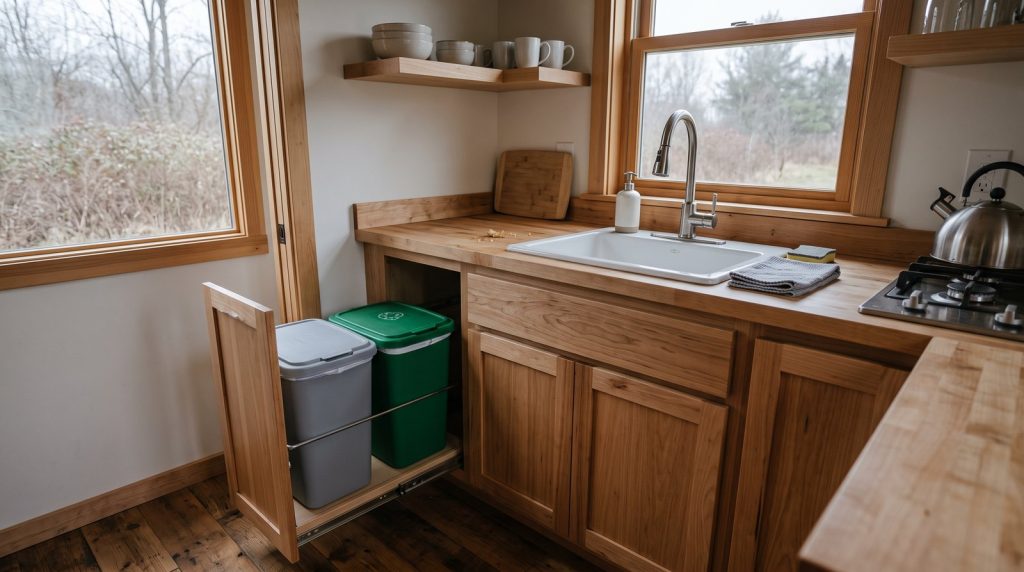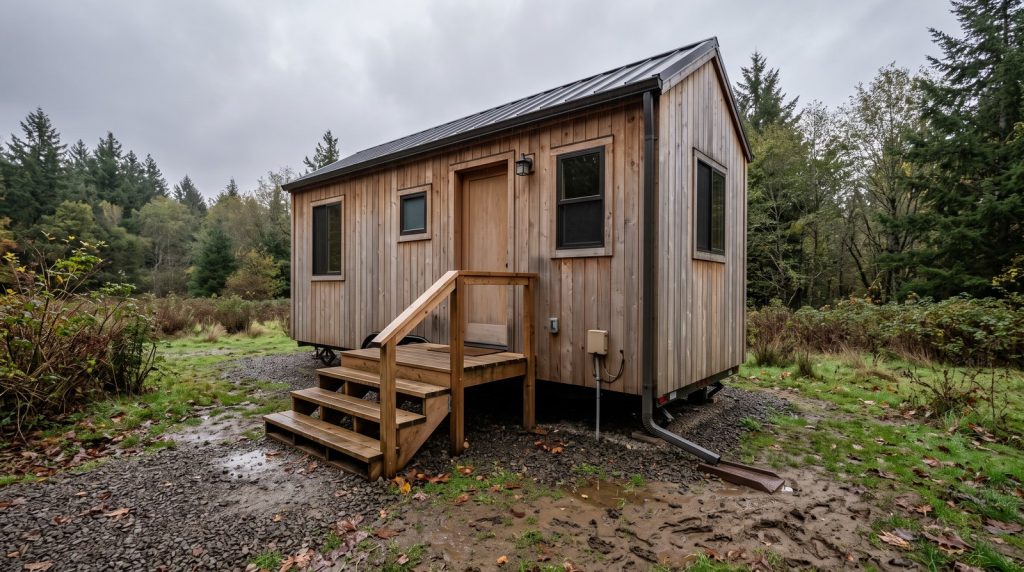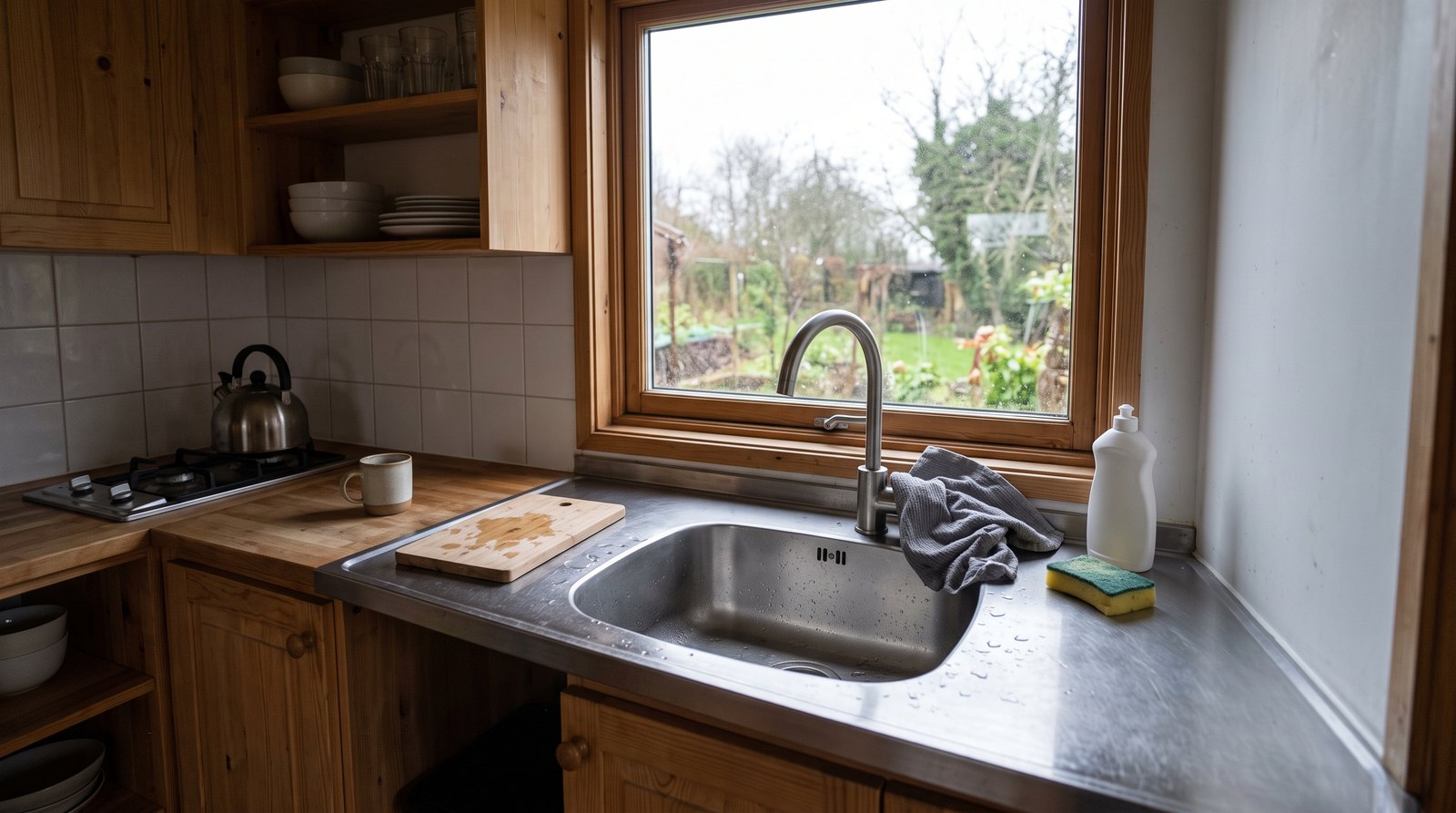
For most tiny houses, a 23 to 27 inch single-bowl stainless steel sink is the best balance of washing space, cabinet room, weight, and cost. Choose a compact double bowl only if you truly separate washing and rinsing. Pick a workstation sink when its fitted accessories can replace valuable counter space.
Table of Contents
Which Tiny House Kitchen Sink Type Works Best?
A single bowl works best for most tiny homes because it fits large pans without dividing a small opening. A low-divide double bowl suits owners who hand-wash daily and want separate zones. A workstation sink earns its space when the cutting board and drying rack will be used often, not stored elsewhere.
Quick answer by situation
- Smallest practical kitchen: Choose a 20 to 25 inch single bowl with an offset drain.
- Frequent hand-washing: Consider a low-divide or unequal double bowl, but check the size of each basin.
- Very little counter space: Use a workstation sink with fitted boards, racks, and colanders.
- Simple, low-cost build: A drop-in stainless steel single bowl is usually the easiest choice.
- Heavy or breakable cookware: Compare stainless steel with composite carefully, including total installed weight.
Single bowls make the most of limited width. A full-size skillet, baking sheet, or stockpot can sit flat or at an angle without hitting a center divider. The tradeoff is that dirty dishes and food preparation share one basin. A removable tub or roll-up rack can create a second zone only when needed.
Traditional equal double bowls can feel cramped in a 25 inch sink because each basin becomes narrow. A low divider lets pan handles cross the middle while still separating rinse water. A 60/40 split gives one useful washing bowl and one smaller prep bowl. Measure your largest pan, not just the overall sink.
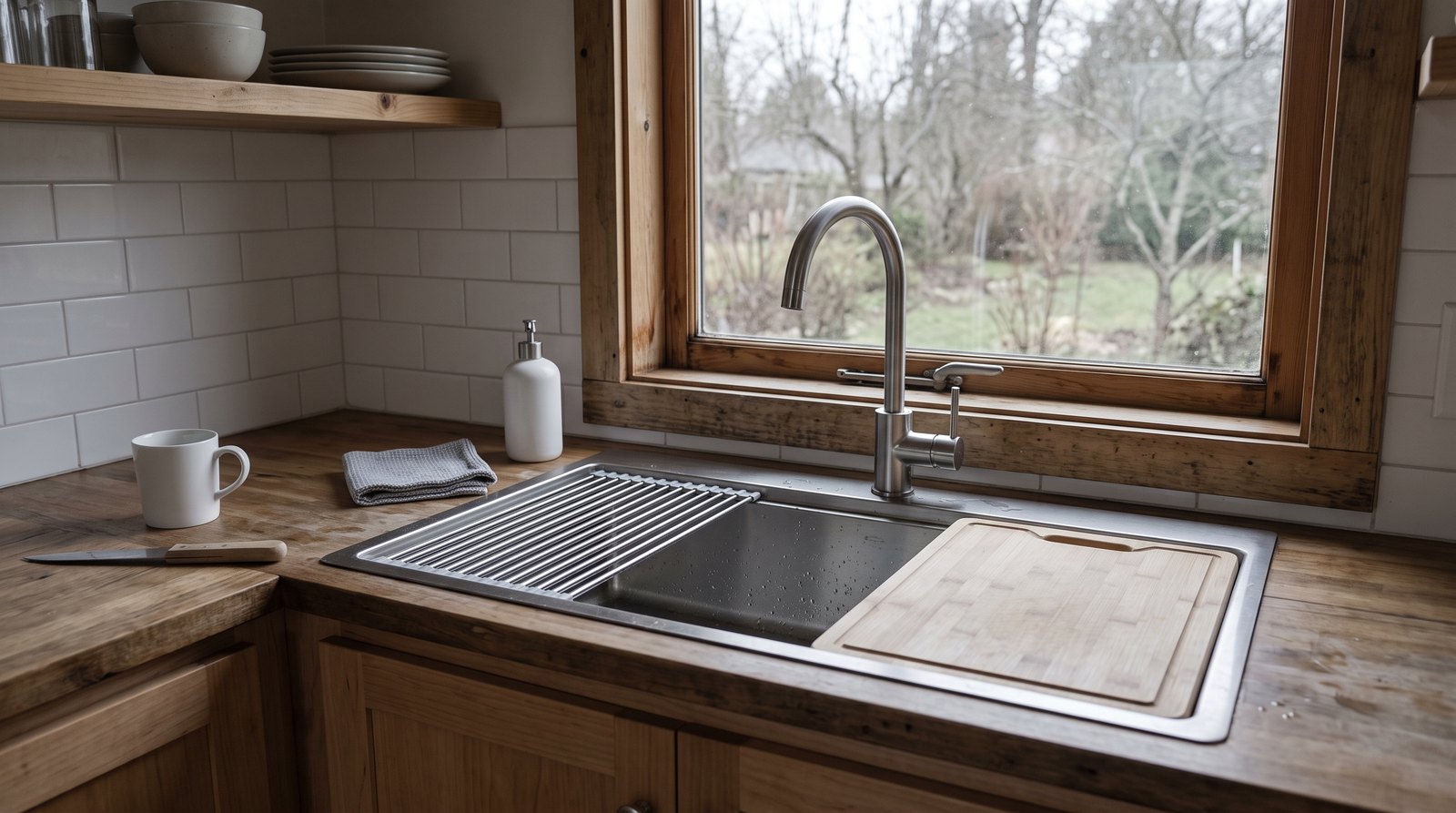
A workstation has ledges that support a cutting board, drying rack, or colander above the basin. That can turn the sink into temporary counter space, which is genuinely valuable in an eight-foot kitchen run. Accessories must fit securely, drain well, and have a convenient storage place when they are not in use.
Start With Cabinet Width and Bowl Depth
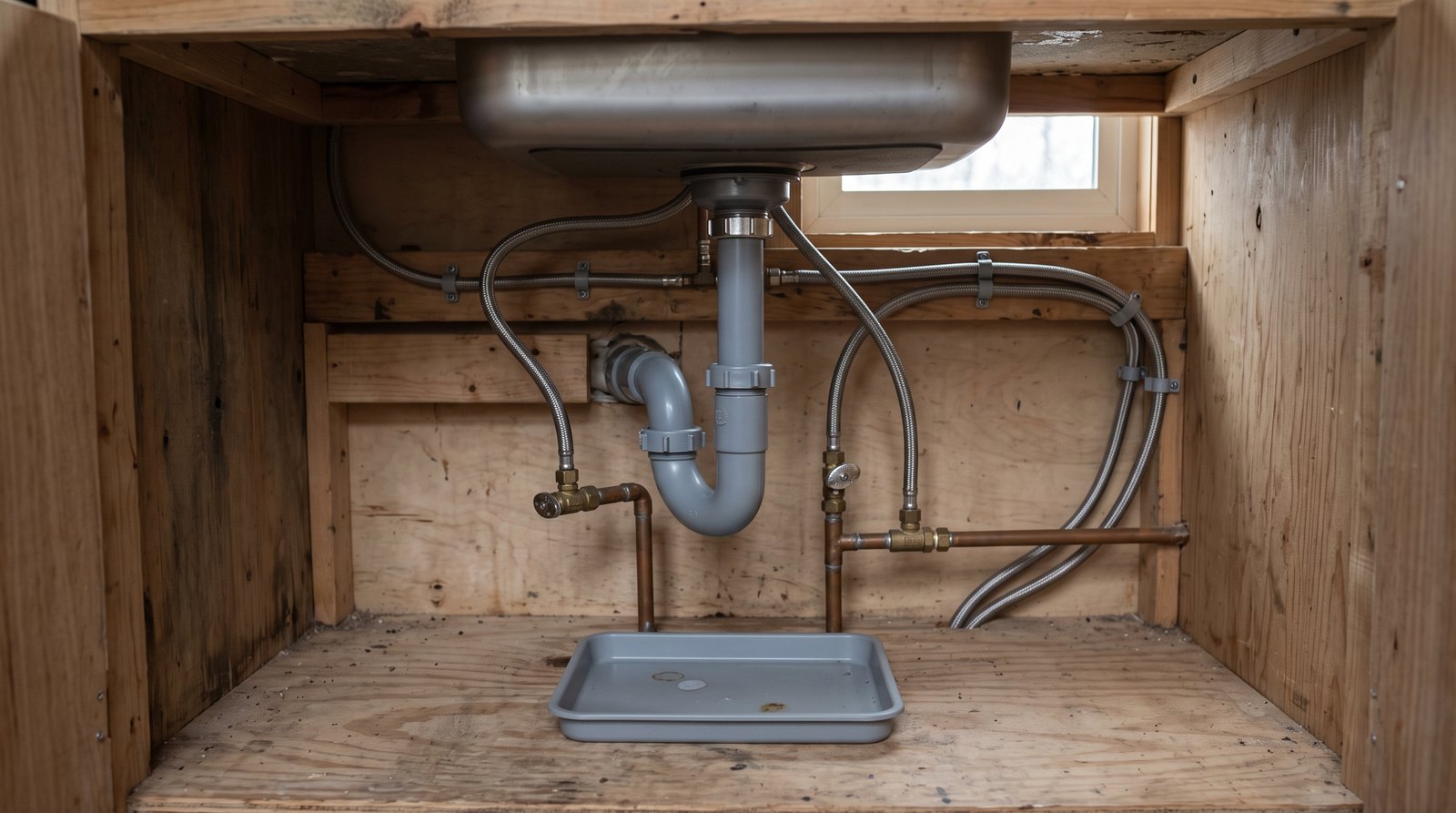
Measure the inside cabinet width, front-to-back clearance, counter thickness, and available depth before choosing a sink. The advertised sink width is not the required cabinet width. Mounting clips, rails, faucet hardware, plumbing, and countertop supports all need room. Follow the exact minimum cabinet size in the sink manufacturer’s current specification sheet.
A 24 inch sink may require a 27 inch base cabinet. That is not unusual. For example, a current 24 inch undermount stainless model from Elkay lists a 27 inch minimum cabinet. Some farmhouse and workstation designs need still more clearance at the sides or front. Never assume a nominal cabinet and sink of the same width are compatible.
Bowl depth also changes how the kitchen feels. An 8 to 9 inch bowl hides dishes and handles pots, but its bottom sits lower. That can reduce knee comfort for a tall user and consume the cabinet space needed for a trap, water filter, trash pull-out, or winterizing access. A 6 to 7 inch bowl saves space below and may be easier to reach, but it splashes more readily.
Check the counter cutout before ordering. A drop-in sink needs enough rim around the opening for clips and sealant. An undermount sink needs a compatible solid counter, a correct template, and independent mechanical support. An apron-front sink may require cabinet modification. Sink and countertop instructions control the cutout and support method.
Plan the Faucet, Drain, and Water Use Together
Match faucet reach to the drain and center of the working bowl so water lands where it is useful, not on the rear wall. Keep the trap and shutoff valves reachable. An offset drain can free cabinet space, while a deep center drain may conflict with drawers, filters, pumps, or a compact water heater.
Check spout height as well as reach. A very tall spring faucet can overwhelm a tiny kitchen, hit a shelf or window trim, and splash from a shallow bowl. A compact pull-down faucet usually offers enough reach for rinsing corners. Confirm that its hose and counterweight can move freely inside the cabinet without catching on pipes or stored items.
Federal efficiency rules limit kitchen faucets to no more than 2.2 gallons per minute at 60 psi. Many current faucets use 1.5 to 1.8 gallons per minute, and some states or municipalities require lower rates. WaterSense does not label kitchen faucets, so read the listed flow rate and applicable certification instead of relying on a WaterSense claim.
Lower flow reduces water and hot-water use, but sink habits matter more than bowl count alone. Filling either a single or double bowl to the top wastes water. Use a dishpan or fill only the area needed. For an off-grid home, check pump flow, accumulator behavior, water-heater output, and tank capacity before choosing a high-flow spray faucet.
Leave a removable panel or cabinet opening around the trap and shutoffs. A pretty fixed shelf that blocks a leaking compression joint is a poor trade. If the sink will have a disposal, filter, dishwasher connection, or condensate drain, draw every component inside the cabinet before cutting the counter.
Compare Materials, Weight, and Counter Support
Stainless steel is usually the safest tiny-house choice because it is relatively light, widely available, and tolerant of travel. Composite, cast iron, fireclay, and stone sinks can be attractive and quiet, but their added weight and brittle edges demand better support. The counter, cabinet, and trailer load plan must handle the complete assembly.
For stainless steel, gauge describes thickness, and a lower gauge number means thicker steel. Common residential choices include 16, 18, 20, and 22 gauge. An 18 gauge sink is a practical middle ground for many builds. Sound pads and undercoating reduce drumming, while rounded inside corners are easier to clean than sharp zero-radius corners.
Composite granite resists dents and can be quieter, but it is heavier and may show mineral deposits. Fireclay and cast iron have a substantial look, yet they add considerable weight and can chip if the house moves or the cabinet flexes. A dark finish may show hard-water residue. Review cleaning restrictions before using abrasive pads or harsh chemicals.
Weight is more than the sink itself. Include the faucet, disposal if any, full accessories, mounting hardware, and water that may remain during travel. Keep the assembly close to a strong part of the floor and cabinet structure when possible. For a tiny house on wheels, include it in the overall axle and side-to-side weight calculation discussed in your build plan.
An undermount sink should not hang from adhesive alone. Use the clips, rails, brackets, or support frame specified by the sink and counter manufacturers. A drop-in rim distributes load differently, but its cabinet still needs to stay square. If you are already planning long-term durability, see our guide to how long tiny houses last.
Seal, Restrain, and Winterize the Sink
A tiny house sink needs the same watertight installation as any kitchen, plus secure plumbing and travel preparation if the home moves. Seal the rim as directed, support supply and drain lines, protect pipes from sharp edges, and add access for inspection. Before towing or freezing weather, remove loose accessories and drain vulnerable components.
Use only the sealant specified for the sink and countertop materials. Too little can let water reach particleboard or cabinet joints. Too much can make a future repair unnecessarily destructive. Clean squeeze-out promptly, allow the required cure time, and test by filling and draining the bowl while watching every connection with a dry paper towel.
For a tiny house on wheels, secure the faucet body, supply lines, trap, and any water filter so vibration cannot make them strike the cabinet. Use travel latches on doors and drawers. Store the cutting board, colander, soap bottle, and roll-up rack before moving. Do not leave heavy cookware in the basin unless it is restrained.
Winterizing depends on the plumbing design and climate. Shut off the water, drain tanks and lines, open faucets as directed, and protect traps and appliances with an approved method. Some owners use compressed air or non-toxic RV antifreeze, but equipment instructions control. A trap, sprayer hose, filter housing, or pump can retain water even after the faucet stops flowing.
If the home travels regularly, review the broader tradeoffs in tiny house versus RV living. Movement changes what counts as a good kitchen detail, especially for rigid plumbing, countertop weight, and loose accessories.
What Does a Tiny House Kitchen Sink Cost?
In 2026, budget about $80 to $220 for a basic compact stainless sink, $150 to $350 for many double-bowl models, and $180 to $500 for a compact workstation sink. Premium brands, heavy materials, faucets, disposals, countertop cutting, and professional plumbing can push the completed project well above the sink’s shelf price.
Current retail examples show why a range is more honest than one average. Basic 25 inch stainless single bowls appear around $80 to $200, while 25 inch double bowls commonly start around $150 to $210. Compact workstation models begin around $180, with many 27 to 30 inch choices in the $280 to $500 range. Prices and promotions change.
Add the pieces that listings often omit: drain assembly, basket strainer, faucet, supply lines, shutoff valves, trap parts, clips, sealant, disposal flange, support rails, and any new cabinet panel. Countertop fabrication can cost more than the sink, especially for stone. A replacement that changes the cutout or drain location also adds labor.
A straightforward drop-in replacement may be a reasonable do-it-yourself job for an experienced owner. An undermount sink, stone cutout, new venting arrangement, or relocated drain is less forgiving. Product instructions and the plumbing code adopted by your jurisdiction control the installation. A licensed plumber or counter fabricator is worth considering when a leak could damage the entire compact cabinet run.
How to Choose Without Regretting It
Choose from the cabinet outward, not from a showroom photo inward. Confirm the sink’s minimum cabinet size, bowl dimensions, depth, drain position, mounting method, and weight. Then test those numbers against your largest pan, faucet reach, plumbing layout, counter material, travel needs, and cleaning habits before you buy.
Make a cardboard template of the outer sink and place it on the planned counter. Mark the bowl, faucet, drain, window trim, nearby cooktop, and remaining prep area. Open adjacent drawers and doors. This simple mockup often reveals that a dramatic large sink leaves too little landing space or puts the faucet against the window.
For most builds, the low-risk specification is a 23 to 27 inch, 18 or 20 gauge stainless single bowl with rounded corners, an offset drain, a compact pull-down faucet, and an accessible trap. Upgrade to a workstation when its accessories replace counter functions. Choose a double bowl only after confirming that each bowl is actually useful.
Frequently Asked Questions
Tiny house sink decisions usually come down to cabinet space, bowl usability, plumbing access, and movement. These short answers cover the questions owners ask most often. Always compare them with the exact sink and faucet instructions, the countertop manufacturer’s requirements, and the plumbing rules adopted by the city or county where the home will be installed.
What size sink is best for a tiny house?
A 23 to 27 inch single-bowl sink fits many tiny-house kitchens well, but cabinet dimensions decide the final answer. Check the manufacturer’s minimum base-cabinet width, not only the sink’s outside width. Leave room for clips, faucet hardware, the trap, shutoff valves, and any filter or storage system below.
Is a single or double sink better in a tiny house?
A single bowl is better for most tiny homes because it handles large pans within a narrow cabinet. A double bowl is useful when you regularly separate washing and rinsing, but compact equal bowls can be frustratingly small. A low divider or 60/40 split is often more practical than two equal basins.
Are workstation sinks worth it in a tiny house?
A workstation sink is worth it when its cutting board, rack, and colander replace counter space you would otherwise need. It is less useful if the accessories are awkward, hard to store, or always in the way. Confirm that fitted parts are replaceable and that the ledges do not make cleaning difficult.
How deep should a tiny house kitchen sink be?
An 8 to 9 inch bowl gives good pot capacity and hides dishes, but it reduces space below and may be uncomfortable for some users. A 6 to 7 inch bowl preserves cabinet room and reach. Mock up the bottom height, trap, and storage before choosing depth, especially over drawers.
Can a tiny house on wheels use a garbage disposal?
It can, but a disposal adds weight, electrical load, vibration, drain complexity, and winterizing work. It may also conflict with septic, campground, or local wastewater rules. Confirm the power circuit, plumbing design, tank strategy, and manufacturer instructions first. Many owners choose a basket strainer and composting routine instead.