Tiny house security works best as a layered system: strengthen the entry door, lock accessible windows, immobilize a trailer, improve visibility, and add an alarm or camera with backup power. Choose upgrades that fit how and where you live, but never install a lock or barrier that delays emergency escape.
Table of Contents
Start With the Door, Frame and Lock
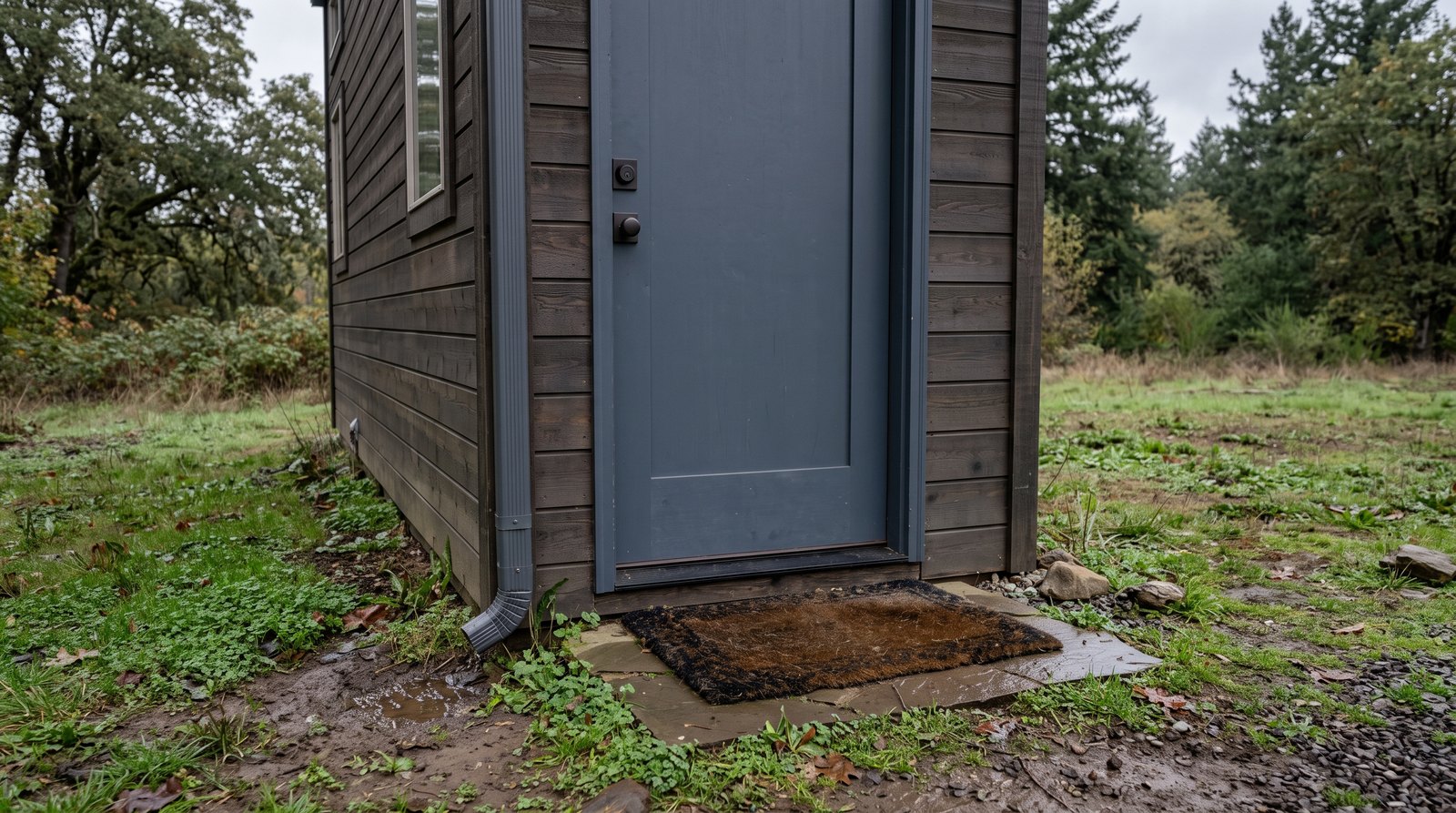
The best first upgrade is a solid exterior door with a tested deadbolt, a reinforced strike area, and a frame firmly attached to the wall structure. A premium lock cannot compensate for a hollow door, short screws, loose hinges, or a thin jamb that flexes when pushed.
Inspect the whole assembly before buying hardware. Close the door and check that the deadbolt enters the strike without lifting or pulling the door. Look for movement at the jamb, cracked wood around the strike, loose hinge screws, exposed hinge pins on an outswing door, and gaps that make the latch easy to reach.
For a foundation tiny home, a single-cylinder deadbolt with an interior thumb turn is usually the practical choice because occupants can leave without finding a key. Choose listed or independently certified residential hardware. BHMA certification, for example, evaluates residential deadbolts for security, durability, and finish. Confirm that the lock fits the door thickness and backset.
Use the strike hardware supplied or approved by the lock manufacturer, and fasten reinforcement into solid framing where the door construction allows it. Do not blindly drive long screws into a tiny house wall. Wiring, plumbing, metal framing, and very thin wall assemblies may sit close to the jamb. Locate hidden services first.
Outswing doors need hinges designed for exterior security, such as nonremovable pins or security studs. Sliding patio doors need a latch plus a correctly sized track stop that cannot fall loose during travel. Whatever the door style, test it from inside. An occupied home needs a simple exit path without a key, tool, code, or special knowledge.
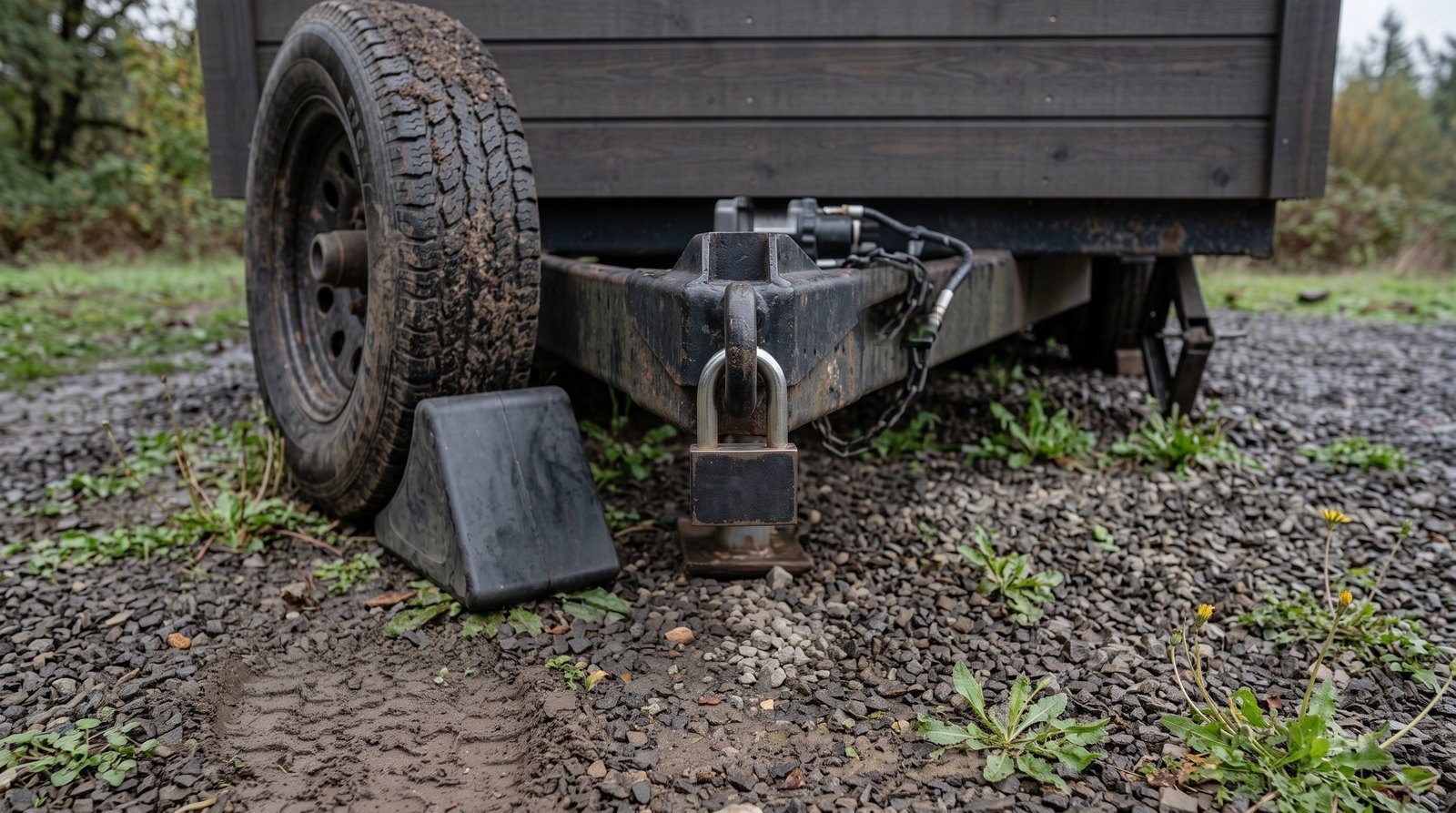
Secure a Tiny House on Wheels Before It Can Move
A tiny house on wheels needs two security plans: keep people out and keep the entire home from being towed away. Use a properly fitted coupler lock, protect the safety chains and receiver, add a visible wheel immobilizer, and make the trailer difficult to approach with a tow vehicle.
Match the coupler lock to the exact coupler style and size. A universal lock that rattles or leaves access to the latch may provide little delay. When the house is connected to a tow vehicle, lock the receiver pin and coupler latch. When it is parked, use a lock made for an unhitched coupler rather than improvising with a small padlock.
A wheel clamp or boot adds a separate obstacle, which matters because one defeated device should not free the trailer. Store the key away from the trailer tongue. If you use chains, route them through a structural part identified by the trailer builder, not through brake wiring, plumbing, a decorative bracket, or a lightweight stabilizer.
Coupler locks commonly cost about $15 to $60, while heavier lock kits and wheel clamps often cost $40 to $150 or more. Buy for fit and resistance to weather, not color alone. Road grime and rust can seize a lock, so lubricate it with a product approved by its manufacturer and test it before every move.
If you live in a THOW full time, review tiny house versus RV differences. Registration, campground policies, and insurance treatment can affect what equipment is permitted and how theft coverage works.
Protect Windows Without Blocking Emergency Escape
Window security should slow entry while leaving required escape openings immediately usable from inside. Repair loose latches, add locks that suit the window type, use stops carefully, and keep vegetation trimmed for visibility. Never screw shut or permanently block a window that serves as an emergency escape route.
Start by identifying which openings are part of the approved escape plan. Emergency escape and rescue openings generally must operate from inside without keys, tools, or special knowledge under modern model-code language, but the adopted rules and required dimensions vary. Confirm the approved plan with the local building official for a foundation home and with the applicable standard or manufacturer for a THOW.
For sliding windows, a fitted stop can limit movement, but it must be easy to release where full opening is required. Casement windows need sound operators and latches. Double-hung windows may accept sash locks or secondary pins designed for that window. Avoid improvised screws that damage the frame or create an exit hazard.
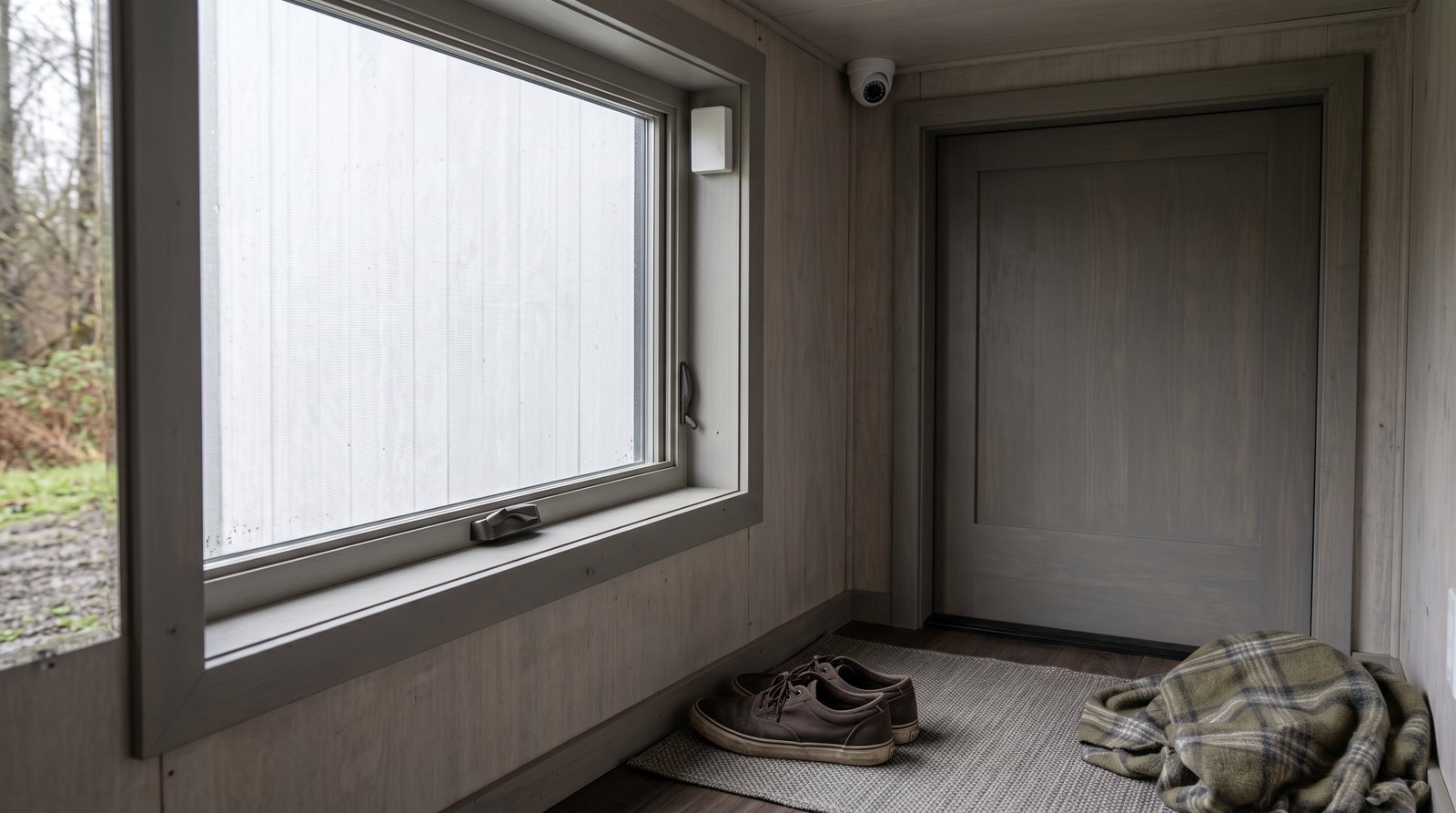
Choose Alarms, Cameras and Backup Power
An alarm or camera should detect the right event, send an alert over a dependable connection, and keep working during a short outage. In a tiny house, a simple door sensor, one or two well-placed cameras, audible alarms, and secure account settings usually outperform a complicated system that is hard to maintain.
Place exterior cameras to cover the approach, entry door, and trailer tongue without recording private neighboring spaces. Mount them high enough to resist casual tampering but low enough to capture useful detail. Follow campground, rental, homeowners association, and local privacy rules. Never aim a camera into another occupied site or shared restroom area.
Cloud cameras depend on both power and internet service. A small uninterruptible power supply can keep a router and base station alive during a short outage. Cellular backup can help where wired internet is unreliable, but signal quality, data limits, subscription costs, and cold-weather battery performance all matter. Test alerts with the main power and Wi-Fi temporarily disconnected.
Protect camera and alarm accounts with a unique password and multifactor authentication. CISA recommends MFA because a stolen password alone is then not enough to access an account. Keep device firmware and apps current, remove access for former residents, and review shared accounts after changing renters, caregivers, or service providers.
Do not confuse intrusion security with life safety. Keep required smoke and carbon monoxide alarms in place and follow their instructions. The U.S. Fire Administration recommends smoke alarms in every bedroom, outside each sleeping area, and on every level, plus carbon monoxide alarms outside sleeping areas and on every level. Test them regularly.
Budget roughly $20 to $60 for basic entry sensors, $70 to $250 for each battery camera, and $100 to $400 for a starter alarm kit. Optional monitoring or cellular service can add about $10 to $60 per month. Confirm current equipment, storage, and subscription prices before choosing a platform.
Use Lighting and Placement to Reduce Risk
Good placement and controlled lighting can reduce easy concealment without turning a small site into a floodlit yard. Keep the entry visible, trim hiding places, secure ladders and tools, use motion lighting where appropriate, and make the home look consistently occupied when you are away.
Do not hide the only entry behind a tall fence or dense hedge. Clear sightlines help neighbors notice unusual activity. At the same time, avoid advertising valuables through uncovered windows. Simple shades, a locked exterior storage box, and a routine for putting tools away can remove tempting targets without making the house feel fortified.
Plan for Travel, Rentals and Campgrounds
Security changes when a tiny house travels or sits on someone else’s property. Use a departure checklist, document who has keys and codes, follow the host’s installation rules, and avoid permanent modifications in a rental. Recheck every lock and sensor after towing because vibration can loosen hardware and shift doors.
Before travel, remove loose cameras, verify that windows are latched, engage travel locks on cabinets, and confirm that exterior security devices will not interfere with towing equipment. Never leave a wheel clamp, tongue lock, stabilizer, or cable in a position that can damage the trailer when it moves. Use the trailer builder’s travel checklist as the controlling guide.
Renters should get written permission before drilling, adding a smart lock, changing cylinders, or mounting cameras. Ask who may retain a key, how codes are reset, and who receives alerts. A removable door sensor or freestanding indoor camera may be appropriate, but it still must respect privacy and emergency access.
Review your policy rather than assuming theft is covered. A tiny home can be treated differently depending on whether it is permanently installed, registered as an RV, being transported, or used as a rental. Our guide to tiny house insurance costs and coverage explains questions to ask an insurer.
Quick Answer by Situation
The right first purchase depends on the home’s weak point and living arrangement. Fix damaged doors or windows before adding electronics, immobilize a trailer before buying interior sensors, and choose portable devices when you rent. Use this short list to prioritize a limited security budget.
- Foundation home: Reinforce the entry assembly, repair accessible window latches, add lighting, then install an alarm or camera.
- Tiny house on wheels: Add a fitted coupler lock and wheel immobilizer, then secure the door and monitor the trailer tongue.
- Remote or off-grid site: Favor local audible alarms, dependable batteries, and cellular alerts only after testing signal strength.
- Rental or campground: Use approved removable hardware, document permission, and respect privacy and site rules.
- Frequent travel: Build a written departure and arrival checklist, inspect alignment, and test every lock after towing.
Budget and Install in the Right Order
A useful basic security package can cost about $200 to $600 if the door and windows are already sound. A broader setup with premium locks, trailer immobilizers, cameras, backup power, and monitoring can exceed $1,500. Spend in order of physical weakness, safety, connectivity, and convenience.
Begin with a walkthrough in daylight. List each entry point, escape opening, exterior storage compartment, trailer control, and place where a person could work unseen. Note what is broken, what is merely inconvenient, and what would still function during a power or internet outage.
Next, fix structure and hardware. Then add lighting and visible deterrents. Add electronic detection only after doors and windows close correctly. Finally, test notifications, backup power, and account recovery. This order prevents a common mistake: paying for a camera that records an intruder using a weak latch you never repaired.
Maintain a Simple Security Routine
Security hardware only helps when it still works, so use a monthly inspection and a travel-day check. Test locks, sensors, alarms, cameras, lighting, batteries, and account access. Clean dirt from trailer locks, correct door movement early, and update your records after any equipment change.
For a THOW, inspect coupler and wheel locks for corrosion, impact damage, or packed dirt. After towing, check the door jamb, strike, window latches, camera mounts, and sensor alignment. Vibration can loosen screws and move magnetic sensors just far enough to create false alarms or missed openings.
Revisit the plan after moving sites, changing internet providers, adding a pet, or altering the layout. If the home will sit empty, tell a trusted local contact how to reach you and what an alarm means. Do not share permanent access codes when a temporary code or physical key log will do.
Frequently Asked Questions
What is the best door lock for a tiny house?
A certified single-cylinder deadbolt is a strong starting point for most occupied tiny homes, provided the solid door, strike, hinges, jamb, and wall attachment are also sound. Choose hardware that fits the door and allows immediate exit from inside. Confirm local requirements before using any keyed interior lock.
How do I keep a tiny house on wheels from being stolen?
Use several independent layers: a fitted unhitched coupler lock, locked receiver hardware when connected, a wheel clamp, controlled hitch access, visible lighting, and a camera aimed at the trailer tongue. Record the VIN and current photographs. No portable device is unbeatable, but several obstacles increase time, noise, and effort.
Can I add locks to emergency escape windows?
Only use hardware that preserves the required clear opening and can be released from inside without a key, tool, or special knowledge. Do not screw an escape window shut or cover it with fixed bars. Because adopted codes and tiny house classifications vary, confirm the approved escape arrangement with the responsible authority.
Do tiny house security cameras need internet access?
Not always. Some cameras record locally, while cloud alerts and remote viewing usually need Wi-Fi or cellular service. Check what happens when internet or power fails, how recordings are retrieved, and whether a subscription is required. Use backup power where practical and protect the account with a unique password and MFA.
How much should I budget for tiny house security?
Plan about $200 to $600 for basic mechanical upgrades and simple sensors when the door and windows are already sound. A system with premium locks, trailer protection, multiple cameras, backup power, and professional monitoring may cost $600 to $1,500 or more, plus monthly service. Repair physical weaknesses before adding electronics.