Tiny house builder contracts should define exactly what you are buying, when payments become due, how work is inspected, and who handles delivery and defects. Before paying a deposit, verify the builder and your placement requirements. Have an independent local attorney review unclear terms, especially cancellation rights, payment protection, and delay remedies.
Table of Contents
Quick answer by situation
The right contract questions depend on whether you are ordering a custom build, buying a finished house, or hiring someone to build on your land. Start with the transaction you actually have. A showroom purchase agreement and a site construction contract can assign very different responsibilities to the buyer.
- Ordering a custom tiny house: Attach dated drawings, specifications, exclusions, payment milestones, and a written change-order process before production begins.
- Buying a completed house: Identify the actual unit, arrange an independent inspection, and confirm which documents transfer with it.
- Building on your property: Define responsibility for permits, site preparation, utility connections, inspections, and final approval.
- Buying from an out-of-state workshop: Resolve destination requirements, transport arrangements, dispute location, and warranty travel costs before sending money.
- Still arranging land or financing: Negotiate clear contingencies before committing to nonrefundable costs. Do not assume an unsuccessful loan application cancels the purchase.
Keep the advertisement, quote, specification sheet, and final agreement together. Highlight any mismatch, such as a pictured deck that does not appear in the price. Ask for a revised signed document instead of relying on a reassuring phone call.

Verify the builder and define the exact house
Verify the legal business taking your money and describe the house precisely enough that another professional could identify what was promised. A trading name, social media account, and attractive model photo are not sufficient identifiers. The contract should connect the seller, the plans, the price, and your specific order.
Request the business address, named contact, applicable license or registration, and evidence of relevant insurance. Check credentials with the issuing agency. The FTC recommends checking licensing and insurance, comparing written estimates, and investigating complaints when hiring contractors. Confirm which licensing category applies to your particular purchase instead of assuming every tiny house seller is a residential contractor.
Ask recent customers whether the delivered house matched the order and whether warranty requests received a response. If possible, visit the workshop or arrange a live walkthrough. A business registry entry can establish an entity name, but it does not demonstrate construction quality or available cash.
Attach a floor plan with dimensions and a dated specification schedule. Identify wall and roof assemblies, windows, appliances, finishes, heating equipment, and included furniture. For a towable unit, ask for the chassis identification and agreed weight documentation. Specify what happens if a selected product becomes unavailable.
Create a separate exclusions list. Delivery, steps, skirting, permits, foundations, utility hookups, and site grading deserve explicit answers. Ask whether sales tax, engineering, inspection charges, and destination paperwork are included. An allowance should identify its amount and explain who pays the difference when the actual selection costs more.
Try a simple comparison exercise: send two builders the same written list of requirements and ask them to mark each item included, excluded, or awaiting a price. This makes a lower quote easier to evaluate. A buyer who needs a completed bathroom should not have to infer whether a shell price includes fixtures, installation, or only rough openings.
Set payment milestones before paying a deposit
A payment schedule should connect each installment to a defined deliverable and a way to verify it. There is no deposit percentage that automatically makes every tiny house purchase safe or lawful. The applicable rules depend on the location, seller, and transaction, so confirm them before accepting a schedule.
Ask what the initial payment purchases: design work, a reserved production slot, materials, or part of the house. Separate those purposes and identify what is refundable, under which circumstances, and by what deadline. A label such as reservation fee should not replace an explanation of what happens to your money.
For an example of why location matters, California CSLB guidance for home improvement contracts limits a down payment to the smaller of $1,000 or 10 percent of the contract price. That is not a nationwide tiny house deposit rule. Ask a qualified local attorney whether that category or another legal framework governs your deal.
A useful milestone might be completion of a documented stage followed by an agreed inspection. A vague instruction to pay when materials are ordered gives the buyer little information. Request an invoice that names the milestone, evidence supporting completion, and the remaining balance. Negotiate these checks before signing.
Ask who owns paid-for materials while they remain in the workshop, how they are identified, and what happens if production stops. Have counsel evaluate any proposed escrow, security arrangement, or lien documentation. None should be treated as automatic protection merely because the seller mentions it.
If borrowing, compare the builder schedule with the lender draw requirements. Our guide to tiny house financing options can help frame that discussion. A deposit due before financing approval creates a separate risk that needs a written answer.
Write down inspections and change orders
Put inspection access and change approval into the agreement before the build starts. Define who may inspect, when access is available, and how identified problems are addressed. A photograph can document progress, but it cannot answer every question about concealed work, agreed materials, or whether the house meets its intended requirements.
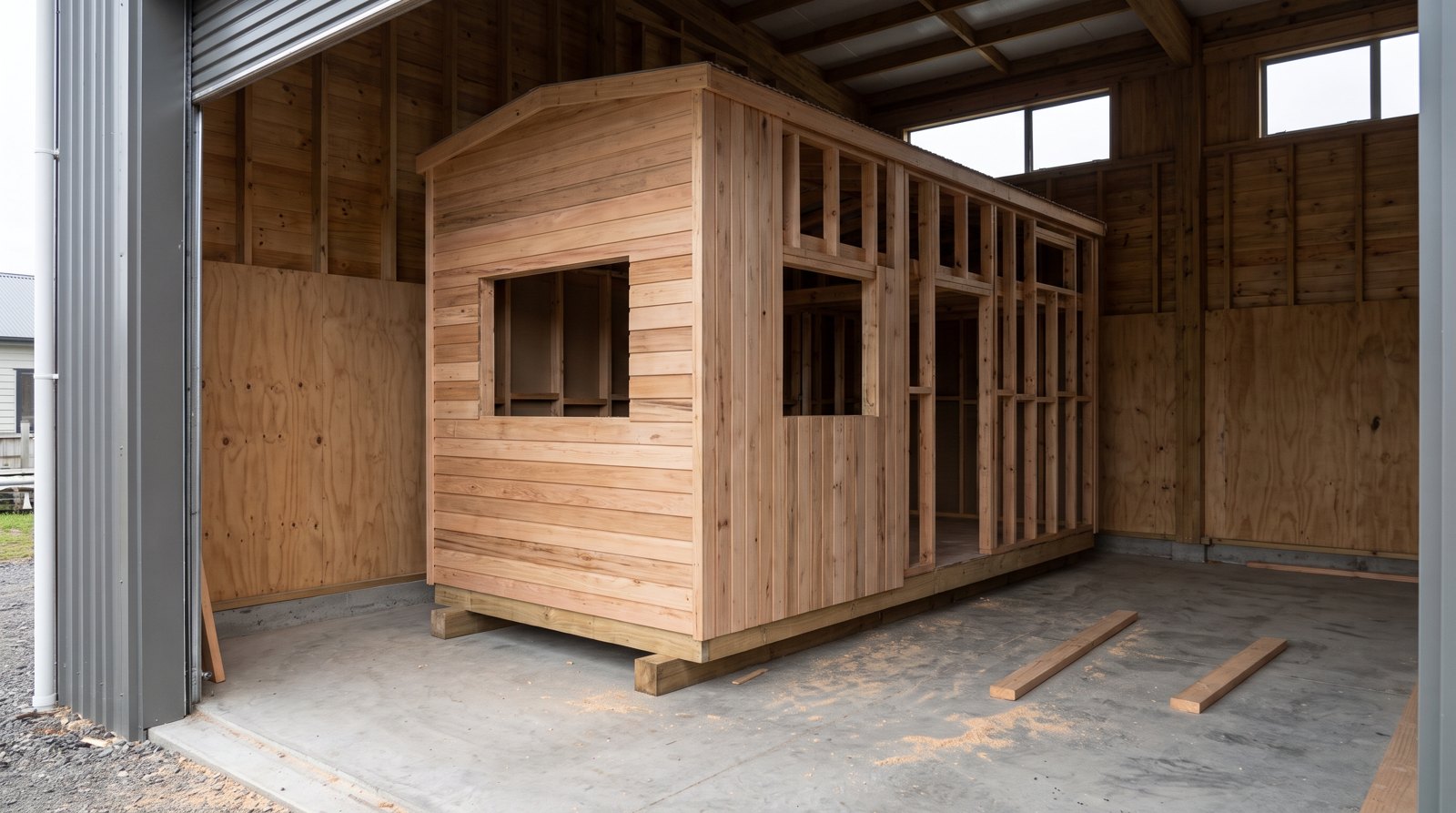
Ask your independent inspector which stages are worth visiting before walls or floors close up. Agree on notice periods, access arrangements, and who pays for repeat visits. Specify whether the builder will provide dated progress photographs and relevant test or inspection records. Give the inspector the same plans and specifications that form part of the contract.
Keep official approvals separate from your private quality review. Washington L&I explains, for example, that qualifying offsite-built tiny houses require its construction approval process, while buyers must also check destination requirements with the local building department. A factory approval is not a promise that every site will accept the house.
For each proposed change, request a description, price adjustment, schedule effect, and any revised drawing. Both parties should approve the change through the process the contract specifies before the work proceeds. Even a seemingly small substitution can affect a tight layout, appliance clearance, or transport weight.
For instance, changing from a freestanding refrigerator to a wider model may require cabinet changes and alter the aisle. Record the resulting dimensions, not just the new appliance name. Maintain one current revision set so the salesperson, workshop, inspector, and buyer are working from the same instructions.
Define delivery, delays, and acceptance
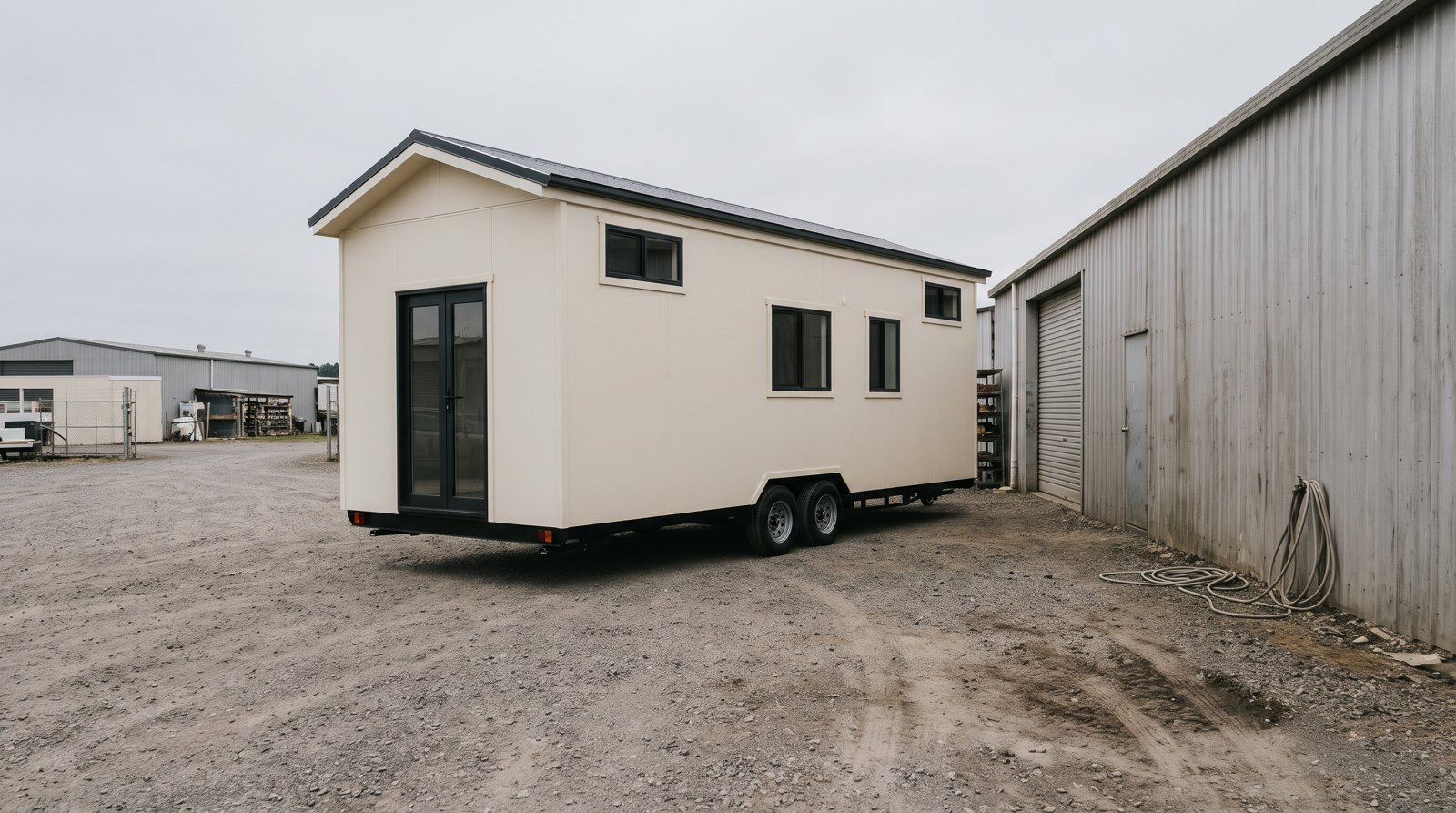
Delivery should mean more than a truck arriving somewhere near your property. Specify the destination, the handoff point, the party responsible for transport, and the condition required at arrival. Separate workshop completion, shipment, placement, utility connection, and permission to occupy, because they may occur on different dates.
Ask who obtains transport permits, checks the route, arranges any escort or crane, and confirms access to the pad. Agree on responsibility for a narrow entrance, soft ground, overhead obstructions, or a site that is not ready. The builder and carrier should know the intended delivery conditions before quoting.
Have the agreement identify when responsibility for damage passes between parties. Ask the insurer and carrier what coverage applies during loading, travel, unloading, and storage. Review tiny house moving costs while budgeting, then obtain a quote for your actual route and unit.
Use dated milestones and an update process for delays. Ask what qualifies for an extension, what notice is required, and what happens if the revised deadline is missed. Have counsel review cancellation or refund remedies instead of assuming a late delivery automatically lets you walk away.
Agree on a documented arrival inspection and punch list. Explain how shipping damage is recorded, how unfinished items are assigned, and when corrections are due. Discuss any final-payment holdback with the builder, lender, and attorney before signing. Do not invent a deduction after delivery that conflicts with the agreement.
Prepare a handoff checklist that names the documents and demonstrations you expect. These might include keys, appliance manuals, finish information, approved plans where applicable, inspection records, and an explanation of shutoff locations. Assign an owner to each missing item rather than leaving a loose promise to email everything later. Keep administrative completion visible alongside the physical work.
Make warranty service workable
A useful warranty explains both coverage and the practical route to a repair. Read the actual document before purchase and ask how service works after the house leaves the workshop. A promise is harder to use if every repair requires transporting your home hundreds of miles at your expense.
Ask when coverage starts, which components have separate terms, what maintenance records are required, and whom to contact. Identify who pays for diagnosis, labor, parts, travel, or return transport. Request the procedure for urgent leaks or other problems that could worsen while a claim is reviewed.
The FTC distinguishes a builder warranty from a separately purchased home service contract and notes that coverage and exclusions vary. Do not import a conventional home’s warranty duration into a tiny house purchase without checking the actual agreement and applicable law. Keep appliance warranties and installation records with the house documents.
Before signing, ask an independent attorney about cancellation terms, dispute location, arbitration, limits on remedies, and any personal guarantee. The CFPB advises careful contract review and consideration of legal review for substantial contractor agreements. Choose counsel familiar with the transaction and relevant states.
Keep signed versions, payment receipts, inspection reports, change orders, delivery photographs, and written repair requests in one accessible folder. Give a trusted household member a copy. If an issue develops, that record makes it easier to explain what was promised, what happened, and what resolution you are requesting.
Frequently asked questions
These answers address common buying questions, but the signed documents and applicable local rules still matter. Resolve uncertainties before you send money or authorize changes. When a seller says a clause is standard, ask what it means for your specific house, delivery location, financing arrangement, and inspection plan.
How much deposit should a tiny house builder require?
There is no single safe or lawful deposit percentage for every tiny house transaction. Ask what the deposit funds, whether it is refundable, and how your payment is protected. Confirm applicable limits with a local attorney or consumer agency, and negotiate later payments around documented progress rather than vague dates.
Can I cancel if my tiny house is delivered late?
Cancellation rights depend on the agreement and applicable law. Look for the delivery deadline, permitted extensions, required notices, and remedies for a missed deadline. Before signing, have an attorney explain the process and refund terms. Do not assume that any delay automatically cancels your payment obligations or guarantees a refund.
Should I hire an independent tiny house inspector?
An independent inspector can help assess whether the work matches the agreed plans and identify visible concerns within the inspection scope. Arrange access before signing and discuss useful construction stages with the inspector. A private inspection does not replace required government inspections or prove that a particular site permits occupancy.
What should a tiny house delivery agreement include?
Include the destination, access requirements, transport provider, permit responsibilities, delivery price, and the point when responsibility for damage transfers. Clarify loading, unloading, placement, storage, and delays caused by an unready site. Agree on arrival photographs, damage reporting, and acceptance procedures before the house leaves the workshop or storage yard.
Does a builder warranty cover every tiny house problem?
No. Coverage depends on the warranty, applicable law, the component involved, and the cause of the problem. Read exclusions and claim deadlines, and identify separate manufacturer warranties. Ask who pays for labor, travel, diagnosis, and transport. Obtain the actual warranty before purchase so you can judge whether service is practical.