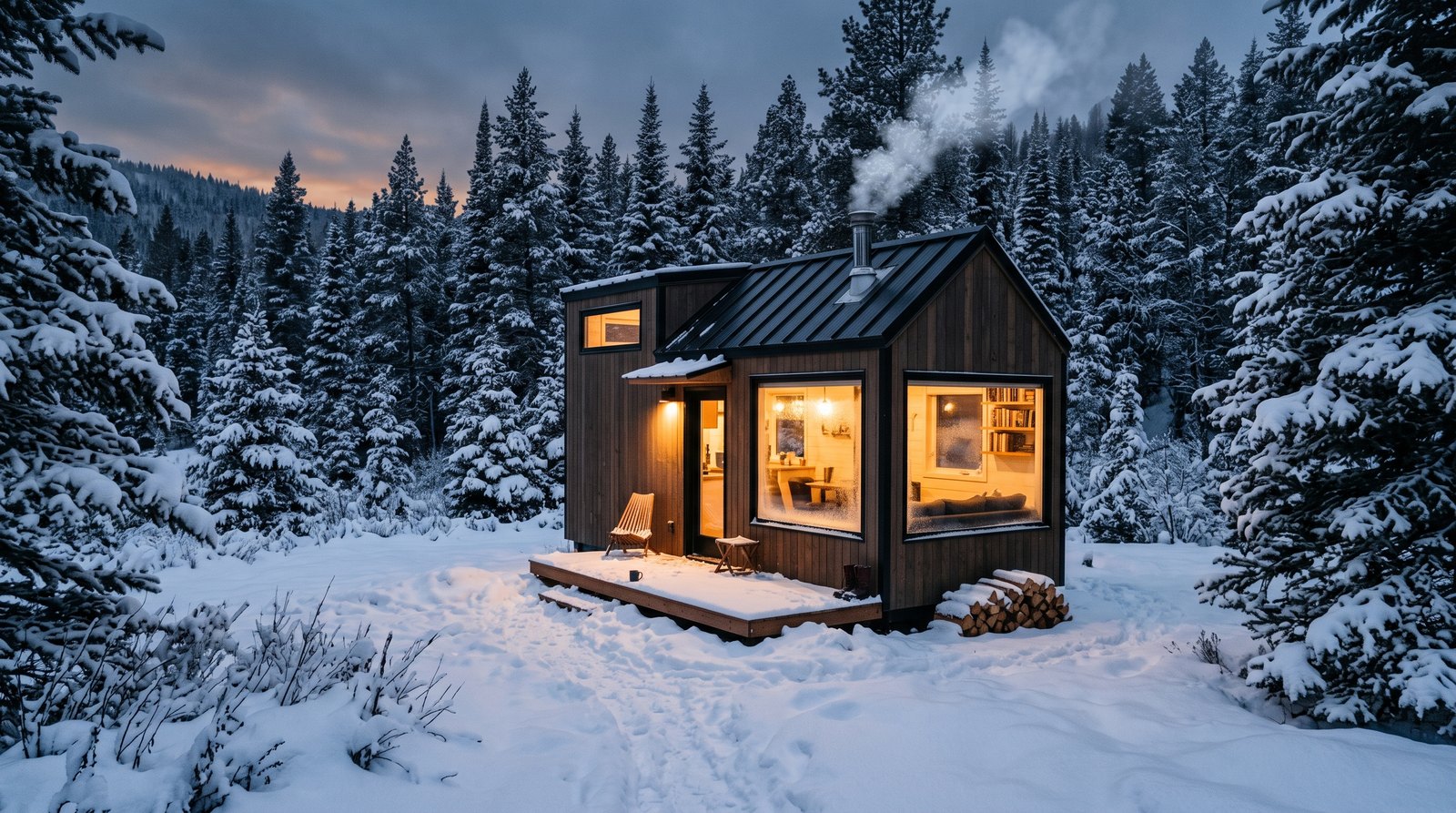
Yes, you can live in a tiny house in winter, and thousands of people do it in Minnesota, Colorado and Maine every year. It takes three things: enough insulation for your climate zone, a heat source sized for the coldest night rather than the average one, and a plumbing setup that assumes the temperature will drop below zero.
The part nobody tells you is that heating a tiny house is the easy problem. A well built 300 square foot house needs remarkably little energy to stay warm. The hard problems are moisture and plumbing, and they are the two that actually end winters early.
Table of Contents
What Winter Actually Does to a Tiny House
A tiny house loses heat faster per square foot than a normal house because it is almost all exterior wall. A 2,000 square foot home has a lot of interior volume protected by other rooms. A 24 foot tiny house has six sides exposed to the weather, including the floor, which sits in moving air under the trailer.
That surface to volume ratio cuts both ways. Yes, it leaks heat quickly. But the total heat load is still small, so a modest heater keeps up easily. The floor is the piece people underestimate. In a house on a foundation the floor sits over still air or earth. On a trailer it sits over wind, which strips heat continuously and freezes anything plumbed below the deck.
Winter also compresses every mistake. A gap in the vapor control layer that would take years to cause visible damage in a large house can soak a tiny house wall in one season, because the same amount of indoor moisture is concentrated in a fraction of the volume.
Heating a Tiny House in Winter: Four Real Options
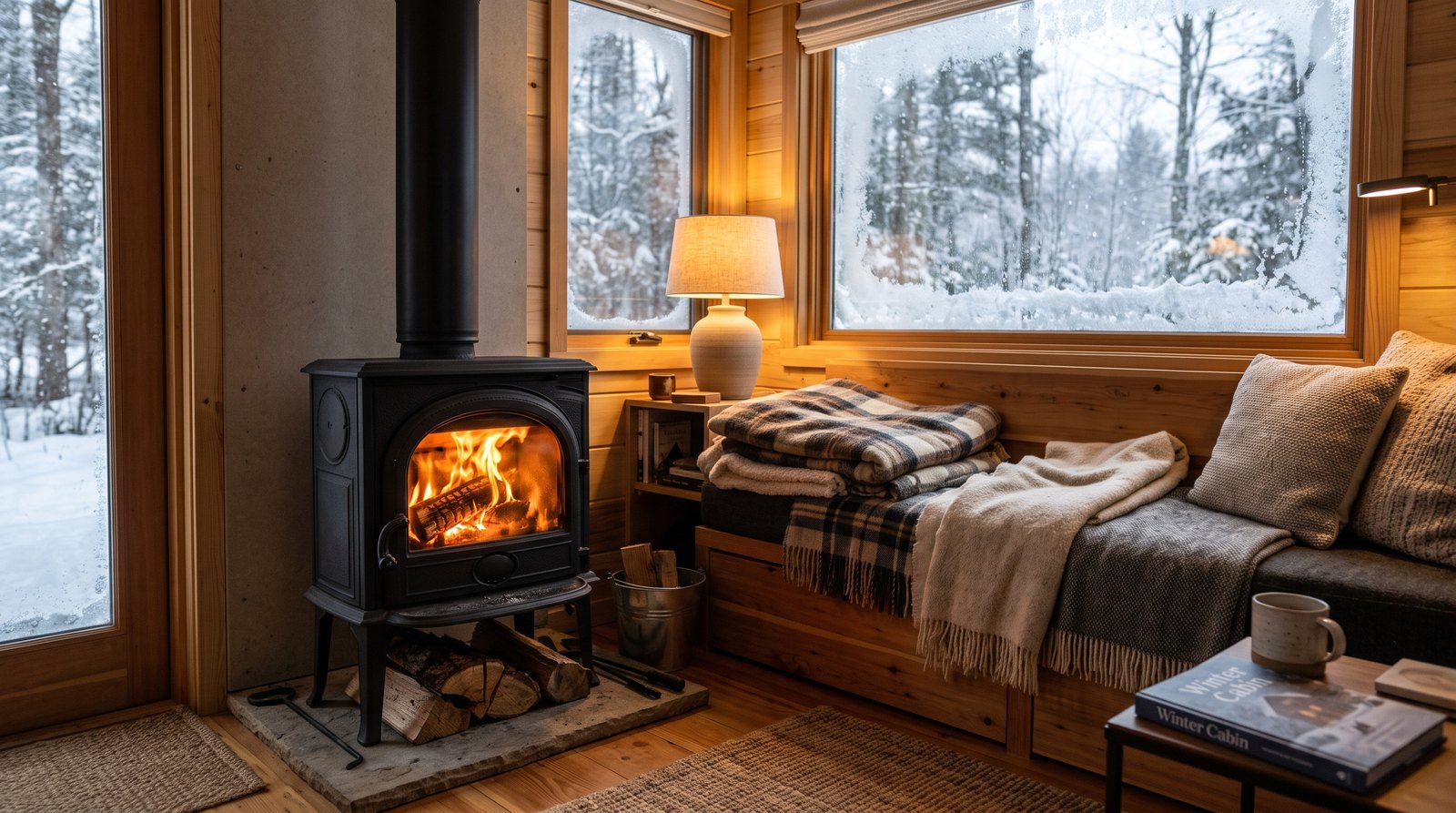
Most cold climate tiny houses end up with a mini split heat pump as the primary heat and a small backup for outages. Wood stoves are the romantic choice and they genuinely work, but they are harder to size down. Propane is convenient and portable, and the unvented kind carries a risk worth taking seriously.
Mini split heat pump. The default for good reason. It is efficient, thermostatically controlled, doubles as air conditioning in summer, and needs no fuel storage. It does need shore power, so it is a poor fit for genuinely off grid builds unless you have serious battery capacity.
Wood stove. A properly sized tiny house stove is a joy, runs with no electricity, and handles power outages. The catch is that most wood stoves are too big. A standard model will drive you out of a 200 square foot space, so you need one of the purpose built small stoves and you need clearances that eat floor area. You also need a permanent air supply, because a tight house will starve the fire and backdraft.
Propane, vented. A sealed combustion propane heater draws combustion air from outside and exhausts outside. This is the safe way to burn propane indoors, and it works without grid power.
Propane, unvented. This is the one to think hard about. Unvented heaters dump every combustion byproduct into your living space, including water vapor, which is the last thing a tiny house needs in winter. They carry an oxygen depletion sensor that cuts the gas when oxygen falls to roughly 18.5 percent, and that sensor is a last resort rather than a ventilation strategy. Manufacturers and safety guidance are consistent that these should not run unattended or while you sleep.
Insulation: R-Value Per Inch Beats Total R
Code R-values assume you have unlimited wall thickness. You do not. The 2021 IECC asks for roughly R-60 in the ceiling, R-20 plus R-5 continuous in walls and R-30 in floors over unconditioned space in climate zone 6. You cannot reach R-60 in a tiny house roof without losing headroom you legally cannot spare.
So the tiny house answer is different. You buy the highest R per inch you can afford, then make up the rest with airtightness. Closed cell spray foam runs about R-6 to R-7 per inch and doubles as an air and vapor control layer. Rigid polyiso is around R-6 per inch and works well as continuous exterior insulation over the framing, which also breaks the thermal bridge through every stud.
That thermal bridge matters more than people expect. Wood studs are roughly R-1 per inch. In a 2×4 wall packed with high performance insulation, the studs become the path of least resistance and quietly drag the whole assembly down. A continuous layer of rigid foam on the outside is usually the single highest value upgrade in a cold climate tiny house.
Do not skip the floor. Insulating the underside of the trailer deck and enclosing it properly is what separates houses that survive a real winter from houses that spend it thawing pipes. Good building practice pays off over decades, which is part of how long tiny houses last in the first place.
Mini Splits in Deep Cold: What the Ratings Actually Mean
The headline BTU number on a mini split is measured at 47 degrees Fahrenheit, which tells you almost nothing about a February night. The number that matters is rated capacity at 5 degrees. Heat pumps lose output as it gets colder, so a unit that looks generous at 47 degrees can fall well short exactly when you need it.
The useful shortcut is the ENERGY STAR Cold Climate designation. To carry it, a unit has to deliver at least 70 percent of its 47 degree heating capacity at 5 degrees, verified by independent testing. Standard units are not held to that, which is why a bargain mini split can heat beautifully in October and struggle in January.
Efficiency is rated in HSPF2. The national minimum for ductless heat pumps is 7.5, and high performance cold climate units generally land somewhere between 9 and 12 or higher. Better cold climate models hold most or all of their rated capacity at 5 degrees and keep producing usable heat well below zero.
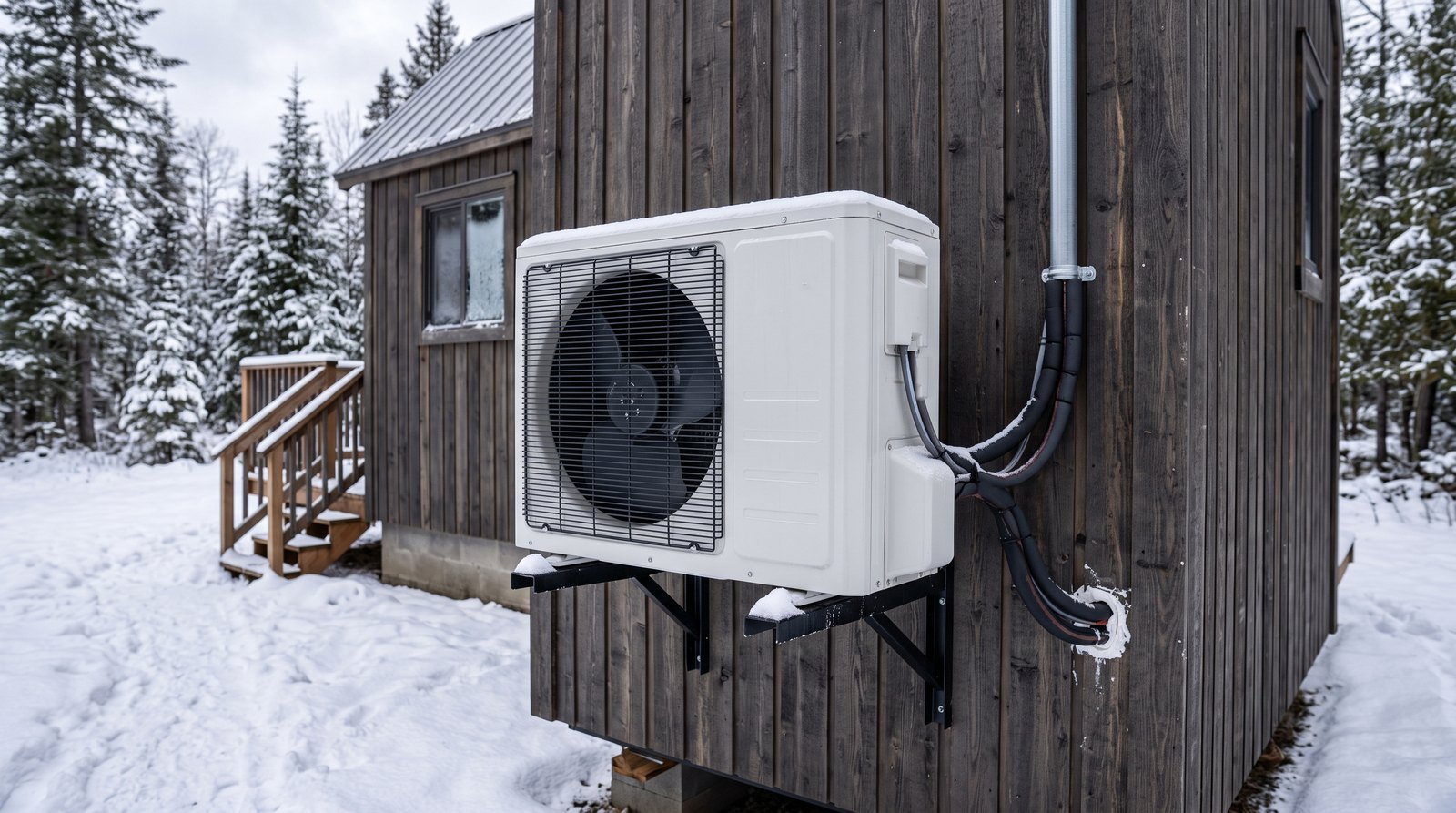
Two practical notes. Mount the outdoor unit high enough to clear your typical snow depth, on a wall bracket or a tall stand, because a condenser buried in a drift cannot breathe. And expect it to run defrost cycles, where it briefly reverses to melt ice off the outdoor coil. Steam rolling off the unit is normal, not a fault.
Stopping Frozen Pipes Before They Start
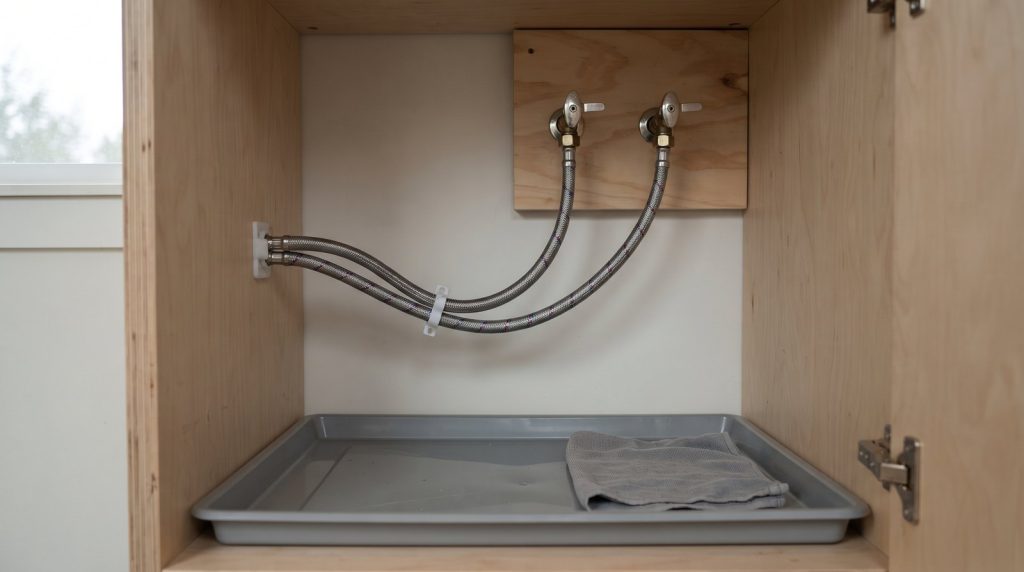
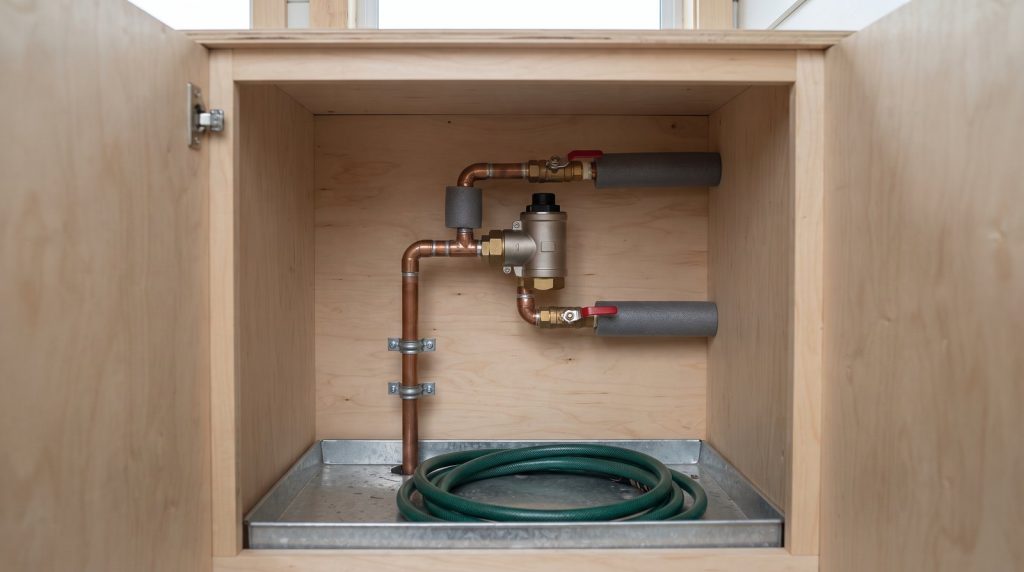
Frozen plumbing is the most common way a tiny house winter goes wrong, and it is almost entirely preventable. The three fixes are heat tape on exposed lines, skirting around the trailer to stop wind under the floor, and keeping every run of water inside the insulated envelope wherever the design allows.
Skirting is the highest return item on the list. Enclosing the gap between the trailer frame and the ground turns a wind tunnel into a still air buffer, and that alone lifts the temperature under your floor substantially. Rigid foam board, straw bales or purpose made skirting panels all work. Some owners add a small thermostatically controlled heat source in that space in severe climates.
For the hose from your water source, use a heated potable water hose rather than a garden hose with tape wrapped around it. Self regulating heat cable on the pipe itself, installed to the manufacturer instructions, handles the runs you cannot bring inside. If you are leaving for a stretch in deep winter, drain the system rather than trusting any of it.
Keep grey water and drain lines in mind too. They freeze as readily as supply lines, and a frozen P trap or a plugged drain line is a fast route to water where it should not be. Water damage is also a common claim category, which is worth understanding when you look at tiny house insurance costs.
Condensation Is the Real Enemy
Two people breathing, cooking and showering release a surprising amount of water vapor every day, and in a tiny house that moisture has nowhere to go. Warm humid air hits a cold surface, condenses, and starts feeding mold inside a wall you cannot see. This ruins more cold climate tiny houses than any heater ever will.
The answer is mechanical ventilation, not opening a window. Running an exhaust fan during and after every shower, and a range hood that actually vents outside while you cook, removes moisture at the source. In a tight build, many cold climate owners add a small heat recovery ventilator, which exchanges stale indoor air for fresh outdoor air while keeping most of the heat.
Watch your windows. Persistent condensation pooling on the frames is the early warning that indoor humidity is too high, and it is telling you something about the inside of your walls. A cheap hygrometer is worth having. Aim to keep indoor relative humidity somewhere around 30 to 50 percent in winter, on the lower end when it is very cold outside.
Quick Answer by Situation
- Mild winter, rarely below freezing: a single mini split and basic skirting will carry you. Insulate normally and do not overthink it.
- Real winter, regular nights below 20 degrees: ENERGY STAR Cold Climate mini split, continuous exterior rigid foam, full skirting, heated water hose, exhaust ventilation.
- Severe winter, extended time below zero: all of the above plus a non electric backup heat source, a heated and insulated wet bay for the plumbing, and a heat recovery ventilator.
- Off grid: a small wood stove or sealed combustion propane, because a heat pump is a large continuous electrical load your batteries will not enjoy in December.
- Parked seasonally, not occupied: do not try to keep it warm. Drain the system fully, blow out the lines and winterize it the way you would a boat.
If you are still weighing the whole approach, the trade offs differ from a trailer, and the comparison in tiny house versus RV for full time living covers how each handles cold.
Frequently Asked Questions
Can you live in a tiny house in winter full time?
Yes. Full time cold climate tiny house living is common in northern states and Canada. It requires insulation matched to your climate zone, a heater sized for your coldest expected night rather than the seasonal average, protected plumbing, and mechanical ventilation to control moisture.
How much insulation does a tiny house need for winter?
Aim for the highest R value per inch you can fit rather than chasing code numbers written for site built homes. Closed cell spray foam gives roughly R-6 to R-7 per inch. Adding continuous rigid foam outside the framing to break thermal bridging usually helps more than thicker cavity insulation.
Do mini split heat pumps work below zero?
Cold climate models do. Look for the ENERGY STAR Cold Climate designation, which requires at least 70 percent of rated 47 degree heating capacity at 5 degrees. Standard mini splits are not held to that standard, so check capacity at 5 degrees rather than the headline BTU rating.
How do you keep tiny house pipes from freezing?
Skirt the trailer to stop wind moving under the floor, run self regulating heat cable on any exposed line, and use a heated potable water hose instead of a standard garden hose. Keep plumbing inside the insulated envelope where possible, and drain the system if you leave in deep winter.
Is a propane heater safe inside a tiny house?
A sealed combustion, vented propane heater is safe because it draws combustion air from outside and exhausts outside. Unvented propane heaters release water vapor and combustion byproducts indoors. If you use one, install a carbon monoxide alarm at breathing height and never run it unattended or while sleeping.