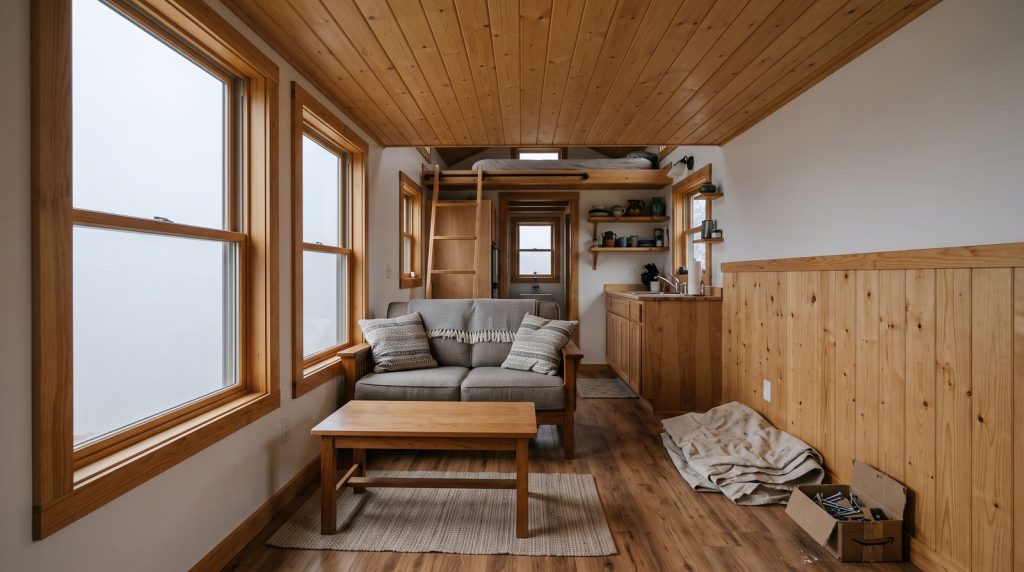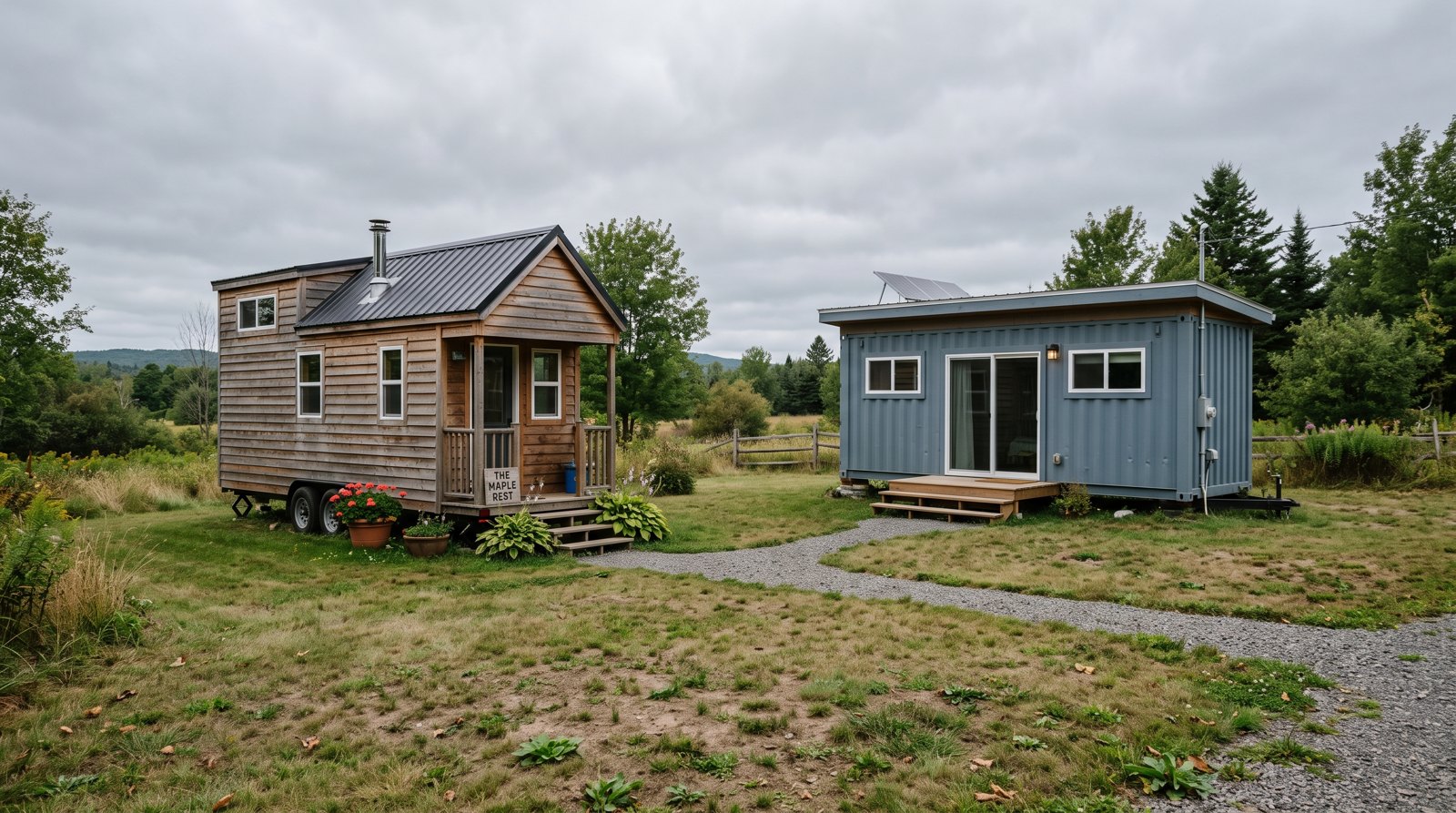
A tiny house on wheels is the better choice if you want mobility, a finished build and an easier resale. A container home is better if you want a hard shell, a big open span and a lower cost per square foot on a permanent site. Neither is cheaper by default, and the difference that decides it is usually your land, not the building.
The two get compared constantly because they look like alternatives. They are not. One is a vehicle that happens to be a house, the other is a building that happens to start as a steel box. Once you see them that way the decision gets a lot simpler.
Table of Contents
The short version of the difference
A tiny house on wheels is built light on a trailer and titled as a vehicle. A container home is a steel shipping container converted on a site and treated as a structure. That single split drives everything downstream: permits, financing, insurance, where you can put it, and what it is worth in ten years.
Quick answer by situation:
- You do not own land yet: tiny house on wheels. You can move it when the plan changes, and a bad parking situation is not permanent.
- You own rural land with no restrictive zoning: container home. You get more usable square footage for the money.
- You want a mortgage: container home on a permanent foundation. A house on wheels stays an RV loan.
- You want it finished and delivered: tiny house on wheels. Container conversions are almost always a project.
- You are in a hurricane or wildfire region: container home. The steel shell tolerates abuse that a stick-framed trailer does not.
- You expect to sell within five years: tiny house on wheels. The buyer pool is bigger and better defined.
Cost, and why the sticker price misleads
A finished tiny house on wheels from a certified builder generally runs somewhere between fifty thousand and a hundred and fifty thousand dollars. A single container conversion often lands lower per square foot, but the number you see quoted almost never includes the site, and the site is where container budgets go wrong.
A used forty foot container costs a few thousand dollars. That is the cheap part and it is the part everyone quotes. Cutting openings, welding reinforcement back in where you removed steel, insulating, roofing over the top, and connecting utilities is the actual build, and it is skilled work. Two containers joined together need engineering for the removed side walls. By the time it is habitable, the savings are thinner than the headline suggests.
The tiny house on wheels hides less. You pay a builder a price, it arrives finished, and the extra costs are delivery and your pad. Our breakdown of what a container home actually costs goes through the line items in more detail.
Insulation is the container’s real weakness
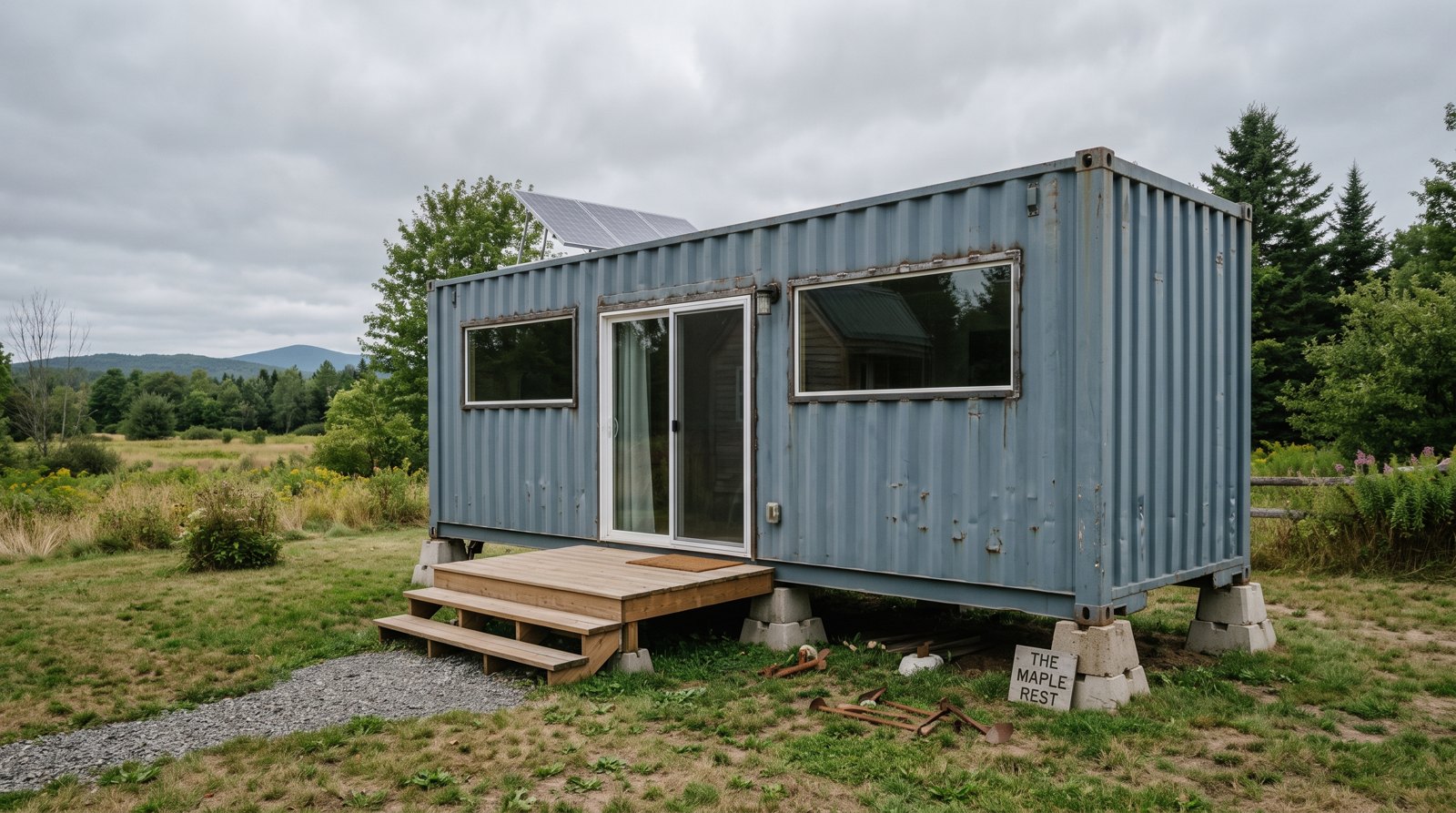
Steel conducts heat straight through the wall and it sweats. A container with insulation sprayed on the inside loses interior width, and any gap in that layer becomes a cold spot where condensation forms and the steel rusts from the inside. This is the single most common way a cheap conversion fails.
Closed cell spray foam applied directly to the steel is the assembly most experienced builders use, because it insulates and stops moisture reaching the metal in one step. It is not cheap. Batt insulation inside a stud wall built against the steel is cheaper and it is how conversions get into trouble, because it leaves an air gap against a cold metal surface.
A tiny house on wheels has ordinary framed walls, so it insulates the way any small building does. Its weak point is not the walls, it is the exposed underbelly over the trailer.
Where you are allowed to put each one
This decides more purchases than any spec sheet. A tiny house on wheels is usually classified as a recreational vehicle, which makes it road legal but often restricts you to an RV park or limited stays on private land. A container home is a building, so it needs permits and inspections, but once approved it is simply a house.
That is the trade in one sentence. The house on wheels is easy to buy and hard to place. The container home is hard to approve and easy to live in afterwards. Rules vary enormously by city and county, so confirm with your local planning department before you commit to either, because the answer in the next county over tells you nothing about yours.
How long each one lasts
A container shell will outlive almost everything attached to it. Corten steel resists corrosion and the box was engineered to be stacked nine high in salt spray. What fails is the conversion around it: the roof you added, the sealant at every cut opening, and any spot where insulation failed and let moisture reach bare metal.
A tiny house on wheels is the opposite. The structure is conventional and predictable, and it usually lasts twenty five to thirty years parked, less if it is towed often. The trailer underneath is the component people neglect. Our guide to how long tiny houses last covers the maintenance that decides which end of that range you land on.
Financing and resale
A tiny house on wheels is titled as a vehicle, financed with an RV loan, and depreciates on a vehicle schedule. A container home on a permanent foundation is real property, can appreciate with the land, and is eligible for conventional mortgage products in many situations. See our guide to tiny house mortgages and financing for which routes are open to each.
Resale cuts the other way, and this surprises people. There is a real, established secondhand market for tiny houses on wheels, with buyers who know what they are looking at. Container homes are one-off conversions, so the buyer pool is smaller and the price depends heavily on whether the work was done well. A good container home sells fine. A mediocre one sits.
So which one
Start with the land, not the building. If you have a site you control and can permit, the container home usually gives you more house for the money and a shell that will not care about weather. If your placement is uncertain, or you want to buy something finished rather than manage a build, the house on wheels is the lower risk choice even though it depreciates.
The mistake to avoid is buying a container conversion because it looked cheap. The box is cheap. The house is not.
Frequently asked questions
Is a container home cheaper than a tiny house?
Per square foot on a permanent site, usually yes. As a finished product, often no. The container itself costs a few thousand dollars, but cutting, reinforcing, insulating, roofing and connecting utilities is the real budget, and site work is rarely included in the quotes you see advertised.
Do container homes rust?
The exterior resists corrosion well because containers are built from weathering steel. The risk is interior rust, which happens when insulation fails and warm damp air reaches cold metal. Closed cell spray foam applied directly to the steel is the standard defence, and skipping it is the usual cause of failure.
Which is easier to get permitted?
Neither is easy, but they fail differently. A tiny house on wheels is road legal immediately yet often cannot be lived in full time on private land. A container home needs plans, permits and inspections, but once it passes it is treated as an ordinary dwelling. Ask your county before you buy.
Can you move a container home later?
Only with a crane and a truck, and only if it was built to come apart. Once it sits on a foundation with utilities connected, moving it is a construction project rather than a tow. If you expect to relocate, that alone points you to a house on wheels.
Which holds its value better?
A container home on land you own, because it behaves like real estate and can appreciate with the site. A tiny house on wheels is titled as a vehicle and depreciates. That said, a well built house on wheels resells faster, because there is an established market and buyers know how to value it.