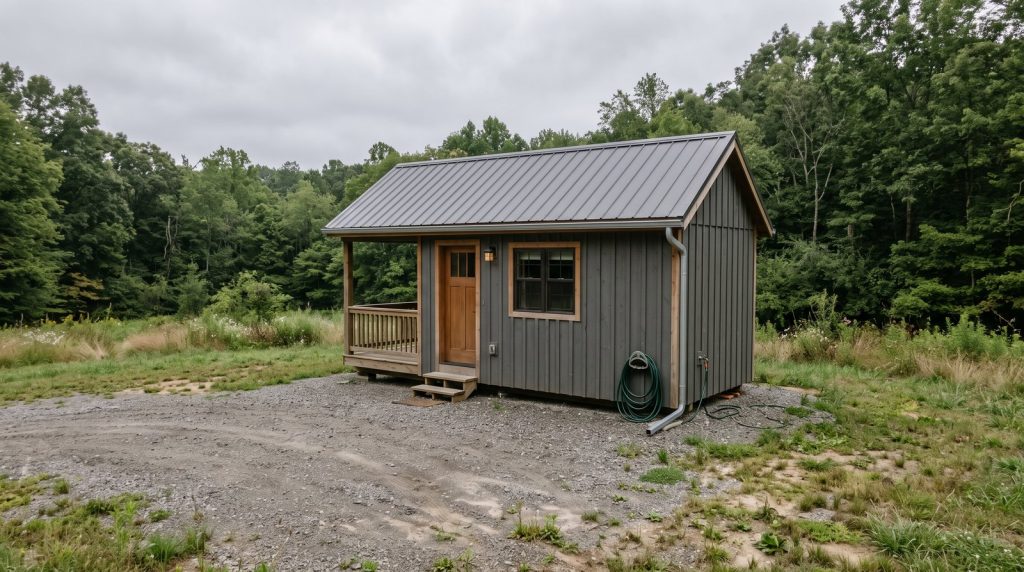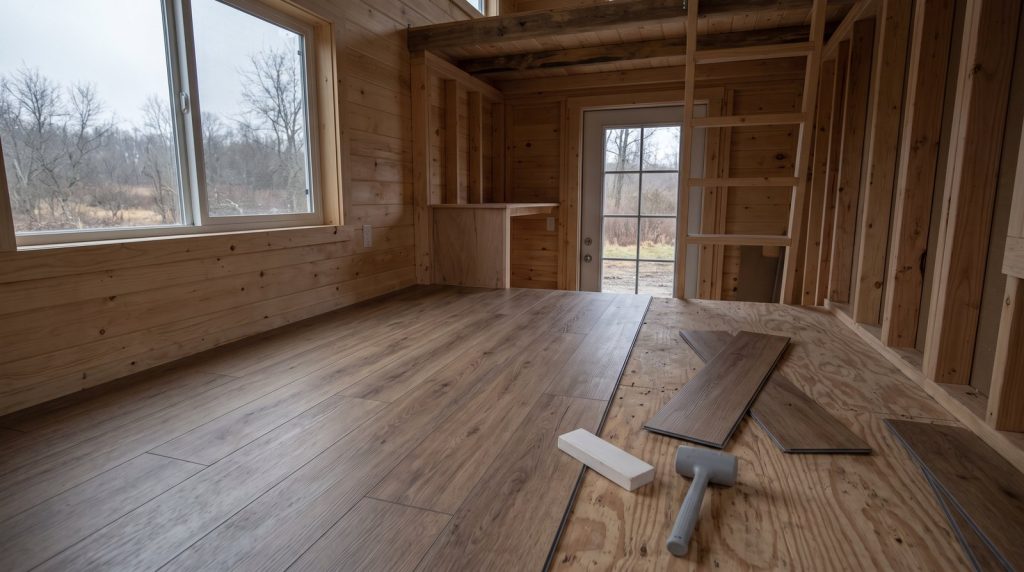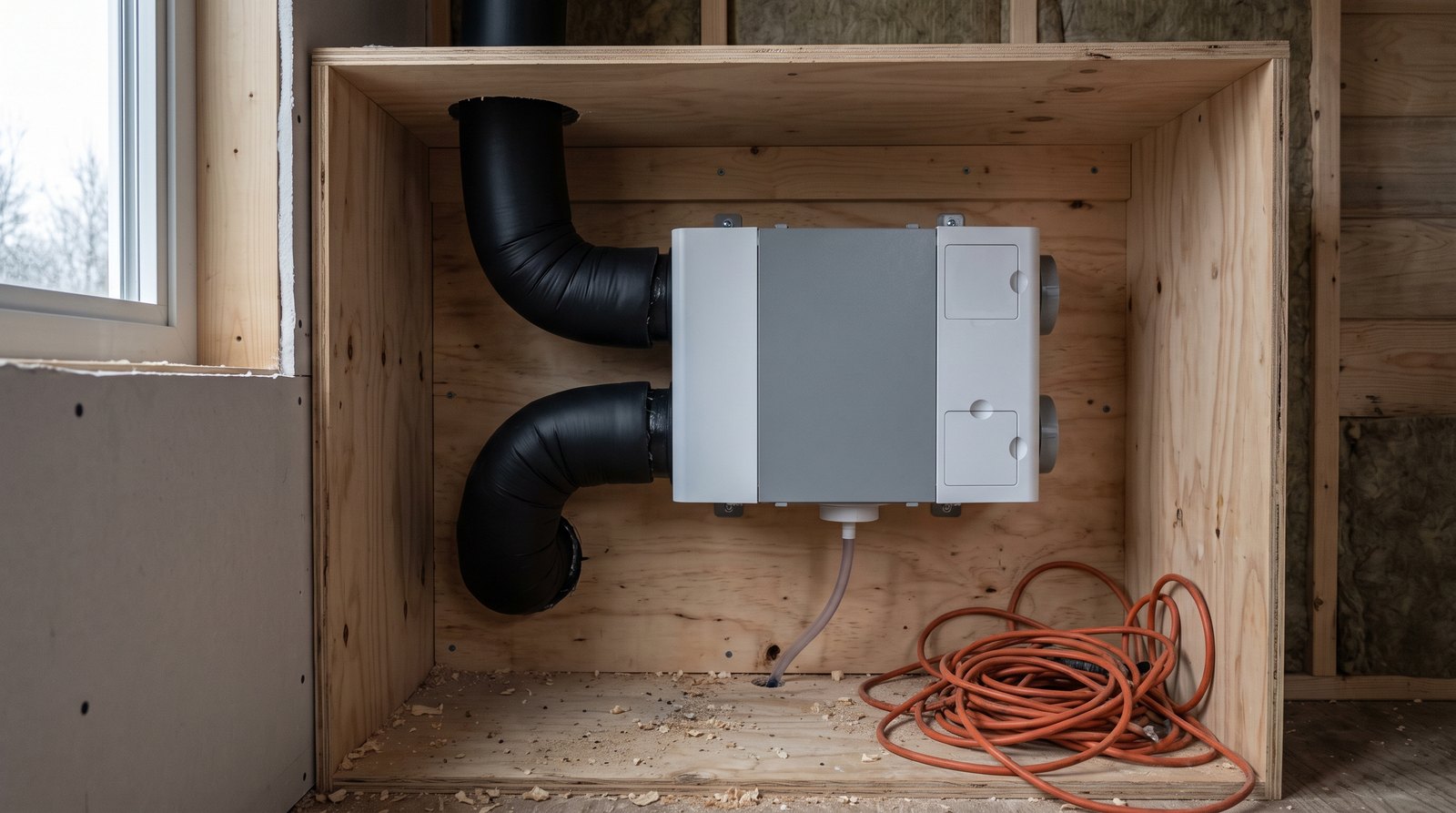
Tiny house ventilation usually needs more than opening windows. A well-sealed tiny home should have reliable bathroom and kitchen exhaust, plus planned outdoor air. Exhaust fans can work for simple builds, while an HRV or ERV offers balanced, filtered ventilation with less heating or cooling loss. Climate, humidity, occupancy, and airtightness determine the best choice.
Table of Contents
Why tiny houses need planned ventilation
A tiny house concentrates moisture, odors, carbon dioxide, cooking particles, and cleaning-product fumes in very little air. Because modern shells are often tightly insulated and air sealed, random leaks may not provide dependable fresh air. Good tiny house ventilation removes pollutants at their sources and replaces exhausted air in a controlled way.
EPA guidance emphasizes three basic strategies: control pollutant sources, ventilate with clean outdoor air, and use filtration as a supplement. It also recommends keeping indoor relative humidity below 60 percent, ideally around 30 to 50 percent. Those principles are especially useful in a tiny home because there is little buffer when moisture or pollutants rise.
Do not count on operable windows as the primary system. Windows are useful in mild, clean weather, but they are unreliable during rain, wildfire smoke, freezing temperatures, high outdoor humidity, or long absences. Mechanical ventilation provides a repeatable baseline. Your local code, adopted energy code, and building department may set specific airflow, duct, or equipment requirements.
Quick answer by situation
The simplest useful choice depends on how tight the house is, how often it is occupied, and what the outdoor climate does. A weekend cabin may need only strong local exhaust. A tightly built full-time home usually benefits from continuous outdoor air, and balanced heat or energy recovery becomes more valuable in severe climates.
- Occasional-use cabin in a mild climate: Use a quiet bath fan, an outdoor-vented range hood, and deliberate makeup-air openings when the appliances run.
- Tight full-time tiny house: Choose a small balanced HRV or ERV, or a code-compliant continuous fan strategy designed for the home.
- Cold, dry winter climate: An HRV is often the straightforward choice because it recovers heat without intentionally transferring much moisture back indoors.
- Hot, humid climate: An ERV can reduce some of the moisture entering with ventilation air, but it is not a dehumidifier and does not replace air conditioning.
- Mobile tiny house with little duct space: Consider a compact wall unit or a carefully commissioned continuous exhaust setup, subject to local rules and safe appliance operation.
- Frequent cooking or showers: Keep dedicated kitchen and bath exhaust even if an HRV or ERV provides whole-house air exchange.
When exhaust fans are enough
Exhaust-only ventilation can be a practical, affordable solution for a modest, less airtight tiny house in a mild climate. It works by pushing stale air outside and allowing replacement air to enter through planned inlets or small leaks. The system must run long enough, vent fully outdoors, and have a safe makeup-air path.
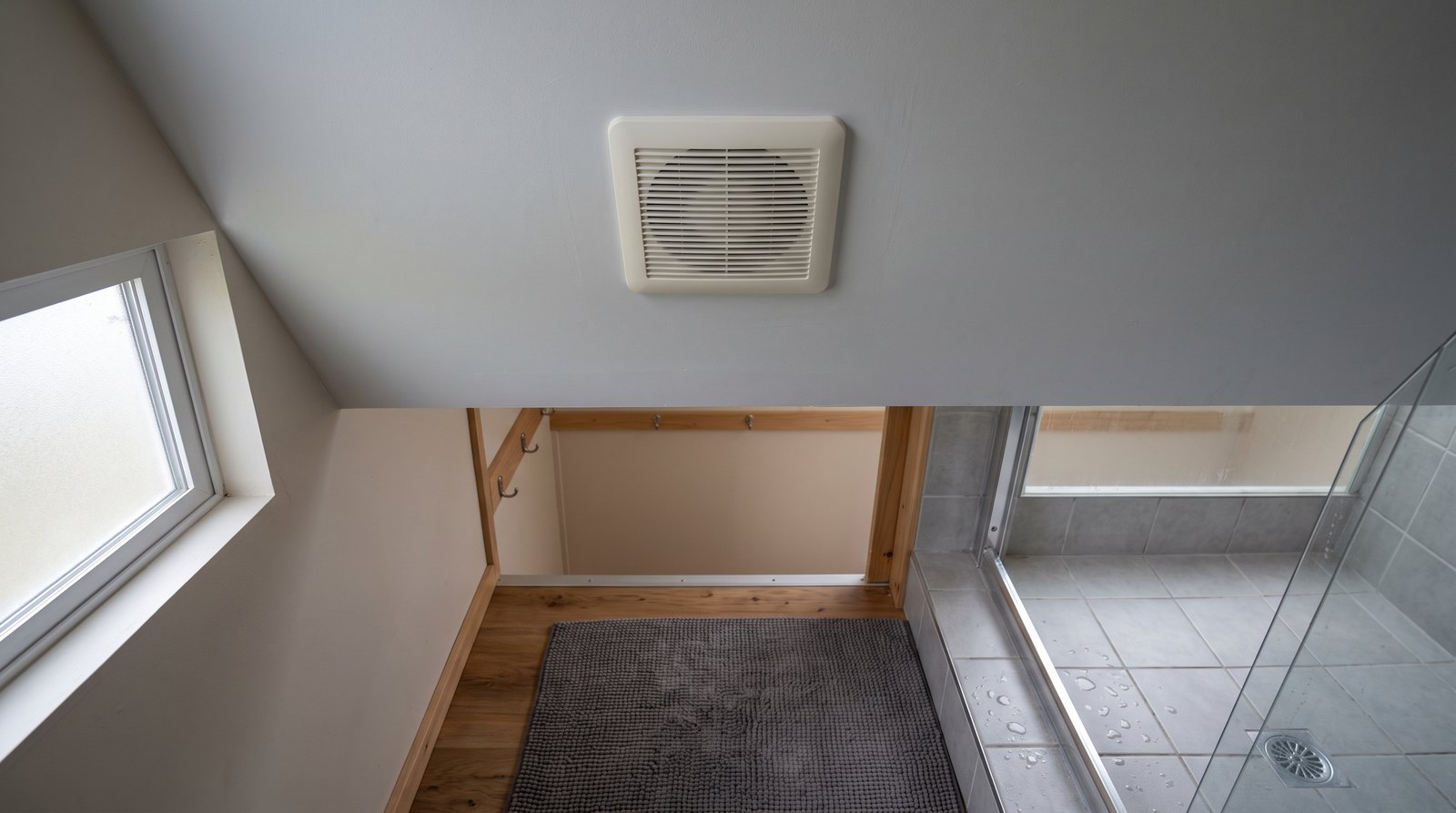
At minimum, put a properly ducted fan in the bathroom and a real range hood over the cooking surface. Recirculating hoods capture some grease but do not remove moisture, combustion gases, or most cooking pollutants outdoors. Bath fans should continue after showers, either through a timer or humidity control. Select quiet equipment because an annoying fan in a tiny space tends to get switched off.
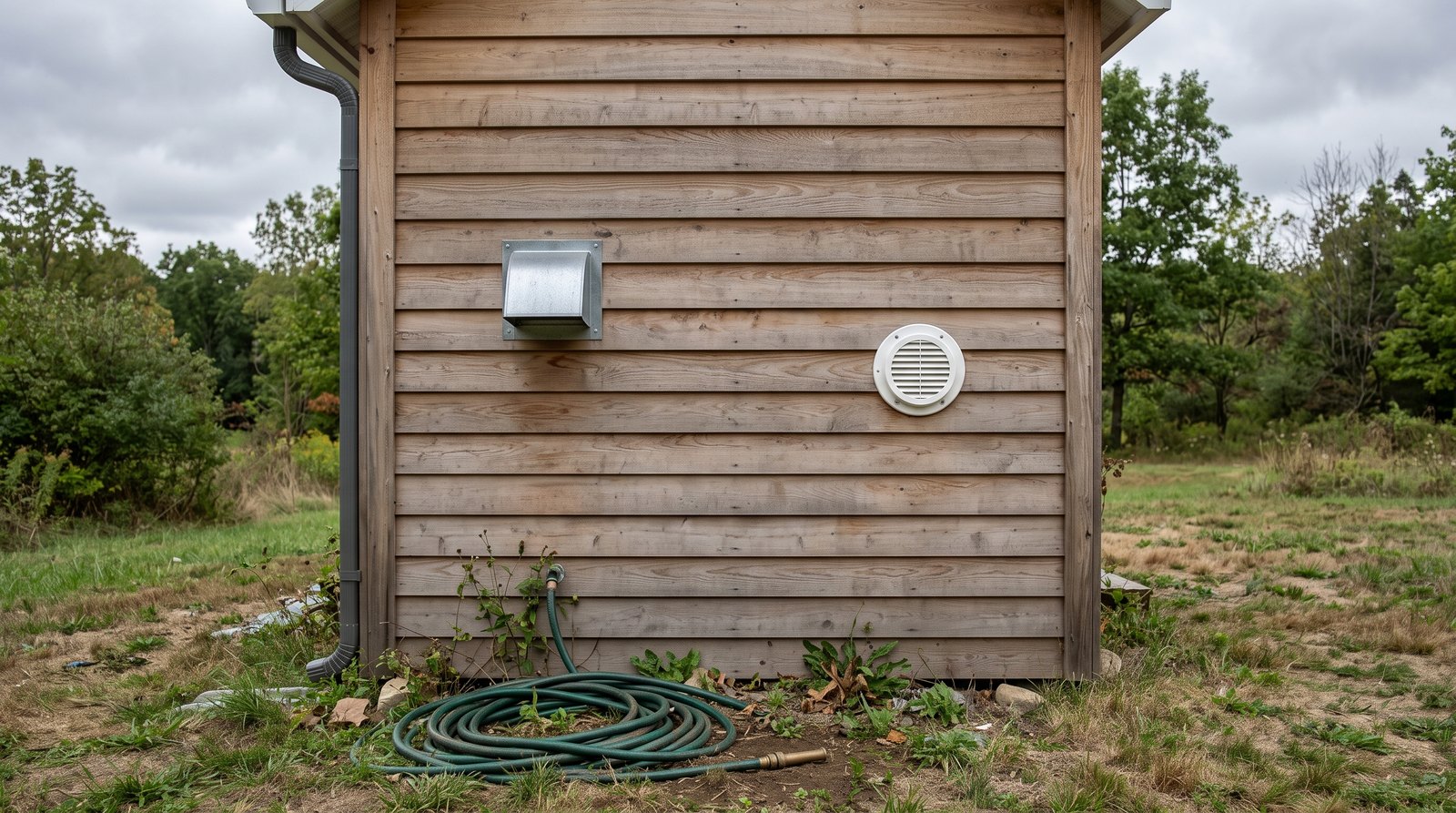
ENERGY STAR evaluates residential ventilating fans for efficiency, sound, and installed performance. A low sone rating matters, but so does pressure capability. Use the shortest practical smooth metal duct, limit elbows, seal joints, insulate ducts that pass through cold spaces, and terminate through a proper wall or roof cap. Never dump moist bathroom air into a loft, ceiling cavity, or trailer belly.
Exhaust-only systems create negative pressure. That can pull cold or humid air through unwanted gaps and can interfere with naturally drafted fuel-burning appliances. A tiny home with a wood stove, atmospheric gas water heater, or other combustion appliance needs professional review for depressurization and makeup air. Sealed-combustion electric or direct-vent equipment generally simplifies the ventilation design.
HRV versus ERV in a tiny house
An HRV transfers heat between outgoing and incoming air. An ERV transfers heat and some moisture. Both provide balanced ventilation when supply and exhaust airflows are commissioned correctly. The right choice is not simply cold climate versus warm climate. It depends on winter dryness, summer humidity, occupancy moisture, and the rest of the HVAC system.
In a cold climate, an HRV can exhaust indoor moisture while reclaiming much of the heat that would otherwise leave with the air. That can help a small home where window condensation appears during winter. The unit needs frost control appropriate for the climate, a working condensate drain where required, and access for cleaning. Do not hide it behind permanent finish work.
An ERV transfers part of the water vapor across its core. In hot, humid weather, that can reduce the moisture burden of incoming outdoor air. During a cold, very dry winter, it can also retain some indoor moisture. However, an ERV cannot correct an oversized air conditioner, wet crawlspace, roof leak, or indoor clothes drying. It moderates the load rather than acting as a dehumidifier.
A complete small-house installation can cost from roughly the low thousands upward when it includes the unit, insulated intake and exhaust ducts, interior distribution, electrical work, controls, exterior caps, balancing, and finish work. Difficult retrofits cost more. New construction is cheaper to plan because chases, drains, and access panels can be designed before walls close.
How to size continuous ventilation
Do not size tiny house ventilation by floor area alone or by buying the smallest fan available. Residential standards account for both floor area and bedrooms or occupants, and local codes may adopt a particular edition with amendments. Have the designer calculate the required continuous outdoor airflow, then confirm the installed system actually delivers it.
ASHRAE Standard 62.2 is the main U.S. residential ventilation reference, and the 2025 edition addresses dwelling-unit ventilation, local exhaust, source control, filtration, and commissioning. The formula and exceptions can change between adopted editions. A tiny house on wheels may also be regulated differently from a foundation dwelling, so ask the local authority which standard applies.
Very low airflow is hard to measure accurately, which makes commissioning important. Use a flow hood or another suitable measurement method at the grilles. Balance an HRV or ERV so supply and exhaust are close to the intended values. Excessive exhaust can depressurize the house. Excessive supply can push humid indoor air into wall or roof assemblies in cold weather.
Place supply air where occupants spend time, usually the main living area and sleeping loft or bedroom. Pull stale air from the bathroom and sometimes the kitchen area, but follow the equipment instructions. A recovery ventilator is not always approved to replace a grease-rated range hood. Keep outdoor intakes away from exhaust outlets, plumbing vents, vehicle exhaust, generator fumes, and other contamination sources.
If you are still planning the shell, coordinate ventilation with insulation and air sealing. A durable envelope and controlled fresh air work together. Our guide to how long tiny houses last explains why moisture management matters to framing and finishes over decades.
Makeup air, cooking, and combustion safety
Every cubic foot of air exhausted must be replaced. In a tiny house, a powerful range hood can change indoor pressure quickly. Provide a deliberate makeup-air route when required, and never assume gaps around doors will be enough. Strong exhaust should be evaluated alongside wood stoves, gas appliances, dryers, and other equipment that moves air.
Cooking deserves special attention. Use the back burners when possible, cover boiling pots, and run the hood during cooking and for a short period afterward. Induction avoids indoor combustion emissions, but it still produces moisture, grease, and fine particles from food. An outdoor-vented hood remains useful.
Propane and natural gas appliances should be listed, installed, and vented as their manufacturers require. Carbon monoxide alarms are essential, but they are not a substitute for correct combustion air and venting. If a fan causes smoke spillage, unusual odors, pilot problems, or a change in stove draft, stop using the combination and call a qualified professional.
If your house moves between climates, choose adjustable airflow and humidity controls. For broader ownership planning, compare the tradeoffs in tiny house versus RV living.
Condensation warning signs and humidity control
Persistent window water, musty odors, mold spots, swollen trim, damp bedding, or rust on fasteners are warnings that moisture production exceeds drying. Measure relative humidity instead of guessing. Improve source exhaust first, then adjust continuous ventilation and heating. Investigate leaks promptly because ventilation cannot repair a wet roof, wall, or plumbing connection.
A basic digital hygrometer is inexpensive and useful. EPA’s general target is 30 to 50 percent relative humidity, although cold-weather conditions may require the lower end to prevent condensation on windows and framing. In humid summer weather, air conditioning or a dehumidifier may be needed even with an ERV.
Watch patterns rather than one reading. A temporary rise after a shower is normal if the bath fan brings humidity back down. High readings every morning suggest inadequate overnight air exchange in the sleeping area. Condensation only behind cushions or inside cabinets may indicate poor air circulation against cold exterior surfaces.
Avoid drying wet clothes indoors without effective exhaust. Repair dripping plumbing, use lids while cooking, squeegee the shower, and keep furniture slightly away from cold walls. These steps reduce the burden on a small ventilation system without sacrificing fresh air.
Noise, power draw, ducts, and maintenance
The best system is one you can tolerate and maintain. In a tiny house, equipment noise and air velocity are noticeable because the fan is close to the bed and living area. Choose quiet, efficient equipment, mount it with vibration isolation, use sensible duct sizes, and keep filters and cores reachable without unloading a closet.
Compare watts at the airflow you will actually use, not only the maximum rating. A small continuous fan running all year can consume meaningful energy, but intermittent operation that leaves the home stuffy is a poor bargain. Recovery ventilation may reduce heating or cooling losses, though savings depend on climate, efficiency, airflow, and operating schedule.
Rigid or semi-rigid smooth ducts usually outperform crushed flex duct. Keep runs short, support them well, seal joints with approved materials, and insulate outside-air ducts to control condensation. Include a service path for the core and condensate system. A beautiful built-in cabinet that prevents filter removal will create expensive maintenance later.
Check exterior hoods for leaves, insects, lint, snow, and nests. Clean or replace filters on the manufacturer’s schedule, often more frequently during wildfire smoke, pollen season, construction, or dusty-road travel. Clean bath grilles and range-hood grease filters. Inspect condensate drains before cold weather and have balanced systems rechecked if ducts or controls change.
Budget for ongoing care just as you would for roofing, sealants, or insurance. If you are estimating full ownership expenses, see our guide to tiny house insurance costs in 2026.
FAQ
Does a tiny house need an HRV or ERV?
Not every tiny house needs recovery ventilation, but a tight, full-time home usually needs planned continuous outdoor air. An HRV or ERV is attractive in severe climates because it reduces energy loss and balances airflow. A simpler exhaust system may work when climate, airtightness, occupancy, codes, and combustion safety allow it.
Is an ERV better than an HRV in a humid climate?
An ERV is often preferable in a hot, humid climate because it transfers some incoming moisture back to the outgoing air stream. It still brings in outdoor air and cannot replace air conditioning or dehumidification. Equipment performance, local climate, indoor moisture, and installation quality matter more than the label alone.
Can a bathroom fan ventilate the whole tiny house?
A quiet, continuously rated bathroom fan can serve as part of an exhaust-only whole-house strategy if it delivers the required airflow and replacement air has a safe path inside. It still needs boost capacity for showers, and the kitchen usually needs separate outdoor exhaust. Confirm the design against locally adopted requirements.
How do I know if my tiny house has enough ventilation?
Look for stable humidity, no persistent condensation, quick odor removal, comfortable sleeping areas, and measured airflow at the grilles. Stuffy mornings, mold, damp trim, and lingering cooking odors suggest a problem. Use a hygrometer, inspect ducts and filters, and have actual supply and exhaust airflow measured when performance is uncertain.
How often should HRV or ERV filters be cleaned?
Follow the manufacturer’s schedule, then adjust for real conditions. Many systems need inspection every few months, with more frequent attention during smoke, pollen, construction, or dusty travel. Also clean exterior screens, inspect the core and condensate drain, and verify that blocked filters have not reduced airflow or unbalanced the system.