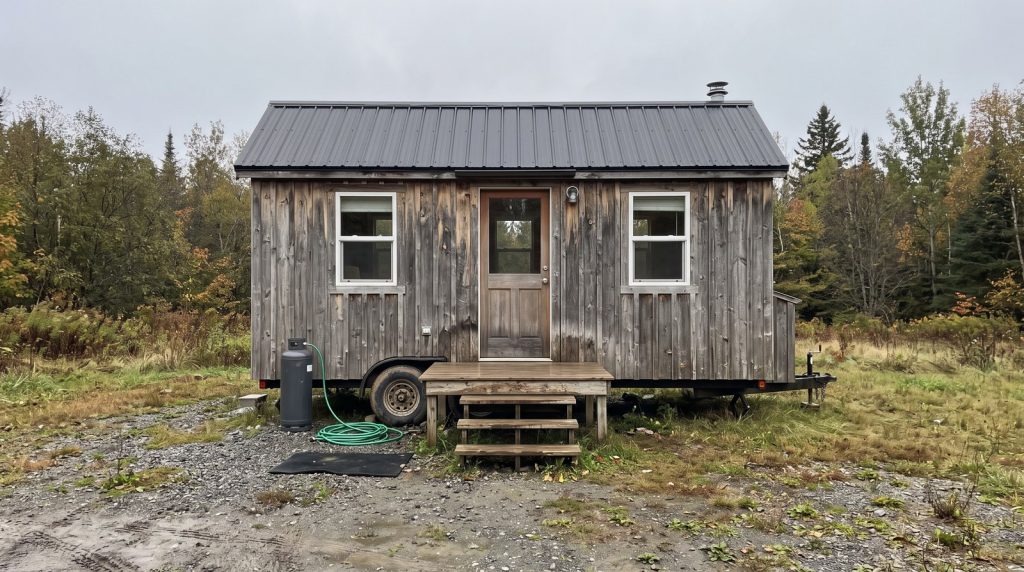
ESCAPE Traveler builds RVIA certified tiny houses on wheels in Wisconsin, with published prices running from $95,474 for the 269 square foot Traveler up to $148,720 for the 720 square foot Ultimate. They are factory built, road legal travel trailers rather than site built homes, which is what makes them straightforward to buy and harder to place.
ESCAPE is one of the few builders in this market that puts real MSRP figures on its own website instead of hiding behind a quote form. That alone makes it a useful benchmark. Here is what the lineup actually costs, what you get, and where the catches are.
All figures below are ESCAPE’s own published specifications and MSRP, checked August 2026. Options, delivery and site work are extra, and prices move. Confirm current numbers with the builder before you plan around them.
Table of Contents
The lineup and what it costs
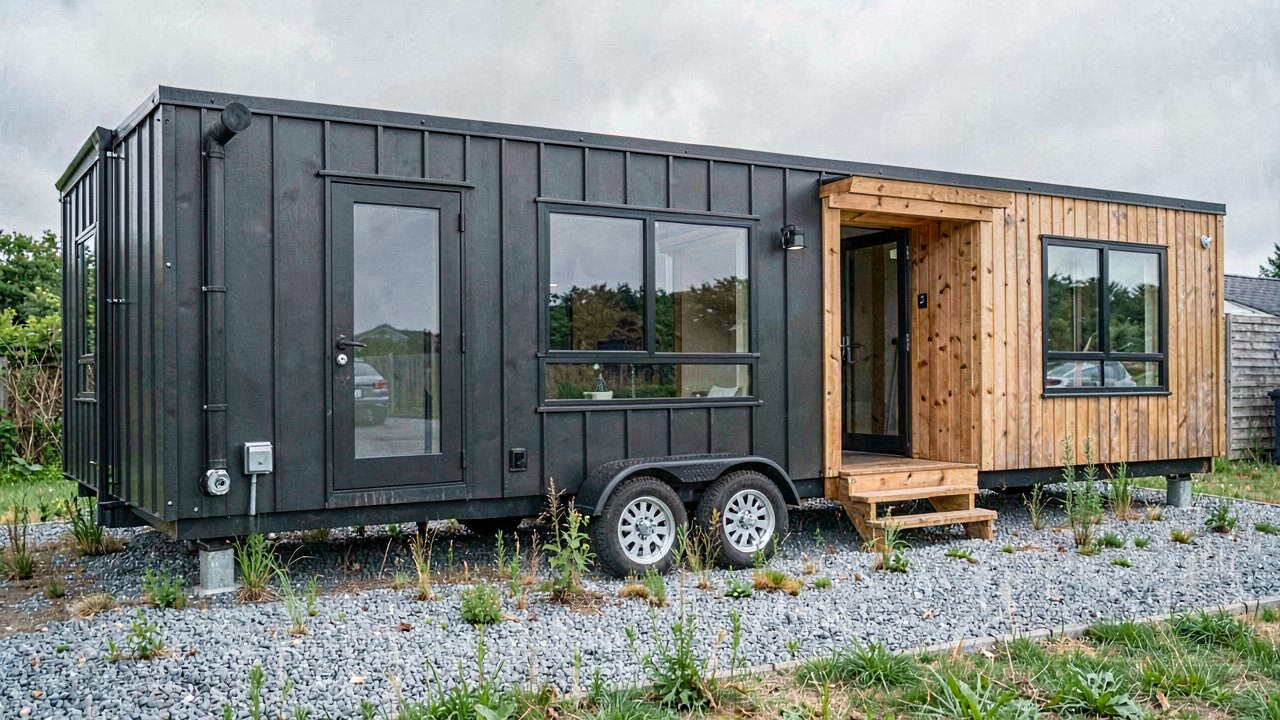
Four models carry published prices. The Traveler and Traveler XL are the core of the range and the two most people end up comparing. The XLS sits above the XL, and the Ultimate is a different animal entirely.
| Model | Size | Length | Starting MSRP |
|---|---|---|---|
| Traveler | 269 sq ft (180 main + 89 loft) | 25 ft, 30 ft with hitch | $95,474 |
| Traveler XL | 344 sq ft (255 main + 89 loft) | 30 ft, 35 ft with hitch | $103,020 |
| Traveler XLS | Not published | Not published | $112,235 |
| Ultimate | Over 720 sq ft, 3 to 4 bed, 1 to 2 bath | 43 ft | $148,720 |
Quick answer by situation:
- One person, or a couple who travel light: the Traveler at 269 square feet is enough, and it is the easiest of the range to tow and to park.
- A couple living full time: the XL buys you 75 more square feet on the main floor, which is where you actually feel it. Worth the $7,546 step up.
- You want a real second bedroom: nothing in the Traveler range gives you one. That is what the Ultimate is for.
- You plan to move often: stay at the Traveler. At 43 feet the Ultimate is a heavy haul, not a weekend tow.
- You want a mortgage rather than an RV loan: none of these qualify as they sit, because they are titled travel trailers.
What you are actually buying
Every Traveler leaves the factory with an RVIA seal, which classifies it as a travel trailer. That matters more than any spec on the sheet. It means the unit is inspected to RV standards rather than residential building code, it can be towed legally on public roads at 8.5 feet wide, and it will be titled and insured like an RV.
The chassis is not an afterthought. ESCAPE builds on a custom steel trailer with 7,000 pound heavy duty tandem axles and 10 ply radial tires. The Traveler weighs 10,000 to 12,000 pounds depending on options and the XL runs 11,000 to 13,000. Those are not numbers a half ton pickup handles. Plan on a three quarter ton truck at minimum and a Class V hitch, which ESCAPE recommends outright.
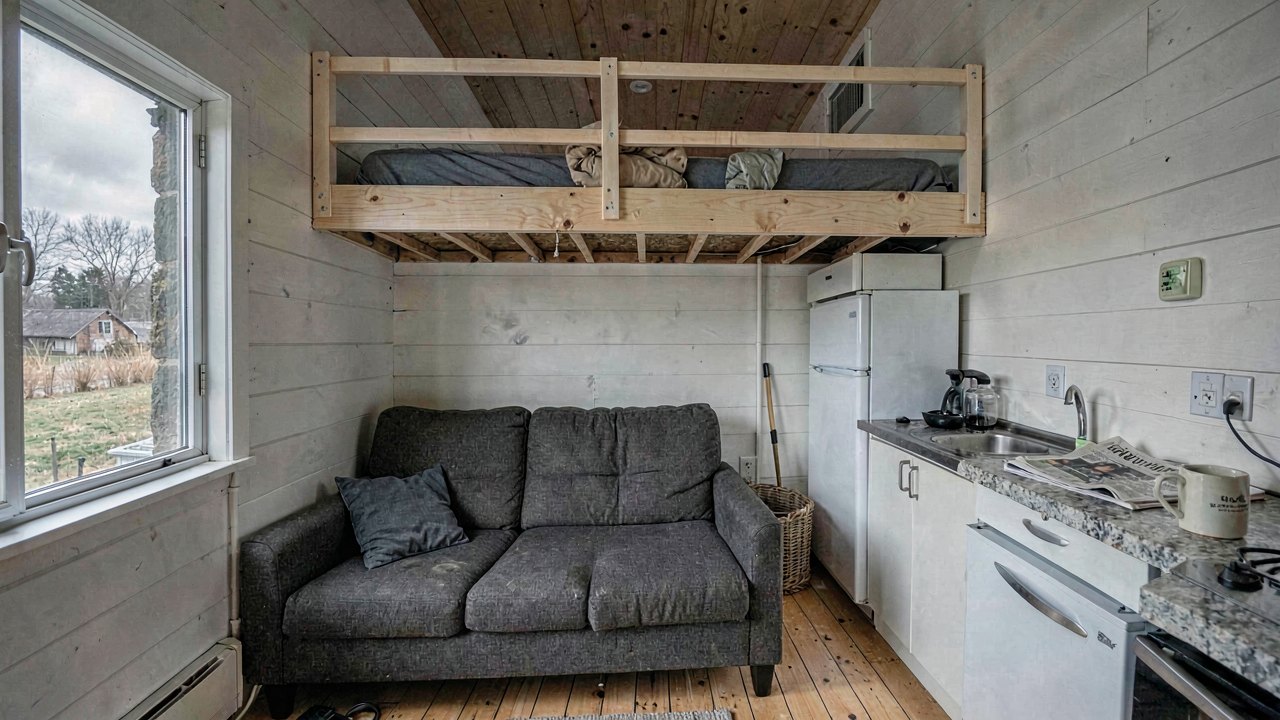
Height is the specification people forget. At 13 feet 6 inches for the Traveler and 13 feet 5 inches for the XL, you are close enough to the 13 foot 6 inch clearance limit on a lot of routes that route planning stops being optional. That is a normal constraint for this class of build, but it catches first time buyers.
The Ultimate is a different proposition
At over 720 square feet across two stories, 43 feet long, and $148,720, the Ultimate is not really a tiny house on wheels in the way the Traveler is. ESCAPE describes it as a custom built, limited edition model sold only through its sale page and not available to pre-order.
What it does offer is the thing the rest of the range cannot: three to four bedrooms and one to two bathrooms, an all electric layout with full size appliances including a dishwasher, a built in laundry center, and a high efficiency heat pump for climate control. If you need a family sized dwelling that arrives finished, this competes with a park model rather than with a trailer.
What the price does not include
“We do deliver, the cost depends on location.”
ESCAPE, on its Traveler XL specification page
The MSRP is the unit. It is not the cost of living in it. ESCAPE delivers, and states plainly that the cost depends on location, which for a load this size and height is a meaningful number rather than a rounding error.
Then there is the site. A pad, a water connection, a sewer or septic tie in, and an electrical service are all on you, and on most rural lots that is a five figure job before the house arrives. Our guide to how long tiny houses last covers the maintenance side of that decision, and if you are weighing a mobile build against something permanent, the financing picture is very different for each.
Financing is the part that surprises people most. A travel trailer is titled as a vehicle, so it is bought with an RV loan and it depreciates on a vehicle schedule. It does not qualify for a conventional mortgage while it sits on its wheels. Our guide to getting a mortgage on a tiny house walks through which routes are open.
Is it worth it
Judged against a stick built house, ninety five thousand dollars for 269 square feet looks steep. Judged against what it actually is, a finished, certified, insurable, road legal dwelling delivered complete, it is competitive. The market average for a certified tiny house on wheels sits roughly between $52,000 and $150,000, so ESCAPE lands in the upper middle rather than at the top.
What you pay for is the certification and the fact that it arrives done. What you give up is placement flexibility, mortgage eligibility, and the appreciation a foundation home can earn. That trade is the right one for some buyers and the wrong one for others, and no amount of specification comparison settles it for you.
How we sourced these figures
Every price, dimension and weight on this page was taken directly from ESCAPE’s own model pages on escapetraveler.net, checked on 25 August 2026. We do not use resale listings or third party aggregators for specifications, because those go stale and often carry figures the builder never published. Where ESCAPE does not publish a number, this page says so rather than filling the gap. Builders revise pricing without notice, so treat these as a starting point and confirm before you commit.
Frequently asked questions
How much does an ESCAPE Traveler cost?
ESCAPE publishes a starting MSRP of $95,474 for the Traveler, $103,020 for the Traveler XL, $112,235 for the Traveler XLS, and $148,720 for the Ultimate. Those figures are for the unit only. Options, delivery and site preparation are all additional, and delivery cost depends on distance.
Are ESCAPE tiny houses RVIA certified?
Yes. ESCAPE builds the Traveler range as travel trailers carrying the RVIA seal. That certification is what makes them road legal and insurable as recreational vehicles, and it is also why they are inspected to RV standards rather than to residential building code.
What truck do I need to tow one?
The Traveler weighs 10,000 to 12,000 pounds and the XL runs 11,000 to 13,000, depending on options. That puts both beyond a half ton pickup. Plan on a three quarter ton or one ton truck, and ESCAPE recommends a Class V hitch for the Traveler.
Can I get a mortgage on one?
Not while it remains on its trailer. A unit titled as a travel trailer is financed with an RV loan, not a mortgage, and it depreciates the way a vehicle does. Buyers who want mortgage eligibility and appreciation generally choose a foundation build instead.
Can I live in one full time?
Legally that depends entirely on your city or county, not on the builder. Many jurisdictions allow an RV classified unit only in an RV park or for limited stays on private land. Confirm the rules with your local planning department before you buy, because the certification that makes it road legal is often what restricts where you can live in it.