The strongest tiny house insulation stacks closed cell spray foam or mineral wool inside the wall cavity with a layer of rigid foam board on the outside to stop heat leaking through the studs. Closed cell gives the most R-value per inch, mineral wool adds fire and sound resistance, and exterior rigid board fixes thermal bridging.
Table of Contents
How Much Insulation Does a Tiny House Need?
Aim for the highest R-value your walls will physically hold, which for most builds means roughly R-13 to R-23 in the walls and R-20 to R-30 in the roof. Tiny house walls are often only three and a half inches deep, so R-value per inch matters far more than it does in a normal house.
A standard framed house has six or more inches of wall cavity to fill. A tiny house on wheels usually rides on 2×4 walls to save weight and interior space, sometimes 2×3, with a shallow roof cavity on top. That thin shell is the whole problem. When you only have three and a half inches to work with, a material that delivers R-6 per inch buys you almost twice the performance of one that delivers R-3.4 in the same space.
Here is roughly what each material returns per inch of thickness:
- Closed cell spray foam: R-6 to R-7 per inch
- Polyiso rigid board: about R-6 per inch, though it drops in cold weather
- XPS rigid board: about R-5 per inch
- Mineral wool (rockwool) batts: R-4 to R-4.3 per inch
- EPS rigid board: R-3.6 to R-4.2 per inch
- Open cell spray foam: R-3.5 to R-3.8 per inch
- Fiberglass batts: R-3.1 to R-3.4 per inch
Colder climates push you toward the top of that list, or toward adding exterior rigid foam so the studs are not the weak line in the wall. Do not forget the floor. A tiny house floor sits over open air and a trailer deck, so it loses heat fast and deserves the same attention as the roof.

Rigid Foam Board: Killing Thermal Bridging on the Outside
Rigid foam board is the layer that makes a thin wall behave like a thick one. Screwed to the outside of the sheathing as a continuous blanket, it covers the studs themselves, which otherwise act as heat highways straight through your carefully insulated cavities. Even one inch outside changes how the whole wall performs.
Wood studs conduct heat far better than insulation, so a wall that is R-15 between the studs can perform closer to R-11 or R-12 once you average in every stud, plate, and corner. That loss is called thermal bridging, and continuous exterior foam is the cleanest fix. It also keeps the wood sheathing warmer, which lowers the chance of condensation forming inside the wall.
The three common boards are EPS, XPS, and polyiso. Polyiso has the highest rating per inch but loses ground in very cold weather, so many builders in cold climates reach for XPS or thicker EPS instead. Tape every seam so the foam layer doubles as your air barrier, and keep the total thickness reasonable so your trailer stays inside its legal width. On a tiny house the extra inch of wall on each side is a real tradeoff against interior room and road width.
Mineral Wool (Rockwool): Fire, Sound, and Moisture Tolerance
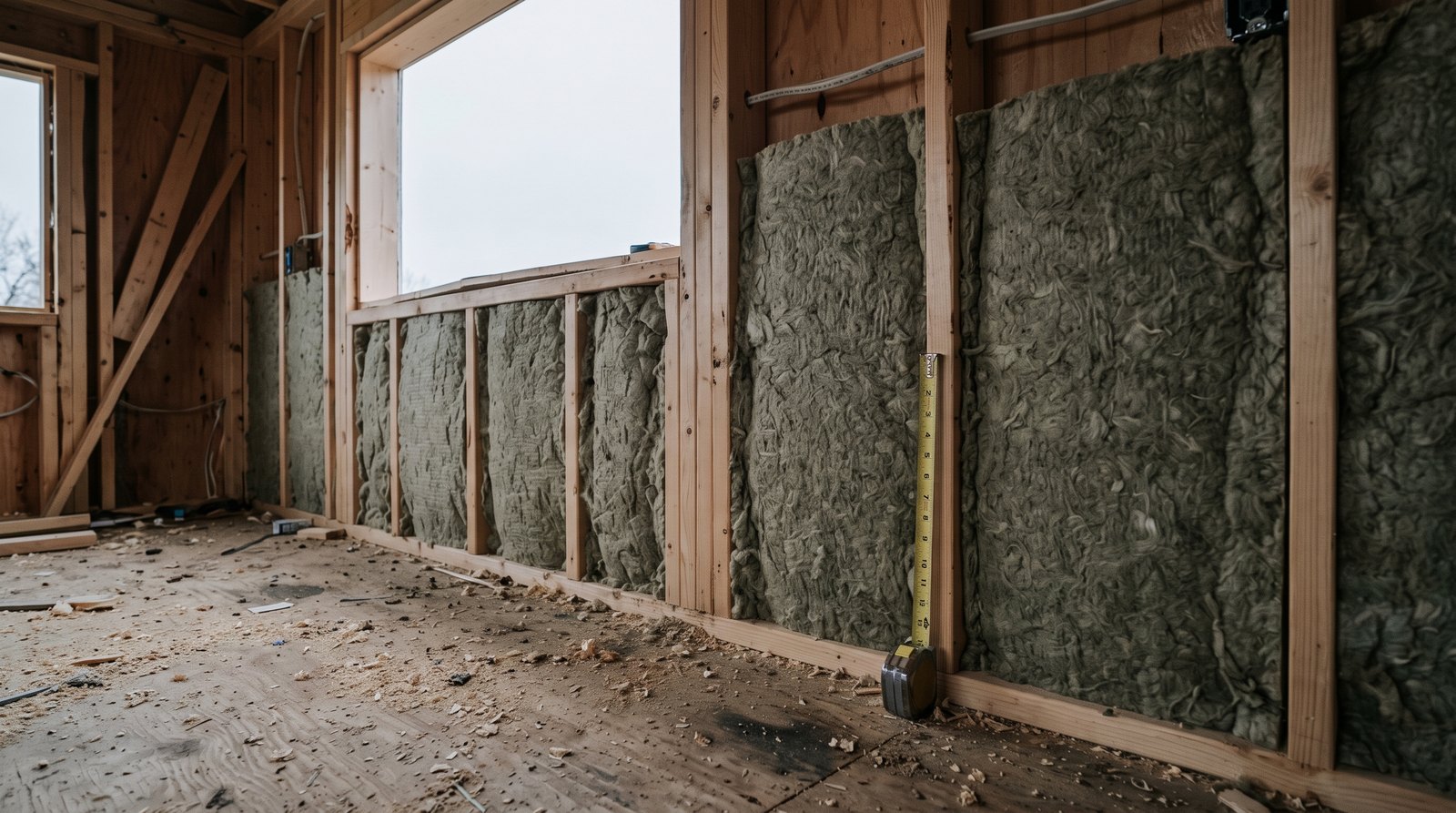
Mineral wool is the safe, forgiving cavity option. It returns about R-4 to R-4.3 per inch, does not burn, shrugs off water, and deadens road and rain noise better than any foam. For a tiny house that doubles as a towed vehicle, that mix of fire resistance and sound control is genuinely useful.
The batts are dense and stiff, so they friction fit between studs and stay put through the vibration of towing rather than slumping over time the way loose fiberglass can. Mineral wool is hydrophobic, meaning it sheds liquid water and dries out instead of staying soggy, which matters in a small space that sees a lot of cooking and shower moisture. It is also vapor open, so a wall built with it can dry in both directions when you pair it with smart air sealing.
The tradeoffs are weight and R-value per inch. Mineral wool is heavier than fiberglass, and in a three and a half inch wall it tops out around R-15, which is why it pairs so well with a layer of exterior rigid foam. Wear a respirator and long sleeves when you cut and fit it.
Closed Cell Spray Foam: Air Barrier and Structure
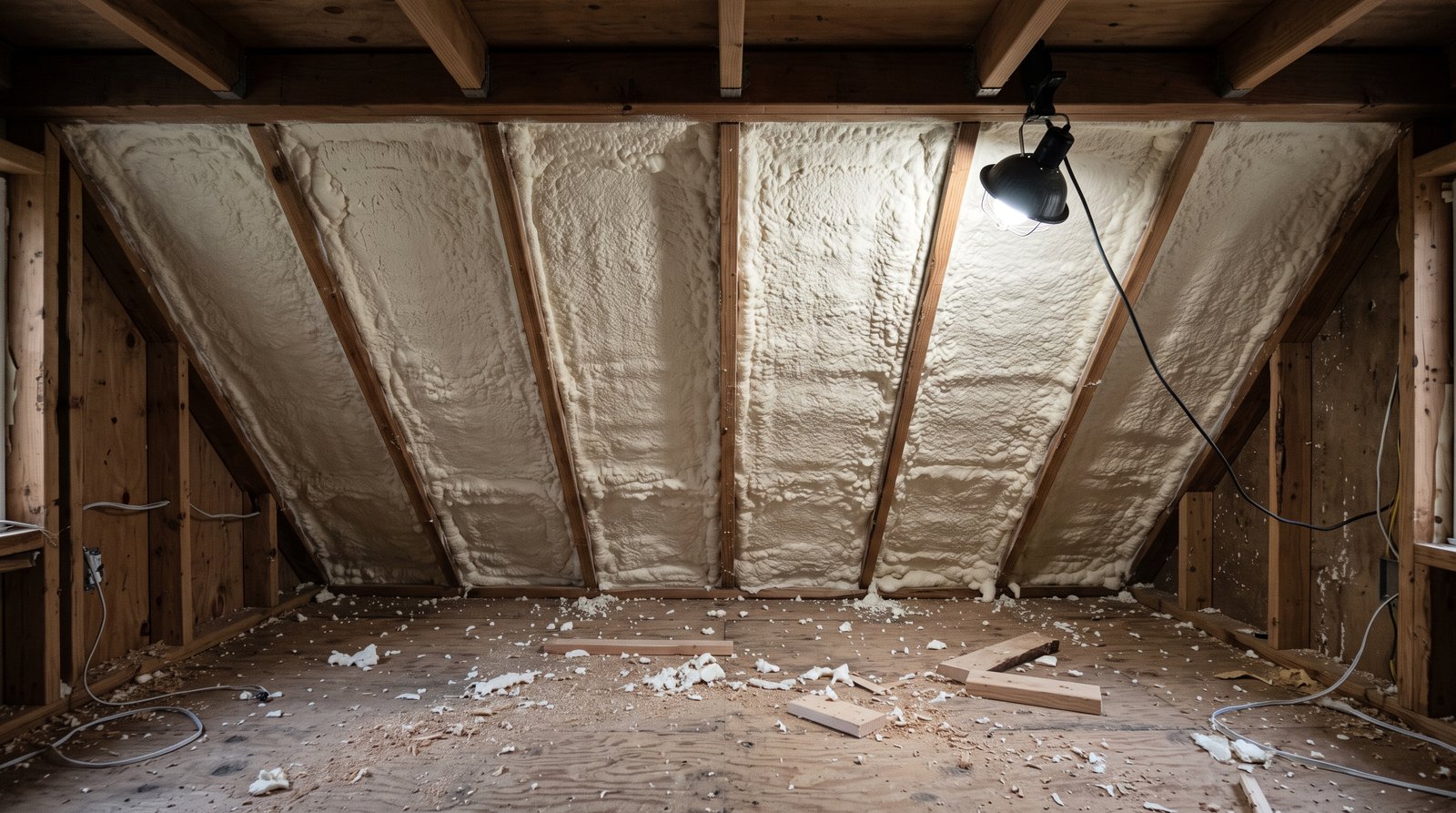
Closed cell spray foam is the highest performing cavity insulation you can put in a tiny house. At R-6 to R-7 per inch it gives the most warmth for the least thickness, and it does three jobs at once: it insulates, it air seals, and at a couple of inches thick it also acts as a vapor retarder. It even stiffens the structure.
That structural bonus matters on wheels. The rigid foam bonds framing members together and adds racking strength, which helps a tiny house survive years of highway flex and bouncing. Because it expands into every gap, it seals the countless small leaks that would otherwise let heat and drafts pass, and air leakage is usually the single biggest energy loss in a small building.
The downsides are cost, weight, and permanence. Closed cell is the most expensive option per square foot, it adds real pounds to a build that has a weight budget, and once it is in, it is in for good, bonded to your framing and wiring. Professional installation gives the best result, though DIY kits exist for small areas. Never trap a closed cell layer between two vapor tight surfaces, or you build a wall that cannot dry.
Open Cell Foam and Fiberglass: Where They Fit
Open cell spray foam and fiberglass batts are the budget end. Open cell returns about R-3.5 to R-3.8 per inch and air seals well, but it is vapor open and soaks up water, so it is a poor match for a thin exterior wall in a damp climate. Fiberglass is cheapest of all at R-3.1 to R-3.4 per inch.
Fiberglass has two real problems in a tiny house on wheels. It performs worst per inch, which hurts the most exactly where you have the least room, and it can settle and sag under constant road vibration, leaving cold gaps at the top of the wall. If budget forces fiberglass, choose high density batts, fit them tightly, and combine them with careful air sealing and exterior rigid foam.
Open cell foam has a place in interior partitions or a roof where drying to the inside is planned for, but for the outer shell of a tiny house that faces weather on every side, most builders skip it in favor of closed cell or mineral wool.
Vapor Control in a Small, Tight Space
A tiny house makes a lot of moisture in a small volume. Cooking, showering, and simply breathing put more humidity per cubic foot into a tiny house than into a normal home, so managing that moisture is as important as the R-value. Air sealing comes first, then a vapor strategy that lets the wall dry.
The rule that saves walls is simple: do not sandwich a cavity between two vapor tight layers. If you use closed cell foam, which is already a vapor retarder, do not add interior poly sheeting on top of it, or moisture that does get in has no way out. With vapor open mineral wool, a smart vapor retarder on the warm side plus taped exterior foam gives you a wall that breathes in the right direction for the season.
Run a good bath fan and a range hood that vents outside, and consider a small energy recovery ventilator so you can exhaust stale, damp air without dumping all your heat. Persistent condensation and trapped moisture are what rot a tiny house from the inside, which is a big part of how long a tiny house lasts. Insulation and moisture control are the same job.
What Insulation Costs Per Square Foot (2026)
Expect rough 2026 ranges of about 60 cents to 1 dollar 20 per square foot for fiberglass, 1 dollar 20 to 2 dollars 50 for mineral wool, roughly 1 to 1 dollar 35 for a typical exterior rigid foam layer, and 3 dollars 50 to 6 dollars 50 to fill a wall with closed cell spray foam. Local quotes vary widely, so price your own build.
Two things make tiny house numbers different from a normal house. First, the square footage is small, so even the pricey options add up to a manageable total, which is why many builders spend more here than they would per square foot on a big house. Second, spray foam usually carries a minimum job charge, so a professional closed cell job on a tiny footprint can cost more per square foot than the same foam on a large one.
Weigh cost against weight and towing too. Closed cell foam adds pounds that eat into your trailer capacity and can nudge up what it costs to move the house later. A common money saving mix is mineral wool or closed cell in the cavities with a thin, taped layer of rigid foam outside, which buys strong real world performance without maxing out any single line item.
Quick Answer by Situation
The right insulation depends on your climate, your budget, and how much you care about weight and fire safety. Most tiny house builders land on one of a few clear combinations, and the shortcut below covers the situations that come up most often when people plan the walls, roof, and floor.
- Cold climate, best performance: closed cell spray foam in the cavities plus a taped layer of exterior rigid foam.
- Fire and sound a priority: mineral wool in the cavities plus exterior rigid foam to cover the studs.
- Tight budget: high density fiberglass or mineral wool batts, fitted carefully, with obsessive air sealing.
- Watching every pound: mineral wool over closed cell, since foam adds real weight to a towed build.
- Damp or coastal climate: mineral wool or closed cell, never open cell or fiberglass alone in the outer shell.
- Roof and floor: treat them like the walls, because a tiny house loses heat through both faster than you expect.
Whatever you choose, insulation is only as good as the air sealing around it, and the choice ties directly into comfort, which is a major reason people compare a tiny house against an RV for full time living. A well insulated tiny house stays livable in weather that makes a thin walled RV miserable.
Frequently Asked Questions
What is the best insulation for a tiny house?
For most tiny houses the best setup is closed cell spray foam or mineral wool in the wall cavities plus a taped layer of rigid foam board on the outside. Closed cell gives the most warmth per inch, mineral wool adds fire and sound resistance, and exterior board stops heat escaping through the studs.
Is spray foam or rockwool better for a tiny house?
Closed cell spray foam wins on R-value per inch, air sealing, and added structure, which suits thin walls on wheels. Mineral wool (rockwool) wins on fire resistance, sound control, moisture tolerance, and lower cost. Many builders use foam in cold climates and rockwool where weight and fire matter most.
How thick should tiny house wall insulation be?
Most tiny house walls are three and a half inches deep, so the cavity insulation is limited to that. Builders gain more R-value by adding one to two inches of continuous rigid foam on the outside, which also covers the studs and reduces thermal bridging without eating interior space.
Do you need a vapor barrier in a tiny house?
You need a vapor strategy, not always a separate barrier. Closed cell spray foam is already a vapor retarder, so you add no poly over it. With vapor open mineral wool, use a smart vapor retarder on the warm side. In every case, air sealing and good ventilation matter more than any single sheet.
How much does it cost to insulate a tiny house?
Rough 2026 ranges run about 60 cents to 1 dollar 20 per square foot for fiberglass, 1 dollar 20 to 2 dollars 50 for mineral wool, and 3 dollars 50 to 6 dollars 50 to fill a wall with closed cell spray foam. Because a tiny house is small, the total stays manageable even with premium materials.