Most tiny house owners spend $800 to $2,500 per year on maintenance. A tiny house on wheels lands near the top of that range because the trailer, tires and bearings need service. One on a permanent foundation lands near the bottom. Add lot rent, insurance and utilities and the real annual cost climbs higher.
Table of Contents
What Tiny House Maintenance Actually Covers
Tiny house maintenance covers four things: keeping water out, keeping the structure sound, keeping the running gear safe, and keeping the systems working. Water is the expensive one. Almost every large tiny house repair bill starts as a failed seal that nobody caught, so the small annual jobs are the ones that protect the budget.
That framing matters because a tiny house is not simply a small house. It is a small house that either sits on a trailer or sits very low to the ground, and both situations concentrate risk. A trailer flexes every time you tow it, which works seams loose. A low deck sits close to splashback and snow load. In a conventional house those forces spread across thousands of square feet. In a tiny house they land on a few hundred.
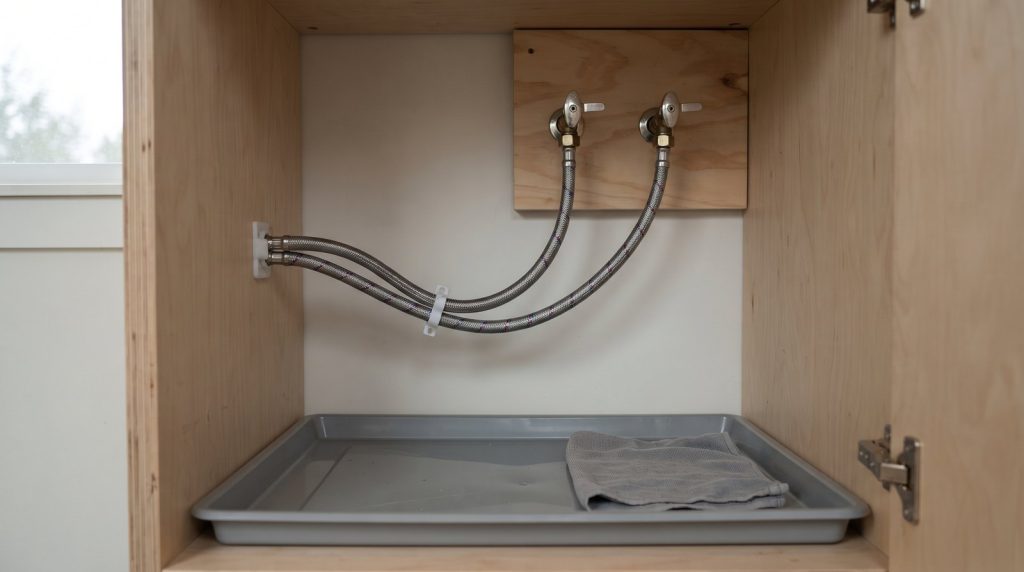
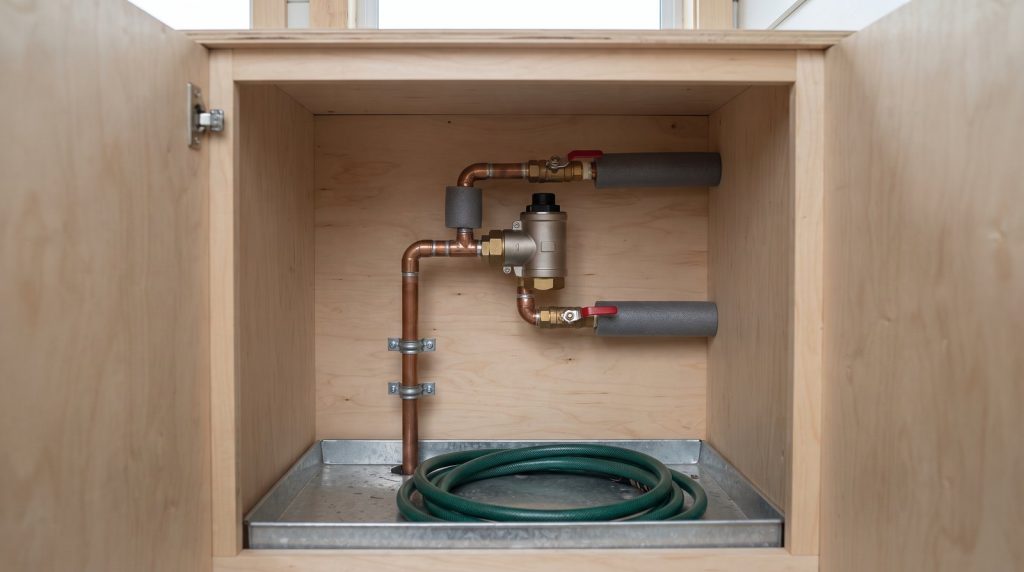
The jobs themselves are not complicated. Inspect and reseal the roof and window penetrations. Wash and re-coat the siding on schedule. Check the subfloor and the wall base for soft spots. Service the trailer. Flush the water heater, clean the mini split filters, and test the smoke and carbon monoxide alarms. Most of it is a weekend twice a year, not a contractor visit.
How Much Tiny House Maintenance Costs Per Year
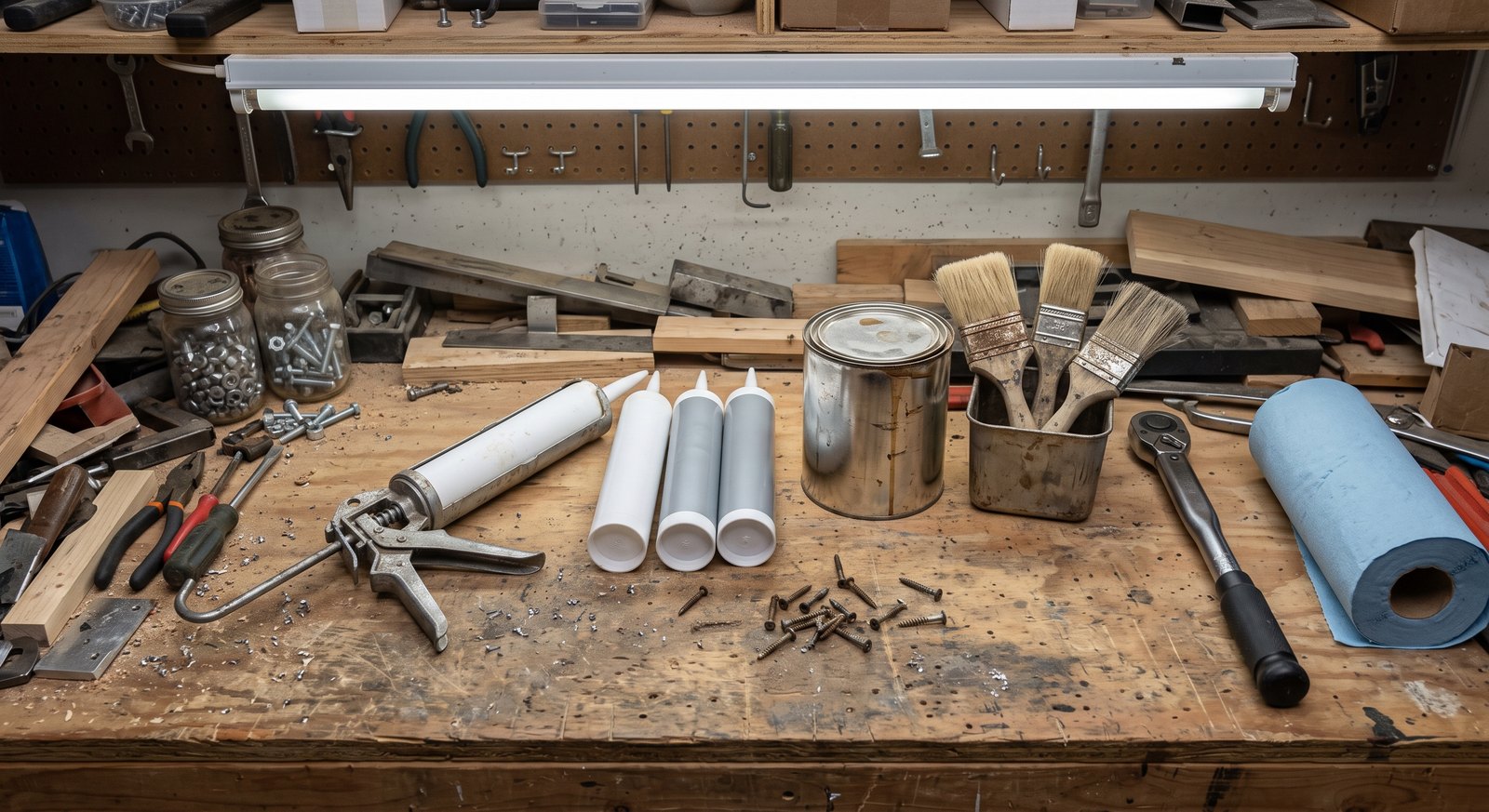
Budget $800 to $1,500 per year for a professionally built tiny house on wheels, and $400 to $900 per year for one on a foundation. A do-it-yourself build with an uncertified roof or homemade flashing runs higher, often $1,500 to $2,500, because the details that fail first are the details an amateur build tends to get wrong.
Those figures assume you do the routine work yourself and hire out only the trailer service and any real repair. If you hire out everything, roughly double them. The RV world uses a rule of thumb of about ten percent of the unit value per year for preventative maintenance, and while that is high for a well built tiny house, it is a useful ceiling for an older or neglected one.
Here is where the money typically goes in a normal year on a tiny house on wheels:
- Sealant, caulk and roof coating: $50 to $250 in materials
- Siding wash, stain or paint touch up: $75 to $300, amortized across the re-coat cycle
- Trailer service and wheel bearing repack: $150 to $300 per axle when hired out
- Tires, set aside annually: $100 to $200
- Appliance and system service: $100 to $250
- Contingency for the thing you did not plan for: $300 to $500
The contingency line is not padding. Tiny houses fail in small, sudden ways: a cracked skylight seal, a water pump that quits, a window that stops closing square after a tow. Owners who skip that line are the ones who describe maintenance as unpredictable.
Sealant, Roof and Siding: Where the Money Goes
Sealant is the cheapest line item and the most important. A tube of roof lap sealant costs under $20, and a full inspection and touch up of every roof seam, vent boot and window flange costs $50 to $200 in materials twice a year. Skipping it is what turns a $20 job into a $5,000 subfloor repair.
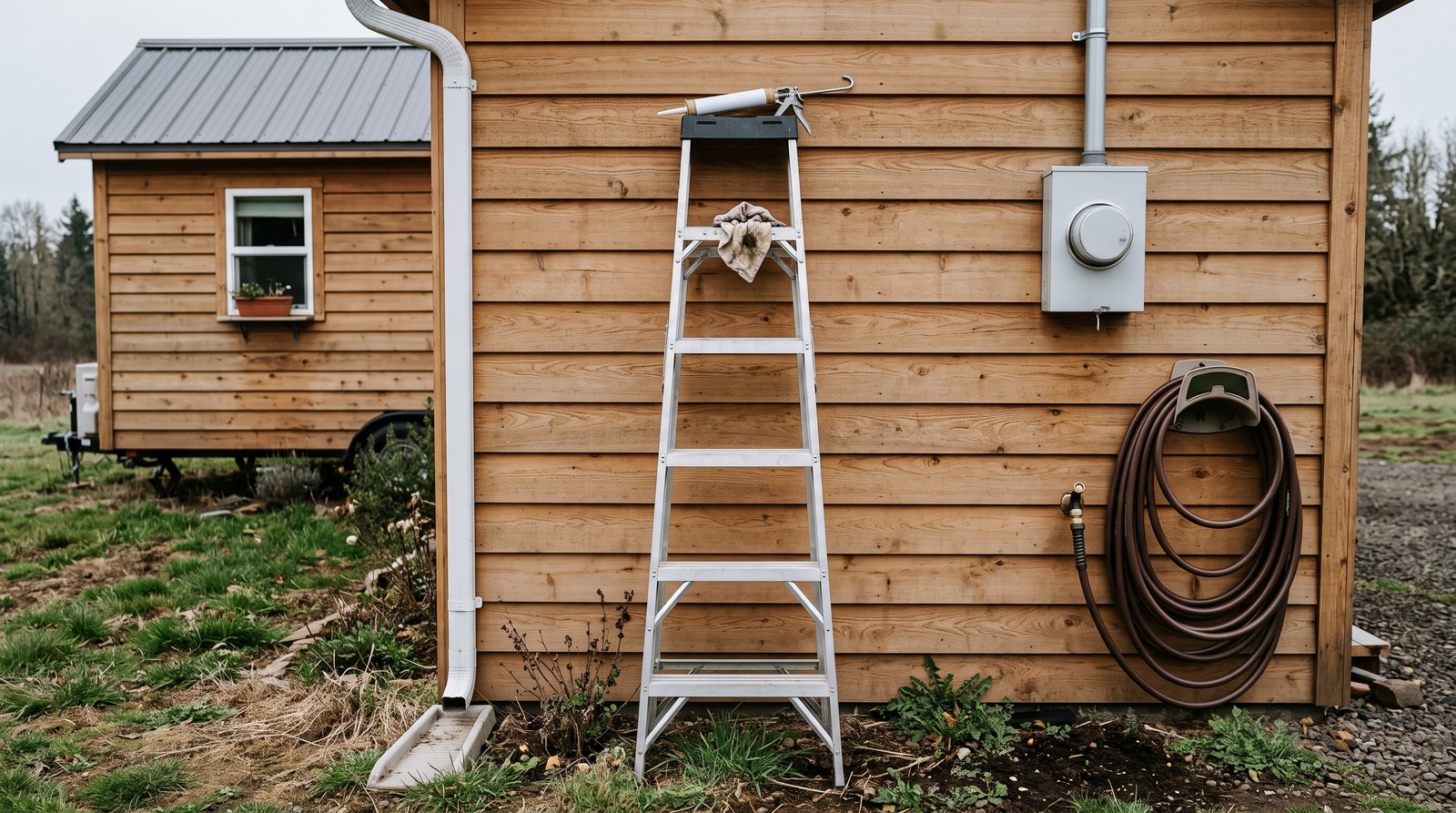
Inspect the roof twice a year, in spring and fall. You are looking for sealant that has gone chalky, cracked or lifted at the edges, and for any penetration where the bead has pulled away from the metal. Vent boots, skylights and the front and rear roof edges fail first because they take the most movement and the most ultraviolet exposure. Clean the old material off properly before you re-bead it, because fresh sealant over failed sealant simply hides the leak.
Siding runs on a slower clock. Stained cedar and other natural wood siding generally needs a re-coat every three to five years depending on exposure, and a south or west facing wall will always come due before the others. Painted fiber cement and metal siding stretch much longer. Either way, wash the walls annually. Dirt holds moisture against the surface, and moisture is the whole game.
Windows and doors deserve their own pass. Check that the exterior sealant bead is intact, that weep holes are clear, and that the unit still closes and latches without being forced. A door that suddenly needs a shove usually means the structure moved, and that is worth investigating before you chase the symptom. Our guide to how long tiny houses last goes deeper on which failures shorten a build’s life.
Trailer, Tires and Bearings on a Tiny House on Wheels
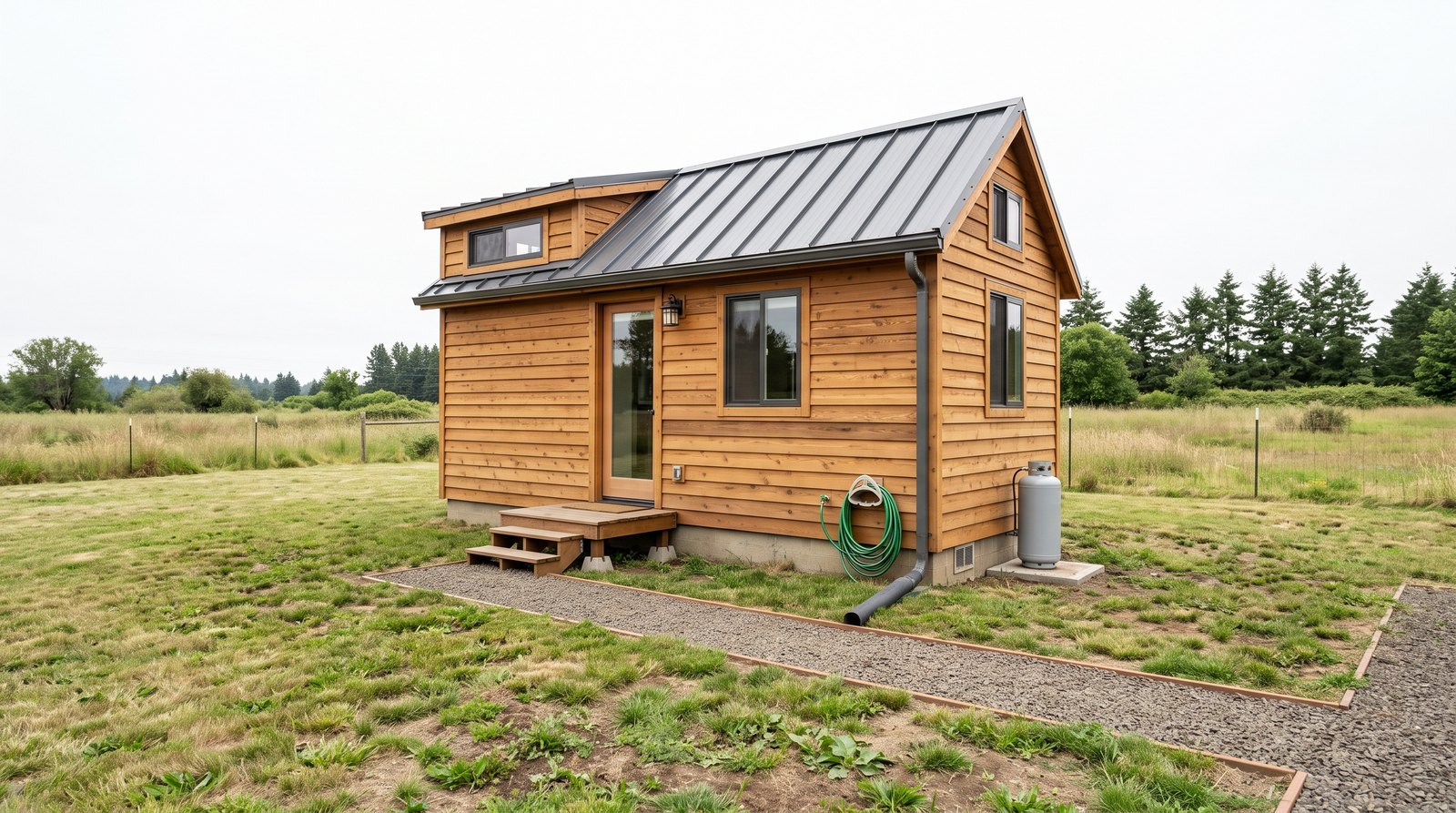
The trailer is what separates a tiny house on wheels from a foundation build. Plan on a wheel bearing repack every twelve months or 12,000 miles, whichever comes first, at roughly $150 to $300 per axle if you hire it out. Grease degrades on the calendar, not just on the odometer, so a parked tiny house still comes due.
Tires are the other calendar item, and they are the one owners get wrong most often. Trailer tires age out before they wear out. Tread depth can look almost new while the sidewall compound has already degraded, and that is exactly the failure that ends in a blowout at highway speed. Replace them on age, generally every five to seven years, and read the four digit date code stamped on the sidewall rather than guessing. The first two digits are the week and the last two are the year.
While you are under there, look at the frame. Surface rust on a steel trailer is normal and manageable with a wire brush and a coat of paint. Flaking rust with pitting, or any rust at a weld or a crossmember, is a different conversation and worth a professional opinion. Check the coupler, the safety chains, the breakaway cable and the lights, because those are the parts that matter on the one day a year you actually move.
If you do plan to move, budget for that separately. Towing is not maintenance, and the real numbers are covered in our breakdown of what it costs to move a tiny house.
Utilities, Insurance and Site Costs
These are not maintenance, but they belong in any honest annual budget. Expect $50 to $150 per month in utilities for a typical tiny house, $500 to $1,500 per year for insurance on a tiny house on wheels, and $300 to $1,000 per month in lot rent if you park in a tiny house community.
Utilities swing hard with climate. A well insulated tiny house in a mild region can run at the bottom of that range year round, while the same build in a hot and humid summer or a hard winter will push toward $180 to $250 in peak months. Propane for cooking and backup hot water is modest: a 20 pound tank runs $20 to $30 to refill and lasts a light use household a month or two.
Insurance depends heavily on how the home was built. RVIA or NOAH certified units are easier and cheaper to insure than owner builds, and a professionally built home on a certified trailer will almost always beat a homemade one on premium. Coverage limits, your deductible and regional risk such as coastal wind exposure drive the rest. We break the categories down in our guide to tiny house insurance costs.
Lot rent is the single largest variable in tiny house ownership and it has nothing to do with the building. Private land leases can run as low as $250 per month, while an amenity rich community can exceed $1,000. Location drives that number far more than the size of your home does.
Quick Answer by Situation
Annual maintenance budgets vary far more by build type, age and site than by square footage. Find the line below that matches your situation, treat it as your repair and upkeep reserve, then add utilities, insurance and any lot rent separately on top of it.
- New professionally built tiny house on wheels: $800 to $1,200 per year for the first five years, mostly sealant, siding care and trailer service.
- Tiny house on a permanent foundation: $400 to $900 per year. No trailer, no tires, no bearings, and far less movement working seams loose.
- Owner built tiny house on wheels: $1,500 to $2,500 per year. Budget more for flashing, roof detail and window seals, which are the usual weak points.
- Tiny house over ten years old: $1,500 to $3,000 per year. Assume at least one significant repair per year and inspect the subfloor annually.
- Tiny house you tow more than twice a year: add $300 to $600 per year for accelerated tire, bearing and sealant wear.
- Tiny house parked in a snow region: add $200 to $400 per year for roof load management, heat tape and freeze protection.
How to Cut Your Annual Maintenance Bill
The cheapest maintenance strategy is frequent inspection and immediate small repairs. Owners who spend the least per year are not the ones who bought the most expensive home. They are the ones who catch a lifting sealant bead in March instead of finding a soft floor in November.
Do the routine work yourself. Resealing a roof, washing siding, cleaning mini split filters and flushing a water heater are all genuinely accessible jobs, and the tools pay for themselves in one avoided service call. Reserve professional help for wheel bearings, anything electrical or gas, and any structural question you cannot answer confidently.
Keep a written log. Note what you sealed and when, when the bearings were last packed, and the date code on your tires. A log turns maintenance from a vague worry into a short list with dates on it, and it materially helps resale, because a documented history is the clearest evidence a buyer has that the home was cared for.
Finally, fix drainage before you fix anything else. Make sure the roof sheds cleanly, gutters and downspouts actually carry water away, and the ground under the home does not pool. Most expensive tiny house repairs trace back to water that had nowhere to go.
Frequently Asked Questions
Is a tiny house cheaper to maintain than a regular house?
Yes, in absolute dollars. A typical tiny house runs $800 to $2,500 per year against several thousand for a full size home, simply because there is less roof, less siding and fewer systems. Per square foot, though, a tiny house on wheels is often more expensive because the trailer adds costs a house never has.
How often should I reseal a tiny house roof?
Inspect every six months and reseal wherever the bead has cracked, chalked or lifted. Most owners do a full pass of every seam and penetration once a year in spring. A complete roof coating, if your roof type calls for one, typically comes due every three to five years depending on material and exposure.
What is the most expensive tiny house repair?
Water damage to the subfloor and lower wall framing. Once moisture reaches the structure, the repair means opening the floor or walls, and it commonly runs into thousands of dollars. It is also almost entirely preventable, which is why sealant inspection is the highest value hour you spend each year.
Do I need to maintain the trailer if I never move the tiny house?
Yes. Wheel bearing grease breaks down with time whether or not the trailer rolls, and tires degrade on age rather than mileage. Service the bearings at least every two years on a parked home, keep the tires covered from ultraviolet exposure, and inspect the frame for rust annually.
How much should I set aside each month for tiny house maintenance?
Set aside $70 to $200 per month depending on build type and age. That covers the routine annual spend plus a reserve for the unplanned repair. Owners of older or owner built homes should sit at the top of that range, and anyone towing regularly should add to it.