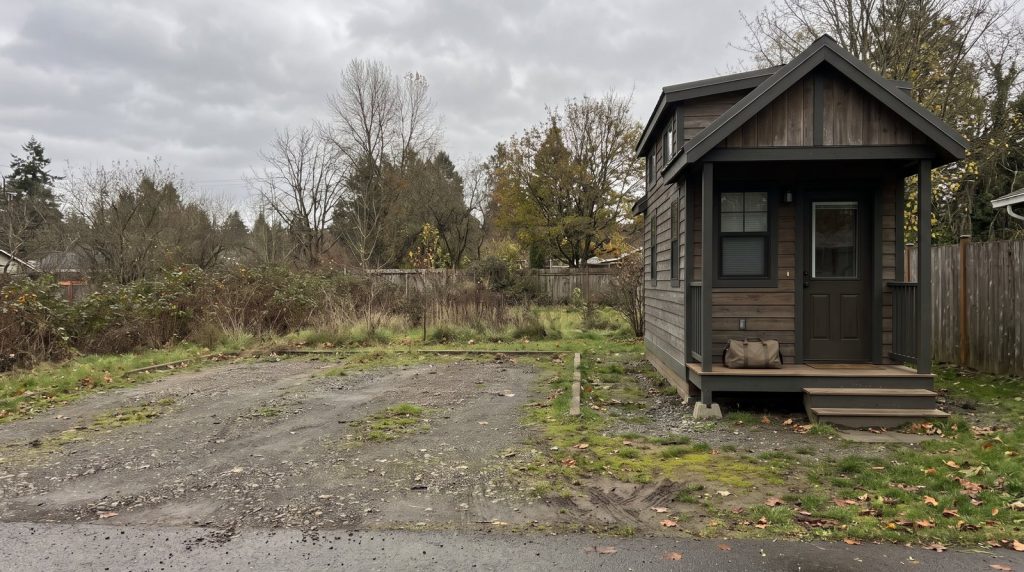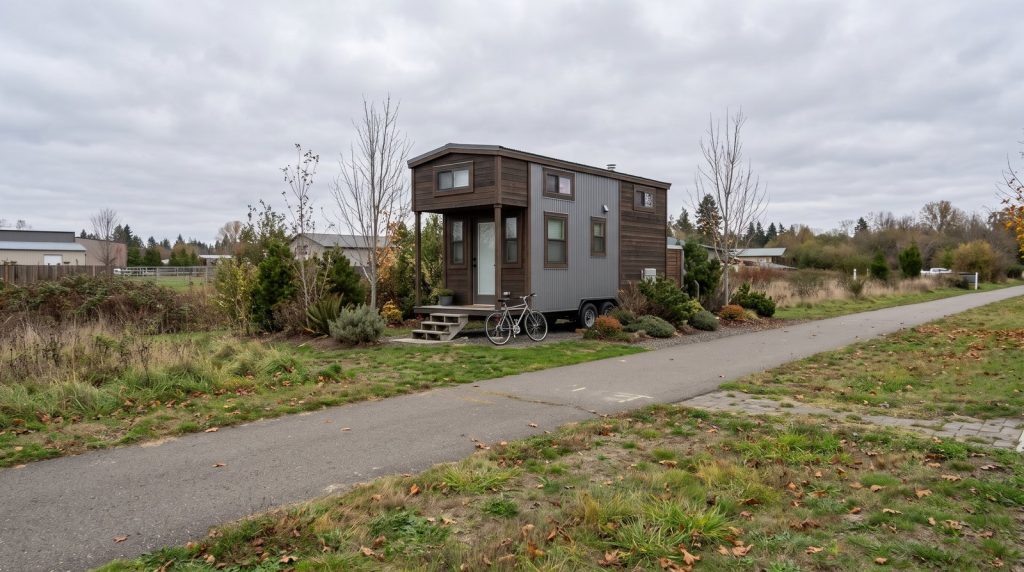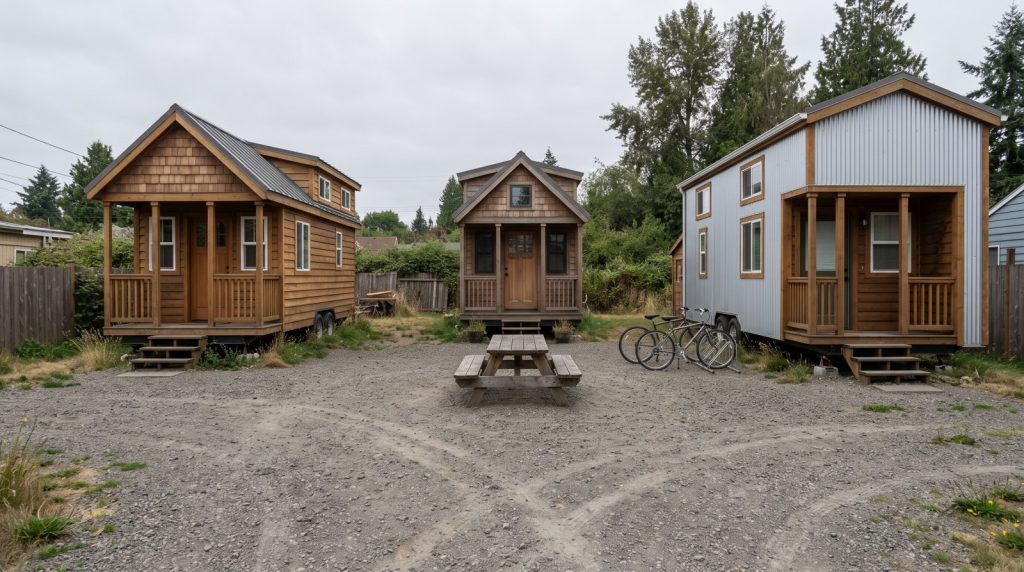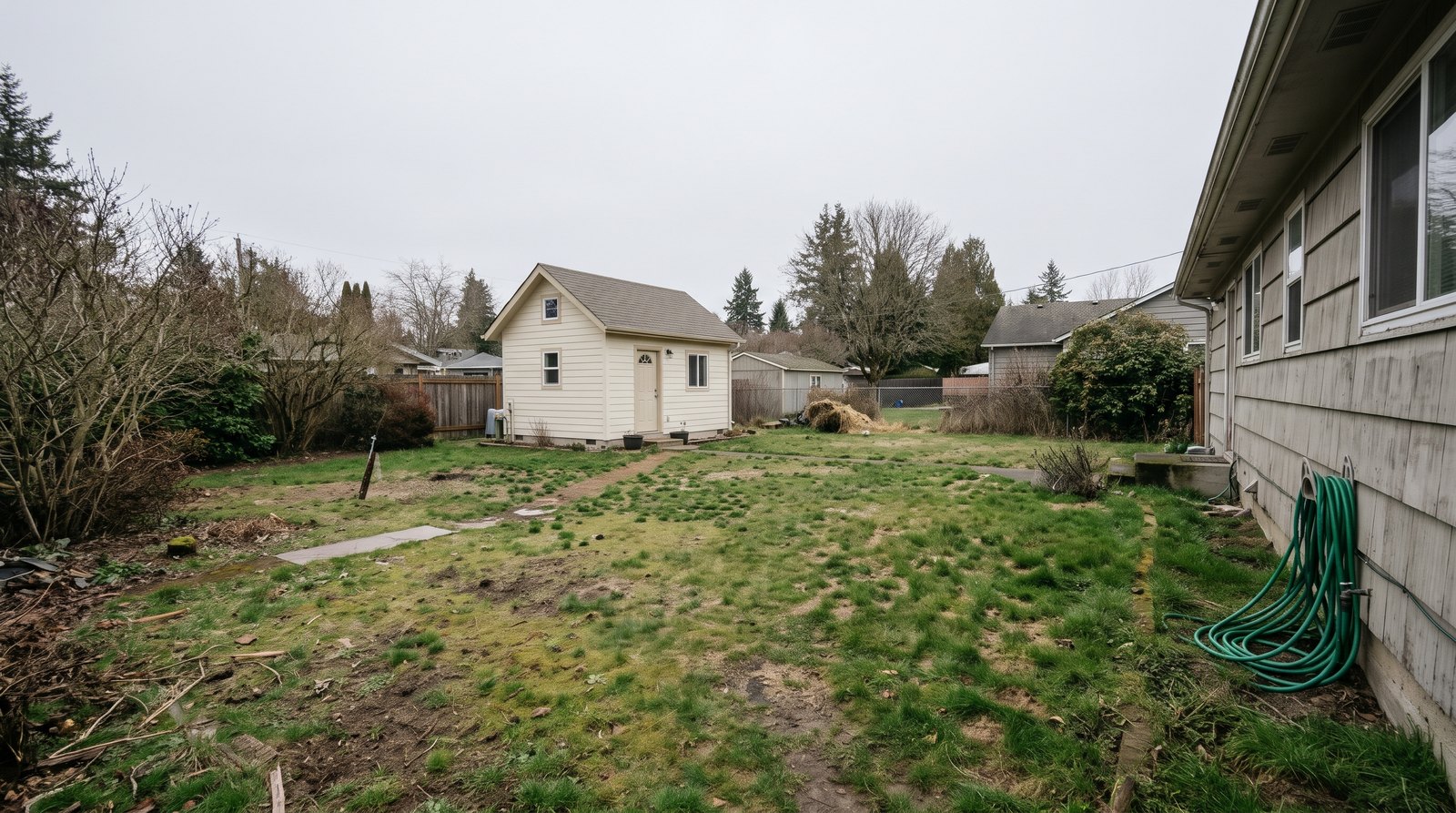
A tiny house on family land works best when both households agree on privacy, access, money, upkeep, and an exit plan before move-in. Family permission and local approval are separate requirements. Write down everyday expectations, check the proposed use with local officials, and get independent advice before making binding property commitments.
Table of Contents
Start with permission, approvals, and a shared purpose
Confirm that the property can accommodate your particular home and intended occupancy before treating a relative’s invitation as a housing plan. Then agree on why you are sharing the land, how long you expect the arrangement to last, and what independence means to each household in daily life.
A small house on a foundation and a tiny house on wheels may follow different approval paths. For example, Portland’s occupied RV guidance distinguishes wheeled tiny homes from foundation-based accessory dwellings. That is a local example, not permission to copy the arrangement elsewhere. Ask your city or county about your exact parcel, structure, intended residents, and duration of occupancy.
Identify everyone who must participate in the decision. A relative who lives on the property may not be its sole owner. Ask a local attorney to review ownership, restrictions, and the proposed occupancy arrangement before you pay for permanent improvements. Do not assume that family consent creates ownership or a lasting right to remain.
Separately, describe the purpose in one sentence: independent housing near parents, a temporary transition, or living close enough to offer agreed help. Discuss any expectation of childcare, transportation, or caregiving explicitly. Living nearby should not quietly become a promise of unlimited availability.

Draw the boundaries around privacy and access
Treat the tiny house as a separate household with a clear route in, a defined outdoor area, and an agreed visiting routine. Walk the property together and identify where private space ends and shared space begins. Resolve everyday access questions before placing steps, fencing, furniture, or storage in the yard.
Sketch the intended walking route, vehicle parking, delivery spot, trash location, and areas used by both households. This sketch is a conversation aid, not an approved site plan. Check proposed physical changes against applicable requirements before installing them. Keep maintenance and emergency access in the discussion, especially where a narrow side yard connects the homes.
Decide whether visitors should text first, knock, or wait for an invitation. Clarify how spare keys will be handled and when entry might be needed. Any formal entry rights or notice provisions need local advice; an informal family preference is not a substitute for applicable housing law.
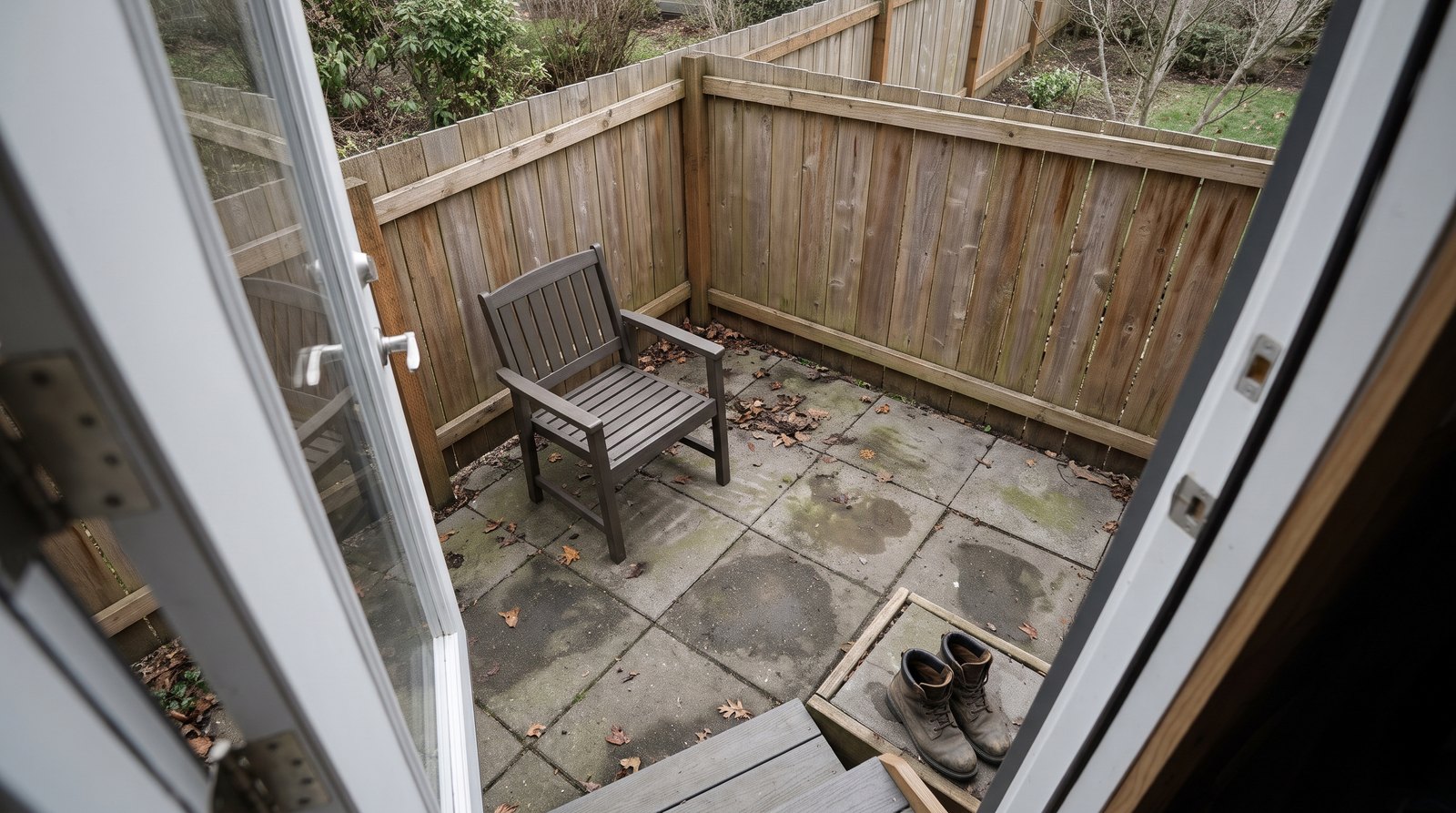
Consider the view from each window as well as the distance between doors. A chair outside the tiny house may face directly into the main kitchen. Moving a seating area can solve that problem without adding a fence. Discuss exterior lighting and cameras so neither household is surprised by light or recording aimed at its private space.
Quick answer by situation
The most useful planning conversation depends on why you are moving onto family land. Start with the situation that best matches your household, then work through the remaining responsibilities together. These are planning priorities, not legal categories, and more than one may apply to the same family arrangement.
- You are staying temporarily: Set a review date, identify the intended next step, and plan what happens if that step takes longer than expected.
- You expect a long-term home: Obtain independent advice about occupancy, improvements, ownership, and what a future property sale could mean before investing heavily.
- You are moving close to help a relative: Define the actual tasks and times involved, and arrange backup help for illness, work travel, or exhaustion.
- You will share household facilities: Agree on access hours, cleaning, supplies, and a backup plan when the main home is unavailable.
- Your tiny house may move later: Preserve a feasible removal route and obtain professional advice about transport before building around it.
Try an ordinary weekday walkthrough. Arrive home after dark, carry groceries from the proposed parking spot, and imagine a delivery while someone else is leaving. Follow the route you would use to do laundry or collect trash. Small inconveniences are easier to correct on paper than after the house and fence are in place.
Set expectations for guests, pets, and shared space
Agree on how shared areas will function when life is busy, rather than assuming family members will naturally use them the same way. Cover guests, pets, meals, parking, laundry, storage, and quiet periods. Keep the routine specific enough to follow while allowing either household to raise a problem without embarrassment.
A weekly family dinner can be welcome without making every evening communal. Likewise, access to a garden does not automatically include access to tools, produce, a workshop, or a swimming pool. Identify which spaces are shared, which require advance agreement, and which remain private.
Talk about overnight visitors before the first invitation. Consider available sleeping space, bathroom access, parking, and any applicable occupancy restrictions. An occasional guest and an additional resident can create different practical and legal questions. Do not invent a universal number of permitted nights; verify the relevant rules and discuss changes before they happen.
For pets, agree on outdoor supervision, waste pickup, feeding, gates, and where animals can go. A closed gate should have a clear meaning for everyone. If one household has children or visiting grandchildren, discuss who supervises them around the other home. Being on the same property does not by itself make the tiny house resident the default babysitter.
Make bills and shared services understandable
List each recurring expense and decide who receives the bill, who pays it, how the share is calculated, and when payment is due. Separate routine living costs from one-time site improvements. Use a method both households can understand, and agree on a review process before seasonal use or household size changes.
The Consumer Financial Protection Bureau’s family lending guidance recommends clarifying what support is provided, whether repayment is expected, when an arrangement ends, and what happens if circumstances change. Apply that conversation to any family contribution toward the home or its setup. Record whether money is a gift, a loan, or payment for something specific, with professional advice where needed.
For shared utility bills, compare the available billing arrangements with the utility and qualified installers. Do not assume that a separate meter, reimbursement formula, or private resale arrangement is permitted. If the agreed contribution is fixed, decide when to revisit it and how to handle a disputed increase.
Check physical service capacity separately from payment. The EPA directs homeowners to local permitting authorities for septic records and requirements. Have the appropriate authority and professionals evaluate added occupancy before connecting another home. A family agreement about the water bill does not establish that the wastewater system can serve it.
Assign upkeep, repairs, and insurance questions
Give every shared maintenance task a named person, a practical schedule, and a way to report problems. Decide who can approve work and how costs will be handled before a repair becomes urgent. Review both households’ insurance arrangements with their insurers using an accurate description of the homes and their use.
Split the task list into the tiny house, the main home, and shared property. Examples include keeping the access path clear, handling leaves or snow, maintaining a gate, moving bins, and arranging service appointments. Agree on who organizes a contractor as well as who pays. Those are different responsibilities.
Describe a simple response to an unexpected problem: report it promptly, protect people, contact the appropriate professional, and keep receipts and photographs. Discuss a spending approval process and how to reach the other household when someone is away. Do not make unqualified occupants responsible for electrical, plumbing, or structural repairs.
Ask insurers about the actual occupancy, ownership, household relationships, shared areas, belongings, and any paid rental arrangement. Coverage depends on policy terms and circumstances. Our tiny house insurance guide can help organize questions, but the insurer must confirm what applies to this property. Keep relevant policy contacts with the household plan, without sharing account passwords or unnecessary personal information.
Write a usable plan and revisit it
Create a short household plan that records decisions in plain language, then distinguish it from any legal documents needed for the arrangement. Each household should keep a copy and know how changes will be discussed. Schedule a review after the initial adjustment period and whenever the living situation materially changes.
Include the residents, private and shared areas, routine payments, chores, visiting expectations, and contact details for practical issues. Add unresolved questions rather than presenting them as settled. A useful note might say that utility allocation still awaits provider guidance, with one person responsible for obtaining the answer before move-in.
Use a local attorney for binding occupancy terms, ownership questions, reimbursement obligations, and termination provisions. Obtain independent advice when interests differ. A friendly checklist cannot determine whether a particular arrangement creates a tenancy or whether a clause is enforceable. Those questions depend on local law and the facts.
At each review, ask what is working, what is repeatedly inconvenient, and what has changed. A new partner, a different work schedule, a pet, or a growing need for care may require another conversation. Record the revised practical decisions and date them. If a change affects legal documents, insurance, or permitted occupancy, seek the relevant review before relying on it.
Plan for disagreements and a workable departure
Discuss how to raise concerns and how the arrangement could end while everyone is still comfortable talking. Choose a regular way to address recurring problems, and identify professional help for disputes that cannot be resolved directly. A departure plan should cover housing, money, belongings, site restoration, and the physical future of the tiny house.
Start a difficult conversation with a specific event and a requested change. For example, explain that a vehicle blocked the agreed walking route and propose another parking position. Avoid treating one inconvenience as proof that the entire arrangement has failed. If discussion stalls, consider a suitable local mediator; legal rights still require qualified advice.
Ask what would happen if the landowner sold, died, needed different care, or could no longer host the home. These are questions for planning and professional review, not events with one universal outcome. Clarify what happens to improvements and any unpaid balances. Do not assume that money spent on a pad or utility work will be recoverable.
For a movable home, preserve the removal route and obtain a current transport assessment. Review our guide to moving a tiny house when organizing quotes and logistics. A foundation-based home needs a different discussion. In either case, identify realistic alternative housing before the family arrangement becomes urgent to change.
Frequently asked questions
These common questions separate the family conversation from the approvals and professional advice needed for a specific property. Use the answers to prepare a shared checklist, then confirm the details locally. The goal is a workable arrangement that protects everyday independence and gives both households a clear way to address change.
Can I put a tiny house on my parents’ land?
Possibly, but your parents’ permission is only one part of the process. Ask the city or county about the specific property, home type, utilities, and intended occupancy. Confirm who can authorize use of the land, then obtain advice about the proposed arrangement before paying for the house or site work.
Should we have a written agreement if no rent is charged?
Yes, a written household plan can clarify privacy, shared expenses, chores, guests, and expectations even when no rent is charged. It does not automatically establish legal rights or settle ownership questions. Ask a local attorney whether separate legal documents are appropriate for your occupancy, financial contributions, and planned length of stay.
How should we divide utility bills?
Start with the services actually shared and the billing options available from each provider. Discuss an understandable allocation method, payment dates, access to relevant bill information, and a review schedule. Confirm any metering or reimbursement restrictions locally. Keep capacity and connection approvals separate from the decision about who pays.
How can we maintain privacy while living near family?
Define private outdoor areas, walking routes, visiting habits, and shared facilities before moving in. Agree on how to request a visit and discuss windows, lighting, cameras, keys, and guests. Revisit the routine after living with it. Physical distance helps, but clear and consistently respected expectations matter just as much.
What happens if the family property is sold?
The outcome depends on ownership, applicable law, and the documents governing the arrangement. Do not assume that an informal promise guarantees continued occupancy after a sale. Ask an attorney about that scenario in advance, and plan the practical alternatives, including relocation where feasible, replacement housing, and handling improvements or outstanding payments.