PEX is usually the better choice for tiny house plumbing because it is light, flexible, economical, and tolerant of movement. Copper still makes sense near certain equipment or where rigidity and long service history matter. Either material can fail if fittings are hidden, pipes freeze, or the system is poorly supported.
Table of Contents
PEX vs. Copper: Which Is Better for a Tiny House?
For most tiny houses, use listed PEX tubing for the main hot and cold water distribution system. It needs fewer fittings, bends around obstacles, and handles trailer vibration better than rigid pipe. Choose copper selectively when local rules, equipment instructions, exposed locations, or owner preference make its rigidity and heat resistance valuable.
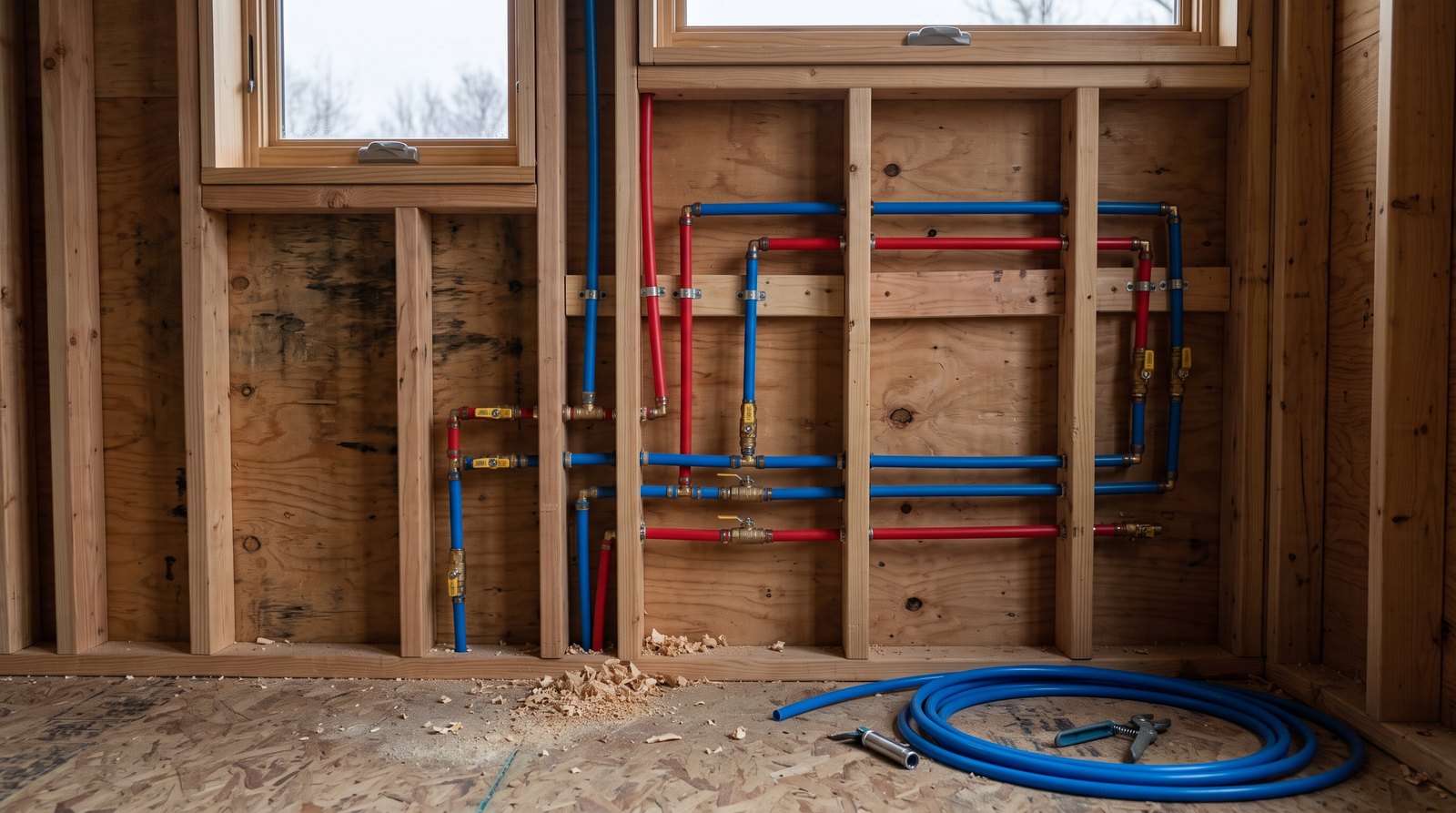
PEX is cross-linked polyethylene tubing made for potable hot and cold water. Its flexibility lets an installer run long, continuous lines through a crowded floor or wall cavity. Fewer elbows and couplings mean fewer potential leak points. PEX also weighs little, which matters in a tiny house on wheels where every pound reduces available cargo capacity.
Copper is rigid, familiar to many plumbers, resistant to sunlight, and unaffected by normal water-heater temperatures when the correct tube and joints are used. It is also easier to keep straight in an exposed utility area. The trade-offs are higher material cost, more labor, more joints, and less forgiveness when a trailer frame flexes or vibrates.
Quick Answer by Situation
The right material depends less on house size than on how the house will be built, moved, heated, and repaired. A mixed system is often sensible. Use the following shortcuts as a starting point, then check the water heater instructions, local code, and the fitting system approved for your selected tubing.
- Full-time tiny house on wheels: PEX is usually the practical default because it is light and flexible.
- Stationary house with an experienced copper plumber: Copper can deliver a neat, durable installation.
- Cold-climate house: Either material needs conditioned routing, insulation, drains, and a winter plan.
- DIY build: PEX reduces soldered joints, but the correct tool and matching fittings still matter.
- Exposed equipment connections: A short approved copper or braided connector may simplify service and protect nearby tubing from heat.
Do not choose a piping material on freeze claims alone. PEX can expand more than copper when water freezes, but fittings, valves, elbows, filters, pumps, and water-heater parts remain vulnerable. Freeze resistance is a margin, not a substitute for keeping the system warm or draining it completely.
Size and Route the Water Lines First
A tiny house does not need oversized plumbing, but it does need a deliberate demand calculation and short, serviceable routes. Many compact systems use a larger cold-water supply feeding smaller fixture branches. Final sizes depend on pressure, developed length, simultaneous fixtures, fitting losses, and the locally adopted plumbing code.
Start with a simple drawing that marks the inlet, pump or pressure regulator, shutoff, filter, water heater, every fixture, and every drain point. Put the kitchen and bathroom near each other when the floor plan allows it. Shorter runs reduce cost, shorten the wait for hot water, waste less water, and leave fewer concealed places for a leak.
Keep supply lines on the warm side of the insulation. Avoid exterior wall cavities, vented underbellies, and unheated storage boxes in freezing climates unless the assembly has a designed heat source and continuous protection. The International Residential Code model language requires pipes exposed to freezing to be protected by insulation, heat, or both, but your city or county decides which code and amendments apply.
Respect the tubing maker’s minimum bend radius and support spacing. The 2026 PEX Plumbing Design and Installation Guide explains that gentle bends can replace fittings and that unsupported bends generally should not be tighter than six times the tube’s outside diameter unless the manufacturer specifies otherwise.
Choose a Manifold or Trunk-and-Branch Layout
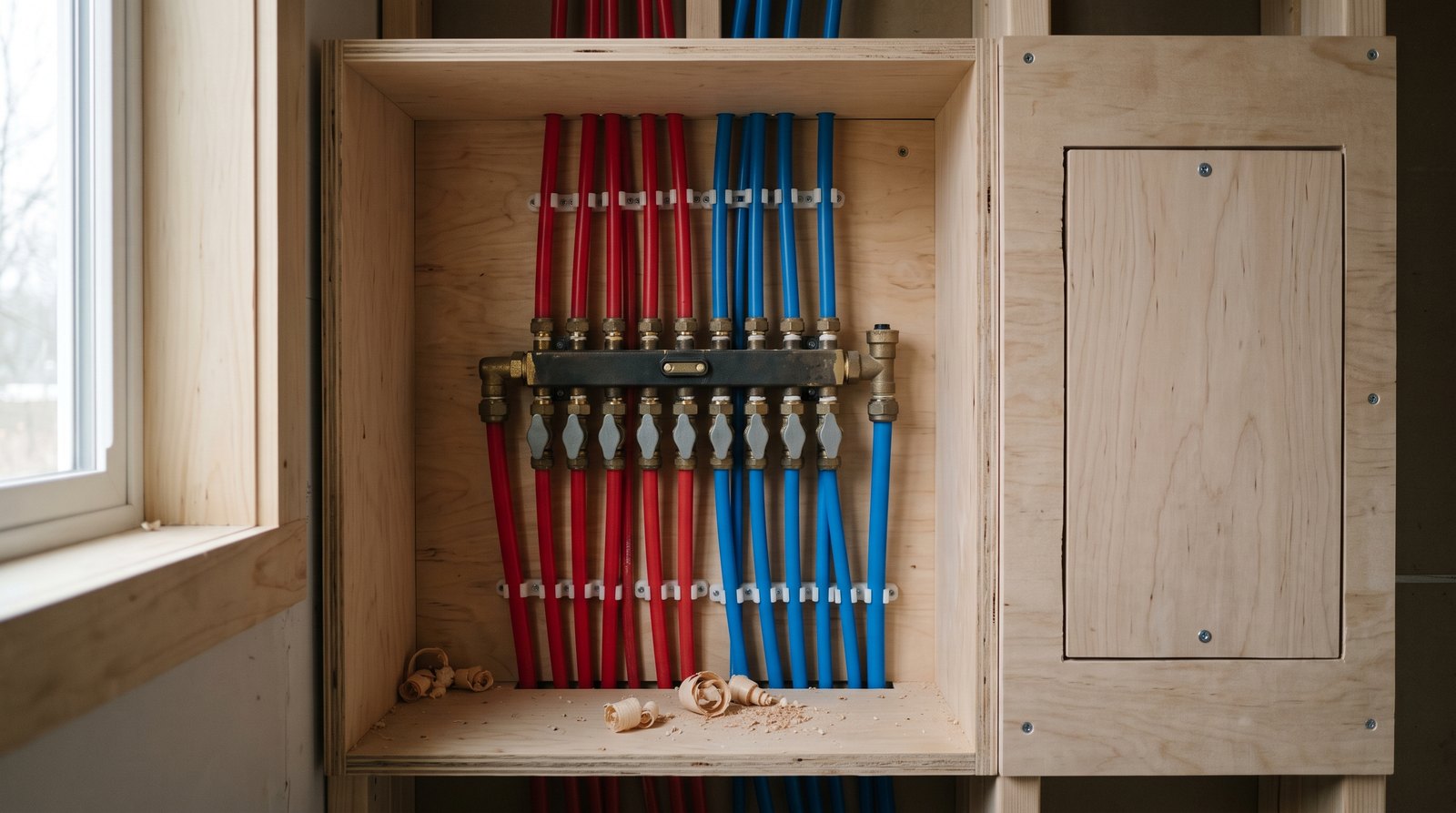
A compact trunk-and-branch layout uses less tubing, while a home-run manifold gives every fixture a dedicated line and shutoff. In a very small house with clustered fixtures, either can work well. Choose the layout that keeps connections visible, limits hot-water delay, and gives you practical isolation during a repair.
With a trunk-and-branch system, a main line runs near the fixtures and smaller branches tee off to each faucet, toilet, shower, and appliance. It is simple and material-efficient, but several fixtures may share flow. A person showering can notice a pressure or temperature change when another fixture opens if the system is undersized.
A manifold system resembles a small electrical panel for water. Separate hot and cold lines run from labeled shutoff valves to individual fixtures. It uses more tubing and needs cabinet space, but a leaking sink can be isolated without turning off the shower. Mount the manifold where every valve remains reachable after cabinets and wall panels are installed.
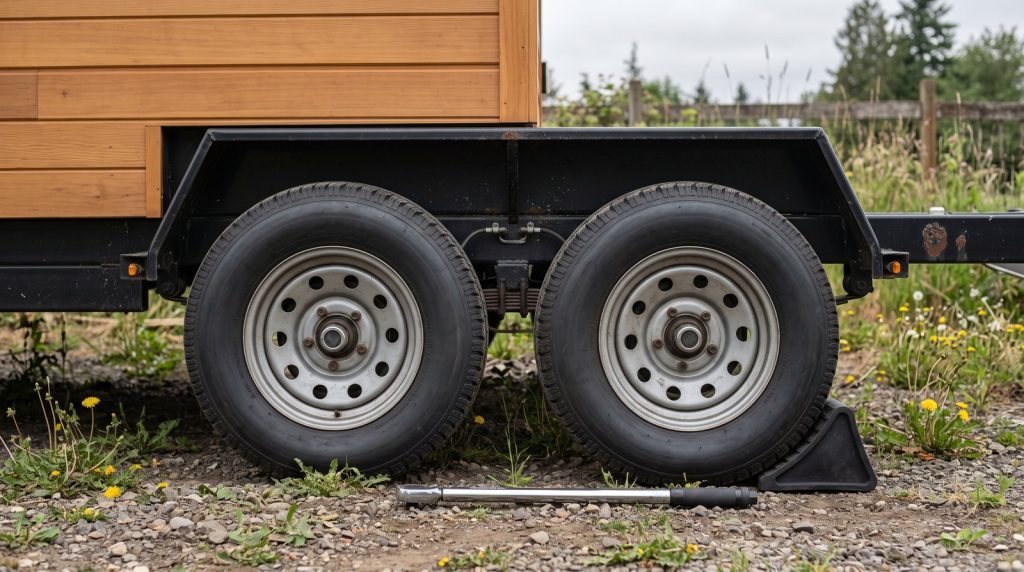
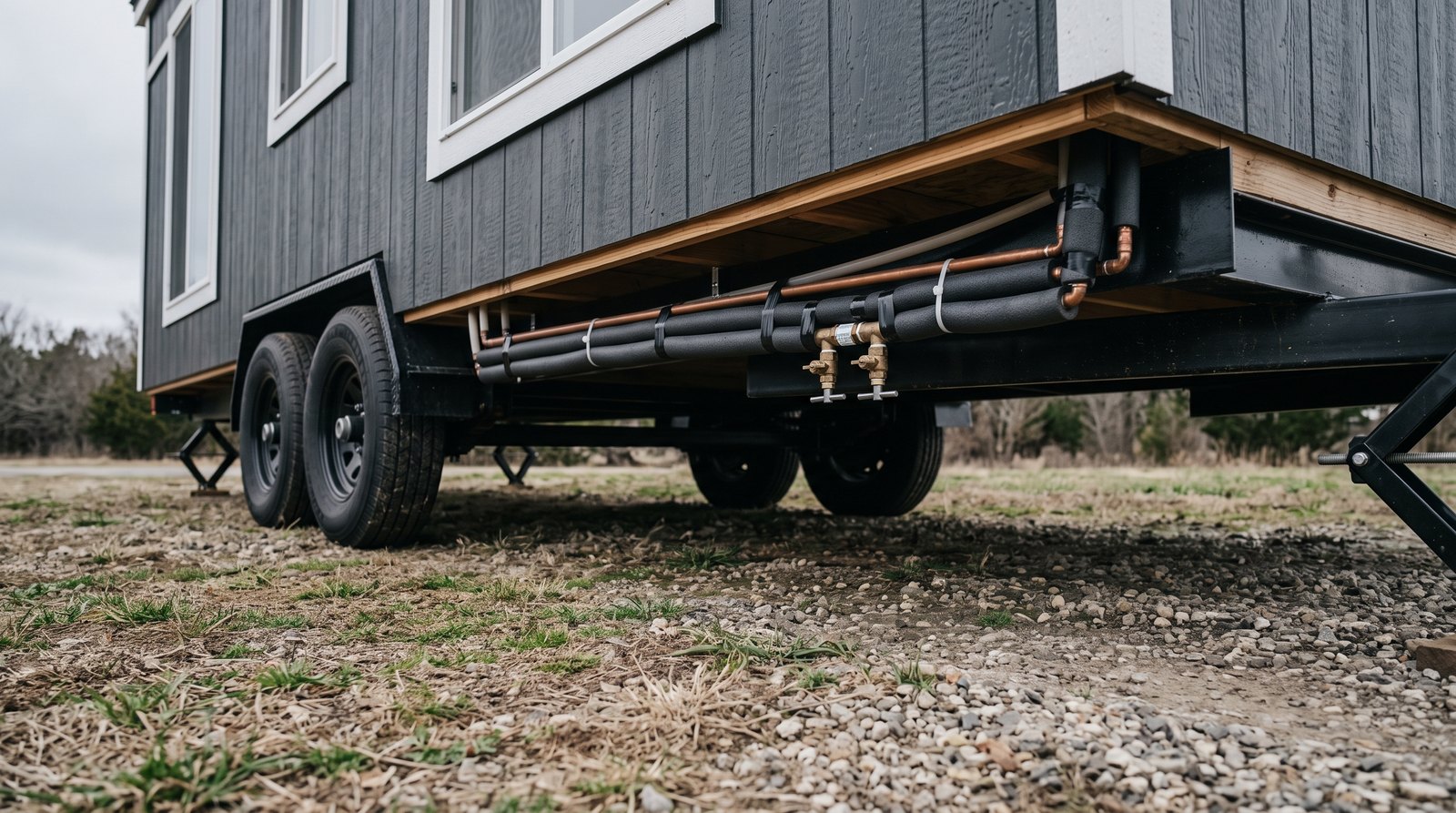
For a mobile tiny house, secure tubing so it cannot rub against metal framing, screw tips, or sharp holes during travel. Use sleeves or grommets at penetrations and leave controlled allowance for expansion. Before towing, inspect the utility cabinet and underfloor runs just as seriously as the tires, brakes, and bearings in this tiny house moving cost guide.
Keep Fittings Visible and Compatible
The best tiny house plumbing system has fewer joints and makes the remaining joints easy to inspect. Use one compatible PEX connection system from tubing through fittings, or approved copper fittings and joining methods. Never assume that parts fit correctly because their nominal sizes match or a connection feels tight.
PEX connection families include crimp, clamp, cold-expansion, and push-fit systems. Each uses its own listed fittings, rings or sleeves, preparation, and tools. The International Plumbing Code model provisions require PEX fittings and joints to follow the applicable standards and manufacturer instructions. Local adoption varies, so confirm the accepted products and inspection requirements before closing walls.
Place connections in a utility cabinet, beneath removable toe kicks, or behind screwed access panels. Avoid burying manifolds, unions, filters, check valves, and water-heater service points. Photograph every open wall with a tape measure in view before insulation goes in. Those photos make future repairs faster and help prevent a cabinet screw from finding a pipe.
Copper joints require clean preparation and a joining method allowed for that location. Heat from soldering can damage nearby foam, wiring, membranes, and framing, so use proper shields and fire precautions. At a water heater, follow the appliance maker’s required connector material, clearances, and dielectric or isolation details instead of improvising a transition.
Protect Tiny House Plumbing From Freezing
Freeze protection begins with pipe location, not heat tape. Route water lines inside the insulated and air-sealed enclosure, eliminate cold drafts at penetrations, and keep vulnerable valves and filters warm. Insulation slows heat loss but does not create heat, so exposed pipes still need a controlled heat source or complete winterization.
Pay special attention to the inlet connection, pressure regulator, pump strainer, low-point drains, outdoor shower, hose bib, water filter, and the first inches of pipe inside the floor. These small components often freeze before a long tubing run. Box them within the thermal envelope where possible and make the box removable for inspection.
If listed heat cable is part of the design, use a product approved for the pipe material and location. Follow its instructions for overlap, insulation, thermostat placement, electrical protection, and maximum temperature. Never wrap random heating wire around a fitting or depend on an extension cord under the trailer as the only defense against a hard freeze.
PEX stays flexible at very low temperatures, according to the current PEX industry guide, but trapped ice can still split tubing or damage a rigid fitting. The Copper Tube Handbook also warns that copper should not be subjected to freezing. Design both materials to avoid frozen water rather than testing their limits.
Build a Real Winterization Plan
If a tiny house will sit unheated in freezing weather, drain and winterize it before temperatures fall. Shut off the supply, isolate power or fuel to the water heater as its manual directs, open fixtures, operate low-point drains, and clear equipment that traps water. A partly drained system is still at risk.
Gravity draining works only when lines slope toward accessible low points and no loops hold water. A manifold with individual lines can make draining easier, but fixture cartridges, toilet valves, pump housings, filter bowls, and tankless water heaters may retain water. Follow each appliance manual because a damaged heat exchanger can cost far more than the tubing.
Where an approved compressed-air procedure is allowed, regulate the air pressure and work one outlet at a time. Do not improvise with unrestricted shop air. Use only nontoxic RV and marine antifreeze in traps or other locations permitted by product and equipment instructions, never automotive antifreeze in a potable system.
Control Pressure and Catch Leaks Early
Small plumbing systems still need stable pressure, accessible shutoffs, and leak detection. Municipal hookups and campground pedestals can deliver pressure different from your pump setting, so install an approved regulator where needed. Test the completed system, inspect every connection, and add sensors beneath the water heater, sink, shower, and manifold.
Use a main shutoff that can be reached in seconds, not one buried behind stored gear. A separate shutoff for the water heater, toilet, exterior connection, and each manifold branch can limit damage. If the house uses a tank and pump, mount the pump on vibration isolators, secure the strainer, and leave room to clean it.
Document the system for insurance and maintenance. Keep photos, product manuals, pressure-test records, and licensed-contractor invoices. Water damage coverage depends on the cause and policy terms, so compare exclusions, limits, and inspection requirements using this guide to tiny house insurance costs and coverage.
Budget for Serviceability, Not Just Tubing
PEX usually costs less to install because long flexible runs reduce fittings and labor, while copper carries higher material and joining costs. In a tiny house, however, fixtures, the water heater, pump, tanks, valves, and difficult cabinet access can outweigh the tubing difference. Compare complete, itemized systems rather than price per foot.
Ask bids to separate rough plumbing, fixtures, water-heater connections, tank and pump work, testing, permits, and finish repairs. Specify access panels and low-point drains in writing. A cheap quote that hides fittings behind glued wall panels can become the expensive choice after the first leak or winter shutdown.
Hire a licensed plumber when local law requires one, when permits or inspections apply, or when the work involves complex water-heater venting, fuel gas, backflow protection, a well system, or uncertain water chemistry. Confirm requirements with the city or county serving the actual parking site, not only the place where the house was built.
Frequently Asked Questions
Tiny house plumbing questions usually come down to movement, cold weather, access, and local approval. The answers below cover the most common decisions, but product listings and local rules still control the final installation. When guidance conflicts, follow the authority having jurisdiction and the instructions supplied with each component.
Is PEX better than copper for a tiny house on wheels?
PEX is usually more practical for a tiny house on wheels because it is lighter, flexible, and needs fewer joints. Those traits help with tight routing and road movement. It still must be supported, protected from abrasion and sunlight, and connected with a listed fitting system installed exactly as its manufacturer directs.
Can PEX freeze without bursting?
PEX may tolerate some expansion better than rigid pipe, but it is not freeze-proof. Ice can damage fittings, valves, filters, pumps, and water heaters even when the tubing survives. Keep lines inside the thermal envelope, protect exposed components, and fully drain an unheated house before freezing weather.
Should tiny house water lines run under the trailer?
Avoid exposed under-trailer water lines in cold climates when possible. If routing below the floor is unavoidable, use an engineered, weather-protected assembly with insulation, approved heat cable where appropriate, secure supports, and accessible drains. Confirm local code and product instructions because insulation alone cannot keep a pipe warm indefinitely.
Is a plumbing manifold worth it in a tiny house?
A manifold is worth considering when you want individual fixture shutoffs and easy troubleshooting. It uses more tubing and cabinet space than a short trunk-and-branch layout. For clustered kitchen and bathroom fixtures, either can work, so compare hot-water delay, available access, total fittings, and the way you plan to winterize.
Do I need a plumber and permit for tiny house plumbing?
Requirements depend on whether the house is on a foundation or trailer, where it will be placed, and which codes the local authority has adopted. Plumbing, water-heater, well, sewer, and gas work may require permits or licensed trades. Ask the city or county before buying materials or covering any work.