Tiny house surge protection should combine a listed panel or service surge protective device with point-of-use protection for sensitive electronics. A tiny house on wheels also needs properly wired shore power and source switching. Good grounding and bonding are essential, but neither a ground rod nor a power strip can substitute for a correctly designed electrical system.
Table of Contents
What surge protection does a tiny house need?
Most tiny houses need layered protection: a Type 1 or Type 2 surge protective device near the service or main distribution panel, plus listed plug-in protection for valuable electronics. A house on wheels may also benefit from a properly rated shore-power protector that checks the supply before connecting it to the house.
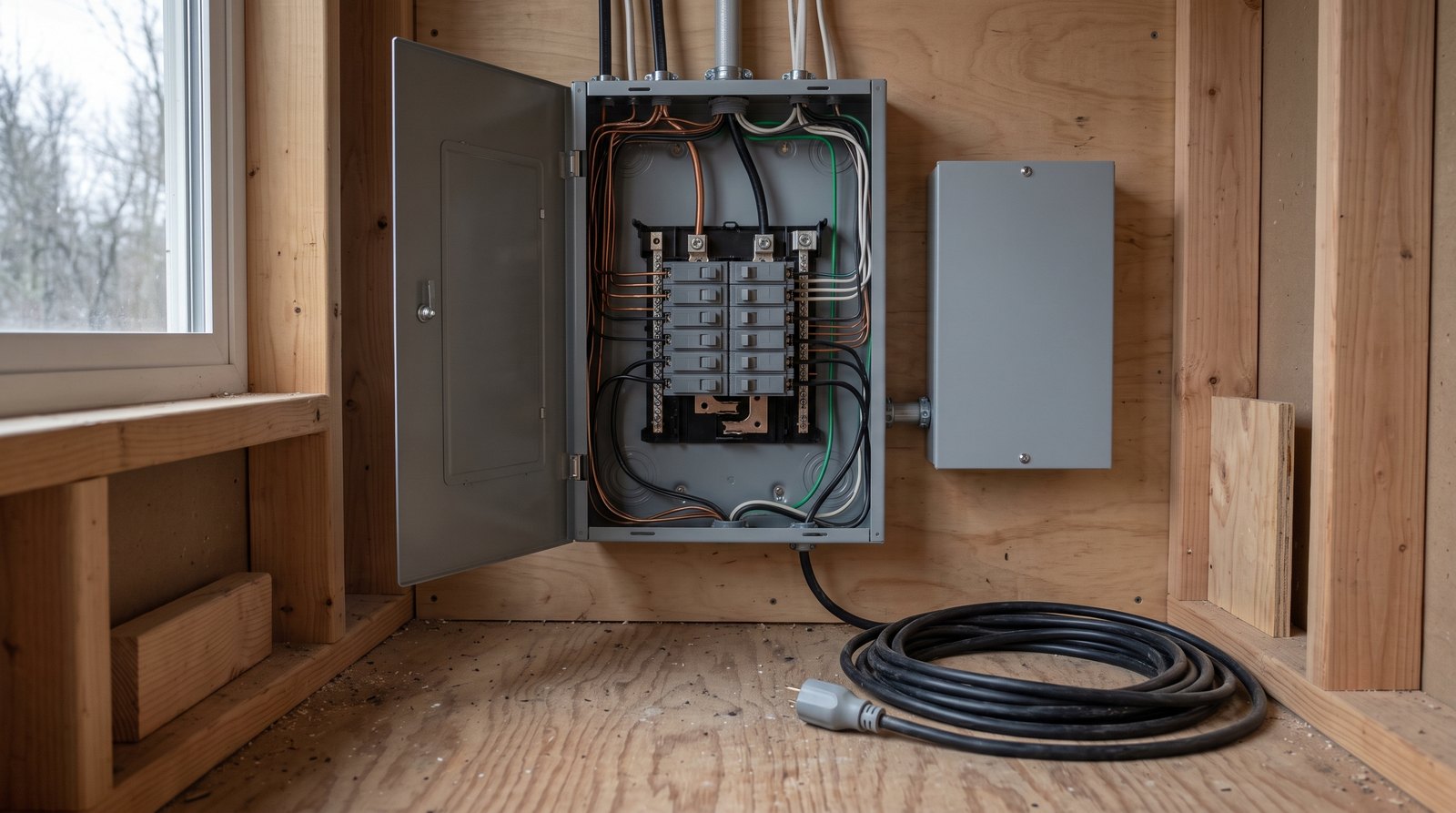
A panel-level device handles transients that arrive on the power conductors or develop when larger loads switch. It can protect hardwired equipment that a plug-in strip never reaches, including a mini-split, refrigerator, water heater controls, charger, and inverter equipment. Point-of-use protectors add a second layer close to computers, televisions, routers, and other sensitive loads.
Choose equipment listed to UL 1449 for the voltage and electrical system it will serve. The label should identify the SPD type, voltage, configuration, and voltage protection rating. More advertised surge current is not automatically better if the device is incompatible, poorly installed, or connected with long leads.
Quick answer by situation:
- Foundation tiny house: Start with a listed Type 1 or Type 2 device at the service or main panel, then protect expensive plug-in electronics.
- Tiny house on wheels at a pedestal: Use a listed shore-power protection device suited to the inlet rating, plus a coordinated device at the house panel when the system design permits it.
- Solar and inverter system: Protect the AC side and assess whether the photovoltaic DC side needs its own correctly rated SPD.
- Generator backup: Have the transfer equipment, grounding, bonding, and SPD placement reviewed as one system.
- Lightning-prone or exposed site: Layer electrical and communication-line protection, and ask a qualified lightning-protection contractor whether a complete lightning protection system is appropriate.
Type 1, Type 2 and plug-in protection
Type 1 and Type 2 describe where a surge device may be installed, not a simple good-better-best ranking. Type 1 devices can be used on the supply side of the service disconnect when listed for that position. Type 2 devices are installed on the load side, commonly at a main or subpanel.
A Type 3 device is point-of-use equipment, such as a listed receptacle or plug-in surge strip. It is useful, but it does not protect hardwired appliances or replace protection at the service. A cheap multi-outlet strip may provide no surge protection at all, so look for an actual UL 1449 listing and a working protection-status indicator.
For a foundation home, ask the electrician whether the adopted electrical code requires an SPD. NEC Section 230.67 requires listed surge protection for services supplying dwelling units, with details that depend on the code edition. States and local jurisdictions adopt and amend code editions on different schedules, so the authority having jurisdiction has the final say.
When comparing devices, record the exact panel model, service voltage, number of phases, and available breaker spaces before shopping. Favor a unit with a clearly visible status indicator and accessible replacement path. Ask whether the warranty covers only the SPD or also connected equipment, since claim limits and documentation requirements vary. Keep the receipt, model information, installation invoice, and a photo of the original status lights with your home records. Insurance coverage also varies, and installing an SPD does not guarantee that a future equipment claim will be paid.
Placement matters. NEC rules call for connection conductors that are no longer than necessary and avoid unnecessary bends. Schneider Electric explains that extra lead length raises the voltage that reaches downstream equipment. The best device can underperform when it is mounted far from the panel with coiled or sharply bent wires.
Grounding and neutral bonding are not surge devices
Grounding and bonding give fault current and surge current intentional paths, but they do not clamp a voltage spike by themselves. An SPD also cannot repair an open neutral, reversed polarity, undersized cord, loose terminal, or missing equipment-grounding conductor. Those defects need diagnosis and correction, not another protector.
In a fixed home, the electrician should inspect the grounding electrode system, service bonding, panel arrangement, and equipment-grounding paths before adding protection. Do not drive an isolated ground rod and assume it makes a questionable installation safe. All required electrodes, conductors, bonds, and service equipment must work as a coordinated system.
Neutral and ground normally connect at the system bonding point, not repeatedly throughout downstream panels and appliances. Extra bonds can put normal return current onto metal enclosures, frames, or grounding conductors. A loose or missing bond can prevent a protective device from operating as intended. Both conditions justify professional testing.
If you are planning other electrical work, review our guide to how long tiny houses last. Water intrusion, corrosion, road vibration, and deferred maintenance can affect electrical connections long before the house structure reaches the end of its useful life.
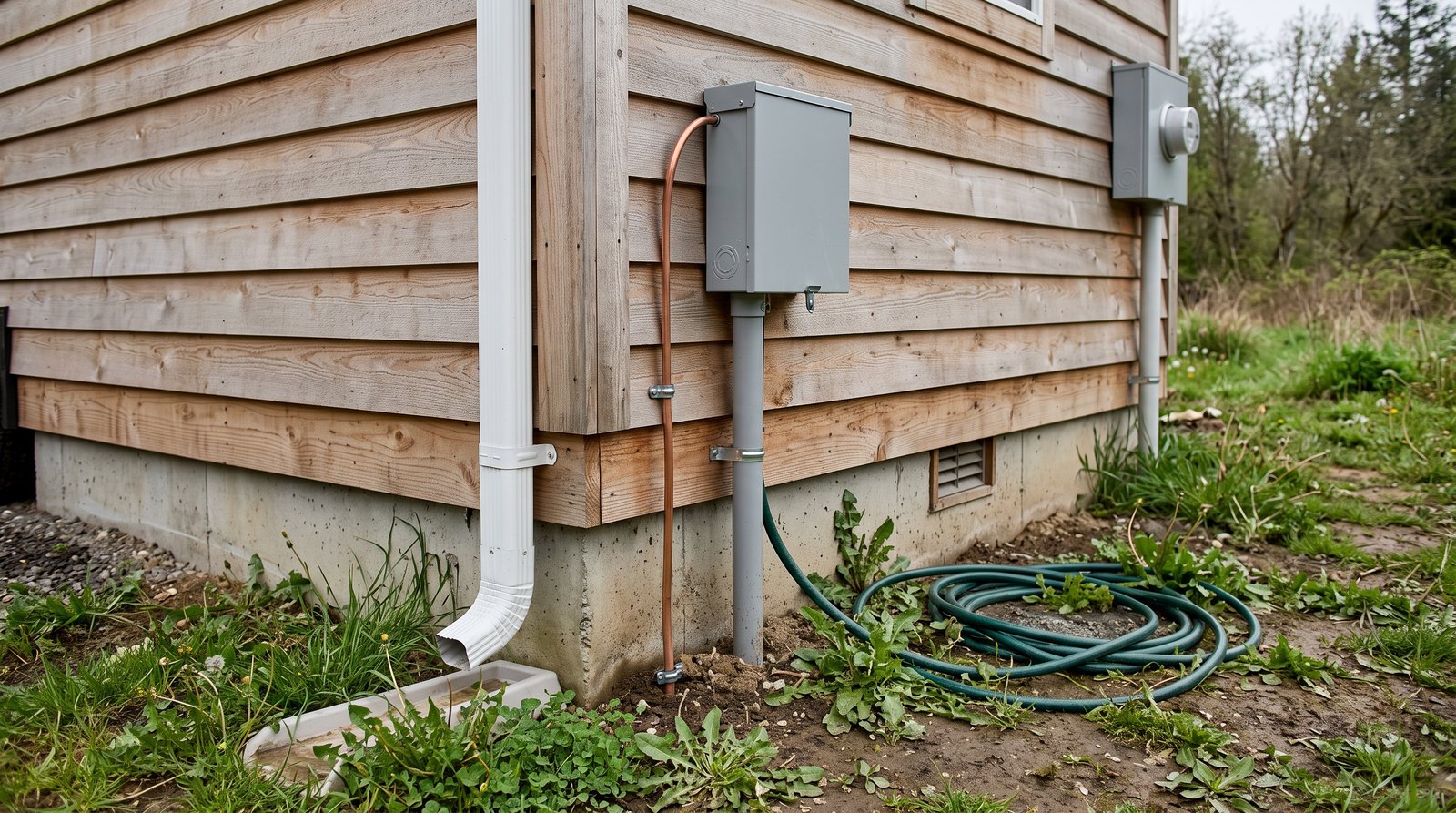
Shore power for a tiny house on wheels
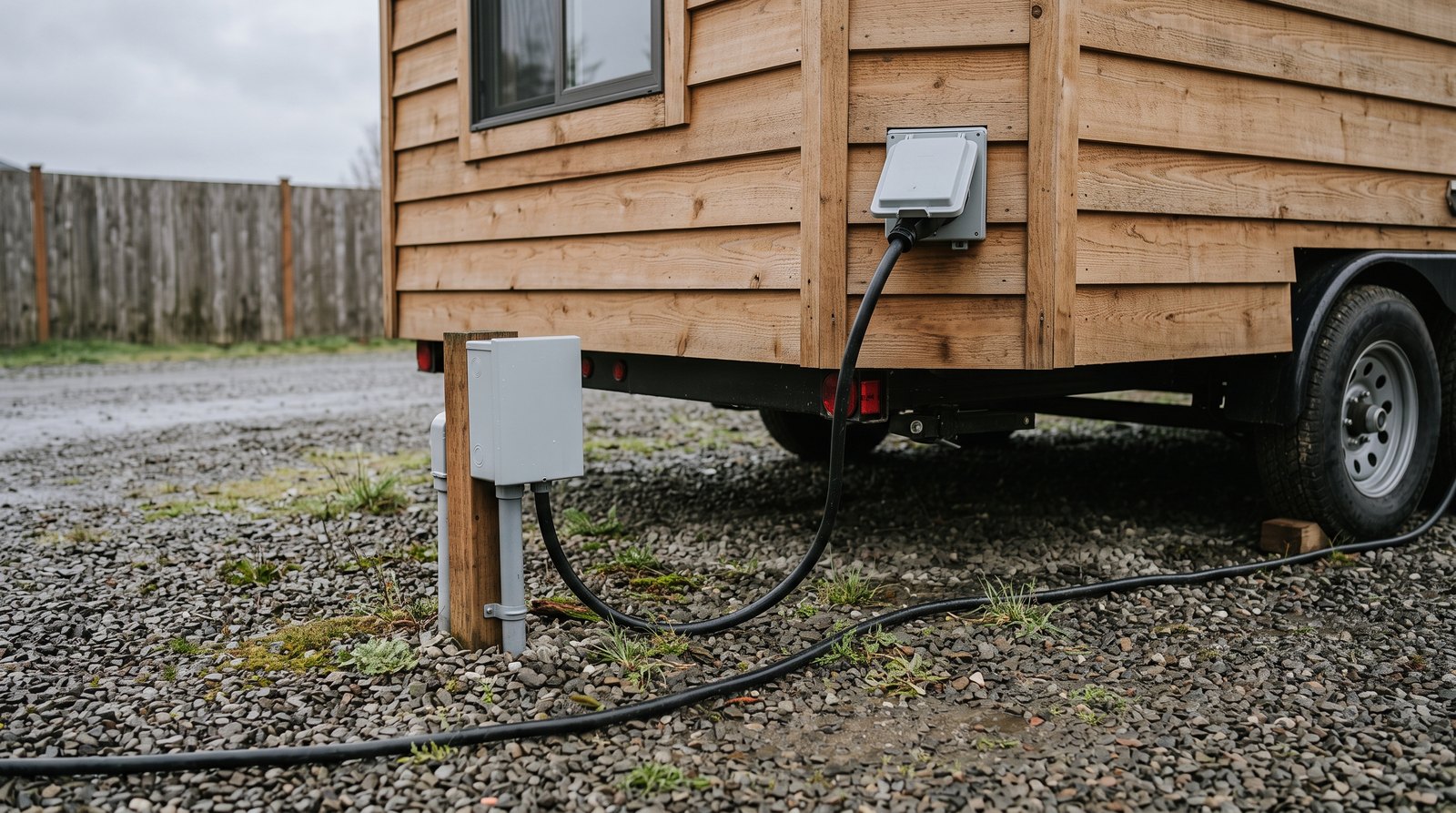
A THOW adds moving parts to the surge-protection plan. The pedestal, inlet, detachable cord, transfer equipment, panel, chassis bond, and source equipment all matter. A portable shore-power unit can screen for certain pedestal faults and voltage problems, while a panel SPD handles fast transients. Those are different jobs, so read the specifications carefully.
Before connecting, inspect the cord ends, inlet, strain relief, and weatherproof covers. Do not use a cord with heat damage, cracked insulation, corrosion, a missing grounding pin, or a loose connector. Match the protector, adapters, cord, and inlet to the actual amperage and voltage configuration. A physical fit does not prove electrical compatibility.
Many products marketed as RV surge protectors are electrical management systems. Depending on the model, they may delay connection or disconnect for high voltage, low voltage, reversed polarity, an open ground, or a lost neutral. Confirm every function in the manual. A basic surge-only device should not be expected to provide those monitoring features.
Road travel can loosen terminals and damage cords. With all sources safely disconnected, inspect accessible equipment for movement, water entry, heat discoloration, or chafing after a move and at the start of each season. Panel covers and energized parts belong to a qualified electrician. If you relocate often, our tiny house moving cost guide covers the larger transport budget.
Generators, inverters and solar equipment
Backup and off-grid sources change where the neutral is bonded and how fault protection works. The correct arrangement depends on the inverter or generator, transfer switch, and whether the source is separately derived. Do not add or remove a neutral-ground bond based on a generic diagram. Follow the listed equipment instructions and use a qualified electrician.
Some inverter-chargers contain an automatic ground relay. In pass-through mode, the incoming shore or utility source may provide the neutral-to-ground connection. In inverter mode, the equipment may create the required connection internally. Manufacturer documentation, such as Victron Energy’s grounding guidance, shows why one fixed bonding assumption does not fit every operating state.
A generator connected to house wiring needs approved transfer equipment. OSHA warns against connecting a portable generator directly to a structure without a properly installed open-transition transfer switch. The transfer arrangement also affects grounding and bonding, so test the complete system in shore, generator, and inverter modes rather than checking each component in isolation.
Solar arrays can introduce surges on DC conductors as well as the AC side. Use only devices rated and listed for the actual DC voltage, polarity, location, and available fault current. Keep conductors routed as the equipment manufacturer directs. Never substitute a household AC strip on a photovoltaic circuit or install an SPD in an enclosure not rated for the environment.
Lightning protection has limits
A surge protector can reduce damage from many lightning-related transients, but it cannot guarantee survival of a direct strike. The National Weather Service says typical surge protectors do not protect equipment from a lightning strike. A complete lightning protection system is a separate design involving strike termination, bonding, conductors, grounding, and surge protection.
Exposed hilltops, open fields, overhead utility lines, and frequent thunderstorms justify a more detailed assessment. Protect every conductive path that enters sensitive equipment, including power, coaxial cable, Ethernet from outdoor devices, and antenna lines. NIST guidance notes that equipment connected to both power and communication systems has more than one possible surge path.
Plan before a storm. Do not handle plugs or touch electrical equipment while thunder is occurring. The National Weather Service specifically warns against unplugging equipment during a thunderstorm because doing so can expose you to shock. Disconnecting nonessential equipment is useful only when done safely well before the storm arrives.
Inspection, replacement and realistic costs
Check the main SPD’s status indicator after severe weather, after a known electrical event, and during routine seasonal maintenance. Replace the unit when its indicator shows lost protection, when the manufacturer specifies replacement, or when an electrician finds damage. An energized-looking panel does not prove that its surge components still work.
As a 2026 planning figure, a straightforward whole-home SPD installation often costs about $300 to $800, including the device and electrician labor. Difficult panel access, an outdoor enclosure, permits, obsolete equipment, or grounding and bonding corrections can push the total above $1,000. Get a written quote that separates protection from unrelated panel repairs.
A listed plug-in protector commonly costs about $20 to $80. Feature-rich shore-power electrical management equipment often costs several hundred dollars. Prices vary by rating and functions, so compare listing, system configuration, replacement policy, indicator visibility, and warranty terms rather than joule claims alone.
Call an electrician when a panel must be opened, an SPD must be hardwired, conductors show heat damage, the neutral-ground arrangement is uncertain, or multiple power sources are involved. Also ask for help after repeated protector failures. That pattern may point to a supply or wiring problem that surge devices are not designed to correct.
Frequently asked questions
Does a tiny house need a whole-house surge protector?
Usually, yes. A listed Type 1 or Type 2 SPD protects hardwired and plug-in loads from many fast transients entering the distribution system. A foundation dwelling may also be subject to an adopted electrical code requirement. Confirm the applicable code edition and installation location with the local inspector and a licensed electrician.
Is an RV surge protector enough for a THOW?
Not always. A shore-power unit protects at the pedestal connection, and some models also disconnect for voltage or wiring faults. A panel SPD protects the house distribution system from fast transients. The right combination depends on the inlet, panel, inverter, and source switching, so compare functions rather than relying on the product name.
Will a ground rod protect a tiny house from lightning?
No. A ground rod alone is neither a surge protector nor a complete lightning protection system. Grounding electrodes, bonding, service equipment, and SPDs must be coordinated. Direct-strike protection requires specialized design. Have an electrician or qualified lightning-protection contractor assess an exposed site instead of adding an isolated rod.
Should I replace a surge protector after a storm?
Check its protection-status indicator and follow the manufacturer’s instructions. Replace it if the indicator shows protection is lost, the enclosure is damaged, or the unit has reached a specified end of life. After a nearby strike or unexplained equipment damage, have the supply, grounding, bonding, and SPD inspected before reconnecting expensive loads.
Can I install a panel surge protector myself?
Panel installation exposes dangerous energized components and requires correct breaker compatibility, conductor routing, torque, bonding, and code compliance. For most owners, this is electrician work. A poor connection or long lead can reduce protection and create a hazard. Use DIY effort for cord inspections and listed plug-in devices, not energized panel work.