A tiny house water meter tracks water passing through a supply line, helping you measure daily use, investigate leaks and estimate tank refill timing. Choose it for the flow range, drinking-water approval and installation conditions of your system. A basic meter counts gallons; remote alerts and automatic shutoff require additional equipment or an integrated monitor.
Table of Contents
Quick Answer by Situation
Start with the question you need answered: how much water you use, whether water is running unexpectedly, or how much remains in a tank. Those goals need different features. Map every water source and branch first, because a meter only measures water that actually passes through its location.
- Foundation home on city water: read the utility meter first. Consider a private submeter if access or reporting is inconvenient.
- Tiny house on wheels with campground hookups: check potable-water approval, connection compatibility, pressure loss and freeze exposure.
- Onboard tank: use a totalizer to record consumption, while retaining an independent way to check remaining water.
- Private well: discuss placement downstream of the pressure tank with your well contractor or plumber.
- Frequent absences: compare automatic shutoff systems, their power requirements and their behavior without internet.
- Community billing: ask the operator which approved meter and reading method its billing arrangement requires.
A small home does not automatically need a particular meter size. A washing machine, shower and outdoor connection may overlap even in a compact layout. Start with the installed pipe, equipment instructions and expected simultaneous demand, then select a device that can also register the low flows you care about.
Mechanical Meters, Digital Displays and Smart Monitors
A mechanical meter can count water without electricity, while a digital display makes readings easier to collect or transmit. These categories overlap: a mechanical measuring element can feed an electronic counter. A smart monitor adds analysis and alerts, but only equipment with a suitable valve can automatically stop incoming water.
Positive-displacement meters measure repeated volumes through a chamber. Multi-jet meters use an impeller. Electronic meters may use other sensing methods. Select by the specific performance sheet rather than assuming every mechanical device catches tiny drips or every digital device is more accurate.
A pulse-output meter sends signals representing measured volume. The logger must use the correct pulses-per-gallon setting. Confusing one pulse per gallon with ten pulses per gallon creates a tenfold reporting error even when the plumbing works perfectly. Check whether the register counts gallons, liters or cubic feet.
For example, Assured Automation describes its WM-PC series as a mechanical multi-jet meter with an optional pulse switch. Its instructions require horizontal installation with the register facing upward. That specific requirement illustrates why an attractive cabinet layout is not enough to establish correct installation.
For remote monitoring, ask what remains functional when Wi-Fi or power fails. Local measurement, stored history, notifications and valve operation are separate functions. Confirm each one instead of treating an app connection as a guarantee of protection. Keep the manual shutoff reachable even after adding automation.
Size for Low Flow and Pressure Loss
Match a meter to both normal demand and the smallest flow you want to measure. Connection size alone does not establish sensitivity or capacity. Compare its minimum rated flow, accuracy across the operating range and pressure-loss curve, then check that the pump or supply can still serve your fixtures.
Starting flow and accurate measurement are different specifications. A dial may begin moving below the range where its published accuracy applies. Likewise, a display showing hundredths of a gallon does not prove the sensor can detect an extremely slow leak. Ask for the measuring range, not just the display resolution.
The WM-PC manufacturer data sheet distinguishes low, continuous and high flow. Its 5/8 by 3/4 inch version lists 10 gallons per minute continuous flow and 20 gallons per minute high flow. These are model-specific values, not universal ratings for every 3/4 inch meter.
Consider restrictions together: the hookup hose, regulator, filter, meter and fittings all affect delivered pressure. A larger meter is not automatically the cure for a weak shower. Identify the actual restriction and have the system sized as a whole, especially with an onboard pump.
Verify drinking-water suitability for the exact model. NSF distinguishes health-effects certification under NSF/ANSI/CAN 61 from lead-content requirements under 372. Lead-free wording alone does not establish every needed approval. Utility requirements, adopted plumbing rules, listings and local inspection requirements still control.
Place the Meter Where It Measures Your Actual Use
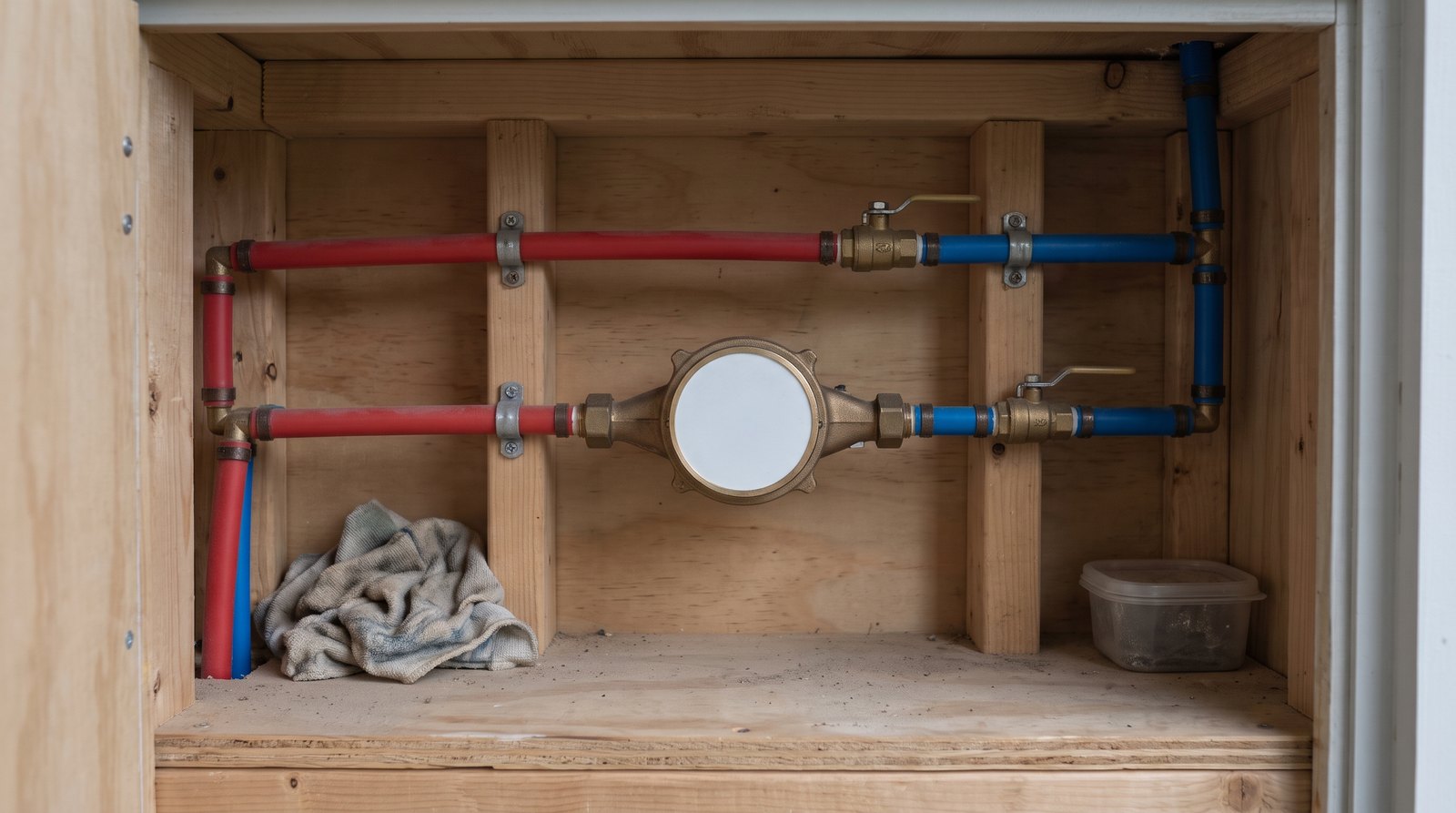
Put a private consumption meter on a permitted supply path that serves the fixtures you want to monitor. Provide access for reading, isolation and replacement, and follow the exact product instructions for orientation and surrounding pipework. Never alter a utility-owned meter or add a bypass without the required permission.
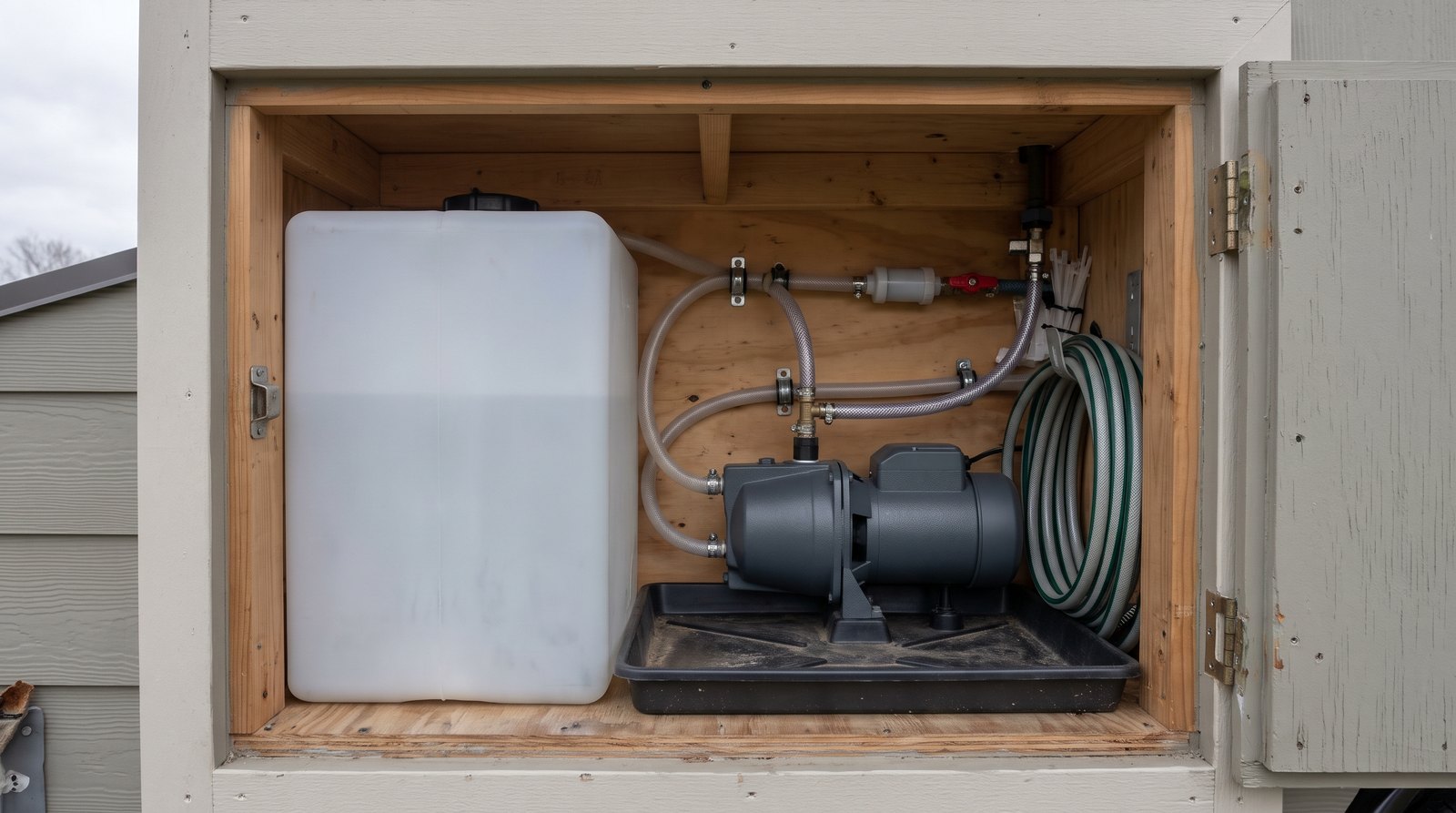
Draw the water path before choosing a cabinet. On a dual-source tiny house, city water may bypass the tank pump. A meter installed only after that pump would miss city-water use. A meter on the fill hose measures water entering the tank, which answers a different question from household consumption.
Have a plumber identify an appropriate common supply point, or use separate meters when the paths cannot be monitored together. Preserve required backflow protection, pressure regulation, thermal expansion control and service access. Do not rearrange protective devices simply to fit a meter into a small opening.
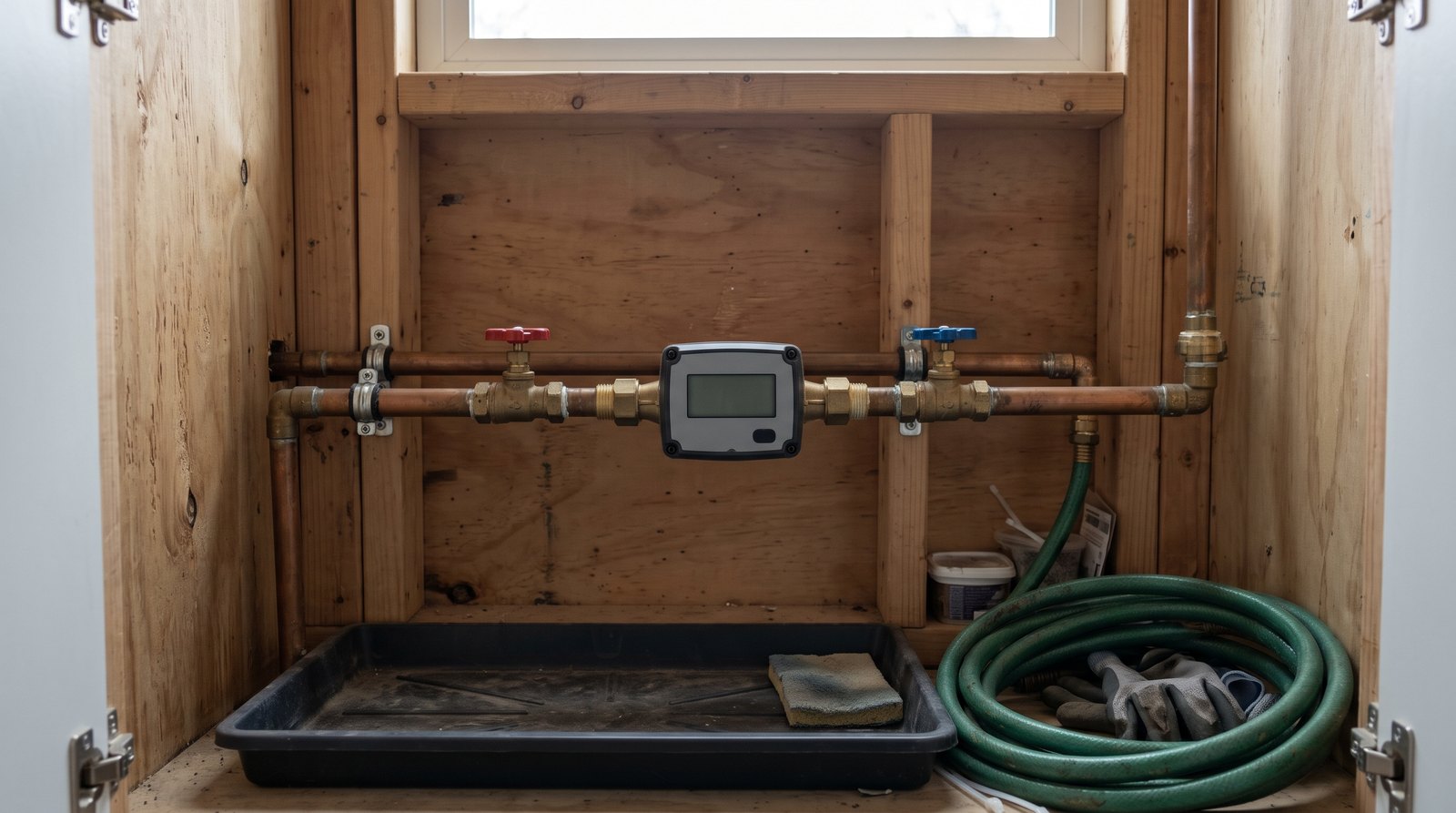
Plan supports and removal clearance along with the device. Pipes should not hang from the meter body, and connections should not be forced into alignment. Leave room for the register, unions, wiring and any battery cover. Use approved fittings and the installation procedure specified for the meter and pipe material.
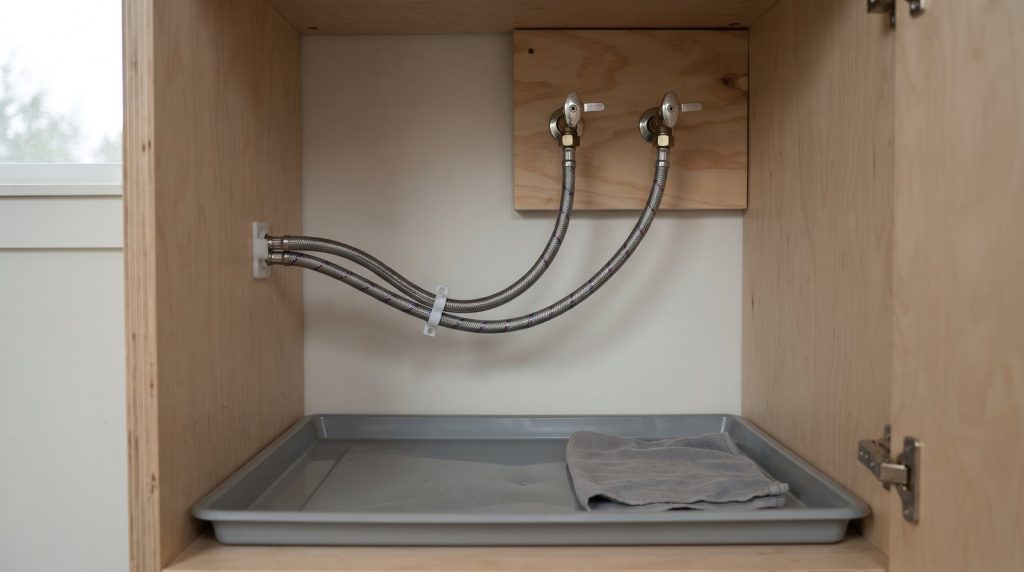
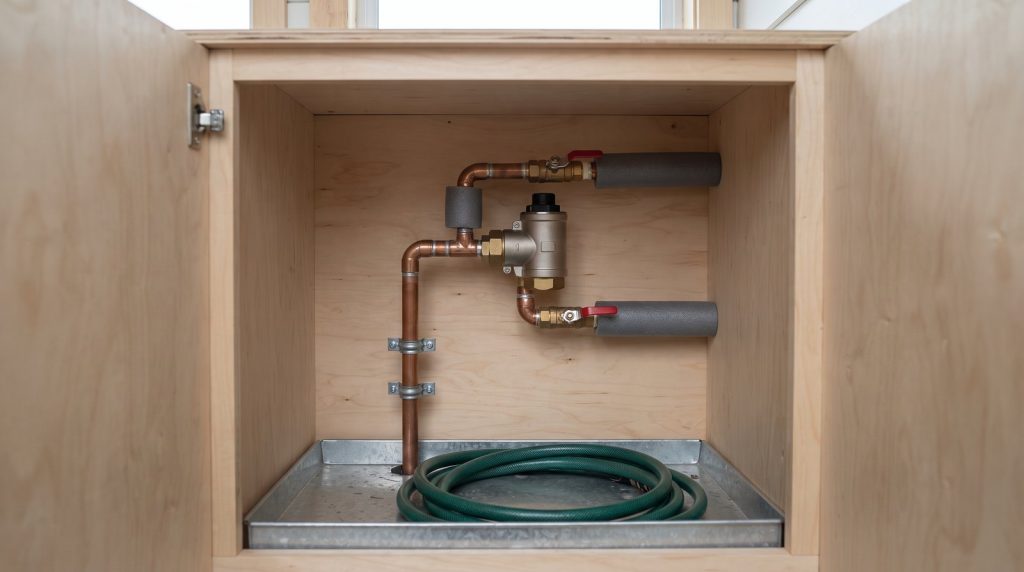
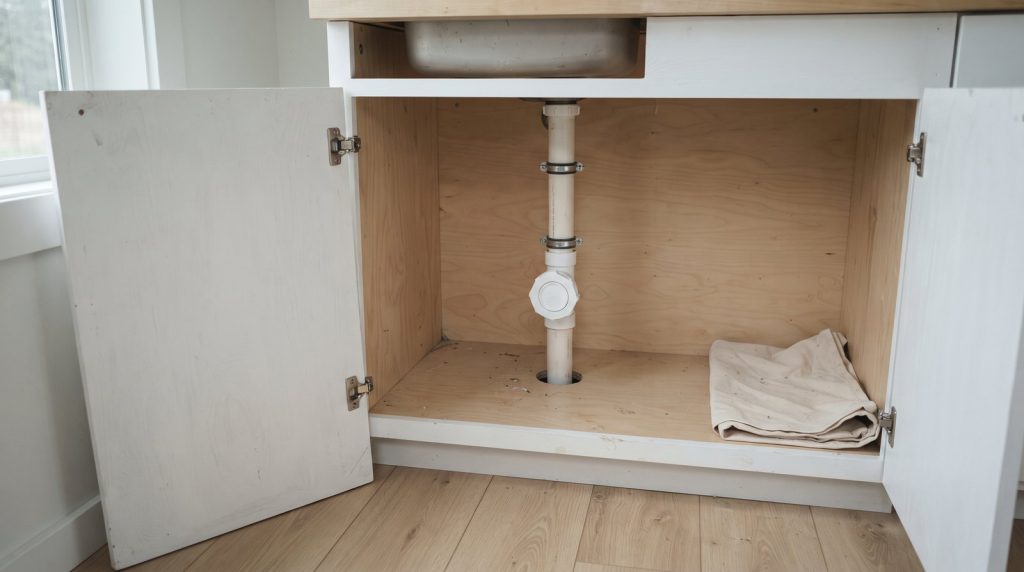
A private bypass can keep water available during maintenance, but it also creates an unmetered route. It may be unacceptable for billing and must never bypass required protection. Keep any permitted bypass controlled and clearly identified. The photographs show equipment arrangements, not a plumbing design to copy.
Use Readings to Investigate Leaks
A changing meter reading during a confirmed no-use period suggests unexpected consumption downstream of the meter. First rule out toilet refills, ice makers, treatment cycles and other automatic uses. A still register does not rule out every leak, particularly one below the measuring threshold or outside the monitored supply path.
The EPA recommends comparing readings across two hours without water use. Record the units and full reading, leave fixtures and water-using appliances off, then compare. A photograph of each reading makes a small change easier to verify without relying on memory.
Inspect accessible fixtures and connections if consumption continues unexpectedly. A toilet dye test can help identify a leaking tank seal. Where safe, accessible fixture shutoffs exist, a plumber can isolate branches to narrow the search. Stop using damaged plumbing and address visible water promptly rather than waiting for another reading.
A supply meter cannot directly identify a leaking drain or roof. Water escaping from a fresh-water tank upstream of the meter may also go uncounted. Moisture sensors and visual inspections complement flow tracking. Early repairs help protect the materials that determine how long tiny houses last.
A smart alert indicates a pattern to investigate, not a diagnosis of a particular fitting. Review normal activities with anyone sharing the home so long showers or laundry do not cause confusion. If insurance savings matter, confirm eligibility with your carrier when comparing tiny house insurance costs.
Track Tank Use Without Guessing at Remaining Water
A totalizer can estimate tank consumption when all outgoing water passes through it and the starting volume is known. It does not directly measure water level. Partial refills, unmetered drains, overflow, inaccurate readings and leaks before the meter can all make the calculated remaining supply differ from reality.
For a planning example, start with 40 usable gallons and record 24 gallons through the meter. The arithmetic suggests 16 gallons remain, before any unmeasured losses. Keep a reserve and verify actual level rather than running a pump dry on the strength of that subtraction.
Record each refill and the totalizer reading in the same notebook or app. Establish usable capacity from the tank arrangement and equipment guidance, rather than assuming the labeled capacity is fully available at the pump pickup. A consistent record is more useful than an unsupported estimate of average tiny-house consumption.
On a well, unexplained pump cycling deserves investigation even if the household meter stays still. Leaks outside the measured path and pressure-system faults may not appear as household consumption. Have a well professional diagnose the cause instead of assuming the meter can identify a failed component.
Protect Against Freezing, Travel and Neglect
Keep the meter within its temperature limits and follow its winterizing procedure whenever freezing is possible. Insulation slows heat loss but does not generate heat. A meter may retain water after surrounding pipes drain, so do not assume opening a faucet or closing isolation valves makes it freeze-safe.
Ask the installer how to drain or remove the specific model safely. Use only approved heating or winterizing methods. Protect electrical connections from moisture, and keep equipment accessible for inspection. An outdoor service cabinet needs a deliberate cold-weather plan even when the rest of the house is heated.
Before towing, secure the assembly, wiring and nearby stored objects. Follow the house and pump shutdown instructions. After travel, restore water according to the equipment procedure and inspect connections while pressurized. Include this check in the preparation budget when planning a tiny house move.
Read the meter regularly, inspect for weeping joints and follow the specified battery or strainer service schedule. Investigate a sudden reading change before replacing equipment. Incorrect pulse settings, a partly open bypass or a changed water path can explain misleading totals without a failed meter.
Budget for the Complete Installation
Compare complete quotes for measurement, installation and ongoing operation, rather than just the meter body. A basic totalizer and an automatic shutoff system provide different services. Fittings, isolation valves, access work, electrical supply and monitoring accessories can change the final cost substantially, especially in a cramped existing utility compartment.
As a current price reference, Moen lists its 900-001 Flo Shutoff at $623.99, before applicable tax and shipping. That is a device price, not an installed quote. Its page specifies Wi-Fi and nearby AC power and recommends professional installation. Confirm price and availability before ordering.
Request separate line items for hardware, plumbing labor, permits where applicable and electrical work. Ask whether a pulse reader or gateway is included, whether subscriptions are optional, and what replacement batteries or service visits cost. For a simple meter, obtain a model-specific quote rather than borrowing a smart-system price.
Spend first on compatible equipment, sound plumbing and access. A readable manual meter with regular checks may meet a tracking goal. Someone frequently away may value automatic isolation more. Neither choice removes the need to maintain the water system or follow local requirements.
Frequently Asked Questions
These answers address the choices most likely to affect a small home’s installation. Use them to prepare questions for your utility, park operator or plumber. The final arrangement depends on the water source, approved equipment, local requirements and whether you need personal tracking, billing or automatic leak protection.
Does every tiny house need a separate water meter?
A separate private meter is not automatically necessary if an accessible utility meter already provides the information you need. A park or community may require an approved billing meter. Check your service agreement and local requirements, then decide whether an additional device offers useful access, consumption records or alerts.
What size water meter should I buy?
Choose by the supply arrangement, simultaneous demand and the manufacturer’s rated flow range, rather than floor area alone. Check connection type, low-flow performance and pressure loss. Have a plumber confirm the size when adapting an existing system, especially if the home uses a small pump or several restrictive devices.
Can a meter detect every tiny leak?
No. A leak below the meter’s measuring threshold may not register reliably, and water escaping before the meter is outside its coverage. Automatic water use can also resemble a leak. Combine no-use checks with visual inspection and moisture sensors, and investigate persistent unexplained readings rather than assuming the cause.
Will a flow meter show how full my tank is?
A flow meter measures water moving through its location, not the level inside the tank. You can estimate remaining supply from a known starting volume and recorded consumption, but partial fills and unmeasured losses affect that estimate. Keep a reserve and an independent way to confirm the actual level.
Will a smart meter work without internet?
It depends on the product and which function you mean. Measuring, storing readings, sending remote alerts and closing a valve can have different power and connectivity requirements. Read the specific manual and ask the manufacturer what happens during an outage before relying on that system for an unattended home.