Tiny house window screens should fit the window maker’s frame, protect against the insects you actually have, and come out quickly for cleaning or emergency escape. Standard fiberglass suits most homes, while aluminum, pet-resistant, or fine insect mesh solves specific problems. For a house on wheels, secure frames and inspect them after every move.
Table of Contents
Quick answer by situation
The best screen is the lightest practical mesh that solves your real problem without restricting ventilation. Start with standard fiberglass unless pets, tiny insects, rough handling, coastal air, or frequent travel justify something tougher. Match the screen to the window system before buying material, because clips, tracks, spline grooves, and emergency-opening requirements vary.
- Most stationary tiny houses: Standard charcoal fiberglass is inexpensive, flexible, and easy to rescreen.
- Frequent towing: Use well-fitted removable frames, positive-retention clips, and a pre-trip inspection routine.
- Cats or dogs: Choose pet-resistant polyester mesh, especially on low windows and doors.
- No-see-ums or gnats: Use 20 by 20 or another manufacturer-rated fine insect mesh, then check the airflow before converting every window.
- Best outward view: Compare high-visibility products in person and use them where the view matters most.
- Required escape window: Use the window maker’s screen and confirm it releases from inside without blocking the required clear opening.
- Damaged but square frame: Replace the mesh and spline. Replace the frame if it is twisted, cracked, or will not stay retained.
Choose mesh by durability, airflow, and insect size
Fiberglass is the sensible default for tiny house window screens because it is economical, does not rust, and is forgiving during installation. Aluminum stays flatter and resists sagging, pet-resistant polyester handles claws and impact, and fine insect mesh stops smaller pests. Every tighter or heavier weave trades some airflow, visibility, or cost.
Standard fiberglass is easy to cut and roll into a spline channel. It does not permanently crease as readily as aluminum, which makes it friendly for a first repair. It can still tear at a sharp corner, stretch if installed too tightly, or wear where a loose frame rubs during travel.
Aluminum mesh feels crisp and holds its shape. It can be a good choice for a stationary house where the owner wants a traditional metal screen. The drawbacks are permanent dents, sharper cut edges, and the possibility of corrosion in demanding environments. Black or charcoal finishes usually disappear from view better than bright aluminum.
Pet-resistant polyester uses thicker strands and is designed to resist punctures and tears. It is useful on a low window next to a bench, bed, or pet perch. The heavier weave can reduce the open area, so do not assume it is the right material for every window. Reinforce behavior and retention too, because insect mesh is not a fall guard.
Fine insect mesh is for places where standard screen lets gnats, sand flies, or no-see-ums through. Phifer identifies its 20 by 20 fiberglass mesh for small flying insects. A denser weave can collect dust faster and move less air than an open mesh, so test one window before ordering material for the whole house.
Match the screen to the window style
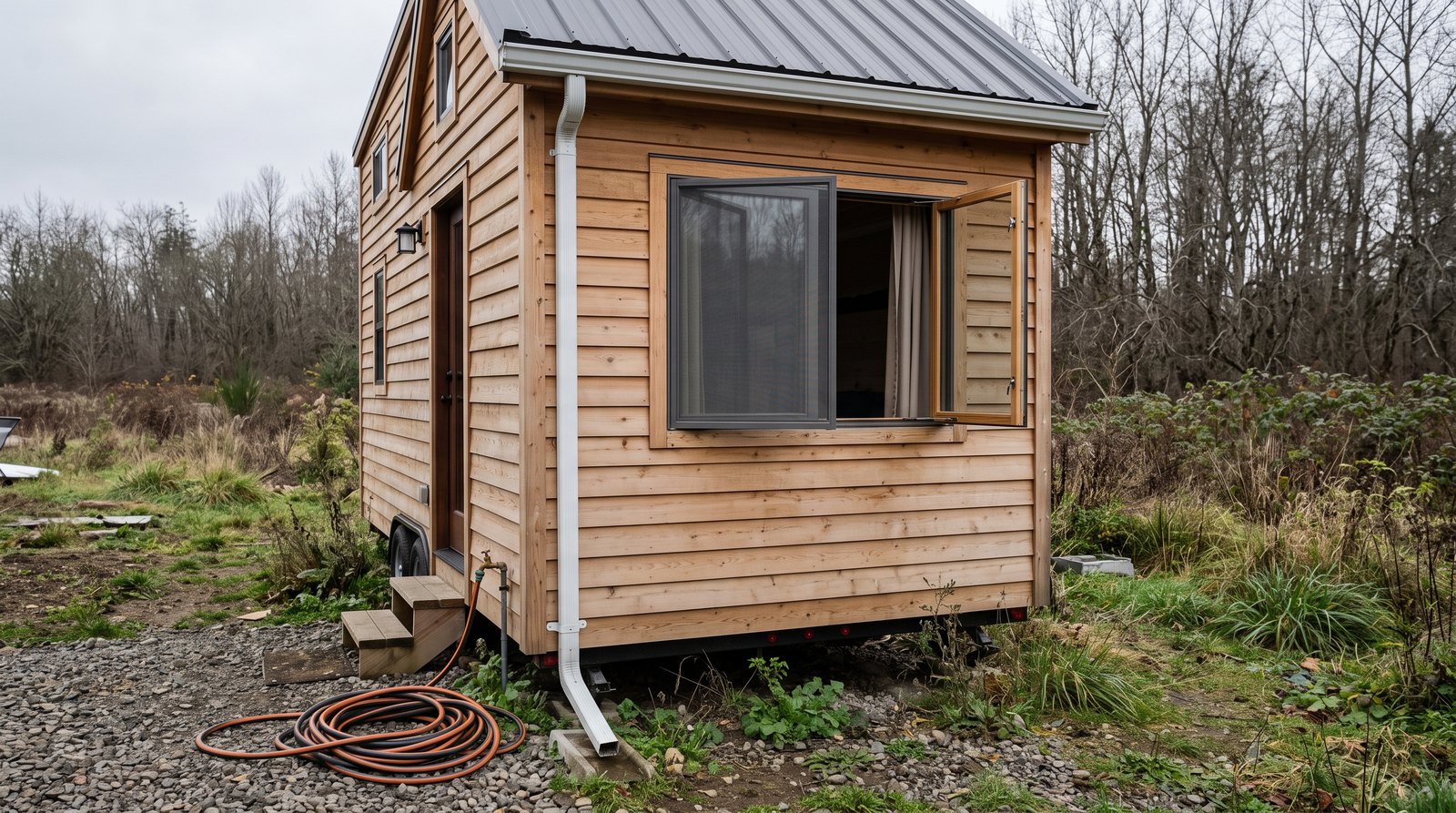
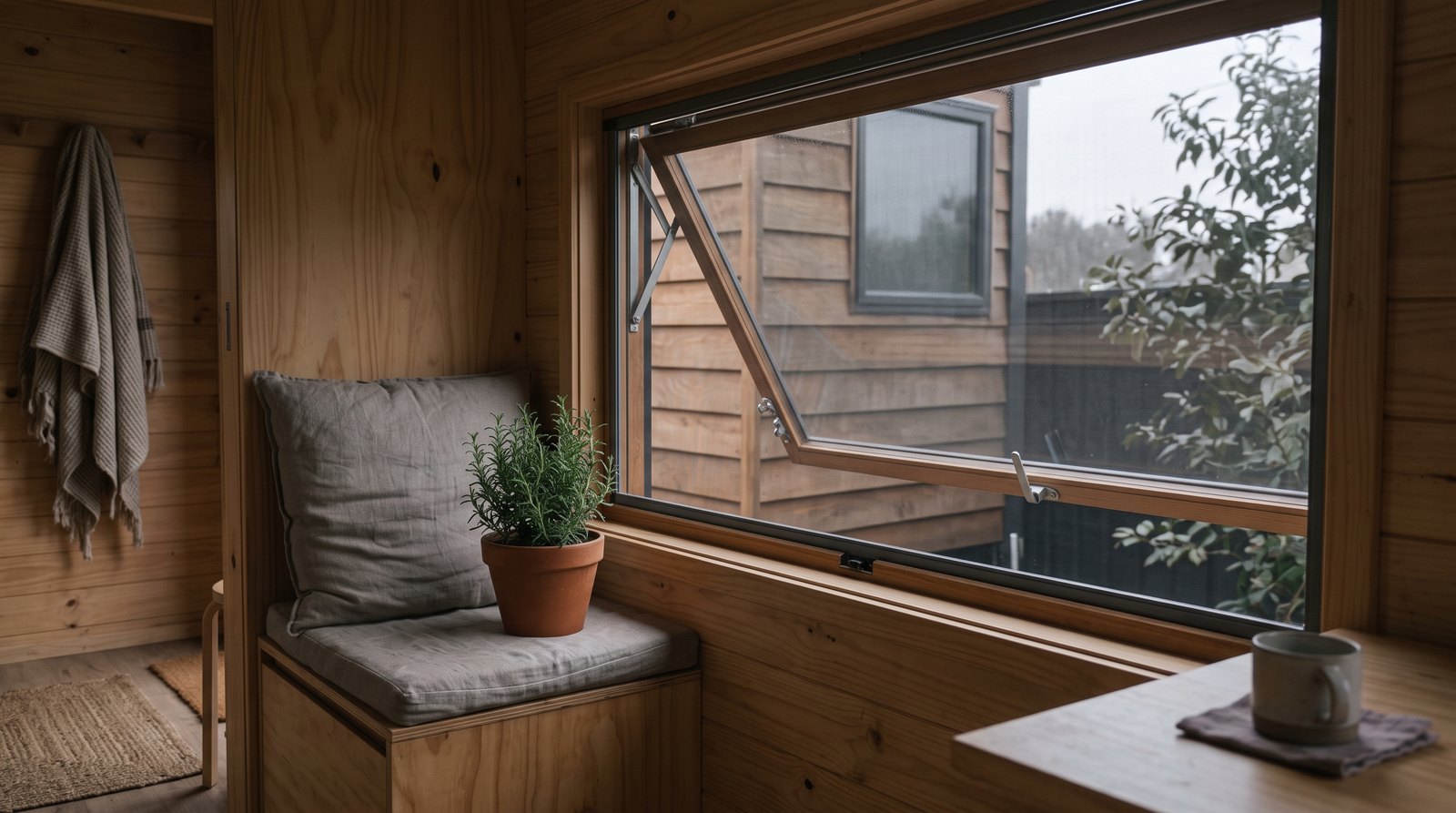
The safest fit is usually the screen designed for the exact window brand, series, size, and operating style. Casement and awning windows commonly place the screen inside, while sliding and hung windows may use exterior tracks, springs, plungers, tabs, or clips. A homemade frame can work only if it clears every latch, crank, seal, and drain path.
Fixed screens make sense where removal is unnecessary and the window maker supports them. Removable frames are easier to wash, rescreen, store, and inspect. They also allow access to operating hardware. A loose friction fit is not enough for a tiny house on wheels, because road vibration can walk a frame out of a shallow channel.
Measure the frame and build a square replacement
Measure the screen channel or the original frame, not just the glass or rough window opening. Record width and height at more than one point, note the frame profile and corner type, and measure both diagonals to check for square. Manufacturer instructions control the final deductions, spring allowance, crossbar location, and retention hardware.
For an existing removable screen, measure its outside width and height to the nearest practical fraction, then photograph each corner and fastener. Measure the diagonal from upper left to lower right and again from upper right to lower left. If the two dimensions differ noticeably, the frame is racked. Rebuilding a bent frame to its distorted dimensions will copy the problem.
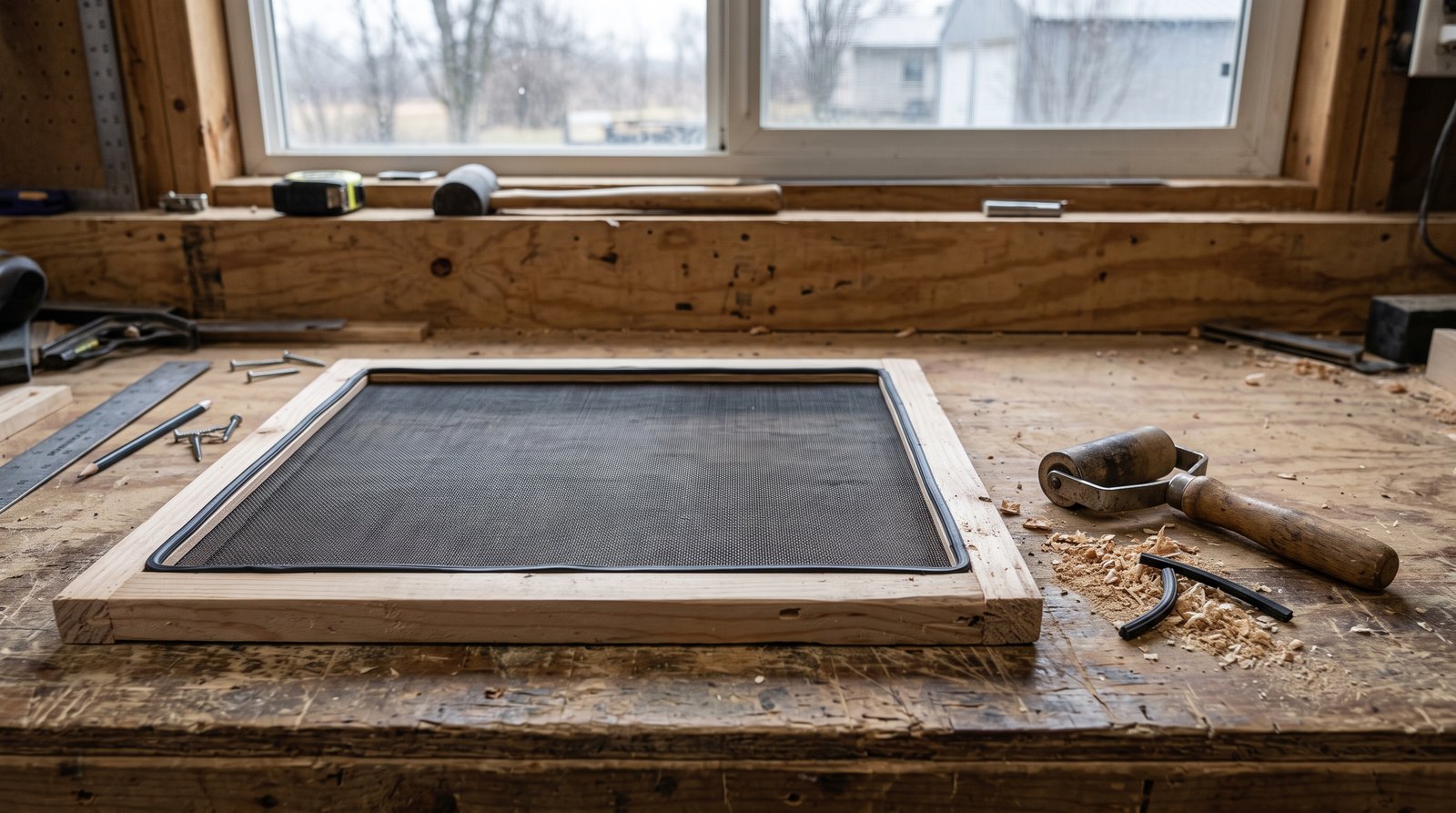
When rescreening a sound frame, lay it on a flat table. Remove the old spline, clean the groove, and inspect the corners. Cut mesh with extra material around every side. Roll the new spline evenly without pulling the mesh drum-tight, which can bow light aluminum frame members. Trim on the waste side of the spline groove so the knife cannot cut the finished panel.
Spline diameter matters. The old spline is the best sample if it still fits securely. Otherwise, measure the groove and follow the mesh maker’s selection guidance. Thick pet mesh often needs a smaller spline than thin fiberglass in the same channel. Forcing an oversized cord can spread the groove or distort the frame.
Protect airflow and visibility in a small room
A screen affects comfort more in a tiny house because each window supplies a large share of the available cross-ventilation. Dense mesh, dust, rainwater, and furniture placed directly in front of the opening can all reduce useful airflow. Choose the least restrictive mesh that meets the insect and durability need, then keep an unobstructed path through the room.
Fine mesh belongs where small insects are a real problem, not automatically on every opening. A practical approach is to place it on the windows normally opened at night and use standard or high-visibility mesh elsewhere. That preserves better ventilation while still protecting the sleeping area. If cooking or bathing moisture lingers, screens are not a substitute for correctly sized exhaust ventilation.
Repair loose spline, tears, and bent frames
Patch only a small isolated hole in otherwise sound mesh. Rescreen the whole panel when damage reaches an edge, several tears are present, the mesh has become brittle, or the spline repeatedly lifts. Straighten only minor frame distortion. A cracked corner, kinked rail, or frame that will not sit flat is usually better replaced than forced back into service.
Check a bent frame on a flat surface. Gentle, broad pressure may correct a slight bow, but aluminum that has sharply creased will remain weak and conspicuous. Replace broken plastic corners with matching parts and confirm the frame stays square before installing mesh. Never use screws that can contact glass, interfere with a sash, or block a drainage path.
Clean screens and store them without damage
Clean ordinary screens with a soft brush, mild soapy water, and a clean-water rinse, then dry the frame before reinstalling it. Andersen recommends at least annual cleaning and more often in coastal, industrial, or agricultural settings. Avoid aggressive pressure washing, hard scrubbing, and strong solvents that can stretch mesh, strip finishes, or drive water into the window assembly.
Vacuum loose dust with a soft brush attachment before wet cleaning. Support the entire frame while carrying it, because a long light rail bends easily when lifted by one corner. Mark the window location on a removable tag attached to the frame, not with permanent writing across the mesh or visible face.
For winter storage, wash and dry each panel, place it upright in a dry protected area, and separate frames with clean cardboard or soft cloth. Do not stack heavy objects on top. Inspect the underlying windows, sealants, and drainage routes at the same time. Screens are one small part of the maintenance that helps determine how long a tiny house lasts.
Secure screens for tiny house travel
A tiny house on wheels needs positive screen retention, even when the frame seems snug while parked. Vibration, frame flex, and repeated expansion can loosen clips or work a panel out of its track. Close and lock every window for travel, secure removable screens with the maker’s hardware, and inspect frames immediately after arrival before opening windows.
Do not add a random screw through a window frame. It may pierce a hidden drainage chamber, damage a thermal break, void a warranty, or prevent emergency removal. Use replacement clips, plungers, springs, or latches designed for the unit. If no positive retainer exists, ask the window manufacturer for an approved part or remove and pad the screen for transport.
Make screen inspection part of the move checklist. Look for polished rub marks, loose spline, cracked corners, missing pull tabs, and mesh touching sharp hardware. Store removed panels vertically with padding and labels. Screen damage is minor compared with the full logistics covered in our guide to moving a tiny house in 2026, but prevention is much cheaper than replacing frames after every trip.
Keep required escape openings usable
A screen must never defeat a required emergency escape and rescue opening. Model codes permit certain screens over these openings only when required clear dimensions remain and the device releases or removes from inside without a key or tool. Local adoption, amendments, and tiny house classification vary, so confirm the exact window and screen with the authority having jurisdiction.
Sleeping lofts and bedrooms deserve special attention. Test the complete sequence from inside, including releasing the screen, operating the sash, and reaching the exterior path. Decorative grilles, pet guards, security bars, furniture, and deep counters can create separate obstructions even when the insect screen itself is removable.
Do not treat a mesh panel as fall protection for a child, adult, or pet. An insect screen is designed to stop insects, not body weight. Where the window creates a fall hazard, use a compliant window opening control device or fall-prevention product that is compatible with emergency escape requirements. Ask the local building official which code edition and amendments apply.
What tiny house window screens cost in 2026
DIY rescreening remains inexpensive, but the price depends on mesh, frame condition, and proprietary hardware. Current U.S. retail listings checked in October 2026 put common 36-inch by 84-inch fiberglass rolls around $7 to $10, comparable aluminum around $10 to $11, and pet-resistant kits around $25 to $26. Prices, taxes, and local availability vary.
A basic fiberglass kit with mesh, spline, and roller was about $10 to $15 in the same retail check. Small-insect, high-visibility, solar, and heavy-duty materials cost more. These figures cover material, not a new custom frame. A factory replacement can be much more expensive because it includes the exact extrusion, corners, springs, finish, crossbar, and freight.
Budget separately for a spline roller, utility knife blades, replacement corners, pull tabs, and retention hardware. The cheapest reliable repair is often new mesh in a square original frame. If the frame is damaged or the window serves an emergency opening, paying for the correct factory screen is usually better than improvising a part that fits poorly.
Frequently asked questions
These answers cover the most common decisions about mesh, measuring, repair, travel, and safety. Window manufacturers and local officials still control product-specific fit and required emergency openings. When a generic instruction conflicts with the label or service guide for your unit, follow the window maker’s documented procedure and confirm local code requirements.
What is the best screen material for a tiny house?
Standard charcoal fiberglass is the best starting point for most tiny houses because it is affordable, rust-free, easy to rescreen, and visually unobtrusive. Choose aluminum for dimensional stability, pet-resistant polyester for claws and impact, or fine insect mesh for gnats and no-see-ums. Test specialty mesh on one window before converting every opening.
Does fine insect mesh reduce airflow?
Usually, yes. A tighter weave has less open area and can also collect dust, which further reduces airflow. The exact change depends on strand diameter and construction, so compare published product data rather than mesh count alone. Use fine mesh where tiny insects are a real problem and keep other openings less restrictive when possible.
How do I measure a replacement tiny house window screen?
Start with the window brand, series, and original screen if available. Measure the actual screen frame or designated screen channel at multiple points, record the smallest relevant dimensions, and compare both diagonals for square. Do not copy a generic deduction from another manufacturer. Springs, plungers, clips, and frame profiles change the required finished size.
Should I remove window screens before towing?
Remove them if the manufacturer does not provide positive retention or if past trips caused rubbing, looseness, or damage. Otherwise close and lock the window, verify every clip or plunger, and inspect after arrival. Pad stored frames vertically so they cannot flex. Never rely on a loose friction fit during highway travel.
Can a screen cover a tiny house escape window?
It may be allowed only when the applicable code and local authority permit it, the required clear opening remains available, and the screen releases or removes from inside without a key or tool. Tiny house classification and adopted codes vary. Confirm the exact window, screen, sleeping-area layout, and exterior escape path before installation.