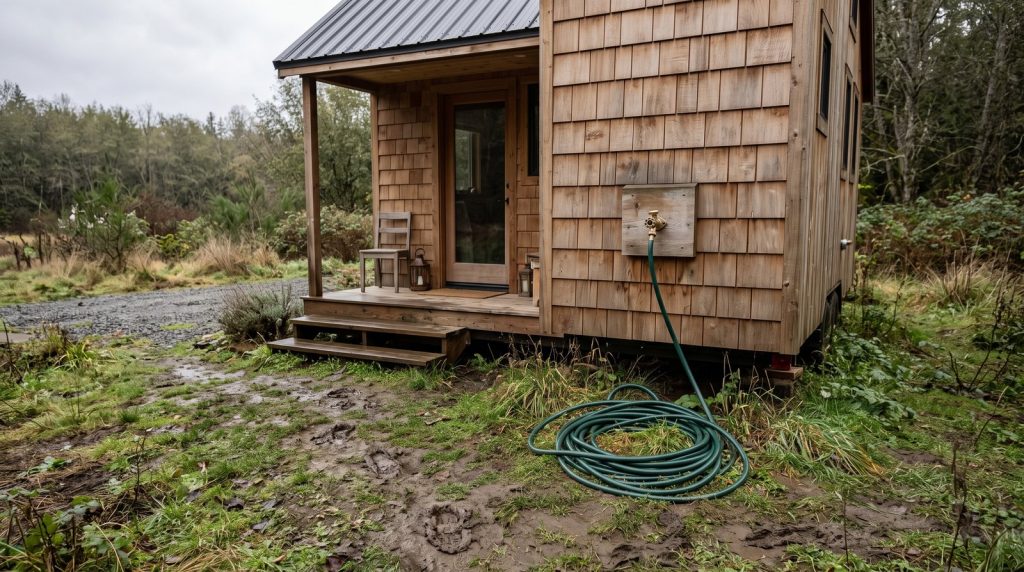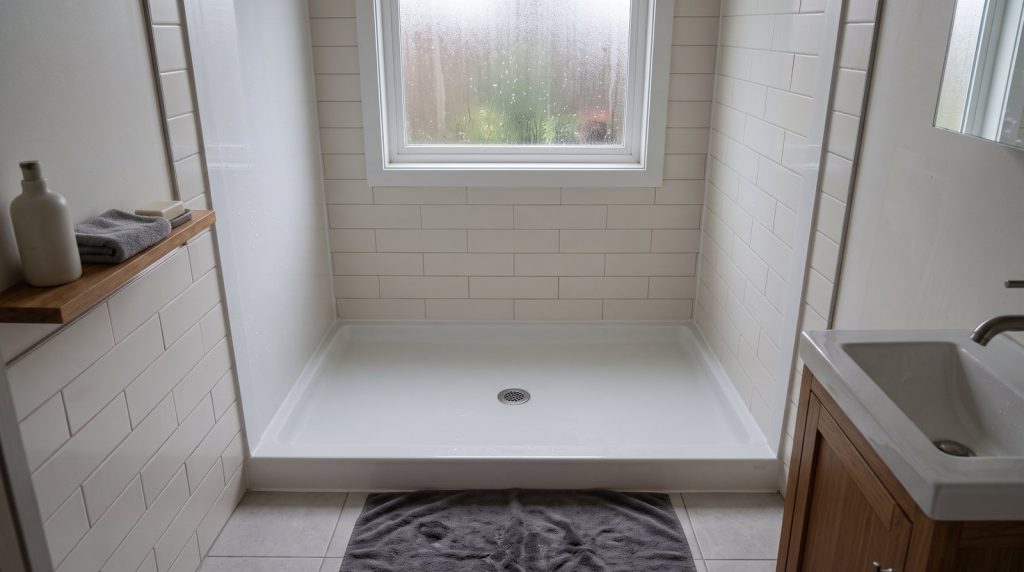
Tiny house mattress condensation happens when humid indoor air reaches the cool, poorly ventilated surface beneath a bed. The dependable fix is to combine an open support layer, room air movement, steady heat and controlled humidity. Dry any wet materials promptly, then monitor the bed until the cause is proven.
Table of Contents
Why condensation forms under a tiny house mattress
Condensation forms because a sleeper adds heat and moisture while the mattress underside faces a colder surface with little air movement. When that surface falls below the air’s dew point, vapor becomes liquid. A tight tiny house can make the pattern more obvious because cooking, showers and breathing affect a small air volume quickly.
The bed platform is often part of the problem, but it is not the only variable. A mattress above an exterior wall, wheel well, trailer deck, unconditioned storage bay or cool floor can lose heat faster than the room. Thick foam also slows drying. A neatly made bed can trap that moisture until the underside smells musty or shows spotting.
Quick answer by situation
Start with the cheapest correction that matches what you actually see. A solid platform needs an air path, a damp room needs moisture removal, and a cold wall needs warmth or better separation. Many tiny houses need two or three of these fixes together, especially during cold weather or long rainy periods.
- Wet only under the mattress: add slats or an airflow mat, open the perimeter and lift the mattress regularly while testing.
- Windows and walls also sweat: reduce indoor humidity, use source exhaust and keep heat more consistent.
- One corner stays damp: move the bed away from the cold wall and check for missing insulation, an air leak or an exterior water leak.
- A THOW bed sits above the trailer or wheel well: treat the cold assembly as a likely contributor and ask the builder how it is insulated and air-sealed.
- Visible mold is already present: stop the moisture first, assess the affected materials and use appropriate cleanup precautions.
Slats, holes and solid platforms
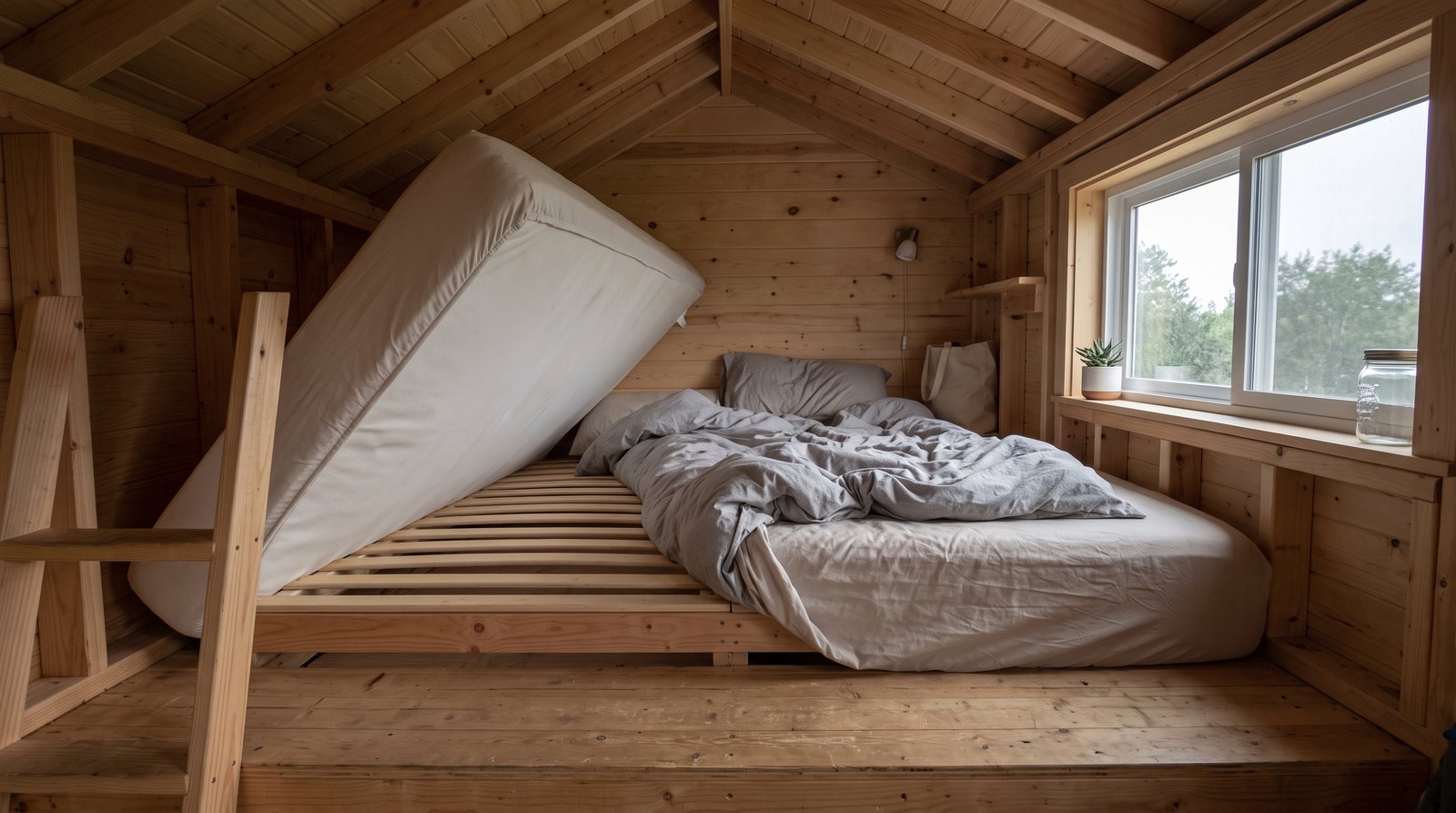
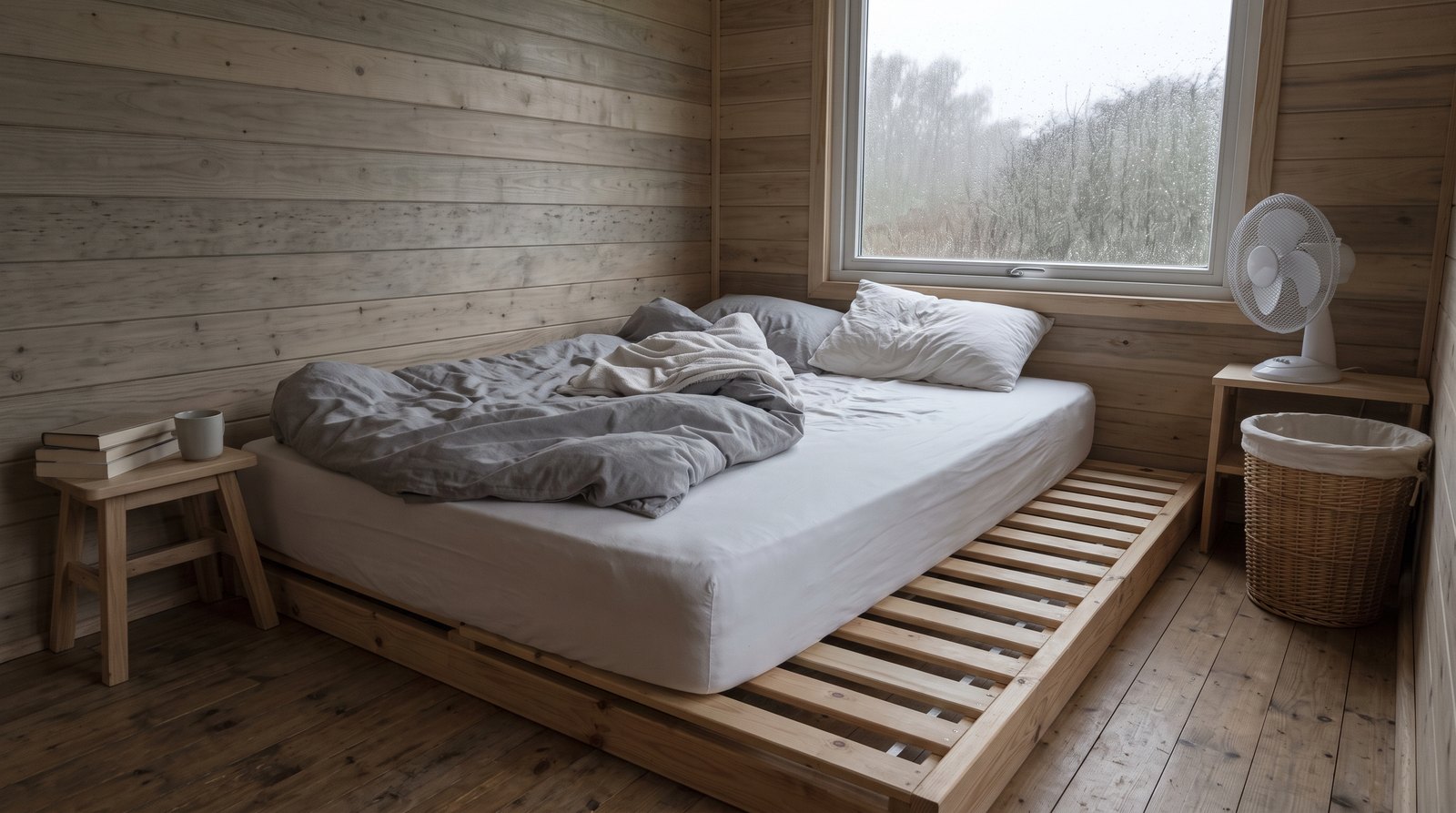
Wood slats are usually the simplest passive fix because they create open channels under the mattress. They must still support the mattress according to its manufacturer’s rules, including any maximum gap and center support requirement. A solid platform can work, but only when another detail provides dependable ventilation beneath the bed.
Before changing the base, check the mattress warranty and installation instructions. Foam and hybrid mattresses may require closer slat spacing than an older innerspring mattress. Slats that are too far apart can cause sagging, while thin slats without adequate support can bow. The goal is airflow without sacrificing structural support or safe access to a loft.
Drilling holes in plywood is better than leaving it completely sealed, but scattered holes may not create much crossflow. Air needs an entry and an exit. Slots, a raised slat layer or a ventilating underlay usually creates a more continuous path. Keep bedding, storage bins and trim from sealing that path around every edge.
When an airflow mat is worth buying
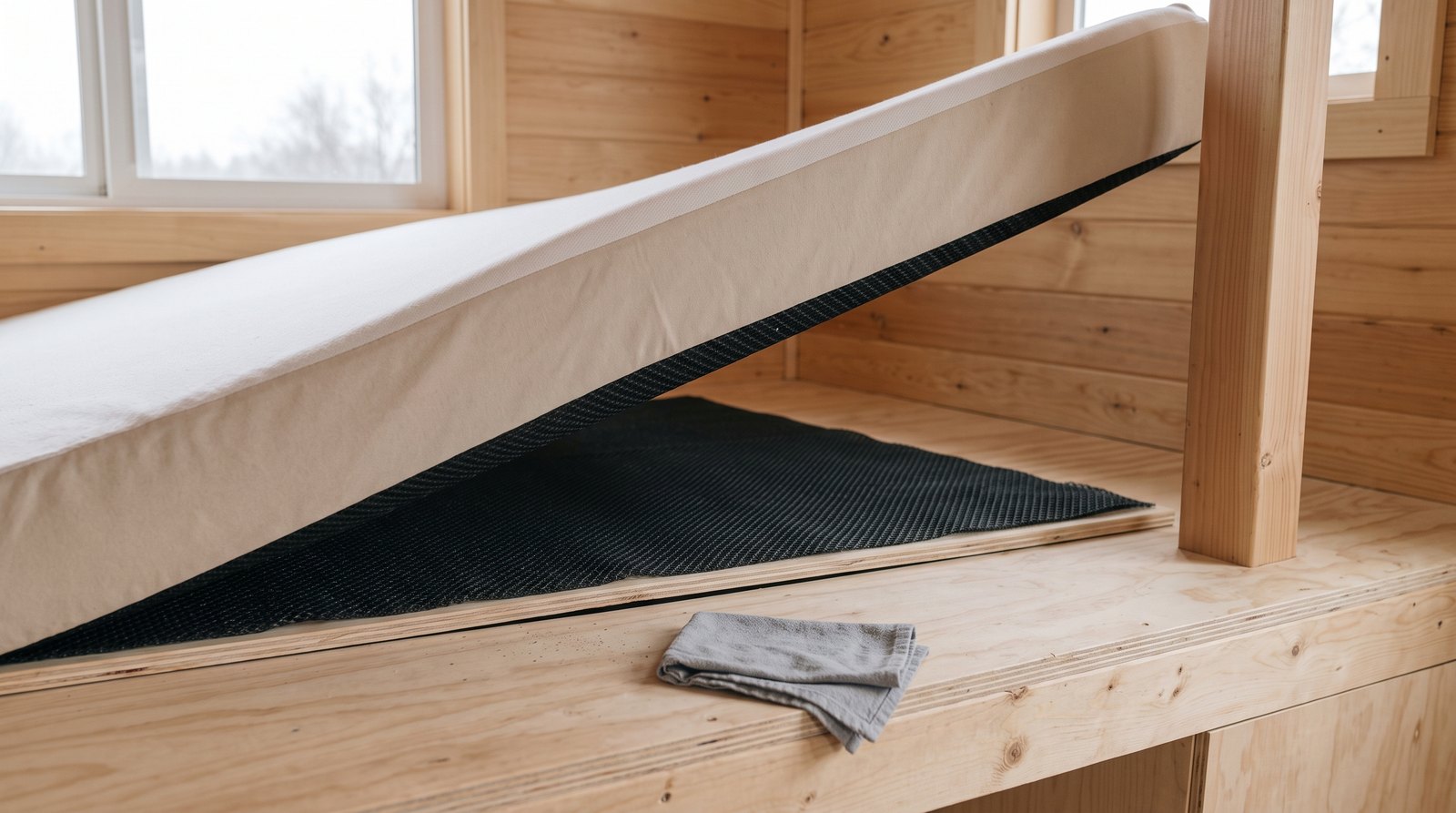
An airflow mat is useful when the mattress must stay on plywood or when adding a full slat frame would consume too much headroom. The resilient mesh creates a thin drainage and air space. It works best when its edges communicate with room air and when the mattress is lifted occasionally so stored moisture can escape.
Measure the sleeping surface and the product’s roll width before ordering. Trim only as the manufacturer permits, cover the main contact area and avoid folding the material into a thick ridge. A mat should not block a heater, electrical component or required egress path. It is a ventilation layer, not a repair for an active roof, window or plumbing leak.
As a 2026 price reference, Genuine Hypervent lists its 39-inch-wide material at $14.85 per linear foot, so ten feet costs about $149 before shipping. Comparable products vary in thickness and stiffness. Confirm dimensions, load behavior, return terms and flame information for your particular sleeping area rather than shopping by price alone.
Control humidity and ventilation at the source
Aim for indoor relative humidity below 60 percent and ideally around 30 to 50 percent, then adjust for comfort and climate. The EPA recommends that range for moisture control. A small hygrometer near the bed shows whether the loft differs from the main living area.
Use the bathroom fan during showers and long enough afterward to clear moisture. Run a range hood that exhausts outdoors while cooking. Vent a clothes dryer outdoors, and avoid drying wet laundry inside when humidity is already high. Confirm that exhaust ducts actually terminate outside, not in a loft cavity, cabinet or under the trailer.
A tight house also needs planned fresh air. The current ASHRAE 62.2 residential standard addresses dwelling-unit ventilation, local exhaust and source control, but the required system and airflow depend on the home, occupancy and adopted rules. Ask the builder or an HVAC professional to verify the design rather than guessing from floor area alone.
Portable dehumidifiers are rated in pints removed per 24 hours. ENERGY STAR buying guidance says capacity should reflect both space size and how damp it is. A humidistat, automatic restart and a practical drain route matter in a tiny house. Keep clearances and electrical supply within the manufacturer’s instructions.
Heat, wall clearance and daily habits
Consistent moderate heat is usually better than letting the sleeping area become very cold and reheating it briefly. Warmer interior surfaces are less likely to fall below the dew point. Leave visible air space between the mattress and an exterior wall, and do not pack clothing or pillows tightly against cold corners.
Each morning, pull the bedding back for a while instead of sealing the mattress immediately under a heavy comforter. During the first week of troubleshooting, lift the mattress edge daily and record humidity, temperature and any dampness. Once the base stays dry through the worst weather, reduce the inspection schedule but keep a seasonal check.
For owners comparing mobile and fixed designs, the moisture sources are similar but the cold assemblies can differ. Our guide to tiny houses versus RVs for full-time living explains other practical tradeoffs that affect year-round comfort.
Foundation homes and tiny houses on wheels
A foundation tiny home may have a cold slab, crawlspace or exterior bedroom wall, while a THOW may place the bed over a metal trailer frame, wheel well or unheated storage compartment. The correct repair follows the actual heat, air and moisture paths. Climate, envelope design and equipment instructions control the details.
For a foundation home, check crawlspace moisture control, drainage, floor insulation and air sealing before treating the mattress as the whole problem. For a THOW, inspect penetrations, exterior seams and underbody damage. Road vibration can open gaps around fasteners and utility entries. Water from a leak can mimic condensation and will not disappear just because indoor humidity falls.
Moisture control also protects the structure and finishes. The maintenance practices in our tiny house lifespan guide help owners connect small water problems with long-term durability instead of treating each stain as an isolated event.
What to do when mold is already visible
Fix the moisture source before cleaning, isolate the affected bedding and decide whether the material can be dried and cleaned safely. The EPA says many people can handle an area under about 10 square feet, but larger damage, contaminated water, HVAC involvement or health concerns call for experienced professional help.
Hard, nonporous surfaces can generally be cleaned with detergent and water, then dried completely. Wear appropriate gloves, eye protection and respiratory protection for mold work. Never mix bleach with ammonia or other cleaners. If mold is growing inside a porous mattress, topper or heavily affected fabric, replacement is often more dependable than a surface wipe.
Do not aim a fan at active mold because moving air can spread spores. Bag discarded material carefully and follow local disposal rules. If anyone in the household has asthma, severe allergies, a weakened immune system or other health concerns, ask a healthcare professional about exposure and cleanup before disturbing the area.
Photograph the damage and keep receipts if a leak or equipment failure may involve a claim. Coverage depends on the cause and policy wording, not merely the presence of mold. Our overview of tiny house insurance costs and coverage explains why documentation and the home’s classification matter.
Realistic costs and a practical 2026 plan
Most owners can diagnose the problem for less than the cost of replacing a mattress. Start with measurement and airflow, then buy active equipment only if the readings justify it. Current examples put a basic correction anywhere from about $10 for monitoring to several hundred dollars for a quality dehumidifier and carpentry.
- Humidity monitor: EPA guidance describes common meters at roughly $10 to $50. Use two if the loft and main room behave differently.
- Slatted bed base: current queen examples from IKEA are about $50 to $120, before any custom framing or center support.
- Ventilation mat: about $129 to $149 for ten linear feet of the cited 39-inch-wide product, plus shipping.
- Portable dehumidifier: current ENERGY STAR models in the 22 to 25 pint class commonly list around $169 to $229, with larger or pump-equipped units costing more.
- Professional diagnosis: pricing varies widely by region and access. Get a written scope if the work involves envelope repair, electrical changes or mold remediation.
Prices change, and the least expensive device is not always the lowest-cost solution to operate. A dehumidifier that short-cycles, freezes in a cold space or requires constant bucket emptying will not solve much. Compare capacity, efficiency, noise, drainage and the manufacturer’s minimum operating temperature.
A sensible sequence is to photograph the starting condition, measure humidity, open the bed perimeter, add slats or a mat, improve source exhaust, and monitor through representative weather. If dampness returns, investigate cold surfaces and leaks. This evidence makes a builder or HVAC visit faster and more useful.
Seasonal checks that prevent a repeat
Inspect beneath the mattress at the start of heating season, after long humid spells and after travel or storage. Clean dust from slats and mesh, test exhaust fans, check dehumidifier drains and replace failed humidity monitors. A five-minute inspection is easier than drying a loft and replacing a mold-damaged mattress.
Watch for musty odor, rusty fasteners, dark spotting, swollen plywood, damp bedding and condensation on nearby windows. Compare readings before and after showers or cooking. If a previously dry bed becomes wet after exterior work, towing or a storm, look for a leak before changing the ventilation setup.
Keep product manuals, builder drawings and photos of the platform. They help you preserve structural support when changing slats or adding access holes. Foundation homes and THOWs may be subject to different codes and equipment rules, so confirm structural, ventilation and electrical changes with the appropriate local authority and qualified professionals.
Frequently asked questions
Why is my mattress wet underneath but dry on top?
The underside is trapped against a cooler, poorly ventilated base while the top can dry into the room. Moisture from sleepers moves through the mattress and can condense below. Check morning humidity, platform temperature, slat or mat airflow, nearby cold walls and possible leaks before assuming the mattress itself is defective.
Will bed slats stop tiny house mattress condensation?
Slats often help because they create continuous air channels, but they are not a complete cure when indoor humidity is high or the platform is very cold. Follow the mattress maker’s spacing and support rules, keep the perimeter open, use source exhaust, and verify the result during the coldest or most humid weather.
What humidity should a tiny house bedroom have?
A practical target is about 30 to 50 percent relative humidity, with indoor humidity kept below 60 percent when possible. Climate and comfort matter, so use actual readings rather than guessing. If the room is in range but the platform stays wet, improve surface warmth, wall clearance and airflow beneath the mattress.
Can I put an airflow mat directly under a foam mattress?
Many ventilation mats are designed for that use, but confirm the mat and mattress manufacturers’ instructions first. The layer must support the mattress evenly, preserve any warranty requirements and have an open edge for air exchange. Inspect it soon after installation to make sure moisture is not simply collecting inside the mesh.
Should I replace a mattress that has mold underneath?
Replacement is usually the safer practical choice when mold has entered foam, padding or other porous layers, when odor persists, or when the mattress cannot be dried fully. Small marks limited to a cleanable hard platform are different. Fix the moisture source first and seek professional advice for extensive growth or health concerns.