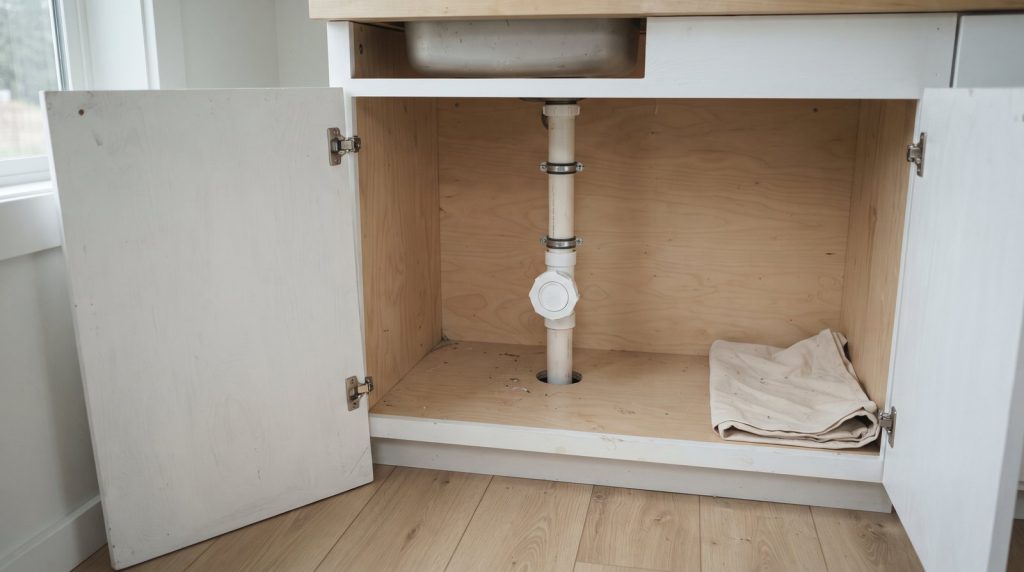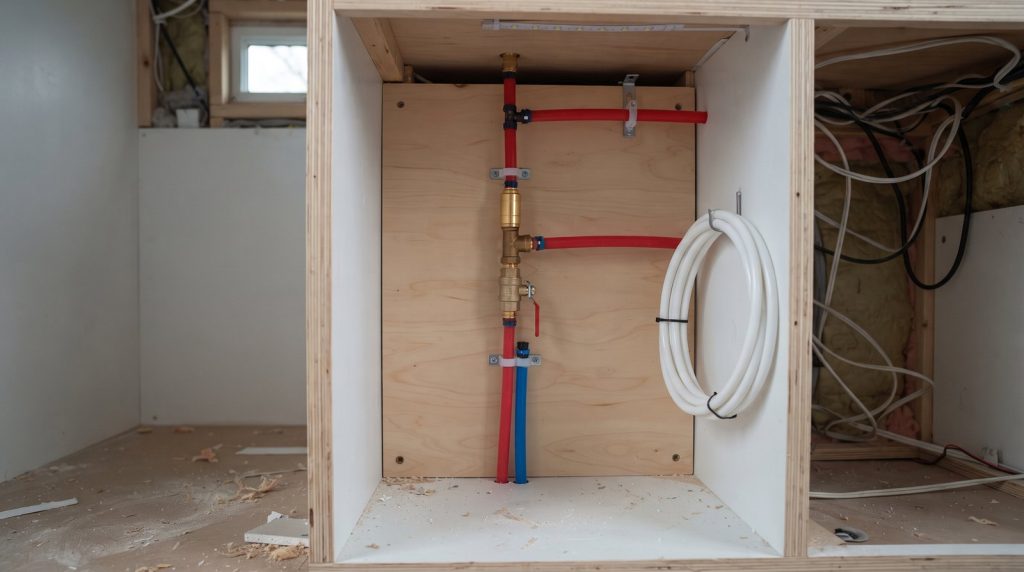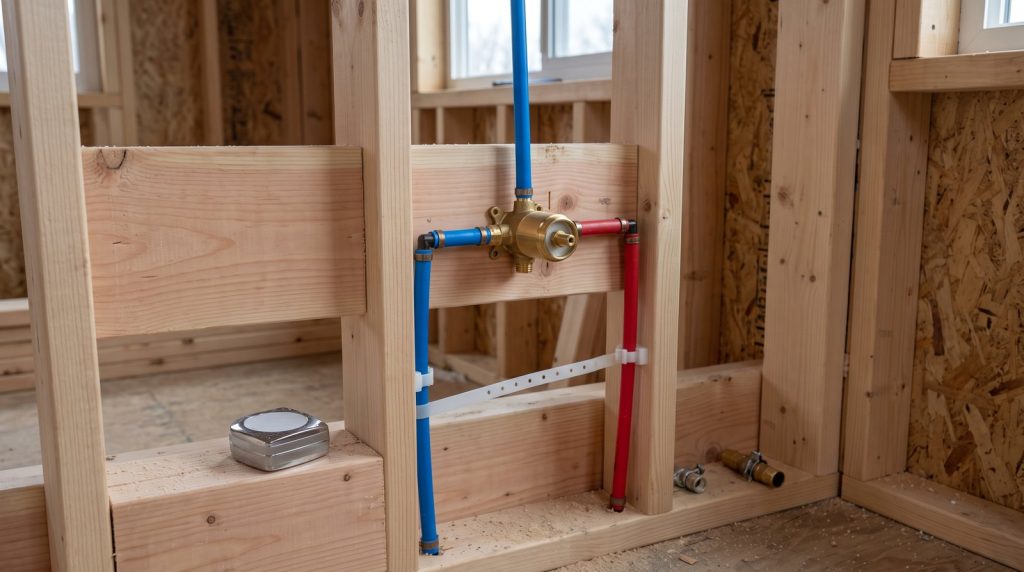
Tiny house water filtration should start with a water test, not a shopping list. Use sediment filtration for particles, certified carbon for specific taste, odor, or chemical claims, reverse osmosis for selected dissolved contaminants, and UV for microbes when testing supports it. Size every component for the home’s actual flow and pressure.
Table of Contents
Test the water before choosing a filter
The right tiny house water filtration system depends on the source and the contaminants actually present. Review the public water supplier’s current report, or send private well water to a state-certified laboratory. Test an onboard tank after contamination, extended storage, unexplained illness, or a persistent change in taste, odor, color, or clarity.
Private well owners carry more responsibility. EPA guidance recommends annual testing for total coliform bacteria, nitrate, total dissolved solids, and pH, plus additional tests suggested by nearby agriculture, flooding, fuel storage, mining, septic systems, or local geology. Follow the laboratory’s sampling instructions because the wrong bottle or handling can invalidate a result.
Do not use taste or clarity as a safety test. Many important contaminants have no obvious smell, color, or flavor. If a result exceeds a health standard, contact the local health department or water professional before selecting equipment. Sometimes the source, well construction, plumbing, or storage tank needs correction before treatment can be reliable.
Build a treatment train instead of one mystery canister
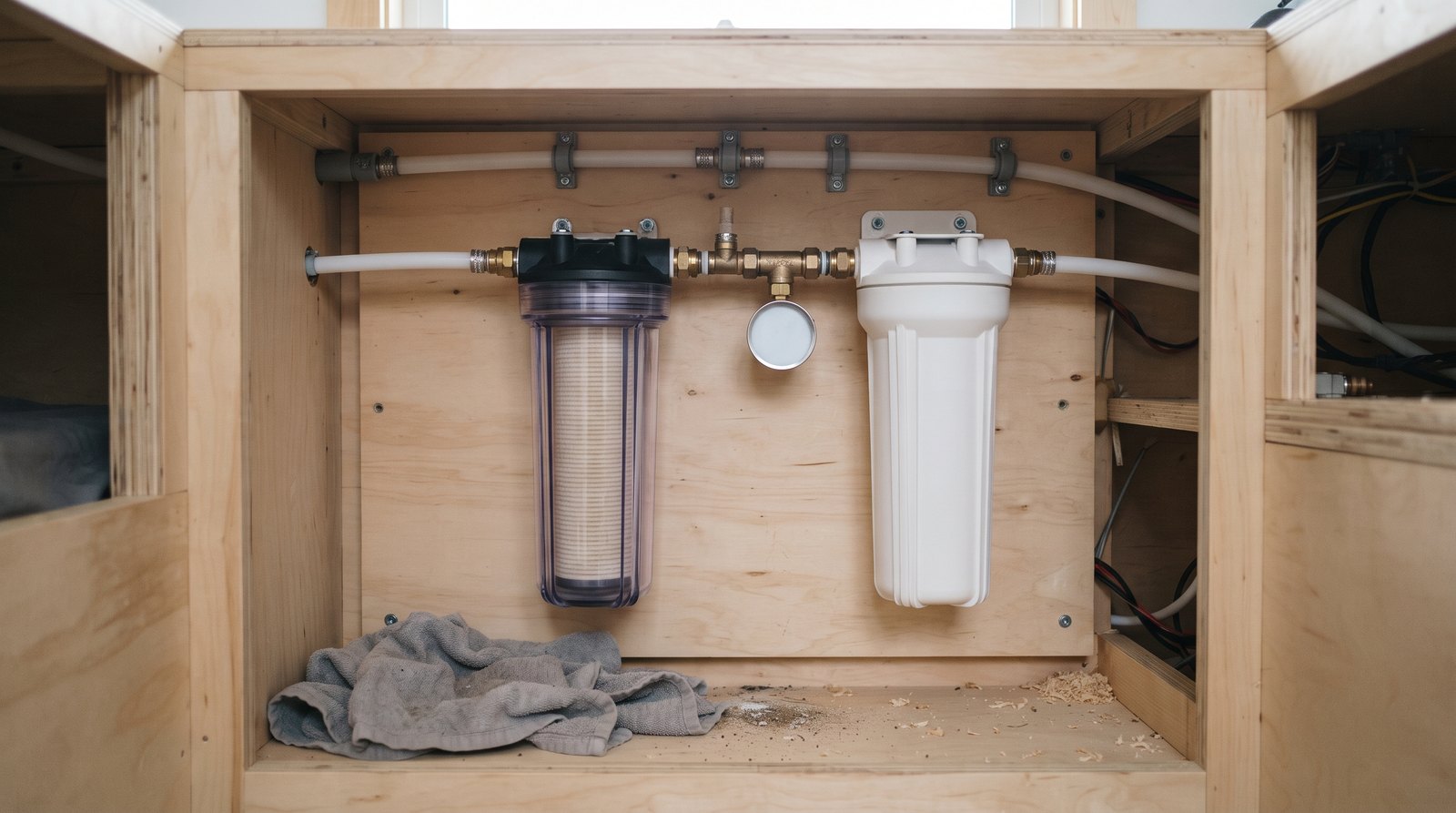
A practical system treats problems in a deliberate order. Coarse sediment protection normally comes first, followed by finer filtration and any contaminant-specific treatment. UV is generally installed after filtration, while an under-sink reverse osmosis unit usually serves a separate drinking-water faucet. The exact sequence must follow the test results and each manufacturer’s installation instructions.
Think of every stage as having one defined job. A washable screen can catch sand before it reaches a cartridge. A pleated cartridge can reduce finer suspended particles. Carbon can address claims listed for that cartridge. UV can disinfect suitably clear water. Combining unlabeled media because it fits the housing is not a treatment plan.
Quick answer by situation
The simplest useful setup changes with the water source and how the tiny house is used. City water often needs less equipment than a private well. A seasonal THOW needs freeze and travel planning. A drinking-water concern may call for point-of-use treatment instead of filtering every gallon used for showers, laundry, and toilet flushing.
- City hookup with sediment or chlorine taste: Start with a properly sized sediment stage and certified carbon cartridge with the exact reduction claim you need.
- Private well with a clean microbial test: Treat only the measured issues, which may include sediment, iron, hardness, odor, or a specific dissolved contaminant.
- Well with microbial risk: Correct the source problem, prefilter as required, and use a properly sized, listed UV or other disinfection system under professional guidance.
- Onboard tank used while traveling: Sanitize the tank and plumbing, protect the fill connection, and choose treatment rated for the source water and pump flow.
- Lead, nitrate, arsenic, PFAS, or another health concern: Buy only a system certified for that specific reduction claim and verify treated water with follow-up testing.
- Low pressure at every fixture: Measure static and flowing pressure, inspect the pump and regulator, and check filter pressure drop before adding another stage.
Choose sediment, carbon, reverse osmosis, and UV by job
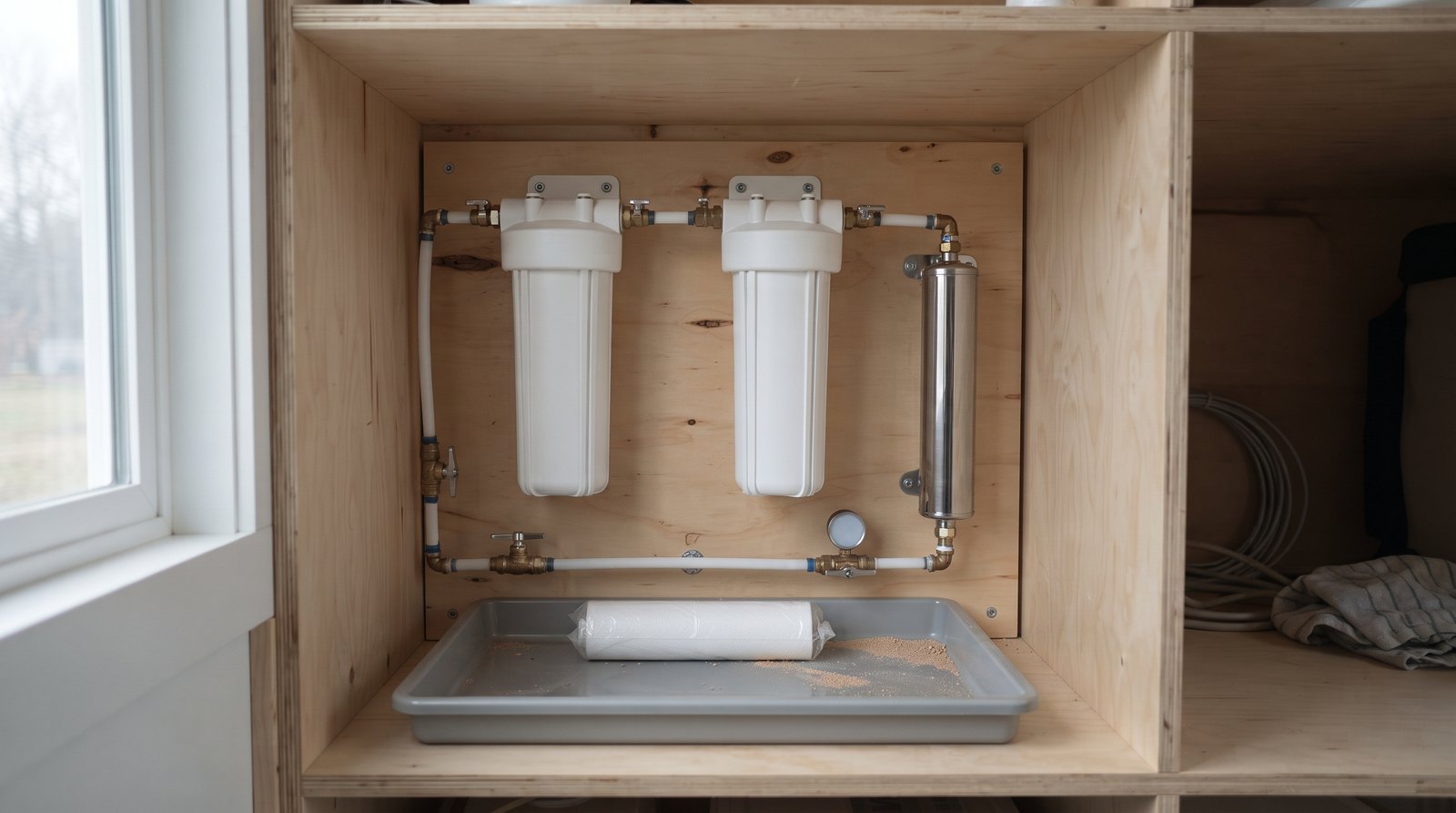
Sediment, carbon, reverse osmosis, and UV are not interchangeable. Sediment stages protect equipment and remove particles. Carbon targets listed aesthetic or chemical reductions. Reverse osmosis addresses selected dissolved contaminants at a slow flow. UV inactivates microbes in suitably pretreated water but does not remove sediment, salts, or most chemicals.
A lower micron number does not automatically make a cartridge better. Finer media usually creates more resistance and can clog faster. “Nominal” and “absolute” ratings also mean different things, so compare the manufacturer’s definition and certified performance. CDC guidance identifies an absolute pore size of 1 micron or smaller as one route for cyst reduction, but the product must still be matched to the actual risk.
Activated carbon is useful for taste and odor, and some certified products reduce particular chemicals or lead. NSF/ANSI 42 generally covers aesthetic claims such as chlorine taste and odor. NSF/ANSI 53 covers specified health-effect reductions. Certification to a standard is not a promise that every product reduces every contaminant listed under that standard.
NSF/ANSI 58 applies to reverse osmosis systems. RO can reduce some dissolved substances that ordinary sediment and carbon stages do not, but it creates a concentrate stream, needs adequate pressure, uses storage space, and requires membrane and prefilter service. In a tiny house, point-of-use RO is usually more practical than whole-house RO.
NSF/ANSI 55 covers ultraviolet systems. Class A and Class B have different purposes, and the selected unit’s certification and instructions control. UV needs clear water, the correct flow, continuous power, a clean sleeve, and timely lamp service. It does not make a dirty tank or damaged well acceptable.
Size housings for flow, pressure, and service space
Size a filter bank for peak simultaneous flow, allowable pressure drop, pipe size, pump capacity, and usable service space. A compact housing may fit the cabinet but starve a shower when another fixture opens. A large housing lasts longer and drops less pressure, but it also needs room below it for removal.
Check the rated flow at the cartridge’s stated conditions, not only the port diameter printed on the head. The cartridge, media, water temperature, sediment load, and degree of clogging all affect pressure loss. Measure pressure before and after the system while water is flowing. Static pressure alone does not reveal a restrictive filter.
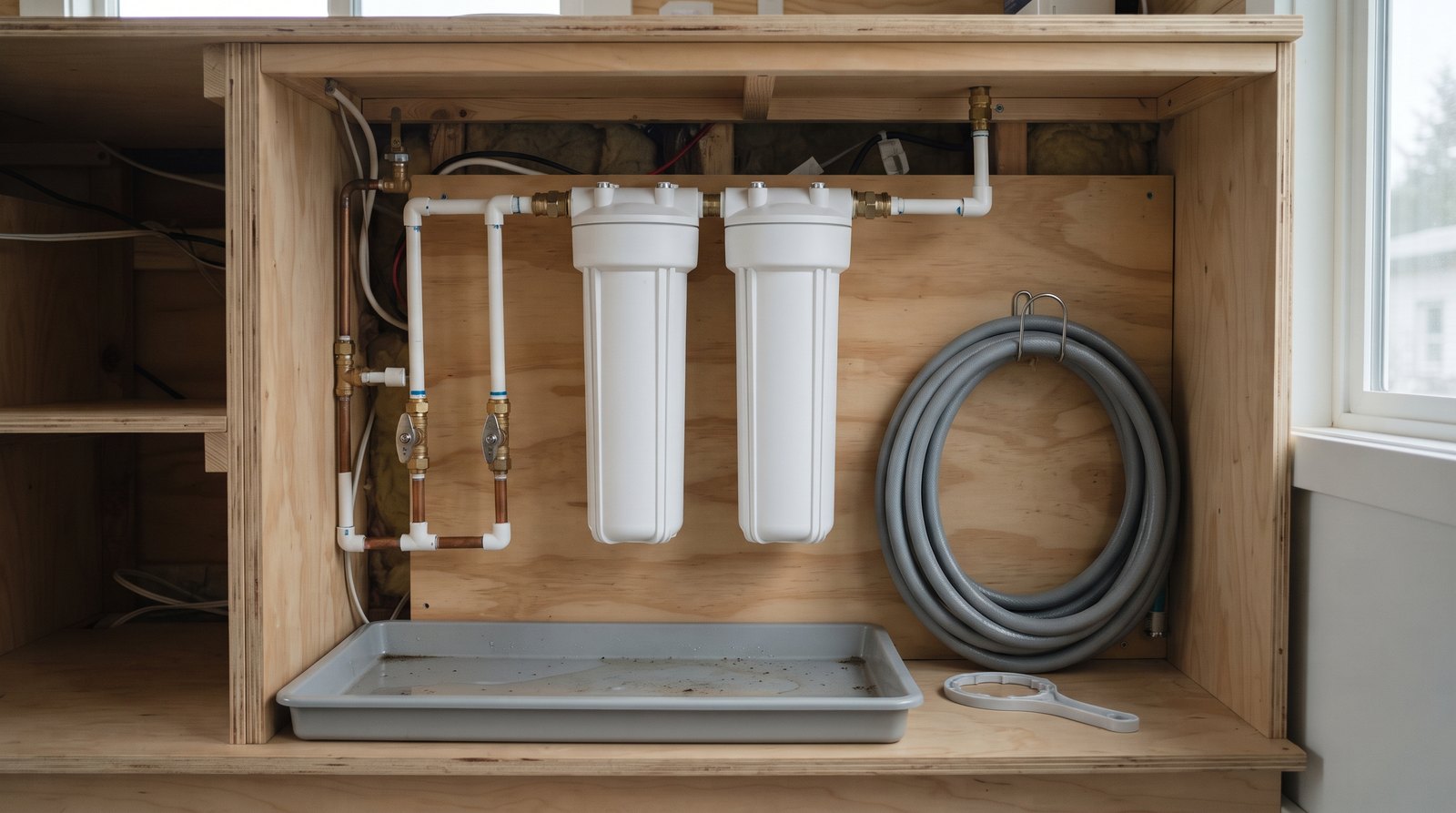
Leave enough clearance to lower each sump without tilting it across wiring or drain pipe. A full housing is heavy and spills water when opened. Provide lighting, a nearby shutoff, a pressure-release method if specified, and a place for the housing wrench. Never mount a heavy filter head only to thin paneling.
Install a bypass, shutoffs, and leak containment
A serviceable tiny house filter installation needs isolation valves, a safe pressure-relief procedure, and a bypass when continued water service is important. Support the piping so the housings do not carry pipe weight. Put every joint where it can be inspected, and contain leaks before they soak the floor or trailer belly.
Place a shallow pan beneath the housings where practical, but route any drain safely and protect it from freezing. Add a leak sensor or automatic shutoff if the risk justifies it. Water damage spreads quickly through a small floor assembly, so review coverage and exclusions in your tiny house insurance.
Use potable-water components and the connection method specified for the pipe system. Follow torque, sealant, mounting, and pressure-test instructions. Do not mix random clear sumps, caps, O-rings, or cartridges because they look interchangeable. A mismatched pressure vessel can crack, leak, or fail without warning.
Plan for onboard tanks, freezing, and travel
A THOW adds tank sanitation, changing water sources, vibration, weight, and freezing to the filtration problem. Secure every housing and pipe for travel, protect the pump inlet, and inspect the system after each move. Drain or winterize every component exactly as its manual directs before any part of the house can freeze.
Use a protected potable-water hose and fill connection, and do not let the hose end touch the ground or a questionable spigot. A filter cannot compensate for a dirty fill hose, contaminated tank, open vent, or unsafe source. Sanitize the tank and distribution plumbing on the schedule required by the system maker and your use pattern.
Cartridge housings, gauges, UV chambers, RO membranes, pumps, check valves, and short pipe pockets can retain water after the main tank is empty. Design low-point drains and access before winter arrives. Never pour an unapproved chemical through drinking-water treatment equipment. Follow the component manuals for removal, storage, or approved winterization.
Before towing, close the water source, relieve pressure if instructed, latch access panels, and secure spare cartridges and tools. After arrival, restore water slowly and watch every connection. The utility choices that work for a stationary home can differ from full-time travel, as explained in our tiny house versus RV comparison.
Maintain and sanitize the system on evidence
Replace cartridges by the manufacturer’s time, volume, pressure-drop, or water-quality limit, whichever applies first. Service intervals vary because two identical filters can see very different sediment loads. Record pressure readings and dates, inspect O-rings, clean housings correctly, and confirm treatment with testing when the system protects against a health concern.
Shut off the supply and relieve pressure before opening a housing. Wear clean gloves, keep replacement cartridges off dirty surfaces, and use only the approved lubricant and sanitizer. Replace damaged O-rings rather than forcing the sump tighter. A pinched seal can leak slowly after the cabinet is closed.
Carbon that removes a disinfectant can allow more microbial growth downstream if maintenance is neglected. CDC specifically warns that whole-home systems removing chlorine or other disinfectants can increase germ growth in plumbing. Do not stretch cartridge life because the water still tastes normal. Follow the certified system’s capacity and replacement instructions.
Tiny house water filtration costs in 2026
Budget about $40 to $160 for a basic single housing, $150 to $650 for a multi-stage cartridge system, $160 to $800 for under-sink reverse osmosis, and roughly $175 to $700 for common residential UV equipment. Installation, testing, valves, gauges, leak protection, electrical work, and specialty treatment can raise the total substantially.
Current retail listings show basic whole-house housings near $40 to $155, three-stage systems around $475 to $750, and standalone UV units from roughly $175 to $500, with larger rack systems costing more. Under-sink RO examples begin near $160 and rise with pumps, tanks, monitoring, UV, and certified reduction claims.
Plan for recurring costs as carefully as the purchase price. Sediment and carbon cartridges, RO membranes, UV lamps, sleeve cleaning, laboratory tests, O-rings, sanitation supplies, and professional service continue for the life of the system. A cheap proprietary housing can become expensive when replacement cartridges are scarce.
Get a written scope when hiring a plumber or water-treatment professional. It should identify the test results being addressed, certified reduction claims, design flow, pressure assumptions, bypass arrangement, drain and power needs, replacement schedule, warranty, and follow-up testing. Protecting plumbing and preventing leaks also supports the long service life discussed in how long tiny houses last.
The bottom line
A good tiny house water filtration system is specific, test-driven, serviceable, and sized for real flow. Start with source testing, assign one job to each treatment stage, verify certifications and contaminant claims, and plan for pressure loss, leaks, sanitation, freezing, and travel. Retest when health protection depends on the equipment.
More stages are not automatically safer. Unnecessary equipment consumes space, pressure, money, and maintenance time. A simple sediment and certified carbon setup may be enough for one city hookup, while a private well may need source repair and professional disinfection design. Let the test report, equipment instructions, water supplier, and local health and plumbing authorities control.
Frequently asked questions
Tiny house owners usually need clear answers about filter order, micron ratings, UV, reverse osmosis, and cartridge life. The correct details depend on test results and the selected equipment, but the following answers provide a practical starting point for city water, private wells, and onboard tanks.
What water filter is best for a tiny house?
The best filter is the smallest certified system that treats the contaminants found in your water without reducing flow below your needs. Many city-water homes use sediment and carbon stages. A well, tank, or specific health concern may require additional treatment selected from laboratory results and professional guidance.
Should sediment or carbon come first?
Sediment filtration usually comes before carbon because it catches particles that could clog or coat the carbon media. The exact order, micron rating, and number of stages depend on water quality and the manufacturer’s design. Some specialty systems require different pretreatment, so follow the complete installation instructions.
Does a 1-micron filter remove bacteria?
Not reliably as a general rule. CDC notes that an absolute 1-micron or smaller filter can remove larger parasites and cysts, but bacteria are smaller and viruses are smaller still. Use a product certified for the specific microbial claim, and correct contamination at the source whenever possible.
Do I need UV and reverse osmosis together?
Only when testing and the system design justify both. UV addresses microbes in suitably clear water, while reverse osmosis reduces selected dissolved contaminants. Neither replaces proper source protection, sediment pretreatment, sanitation, maintenance, or follow-up testing. Combining them without enough pressure, power, drainage, and service space can create new problems.
How often should tiny house water filters be changed?
Follow the cartridge maker’s time, gallon, pressure-drop, or water-quality limit, whichever arrives first. Heavy sediment can shorten a filter’s life dramatically. Record installation dates and pressure readings, inspect housings during changes, and never extend a health-protection cartridge merely because the water still looks or tastes acceptable.