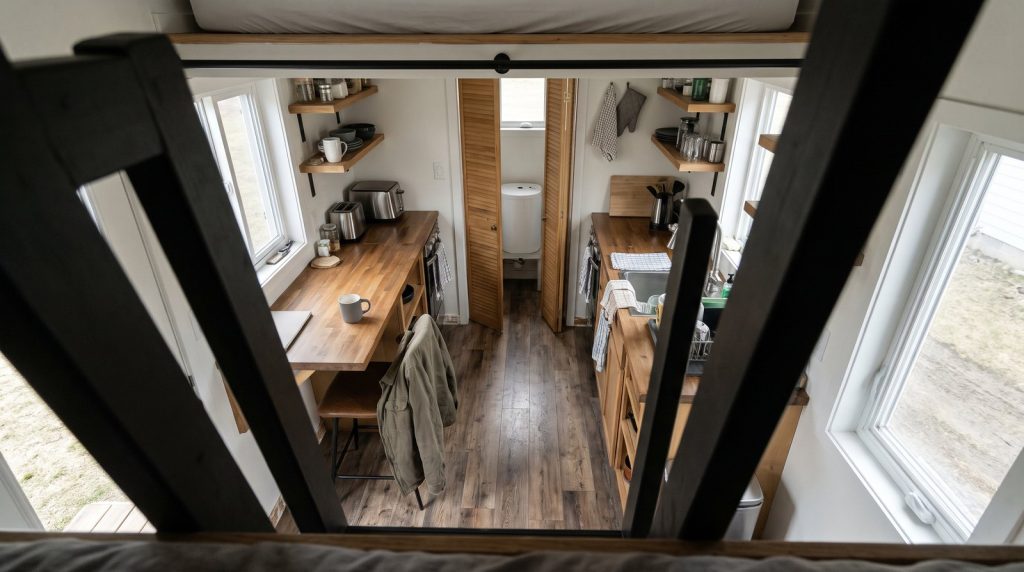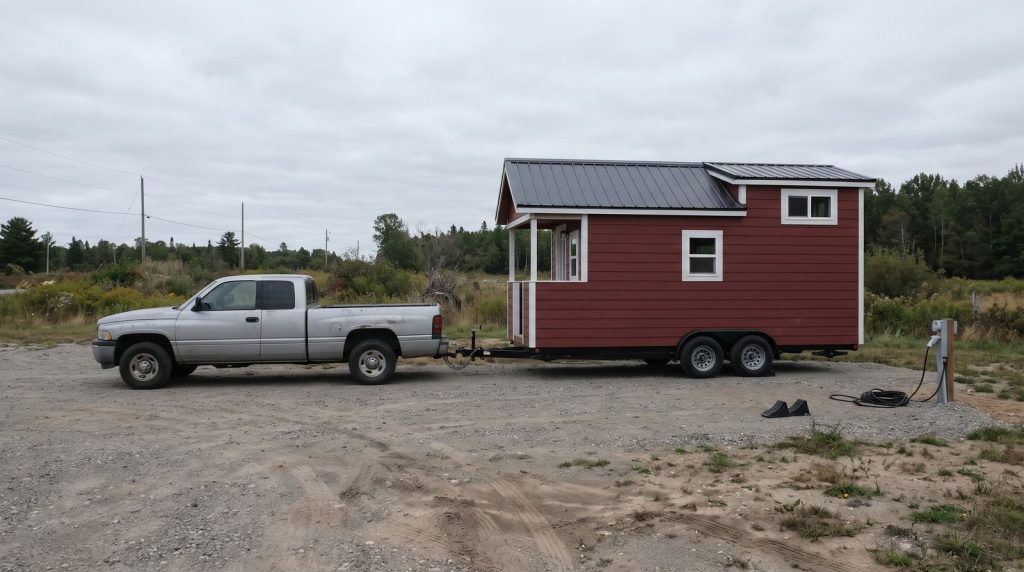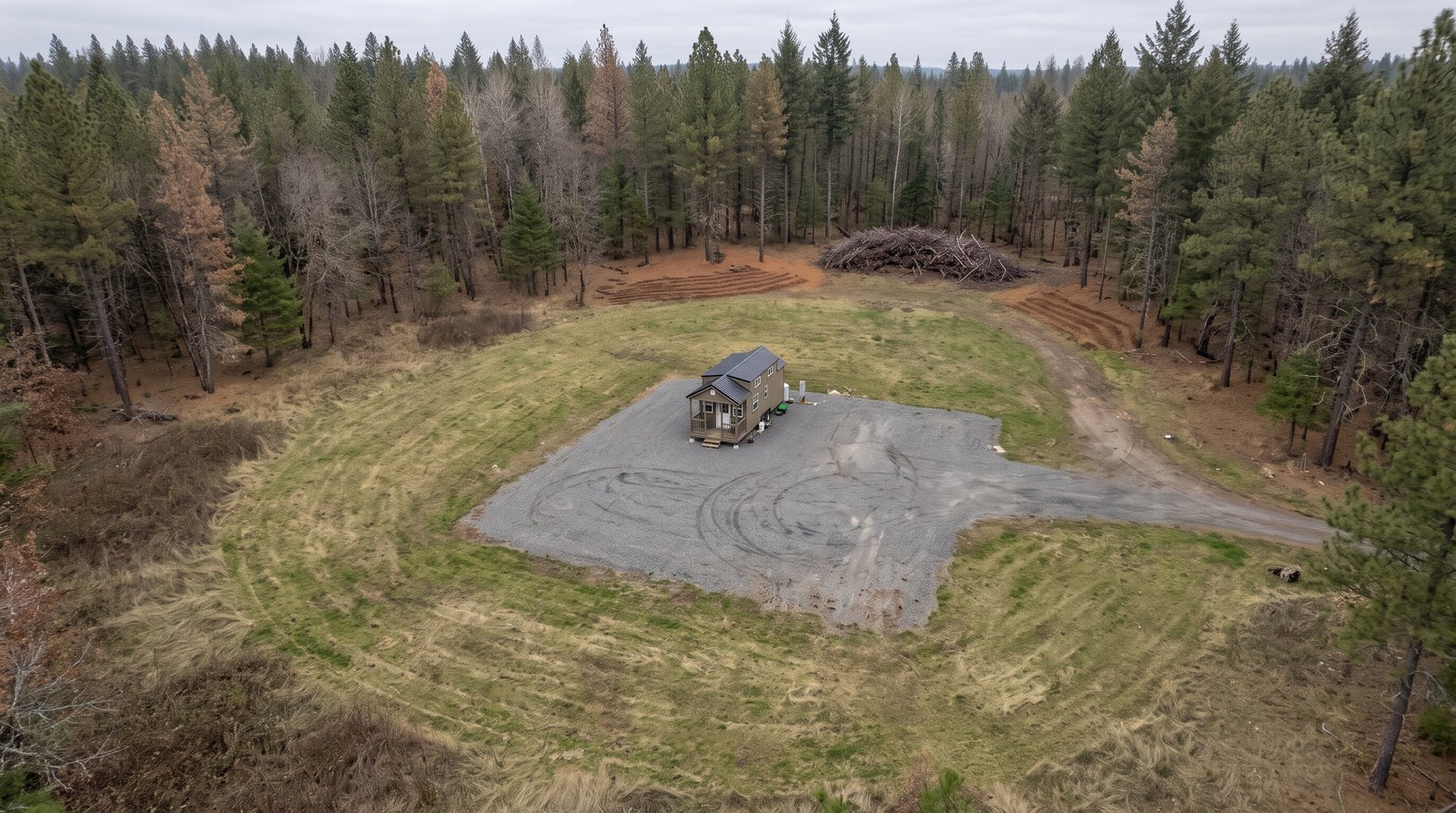
Tiny houses in hurricanes and wildfires need an evacuation plan that protects people before property. Leave when officials direct you, and leave earlier if your circumstances require more time. Moving a tiny house is an advance preparation decision, not a last-minute escape strategy. Anchoring and fire-resistant improvements reduce risk without guaranteeing survival.
Table of Contents
Quick answer by situation
Your safest next step depends on the threat, the building, and the time available. A tiny house on a permanent foundation has different structural requirements from a trailer-mounted home, but neither overrides an evacuation order. Decide separately whether your household should leave and whether moving the house is still practical.
- Officials order evacuation: Leave promptly using the routes and destinations they identify. Do not delay departure to hitch up the house.
- A hurricane is forecast well in advance: Consider relocation only with a capable driver, suitable equipment, a clear route, and a confirmed receiving site.
- Wildfire threatens nearby: Prepare to leave in your vehicle. Do not assume there will be time to disconnect utilities and tow.
- The house is permanently installed: Plan around safe shelter elsewhere and improvements completed before an emergency.
- You rent a tiny house or parking space: Get the evacuation procedure, gate access arrangements, and emergency contacts from the host or property manager.
Put those decisions on one sheet of paper. Include who collects pets, who carries medication, and where everyone meets if phones fail. A plan that depends on one person being home needs a backup. Do not make the household wait for a mover to answer the phone.

What anchors can and cannot do
A properly designed anchoring system helps transfer wind forces into the ground, but it does not turn a tiny house into a storm shelter. Its performance depends on the building, connections, installation, and soil. Have the builder or a qualified professional evaluate the complete arrangement before hurricane season or another high-wind threat.
FEMA P-85, Protecting Manufactured Homes from Floods and Other Hazards, treats foundations and installation as a coordinated design problem. That manufactured-home guidance is useful background, not a substitute installation specification for a custom tiny house. A trailer frame, site-built cottage, and HUD-code manufactured home are not interchangeable categories.
Ask for documentation identifying the intended attachment points, compatible hardware, installation requirements, and inspection procedure. Do not choose anchor spacing or strap tension from a photograph. Wheel chocks and leveling jacks serve different purposes from an engineered wind-resisting system. A parked home still needs its applicable foundation or anchoring requirements addressed.
Florida emergency officials advise residents to inspect tie-down systems and leave mobile homes during high-wind events. For a tiny house, ask the local building department how its actual construction is classified and what wind design applies. An RV label or a builder saying the house is heavy does not establish that it is safe shelter.
Decide about towing before conditions deteriorate
Relocating a tiny house can be reasonable when there is ample advance notice and a complete transport plan. It becomes a poor evacuation plan when equipment, permits, access, or a destination are uncertain. Establish an early decision point with your transporter, then keep a separate departure plan that requires only your passenger vehicle.
The National Weather Service describes a hurricane watch as generally issued 48 hours before anticipated tropical storm-force winds, and a warning 36 hours before those winds. Those are forecast alert definitions, not guaranteed moving windows. Tropical storm winds begin at 39 mph, and dangerous conditions or road restrictions can affect your route earlier.
Ask the transporter to review the loaded weight, hitch, brakes, tires, overall dimensions, and route. Confirm any permits, escort requirements, and travel restrictions with the appropriate transportation agencies. A truck that can pull the trailer around a parking lot is not proof of a safe highway combination. There is no universal safe towing wind speed for every tiny house.
Walk through the departure sequence on a calm day: secure contents, arrange utility disconnection, clear access, and check the destination. Record how long your actual process takes. Include packing and travel time rather than counting only the moment the hitch connects. Our tiny house moving cost guide can help frame the transport discussion, but emergency availability needs direct confirmation.
Set a firm fallback: if the mover cancels, access closes, or officials instruct you to leave, evacuate without the house. Do not improvise a new towing setup while neighbors are already departing.
Prepare for the hazards beyond the wind
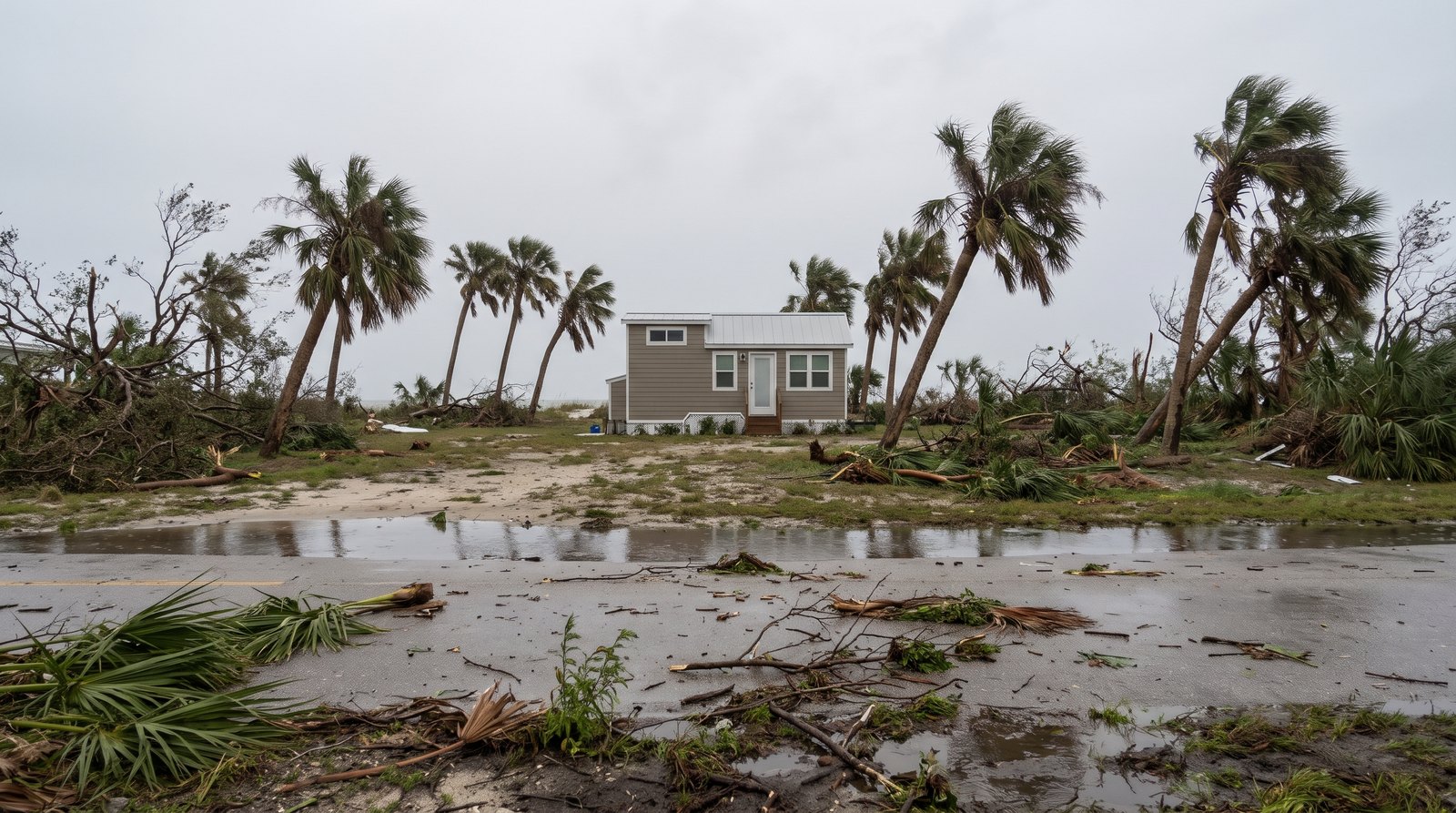
Hurricane planning must account for water, debris, and access as well as wind. A house can remain standing while its site becomes unsafe or unreachable. Check the evacuation zone and flood exposure for the actual parking location, then choose a destination that avoids the same threat rather than simply driving a short distance inland.
The National Weather Service explains that storm surge can produce life-threatening inundation inland from the shoreline. A hurricane category describes wind intensity, so it should not be your only trigger for action. Follow local emergency management instructions for your address, including any earlier guidance for vulnerable housing or people needing transportation assistance.
Review the route out of the property. Low crossings, gates, narrow turns, and overhanging limbs deserve attention before a forecast becomes urgent. Ask a parking host what happens if power fails and the gate motor stops. Write down how emergency vehicles reach the lot and how responders can identify your home.
When choosing between mobile housing options, our tiny house versus RV comparison provides useful context. Mobility should be judged by the whole departure process, not merely the presence of wheels.
Reduce wildfire exposure around the house
Wildfire preparation starts with the house and the material surrounding it. Clear accumulated combustible debris and seek local advice about vegetation management, slope, and nearby buildings. A gravel pad can be useful, but a cleared ring alone does not establish that the property is safe or that the house will survive.
CAL FIRE recommends focused fuel reduction in the first five feet around a home, with additional vegetation management farther out. Remove leaves and needles from roofs and gutters, and avoid storing firewood or combustible clutter beneath steps and decks. Confirm the specific requirements with your local fire department; California guidance is not a nationwide code.
For a rented pad, put responsibilities in writing. Identify who maintains the space outside your lease boundary, removes branches, and keeps the access lane clear. A tenant may be able to move a doormat but may need the owner to address a nearby woodpile or overgrown neighboring strip.
Ask for a property assessment before buying tools or ordering landscaping work. Bring photographs of the trailer underside, deck, shed, and adjacent fences. Those details help the assessor see conditions that a wide view of the house may miss. Schedule recurring cleanup because a cleared surface can collect fresh debris between visits.
Address ember entry and practice leaving
Embers can reach vulnerable openings and ignite material even when flames have not reached the house. Pair site maintenance with a review of roofs, vents, windows, and attached structures. Complete upgrades in advance, and practice household evacuation so that protecting the building never becomes a reason to miss a safe departure.
CAL FIRE recommends approved flame- and ember-resistant vents and cautions that changes can affect ventilation. Have a qualified contractor and local building official review suitable products. Do not block appliance exhausts or required combustion-air openings. A metal roof also needs appropriate details and maintenance; its material alone does not make a home fireproof.
Create a household plan with multiple routes where available, a meeting location outside the threatened area, an out-of-area contact, and arrangements for pets. These are central elements of CAL FIRE’s wildfire action plan. Keep essential medication, documents, chargers, and needed accessibility supplies ready to take.
Practice at a realistic pace. Can everyone get down from the loft, locate the pet carrier, and reach the vehicle without moving furniture? Keep the exit and vehicle keys accessible. If someone needs help leaving, arrange that assistance early rather than waiting for an evacuation order.
During an actual threat, use official alerts and instructions. CAL FIRE’s evacuation guide makes property preparation conditional on having time and advises leaving if you feel at risk. Do not stay to defend the house or finish a checklist as conditions worsen.
Check coverage and plan for returning
Insurance and recovery planning should happen before a warning arrives. Ask your insurer how the policy applies to your exact house, location, use, and transport arrangement. Save the answers with your documents. After evacuation, wait for authorities to permit return, then assess safety before entering, reconnecting utilities, or moving the building.
Request written answers about wind, wildfire, smoke, flood, personal belongings, and temporary housing. Ask whether moving the house changes coverage and whether a professional hauler needs separate protection. Confirm deductibles and any time limits for reporting a loss. Our tiny house insurance guide can help organize those questions.
FEMA’s National Flood Insurance Program explains that most homeowners insurance excludes flood damage and new NFIP coverage generally has a 30-day waiting period, with exceptions. Do not assume every trailer-mounted tiny house qualifies. Have the insurer verify eligibility and available flood protection for the specific structure and installation.
Keep dated interior and exterior photographs, purchase records, the trailer identification information where applicable, and policy contacts in a location accessible away from the house. Photograph upgrades and keep installation receipts. This is easier to do during routine maintenance than after an evacuation.
On return, watch for downed power lines, unstable trees, damaged supports, and other hazards described in CAL FIRE’s returning-home checklist. Do not assume an intact exterior means the inside is safe. Contact appropriate professionals about damaged wiring, gas equipment, structural movement, or water intrusion, and document damage from a safe position before repairs.
Frequently asked questions
These answers address common planning questions, but the decision during a specific emergency depends on official instructions and conditions at your location. Use them to prepare the house and household ahead of time. Once a threat develops, prioritize a safe departure and avoid turning property protection into an evacuation delay.
Can a tiny house survive a hurricane?
Some tiny houses may survive, depending on their engineering, construction, installation, exposure, and the storm. Survival is not a guarantee of safe occupancy. Ask for the actual wind-design and foundation documentation, and follow evacuation instructions. A house remaining upright after another storm does not prove it is safe for the next one.
Should I tow my tiny house when a hurricane warning starts?
Do not treat a warning as the automatic start of a towing trip. Relocation needs advance planning, safe conditions, suitable equipment, and a confirmed destination. The warning may leave too little practical time. If moving the house would delay your evacuation, leave it and take your household to safety.
Do tie-downs make a tiny house safe during high winds?
Tie-downs can help an appropriately designed installation resist movement, but they do not protect every part of the building or eliminate wind, debris, and flood hazards. The connections and soil conditions matter. Obtain a professional assessment and maintain an evacuation plan regardless of how substantial the hardware looks.
Is a tiny house with metal siding safe from wildfire?
Metal siding does not make the whole house fireproof. Embers, heat, vulnerable openings, attached decks, and combustible material near the structure still matter. Review the building and site together with local fire professionals. Complete recommended work before fire conditions develop, and leave when instructed even after making improvements.
Does tiny house insurance cover evacuation and storm damage?
Coverage depends on the policy, the cause of loss, the installation, and how the house is used. Ask specifically about wind, wildfire, smoke, flood, transport, and additional living expenses. Get written confirmation of limits and deductibles before an emergency. A general promise of tiny house coverage is not enough.