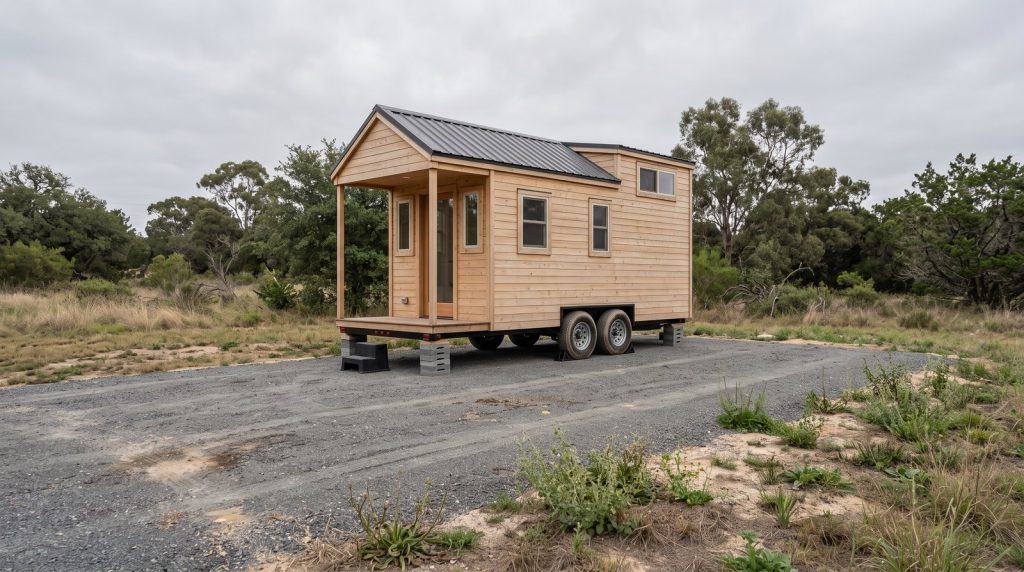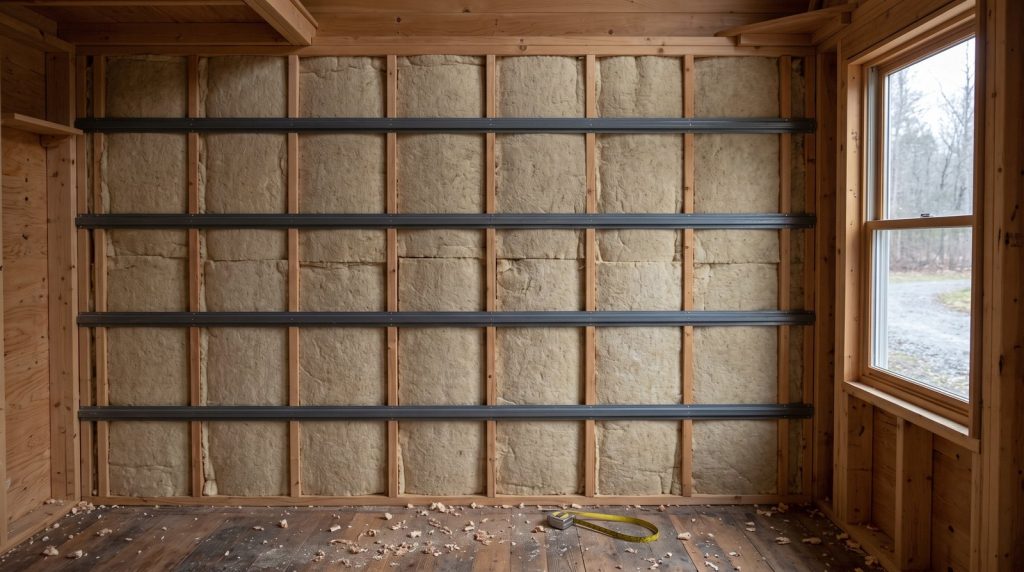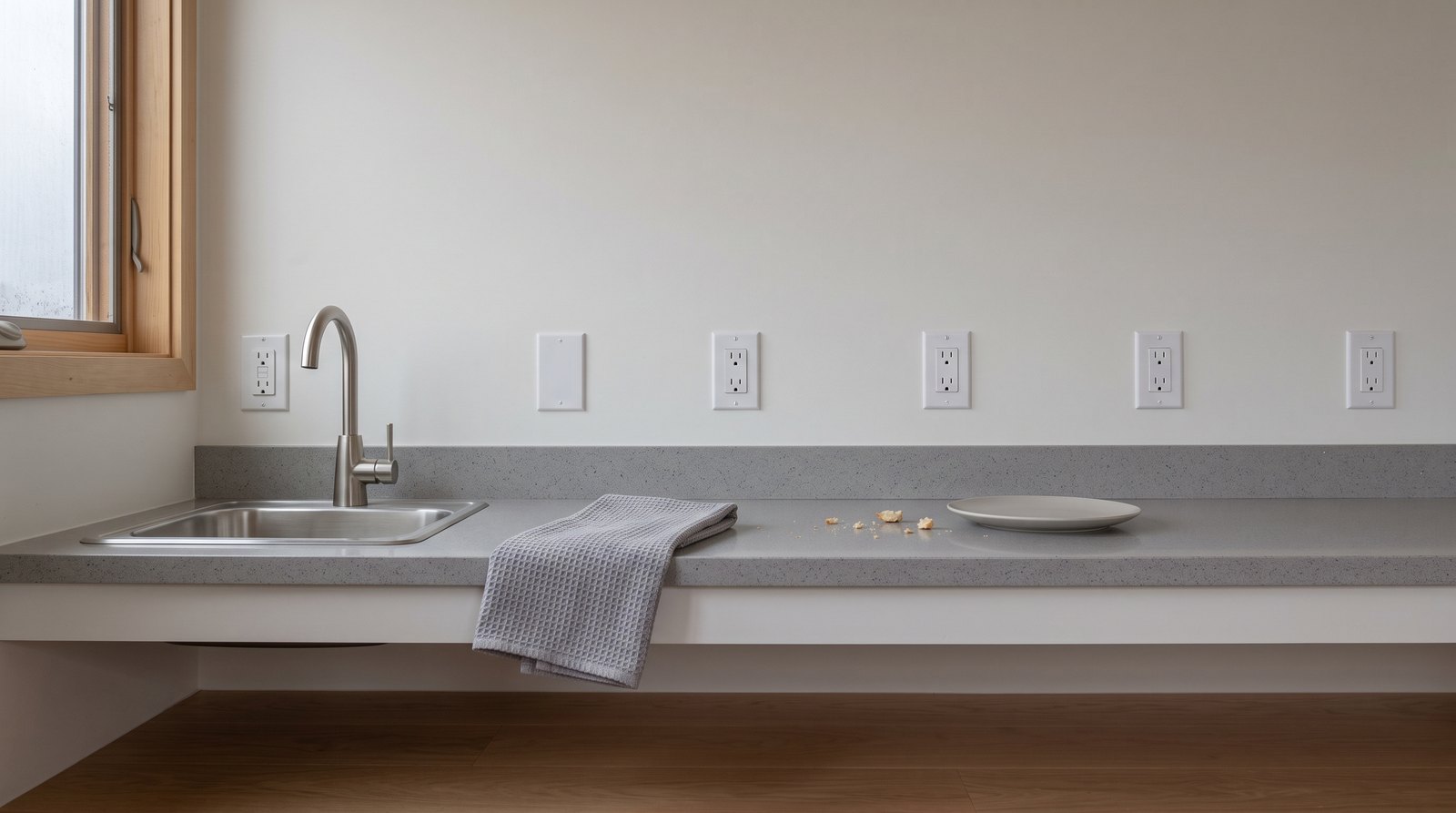
Tiny house outlets should be planned around real appliance loads, daily charging habits, wet areas, and the electrical code adopted where the home will be installed. GFCI protection belongs in kitchens, bathrooms, laundry areas, exterior locations, and other damp or utility spaces required by the local inspector. A licensed electrician should approve the final layout.
Table of Contents
How Many Outlets Does a Tiny House Need?
Most tiny homes need more receptacles than their wall area suggests because one small room often serves several purposes. Start with the spacing and circuit rules in the locally adopted electrical code, then add outlets for the actual furniture, appliances, work areas, and charging locations. The goal is convenient access without permanent extension cords.
That baseline is only the beginning in a tiny house. Sketch the finished floor plan and mark the exact locations of the refrigerator, cooktop, microwave, range hood, water heater, washer, television, desk, bed, sofa, ventilation equipment, and exterior gear. Then mark where phones, laptops, vacuums, and tools will actually be used.
Quick answer by situation:
- Foundation tiny house: Follow the locally adopted residential electrical code and permit plan.
- Tiny house on wheels used as an RV: Confirm which RV standard, registration rules, and campground connection requirements apply.
- THOW treated as a dwelling: Expect the building department to review it more like a small house than a travel trailer.
- Existing home with too few outlets: Add permanent receptacles instead of building daily life around power strips and extension cords.
Where GFCI Protection Belongs
GFCI protection is intended for locations where moisture, grounded surfaces, or equipment increase shock risk. In a modern tiny dwelling, that commonly includes bathrooms, kitchens, laundry areas, outdoor receptacles, crawl spaces, basements, garages, and receptacles near sinks. Exact coverage depends on the code edition and local amendments in force.
A ground-fault circuit interrupter compares current leaving and returning on a circuit. If it detects a small imbalance that could be flowing through a person, it opens the circuit quickly. It does not replace grounding, correct overloaded wiring, or make a damaged appliance safe. It addresses a specific shock hazard.
The 2023 National Electrical Code expanded dwelling kitchen protection to all receptacles in the kitchen, not only countertop receptacles near a sink. Many jurisdictions still enforce an earlier edition, while some have amendments or delayed adoption. That is why a national checklist cannot replace the authority having jurisdiction, usually the city, county, or state electrical office.
How GFCI and AFCI Protection Work Together
GFCI and AFCI protection solve different problems, so a tiny house may need both on the same branch circuit. GFCI protection responds to current leaking toward ground, while AFCI protection responds to dangerous arcing patterns in wiring and cords. A dual-function breaker is often the cleanest solution when the panel and local code allow it.
AFCI rules commonly cover living rooms, bedrooms, kitchens, dining areas, laundry areas, hallways, and similar dwelling spaces. In a tiny home, almost every general-purpose circuit may pass through one or more of those areas. A single open room does not erase the protection requirement just because the floor plan lacks conventional walls.
Nuisance tripping should be diagnosed, not bypassed. A worn appliance, pinched cable, moisture intrusion, loose connection, shared neutral problem, or incorrect line and load connection can all create symptoms. Repeatedly resetting a device without finding the cause can hide a real fault. Record what was running when the trip occurred and call an electrician if it repeats.
Kitchen and Bathroom Outlet Placement
Kitchen and bathroom outlets should be placed for safe use before cabinets, tile, and plumbing lock the layout in place. Keep cords away from sinks, burners, and walking paths, provide the required countertop access, and reserve suitable circuits for high-demand appliances. A tiny counter still needs a deliberate electrical plan, not one outlet feeding a power strip.
Start with the kitchen elevation drawings, not just the floor plan. Mark counter sections, sink edges, cooktop clearances, refrigerator space, range hood, microwave shelf, and any appliance garage. Modern countertop placement rules can differ substantially by adopted code edition, especially for islands and peninsulas, so the permit set should show each required outlet location.
Small appliances such as kettles, toasters, coffee makers, and induction burners can draw significant current. Kitchen small-appliance circuits should not be treated as spare capacity for every fixed appliance in the home. The refrigerator, microwave, dishwasher, disposal, electric cooking equipment, and other loads may require individual or specifically sized circuits based on their ratings and the adopted code.
Outdoor, Utility, and Appliance Locations
Outdoor and utility receptacles need protection matched to rain, condensation, dust, and physical damage. Use listed weather-resistant devices and appropriate covers, maintain GFCI protection, and keep connections above wet ground. Dedicated appliance outlets must also match the equipment instructions, circuit rating, access needs, and local requirements for disconnects or service clearances.
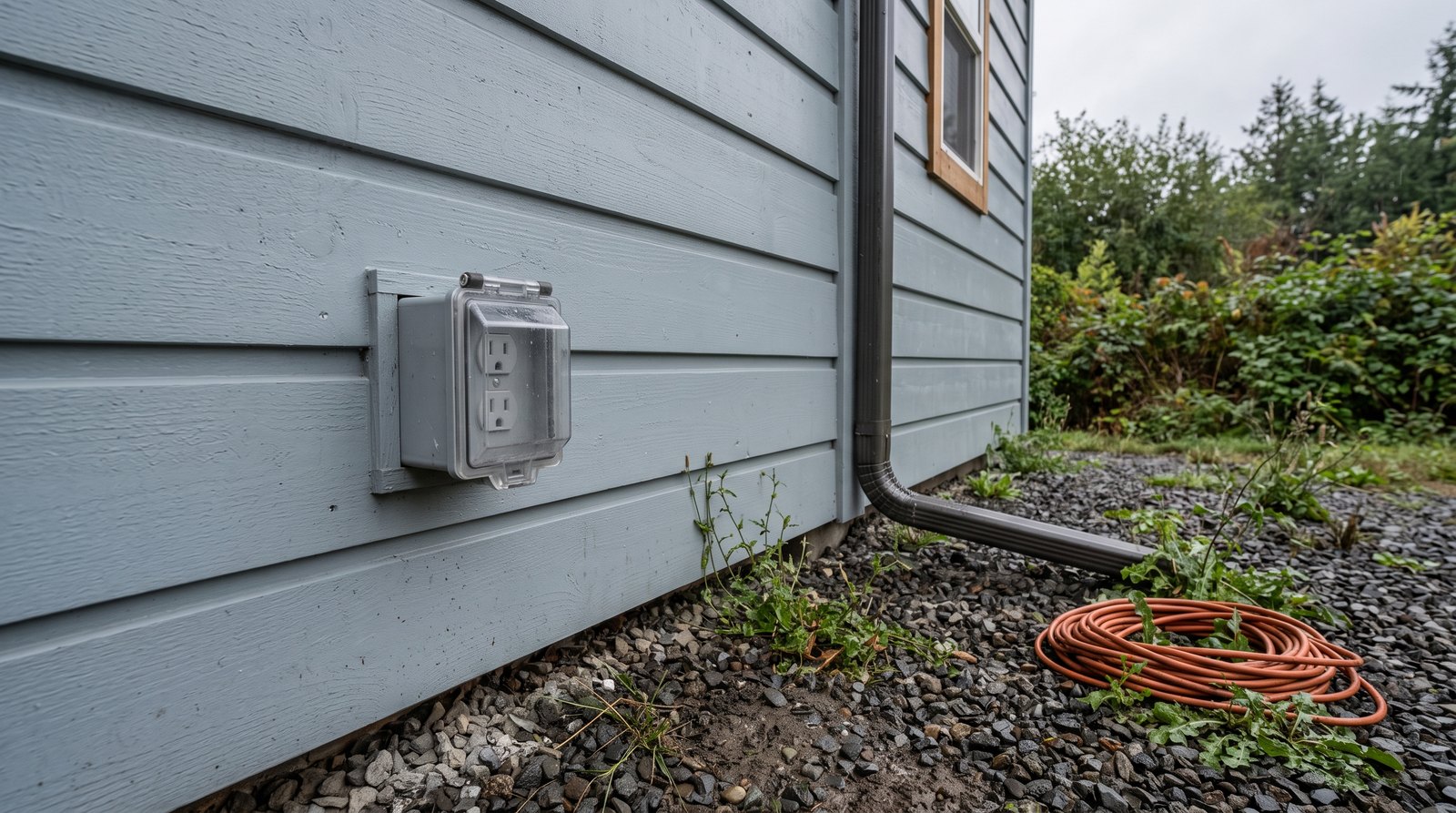
An exterior receptacle with a plug left connected during rain generally needs an in-use cover that protects the connection while the cord is present. Seal the box to the wall correctly, preserve the siding drainage plane, and avoid trapping water behind trim. A cover cannot compensate for a loose box, damaged cable, or poor flashing.
For a moveable tiny house, shore-power equipment, the distribution panel, inverter, generator inlet, and any transfer equipment must operate as one coordinated system. Neutral and ground bonding rules vary by source and equipment configuration. This is not a safe place for improvised adapters or a male-to-male cord. If you are deciding between dwelling and RV systems, review tiny house versus RV full-time living before finalizing the design.
THOW Vibration, Box Depth, and Road Travel
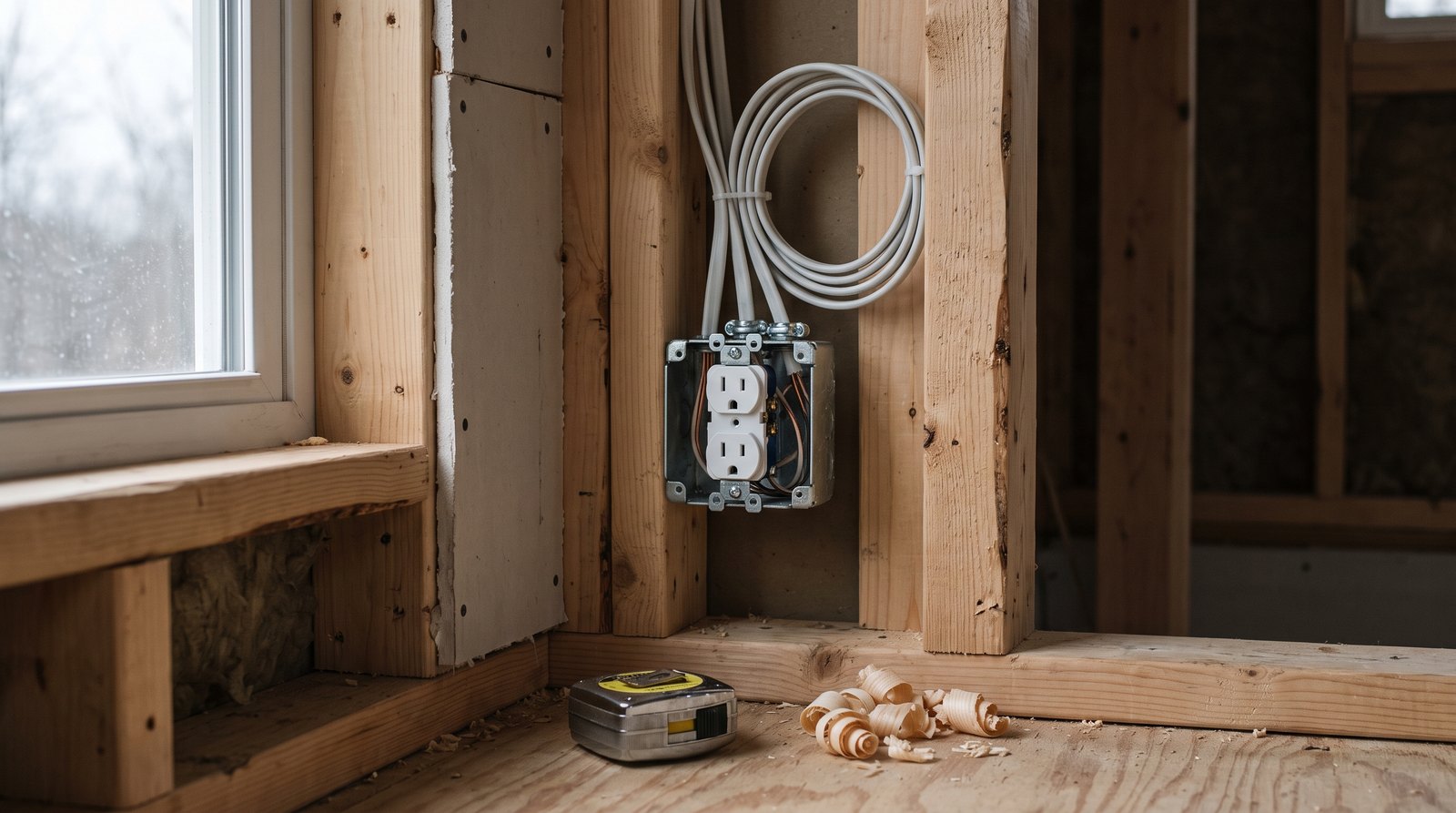
A tiny house on wheels adds vibration, flexing, and repeated setup to ordinary electrical concerns. Use listed boxes and fittings, secure cables against movement, protect conductors at metal edges, and keep enough box volume for the devices and splices. Inspect the system after hard travel, especially where cords, inlets, and cabinets can shift.
GFCI and USB receptacles are often deeper than basic duplex receptacles. A shallow box packed with conductors, grounds, connectors, and a bulky device can be difficult to assemble without stress. Plan box depth during framing and account for finished wall thickness. Do not force a device into a box by crushing wires behind it.
After a move, look for cracked cover plates, loose devices, warm plugs, scorch marks, damaged inlet pins, tripped protection, and cords pinched by furniture. Stop using anything that buzzes, smells hot, sparks, or will not hold a plug securely. Good electrical maintenance supports the broader durability practices in how long tiny houses last.
Tamper-Resistant and USB Receptacles
Tamper-resistant receptacles are the normal choice for dwelling locations covered by current codes, and they are worthwhile even in an adults-only tiny home. Built-in shutters help block foreign objects while accepting a proper plug. USB receptacles can reduce adapter clutter, but they should be listed, accessible, replaceable, and located where charging cables will not create hazards.
Tamper-resistant does not mean difficult forever. A plug usually must enter straight so both shutters open together. If a known-good plug requires extreme force, the receptacle may be damaged or poor quality. Do not defeat the shutters with tools. Replace a device that is cracked, loose, discolored, or unable to grip plugs.
Built-in USB ports are convenient beside a bed, desk, or entry shelf, but charging standards change faster than house wiring. Choose a reputable listed device with enough output for current equipment, and avoid filling every location with electronics that may become obsolete. A conventional receptacle plus a replaceable charger can be simpler in hard-to-service walls.
Extension Cords and Power Strips
Extension cords should be temporary tools, not substitutes for missing branch-circuit wiring. Do not run them under rugs, through doors, inside walls, or where wheels and furniture can crush them. Match the cord to the load and environment, fully inspect it, and add a permanent outlet when a cord becomes part of everyday life.
A power strip increases the number of plug openings, not the capacity of the circuit. A kettle, space heater, toaster, induction burner, and hair dryer can each consume much of a 15-amp circuit by themselves. Plugging several high-wattage appliances into one strip can overload the strip or trip the breaker even when every receptacle appears to work.
Inspection and Retrofit Priorities
For an existing tiny house, correct shock and fire hazards before adding convenience features. Start with the service or shore-power connection, panel, grounding and bonding, GFCI and AFCI protection, damaged receptacles, undersized cords, and appliance circuits. Then improve outlet placement, add weather protection, and consider USB or smart devices only after the fundamentals pass inspection.
Test GFCI devices with their TEST and RESET controls according to the manufacturer’s instructions, commonly every month. Confirm that downstream receptacles lose power when expected. If a device will not trip, will not reset, or resets without restoring correct power, stop relying on it and have the circuit evaluated.
Document the panel schedule, circuit ratings, protective devices, concealed junctions, and major appliance loads. Keep photos taken before walls close. This record makes later repairs safer and can help with coverage questions. For related planning, see the guide to tiny house insurance costs in 2026.
Tiny House Outlet and GFCI Costs in 2026
In 2026, replacing an existing receptacle is commonly an $80 to $200 service, while adding a new outlet often runs about $150 to $350. A new GFCI outlet commonly falls near $130 to $300. Access, panel capacity, wiring condition, permits, travel, and minimum service charges can move a tiny-house project well outside those ranges.
The device itself is usually a small share of the bill. Labor rises when an electrician must trace an unknown circuit, enlarge a shallow box, fish cable through finished walls, add a breaker, correct grounding, repair heat damage, or coordinate an inverter and shore-power system. Outdoor boxes, covers, trenching, and weather sealing also add time.
Do not choose a design solely because it uses the fewest devices. One well-planned circuit and outlet layout is usually cheaper than repairing scorched wiring, opening finished walls, or replacing a panel later. Get the authority having jurisdiction and a licensed electrician involved before construction, not after cabinets cover the routes.
Frequently Asked Questions
Tiny house outlet questions usually come down to classification, adopted code, water exposure, appliance loads, and access for testing. These short answers cover the most common decisions, but the local inspector and a licensed electrician should confirm the final design for a foundation home, THOW, park model, or RV installation.
Do all tiny house kitchen outlets need GFCI protection?
Under the 2023 National Electrical Code, all dwelling-unit kitchen receptacles are covered, but your jurisdiction may use an earlier edition or local amendments. A tiny house classified as an RV may follow a different standard. Confirm the adopted rules and protect every location the inspector identifies, including fixed-appliance outlets where required.
Can one GFCI receptacle protect several outlets?
Yes. A correctly wired GFCI receptacle can protect compatible downstream receptacles connected to its load terminals. Those outlets may need required labels, and the GFCI must remain accessible for testing and reset. Incorrect line and load connections can defeat protection or cause confusing operation, so have the arrangement tested.
Do tiny house outlets also need AFCI protection?
Often, yes. GFCI protects against ground-fault shock hazards, while AFCI protects against dangerous arcing. Dwelling rules commonly require AFCI protection in many living areas, including kitchens and bedrooms. A dual-function breaker can provide both where listed and compatible, but classification, adopted code, and panel design control the answer.
Are USB outlets safe in a tiny house?
Listed USB receptacles are generally safe when properly installed on a suitable circuit and kept within their ratings. Choose accessible locations with enough box depth and ventilation, and expect charging technology to age faster than the wiring. Avoid unknown devices, damaged ports, loose plugs, and installations exposed to water or road impact.
How often should GFCI outlets be tested?
Test GFCI receptacles monthly unless the manufacturer gives a different interval. Press TEST, verify power stops at the protected outlet and expected downstream outlets, then press RESET. If the device will not trip, reset, or restore correct power, stop using the affected receptacles and arrange professional inspection or replacement.