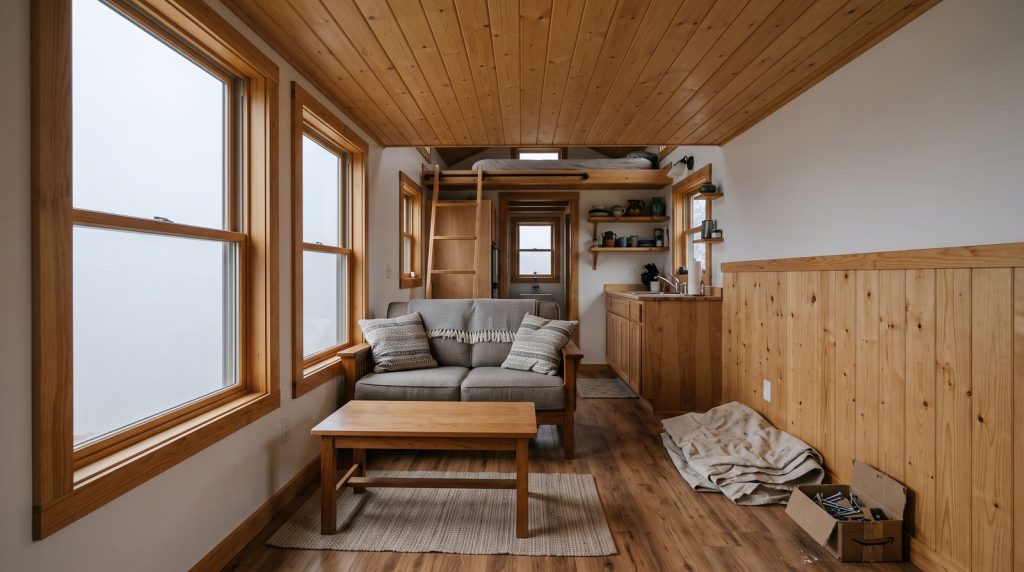
A permanent foundation is usually best if you own suitable land, want conventional residential approval, and expect to stay put. A tiny house on wheels is better when genuine mobility or a lower commitment to one site matters most. The right choice depends less on appearance than on zoning, financing, insurance, utilities, and resale.
Table of Contents
Tiny House Foundation vs Wheels: The Basic Difference
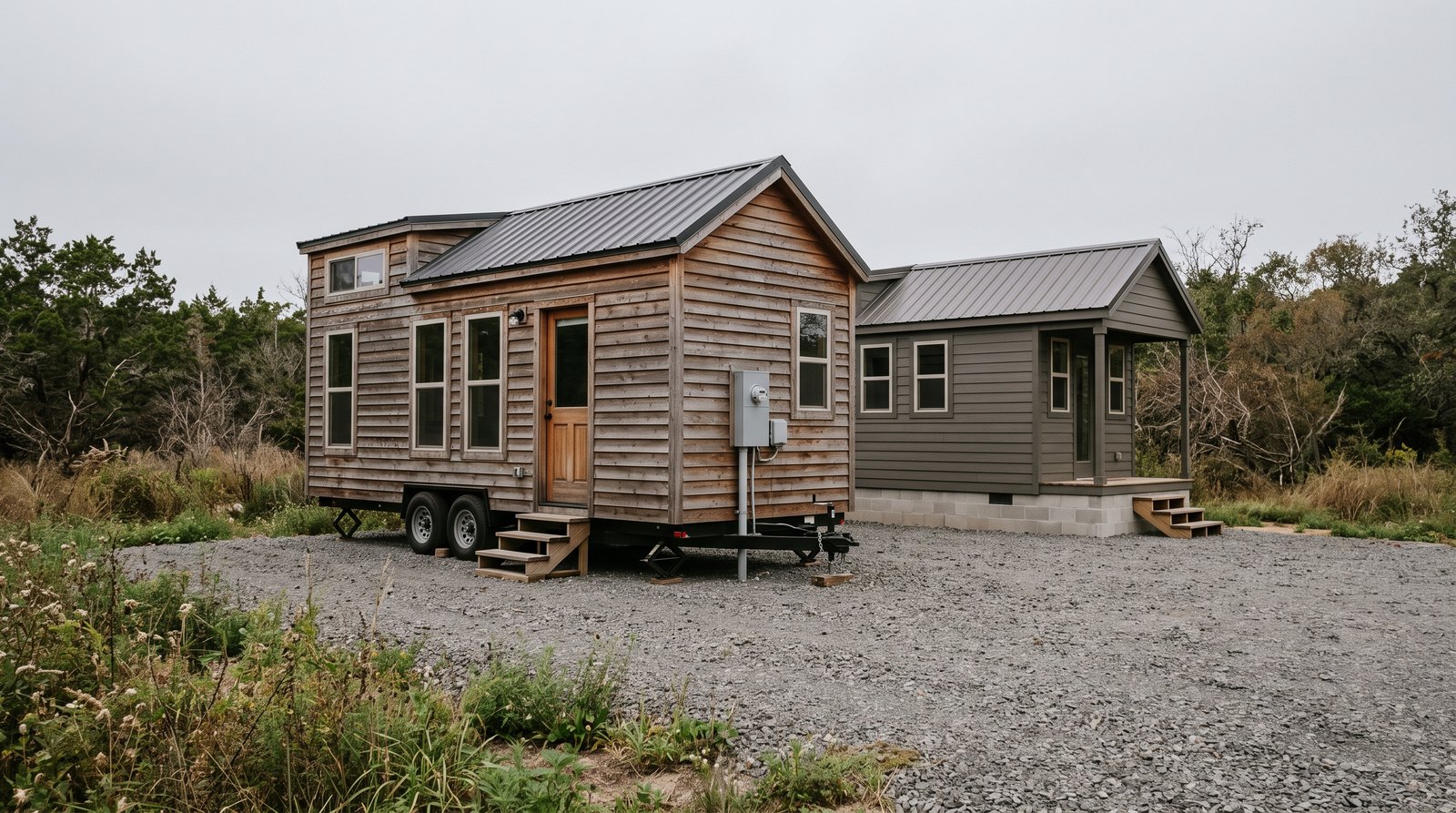
A foundation tiny house is treated more like site-built real estate, while a tiny house on wheels, or THOW, begins as a movable structure built on a trailer. That distinction affects the approval path, title, loan options, insurance, taxes, utility design, and who may legally occupy the home on a particular property.
A foundation can mean a slab, crawlspace, basement, frost-protected system, piers, or another engineered system accepted by the local building department. The house is attached to land and normally permitted as a dwelling, accessory dwelling unit, or another locally recognized residential use. The exact foundation must suit the soil, frost depth, wind exposure, drainage, and local code.
A THOW uses a roadworthy trailer as its structural base. Some are designed and certified as recreational vehicles or park model recreational vehicles. Others are custom dwellings that do not fit neatly into an RV, manufactured housing, or conventional residential category. A trailer and wheels do not automatically create a legal full-time residence.
Quick answer by situation:
- You own buildable land and plan to stay: choose a permanent foundation in most cases.
- You expect to move every few years: a THOW may justify its towing and siting compromises.
- You need a standard mortgage: a permitted foundation home offers the clearer path, though lender eligibility still varies.
- You will rent a pad: confirm the park or landowner accepts your exact unit before buying it.
- You want the lowest starting price: compare the complete installed cost, not just the shell or trailer price.
Building Codes and Legal Placement
A foundation home generally follows the locally adopted residential code, zoning ordinance, and permit process. A THOW may instead fall under RV rules, a local tiny house ordinance, or no accepted dwelling category at all. Before choosing either, ask the city or county about both construction approval and legal full-time occupancy at the proposed address.
The 2024 International Residential Code includes Appendix BB for tiny houses. Earlier editions used Appendix Q. These provisions address compact features such as lofts, ladders, stairs, and reduced ceiling heights, but an appendix applies only when the jurisdiction adopts it. Local amendments can also change the details. Never assume that a plan labeled “Appendix Q compliant” is automatically approved where you live.
For a foundation build, the building official may review the site plan, setbacks, foundation engineering, structural drawings, energy compliance, electrical work, plumbing, septic or sewer connection, and final occupancy inspection. Zoning remains separate. A code-compliant house can still be prohibited on a parcel because of minimum size, density, use, or accessory dwelling rules.
For a THOW, ask which standard the jurisdiction recognizes. RV Industry Association standards cover recreational vehicles and park model RVs, but certification does not by itself authorize permanent residential use on private land. Some communities allow a THOW in a designated park, as a temporary dwelling, or under a specific tiny house ordinance. Others treat it as an RV that cannot be occupied continuously outside an approved park.
Get the answer in writing before ordering a trailer or house. Provide dimensions, height, weight rating, certification, utility plan, intended occupancy, and a parcel address. A general phone answer about “tiny homes” is too vague when the legal treatment of a foundation house and a wheeled unit can be completely different.
Financing, Insurance, Taxes, and Appraisal
A permitted foundation home usually has better access to real estate lending, but small size and unusual construction can still make appraisal difficult. A THOW is more often financed with cash, a personal loan, an RV loan when eligible, or builder financing. Insurance and taxes follow the same divide between real property and movable personal property.
Conventional mortgage lenders want an eligible dwelling attached to land, a clear title, an acceptable appraisal, and marketable collateral. A one-of-a-kind 250-square-foot house may have few comparable sales, even if it is beautifully built and fully permitted. Owning the land helps, but it does not guarantee approval. Talk to lenders before construction and review our guide to tiny house mortgage and financing options.
Do not confuse a tiny house with a HUD-code manufactured home. Manufactured housing has its own federal construction standard, labels, titling rules, foundation requirements, and mortgage programs. Fannie Mae guidance for eligible manufactured homes focuses on permanent attachment, real-property treatment, and documentation. A custom THOW without the required certification does not become mortgage eligible merely because you remove its wheels.
A THOW loan may carry a shorter term or higher rate than a mortgage because the lender is financing a movable asset rather than land and a dwelling together. RV financing may require qualifying certification and intended use. Personal loans do not place a mortgage lien on land, but the payment can be much higher because the term is usually shorter.
Foundation homes commonly need a homeowners policy or a specialized dwelling policy. THOW coverage may combine physical damage, liability, contents, and transit protection. A normal auto policy for the tow vehicle does not necessarily cover damage to the house itself. Compare policy wording carefully with our explanation of tiny house insurance.
A foundation dwelling and its land are normally assessed as real property under local rules. A THOW may be titled and taxed as personal property, registered like an RV, or assessed differently if permanently placed. These rules vary by state and county. Ask the assessor, motor vehicle agency, and building department how your exact project will be classified.
Cost and Utility Hookups
A THOW can avoid some foundation work, but it is not automatically the cheaper finished home. Its custom trailer, axles, brakes, weight-conscious materials, towing equipment, and pad can absorb much of the apparent saving. A foundation project adds excavation and concrete, yet it may simplify utilities, expand material choices, and produce a more valuable real-estate asset.
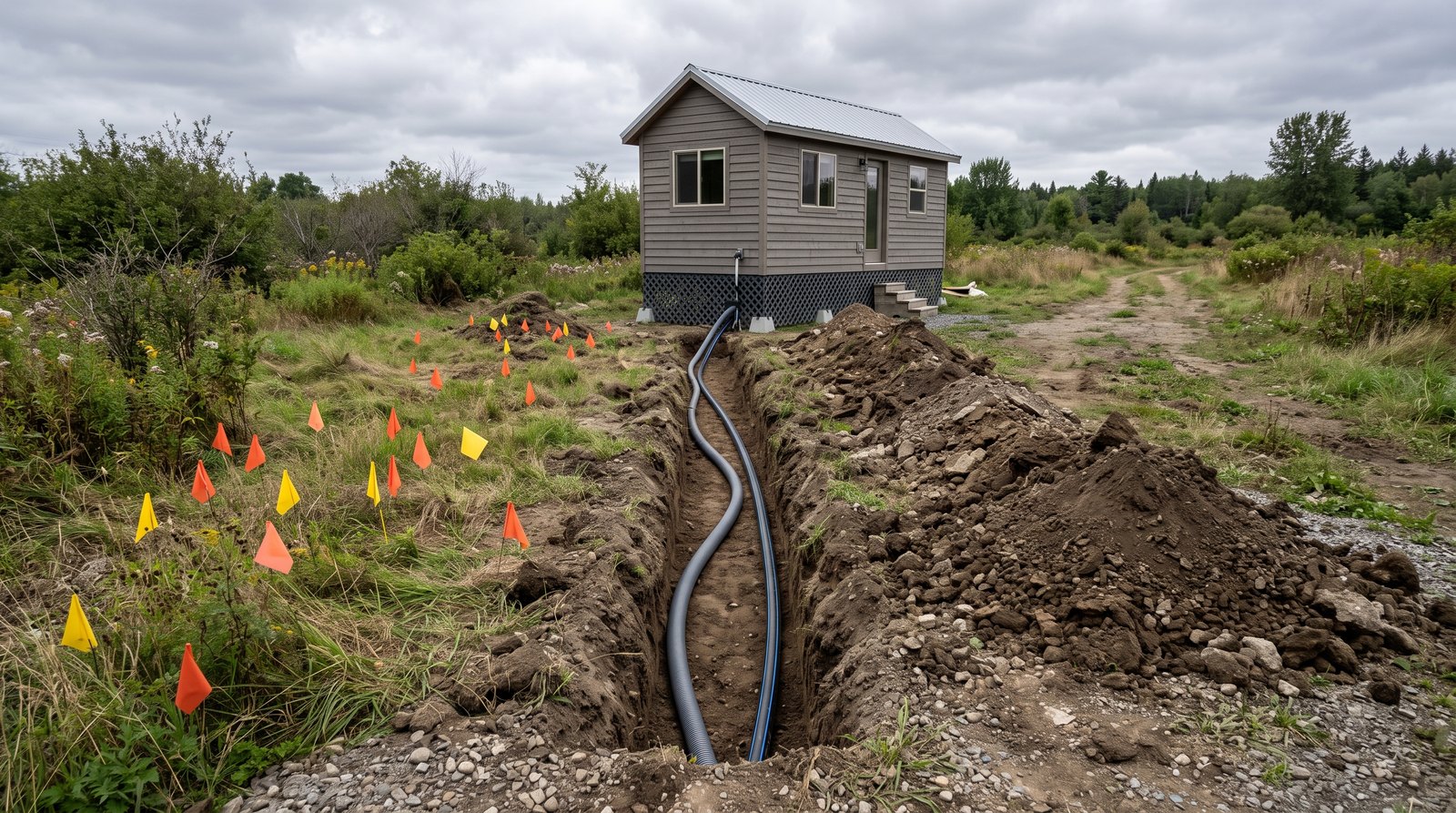
Compare both options on an all-in basis. For a foundation home, include surveys, design, permits, engineering, clearing, excavation, drainage, concrete or piers, inspections, driveway access, utility trenches, septic or sewer work, and connection fees. Difficult soil, a steep site, deep frost, or a long utility run can change the budget substantially.
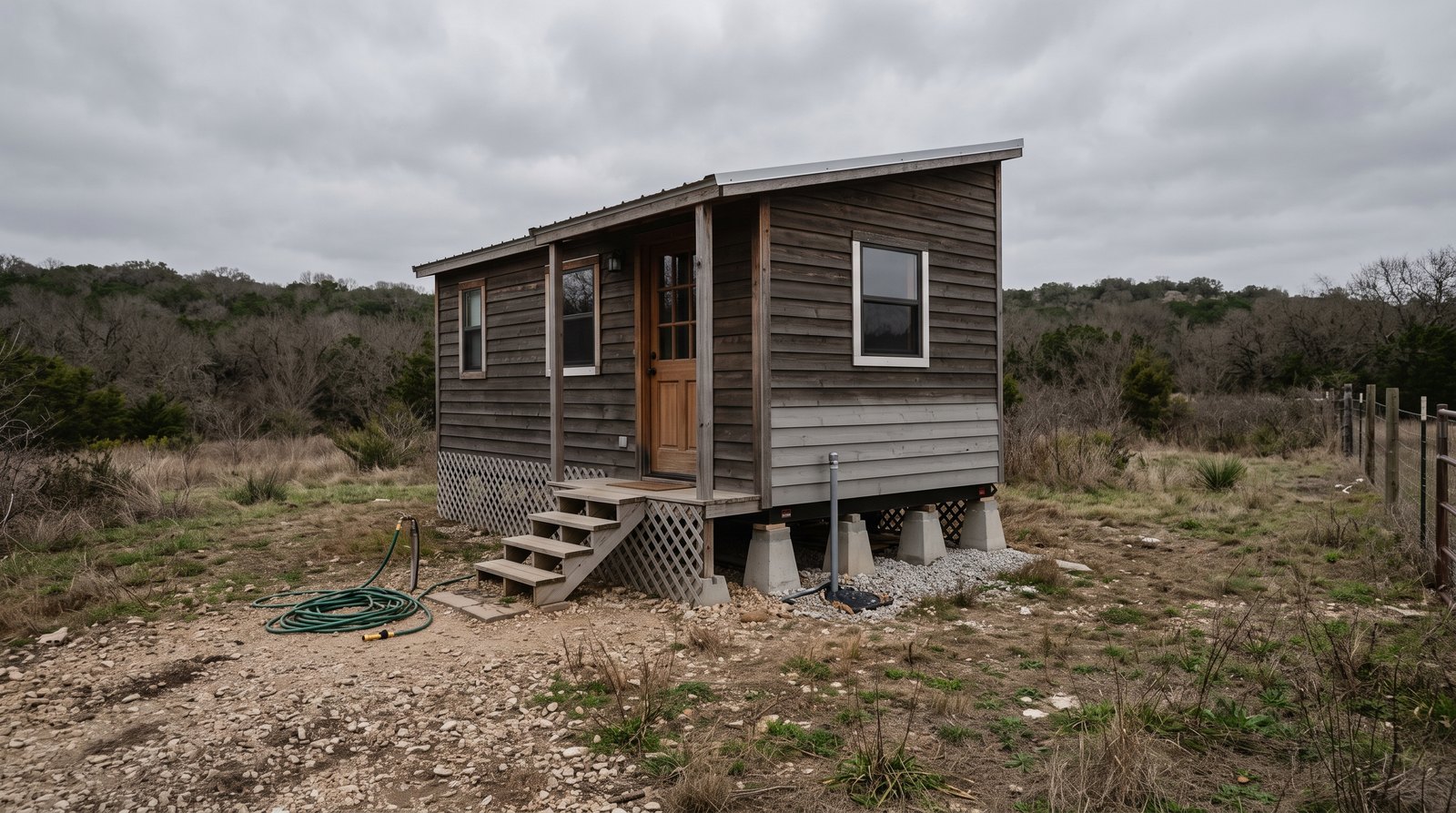
For a THOW, include the purpose-built trailer, leveling or anchoring system, gravel or concrete pad, skirting, steps or deck, electrical pedestal, water hose or buried line, sewer connection or approved waste system, propane setup, and winter protection. If the house will move, add a suitable tow vehicle or professional transport, permits, escorts when required, tire service, bearings, brakes, and setup at the destination.
A foundation home normally uses permanent buried water, sewer, electrical, and possibly gas connections. Those systems are familiar to inspectors and service providers. A THOW can use RV-style hookups, tanks, or removable lines, but freezing weather, hose protection, wastewater disposal, and connection standards require careful planning. An informal extension cord and garden hose are not a durable residential utility system.
Mobility has a real price. A wide, tall, or heavy THOW may require route planning and a commercial mover. Porch roofs, mini split condensers, utility attachments, and loose interior contents must be secured. Review current considerations in our guide to the cost to move a tiny house.
Resale, Maintenance, and Long-Term Value
A permitted foundation home usually has the stronger long-term resale case because buyers can purchase land and dwelling together, inspect public permits, and pursue real estate financing. A THOW offers a wider geographic buyer pool in theory, but the buyer must solve towing, legal placement, financing, and insurance before the sale can close.
Real estate value depends heavily on location. A modest tiny house on a desirable legal parcel may hold value better than an elaborate THOW with nowhere approved to park. The foundation house can also benefit from permanent improvements such as a well, septic system, driveway, landscaping, and grid connections. Those improvements cost money, but they remain with the property.
A THOW depreciates more like a specialty vehicle or movable structure in many markets, although craftsmanship, condition, certification, and regional demand matter. Buyers may worry about hidden water damage, trailer corrosion, overloaded axles, old tires, poor weight distribution, and unpermitted electrical work. Keep plans, receipts, inspection reports, certification records, weight tickets, and maintenance logs.
Foundation maintenance centers on drainage, settlement, pests, moisture, and local climate. THOW maintenance adds tires, brakes, wheel bearings, coupler or gooseneck hardware, lights, frame corrosion, and movement-related seal failures. A house that never travels still needs its running gear inspected if it remains part of the structure or may be moved later.
Resale flexibility cuts both ways. A foundation home cannot leave a weak market, but it can be sold through familiar real estate channels. A THOW can be transported to another market, but every additional buyer must have a legal destination and enough money for the house, transport, and site work.
How to Make the Final Decision
Choose the legal site and ownership plan before choosing the house. If you expect to occupy one parcel for five years or more, want easier utility service, and need real-estate financing, a foundation usually wins. Choose wheels only when you have confirmed destinations and will genuinely use the mobility enough to justify its compromises.
Start with two written feasibility checks. Ask the local planning and building departments whether each option is allowed on the parcel and what permits or standards apply. Then ask at least two lenders and insurers whether they will accept the planned construction, title, certification, foundation, occupancy, and location. Generic prequalification is not enough.
Build two complete budgets with the same level of finish. Include land or pad rent, site work, utilities, permits, taxes or registration, financing cost, insurance, maintenance, and one future move for the THOW. Also compare the exit plan. Estimate what a buyer would need to finance and legally place each home.
Be honest about mobility. Moving once from a builder to a permanent pad is transportation, not a mobile lifestyle. If the house will remain parked indefinitely, a foundation may give you more interior width, fewer weight limits, easier inspections, and a clearer resale story. If seasonal or job-related moves are truly likely, wheels can preserve options that concrete cannot.
FAQ
Is a tiny house on wheels considered an RV?
Sometimes, but not automatically. Classification depends on how it was built, which certification it carries, state rules, and local enforcement. An RV or park model standard may help with registration and park acceptance, but it does not guarantee that a city or county will allow full-time residential occupancy on private land.
Can I put a tiny house on wheels on a permanent foundation?
Possibly, but removing wheels or setting a trailer on piers does not automatically convert it into a code-approved dwelling or real estate. The building department may require plans, structural review, an approved foundation, utility permits, inspections, and proof that the structure meets the adopted residential code. Ask before making alterations.
Which option is easier to finance?
A permitted foundation home on owned land usually offers the clearest route to a mortgage, especially when it can be appraised against comparable homes. A THOW may need RV financing, a personal loan, builder financing, or cash. Certification, title, credit, down payment, land ownership, and intended use all affect eligibility.
Is a tiny house on wheels cheaper than one on a foundation?
It can cost less initially, but compare complete installed costs. A THOW needs a custom trailer, road systems, a pad, hookups, and possible transport. A foundation home needs excavation, concrete, permits, and permanent utilities. Site conditions, finish level, labor, financing, and future moving costs can reverse the apparent difference.
Which type has better resale value?
A legal foundation home often has the better resale path because land and dwelling sell together through familiar real estate channels. A well-built THOW can still attract buyers, but financing, towing, certification, and legal placement shrink the pool. Location, records, condition, and the availability of comparable sales remain important for both.