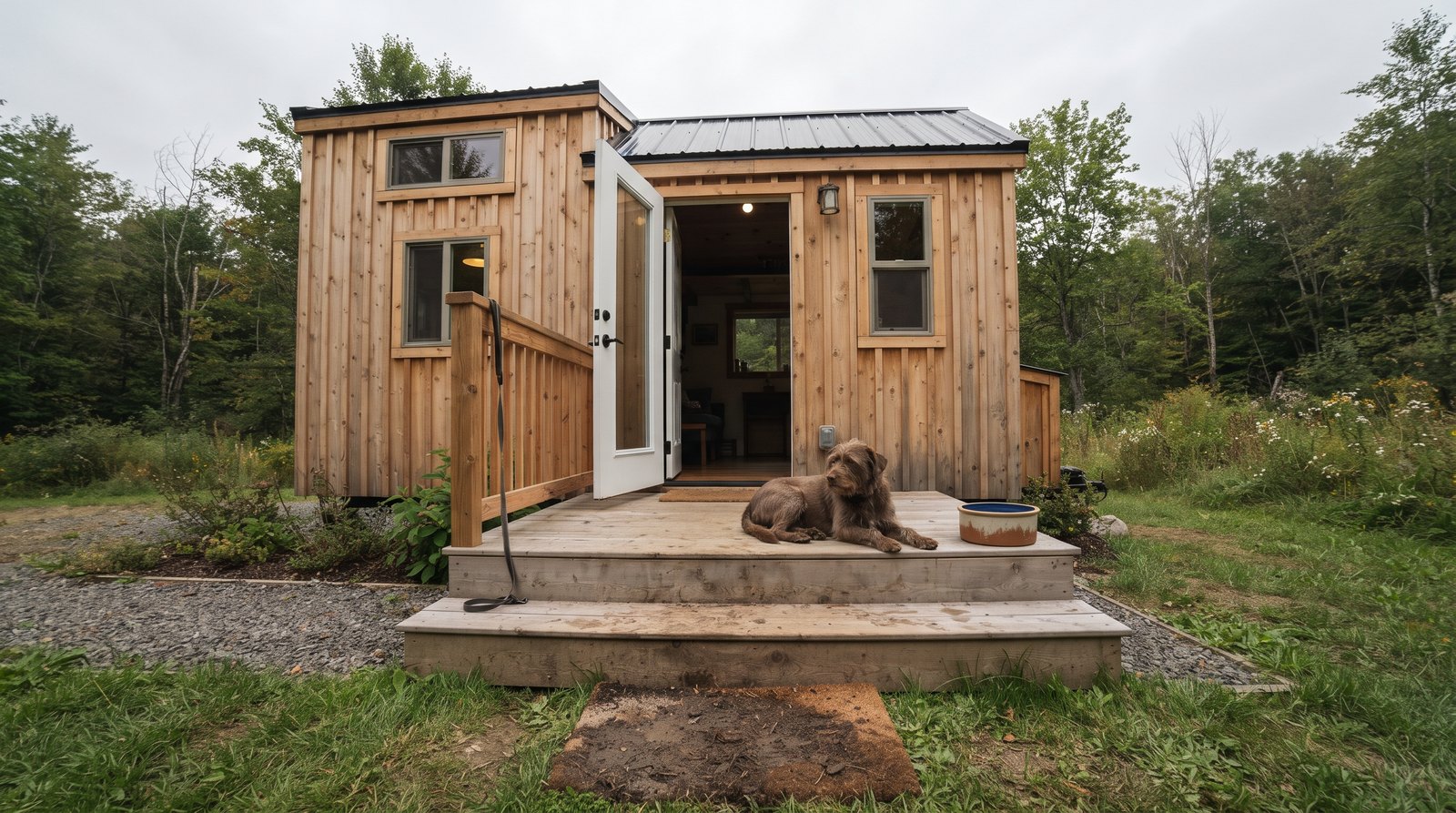
Tiny house living with dogs and cats can work when the layout provides separate resting, feeding, and bathroom spaces, plus reliable temperature control and daily activity. Choose the home around your animals’ actual routines. A small footprint becomes a problem when pets cannot retreat, move comfortably, or receive care while you are away.
Table of Contents
Does your pet fit the life, not just the floor plan?
Start with your pet’s behavior, mobility, and daily needs rather than a promised square-foot allowance. Measure the space your animal uses to sleep, turn, eat, and pass you. Then check whether those activities still work with the bed open, the dining table in use, and another pet nearby.
A floor plan can look spacious while hiding an awkward routine. If the dog bed occupies the only route to the bathroom, somebody must move every time you get up. If the cat must pass the dog to reach the litter box, an ordinary household interaction can become a daily conflict.
Use painter’s tape to mark the proposed interior on a larger floor. Add the actual bowls, carrier, bed, litter boxes, and furniture footprints. Walk through a rainy morning, a grocery delivery, and bedtime. This is a planning exercise, not a veterinary space standard. Leave the main exit clear throughout.
Also count the supplies that rarely appear in listing photographs: food bags, litter, towels, grooming tools, medication, and cleaning equipment. Give each a storage location that you can reach without dismantling the living room. If a crate is part of your pet’s established routine, include its full footprint rather than assuming it can stay folded indefinitely.
For quick answers by situation, use these starting points:
- One settled adult dog: Prioritize a permanent floor-level bed and dependable outdoor breaks.
- One indoor cat: Reserve separate litter locations, a scratching surface, and an accessible resting perch.
- A dog and a cat: Create routes and resting spots where neither animal can block the other.
- Senior pets: Keep essential resources on the main floor and plan for declining mobility.
- Long workdays away: Arrange care and a temperature-failure response before choosing the house.
Build safe resting places and routes
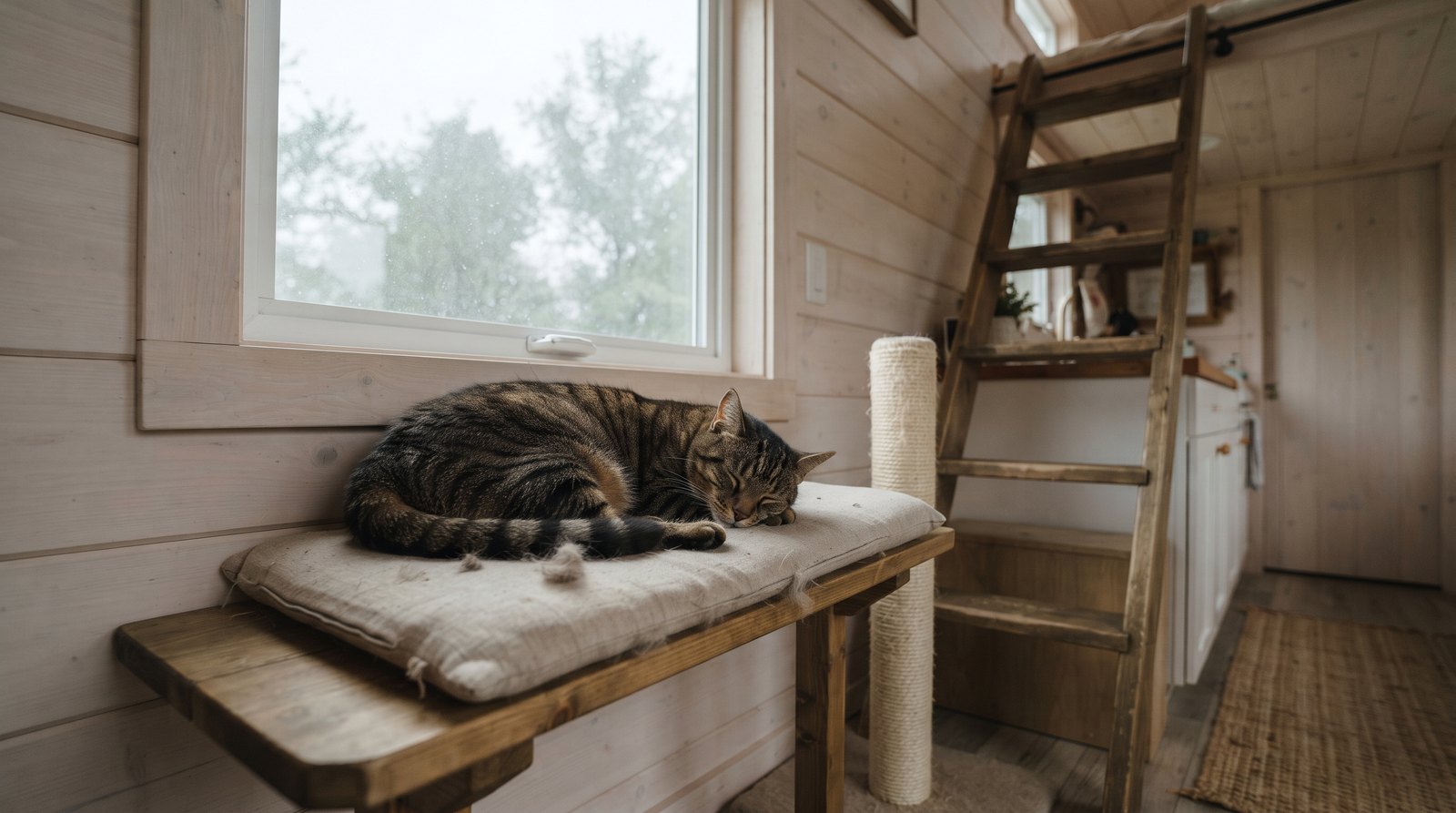
Give every animal a resting place that remains available throughout the day. Keep dogs off steep loft ladders and make cat access deliberate rather than accidental. A low bench or stable perch can provide a useful retreat without making an exposed loft edge part of the animal’s normal route.
Look at furniture in every position. A folding bed can trap a bowl underneath it, while a sliding door can close off the only water station. Avoid placing a pet bed where an opening refrigerator or bathroom door will repeatedly disturb its occupant. Keep carriers reachable instead of burying them behind seasonal storage.
For cats, choose stable climbing and scratching furniture suited to their ability. Anchor items according to their instructions, and avoid routes beside a hot cooktop. Do not assume a window screen will contain an animal leaning against it. Review windows, door gaps, and any planned enclosure before allowing unsupervised access.
A barrier that redirects a dog may not contain a cat. Test your arrangements while you are present. If an animal slips, hesitates, or needs lifting repeatedly, revise the route. A main-floor sleeping arrangement may serve the household better than a loft that only works while everyone is young and agile.
Find room for litter boxes and separate meals
Plan litter-box locations before cabinetry, because a hidden box is not automatically a usable box. Cats need reliable access, enough room to move, and separation from meals. Put feeding stations where pets can eat without crowding, and keep water available even when a door closes or furniture changes position.
Cornell’s litter-box guidance recommends one box per cat plus one extra, with boxes in different locations. It also recommends quiet, accessible placement away from feeding areas. For one cat, draw two realistic box locations into the plan. Adjacent boxes squeezed into one cabinet do not provide the same choice of locations.
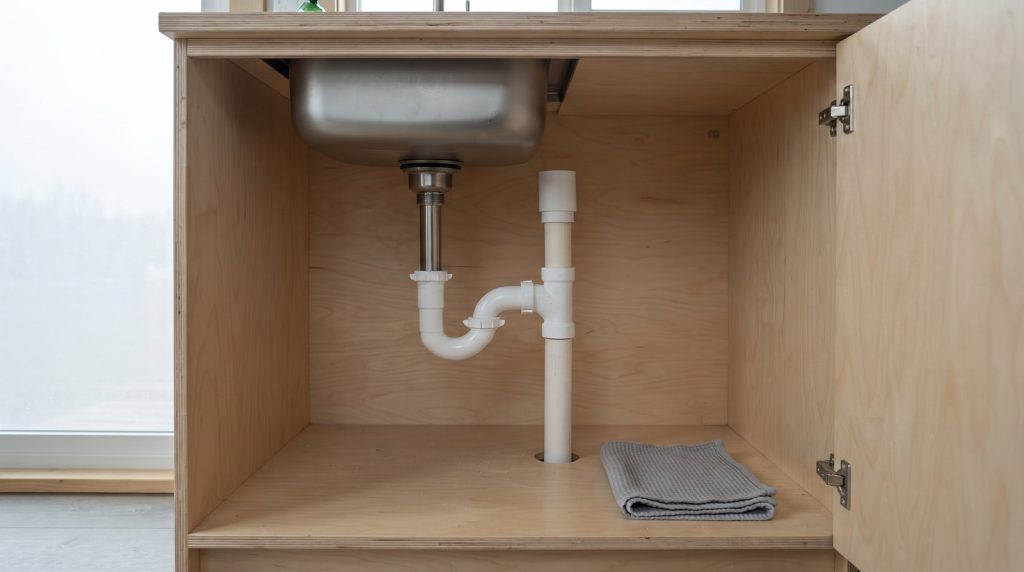
Check access with the bathroom occupied and the shower in use. A box that disappears behind a closed door is unavailable. Keep the approach clear of stored shoes and laundry. Before ordering a custom opening, measure the actual box and the space needed to remove it for washing.
Use low-entry arrangements when mobility requires them. Cornell also cautions that house soiling can have medical causes, so a new problem deserves veterinary attention rather than punishment. For meals, place the cat’s food beyond the dog’s reach using an arrangement both animals can navigate safely. Store food in closed containers that fit without blocking service access.
Control odor with cleaning and usable materials
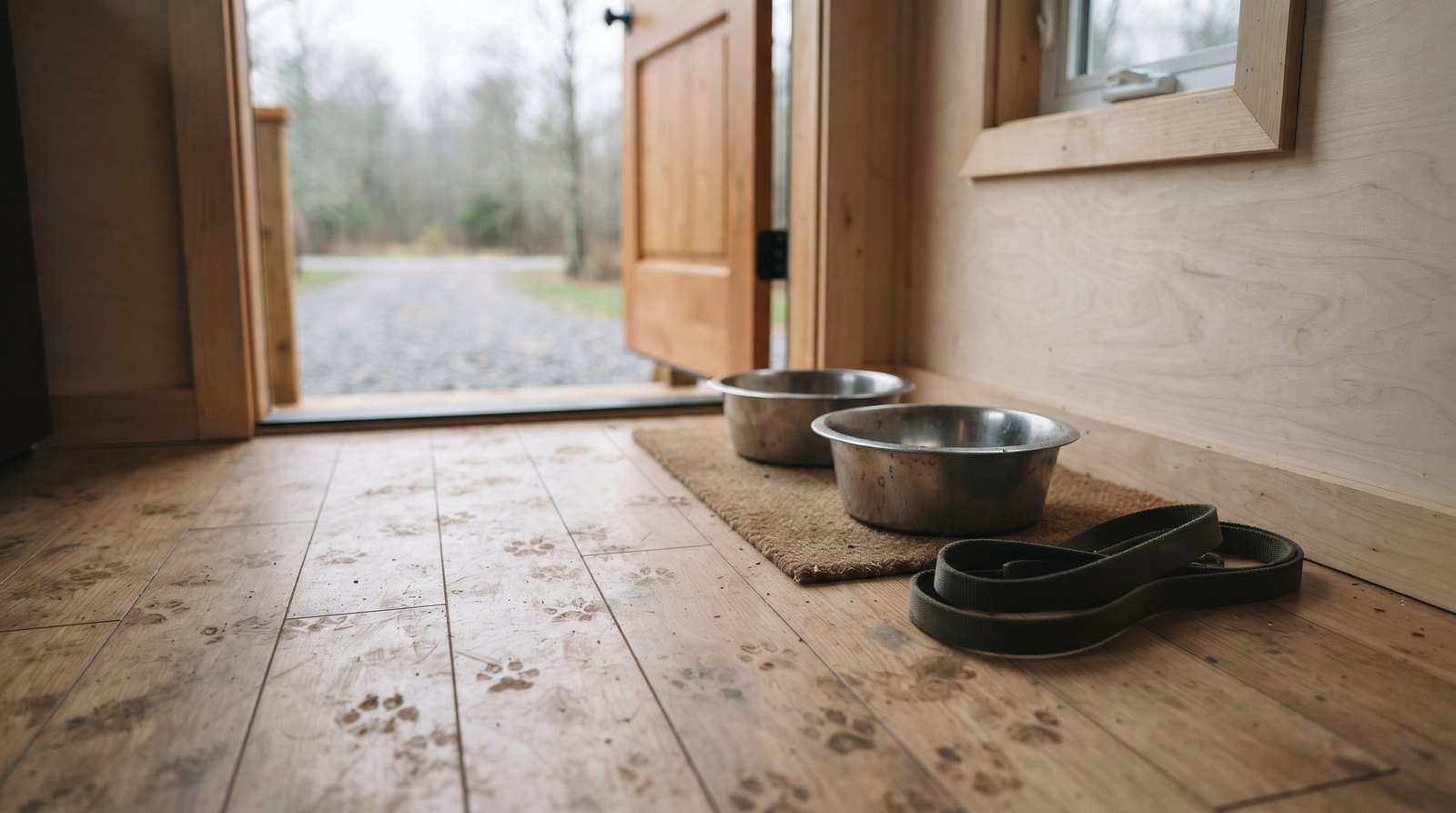
Odor control starts with removing waste and drying wet materials, supported by the home’s ventilation. Choose washable bedding, accessible floor edges, and a practical place for muddy gear. A tiny house has little spare space for a damp dog towel, an overflowing waste container, or litter tracked into the bed.
Set up a small arrival station near the entrance: a washable mat, towel hook, leash hook, and closed waste storage outside where permitted. Keep walking gear accessible so a quick bathroom trip does not require unpacking a cabinet. Choose a bowl location where spills are visible and can be wiped up immediately.
Scoop litter daily and remove bagged waste promptly. Wash bedding on a routine that matches actual use. A washable cover helps only if you can remove, dry, and replace it without leaving the animal’s only resting area unusable. Having a spare cover can be more valuable than buying another decorative cushion.
Inspect flooring for traction as well as easy cleaning. Secure washable runners where needed, and follow the flooring manufacturer’s cleaning instructions. Clean beneath movable furniture and around trim instead of repeatedly masking smells. Persistent dampness also affects the building, a broader issue covered in our guide to how long tiny houses last.
Plan for heat and power failures before leaving pets alone
Only leave pets when the home can maintain suitable conditions and someone can respond if that changes. Air conditioning, an alert device, and a nearby helper serve different purposes. Test the complete arrangement in your actual location, including what happens when power or internet service stops working.
The American Veterinary Medical Association’s warm-weather guidance emphasizes fresh water and shade and identifies increased heat risks for some animals, including short-nosed and overweight pets. Ask your veterinarian about your animal’s needs. Do not treat a single thermostat number as a universal safety guarantee.
Measure conditions where the pet rests, not just at a wall thermostat. Sun exposure and closed interior doors can make that location different. Keep the animal away from direct sun through glass, maintain equipment as instructed, and confirm that water cannot easily be tipped over while you are gone.
An alert is useful only if it reaches you and leads to action. Confirm whether the monitor depends on the same power and Wi-Fi as the cooling equipment. Give a trusted nearby person access and clear instructions. If you cannot provide a workable response, arrange a sitter, daycare, or another suitable place for the pet during your absence.
Recheck the plan after every move. A new site may have different shade, electrical service, cellular coverage, and travel time for your helper. Keep the carrier, leash, and essential supplies together so leaving quickly does not depend on finding scattered items. Write down the nearest veterinary emergency contact before you need it.
Make daily activity possible in bad weather
A tiny house works better when activity is built into the day rather than delegated to a yard. Dogs need opportunities suited to their health and temperament, and cats need play, scratching, and choice. Plan an indoor routine for bad weather alongside outdoor time that you can realistically maintain.
AAHA’s February 2026 enrichment guidance describes enrichment as meeting animals’ natural needs and includes food-based activities for dogs. In a narrow room, a suitable food puzzle or a short training session can use less floor area than energetic chasing. Supervise unfamiliar toys and select activities appropriate to your pet.
Do not choose a dog solely because it is small. Consider barking, reactivity, ability to settle, and comfort with nearby people or animals. A busy campground may be difficult for a dog that reacts to every passing walker. Meet those needs honestly rather than assuming the animal will adapt after the purchase.
For cats, rotate a few suitable toys and provide a stable scratching surface. Preserve a retreat during visitors and household chores. If multiple animals repeatedly compete for one resting spot or passageway, adjust the layout and seek qualified behavioral help when needed. More outdoor scenery through a window does not resolve conflict inside.
Check pet rules and travel arrangements
Confirm the parking location’s pet policy before signing an agreement, and plan transportation separately from the house. A community accepting tiny homes may still limit animals or outdoor enclosures. During a move, arrange secure, climate-controlled transport where pets can be monitored instead of leaving them loose inside the towed house.
Ask about animal numbers, breed or size restrictions, vaccination records, fees, barking, fencing, and unattended-pet rules. Get the applicable terms in writing. For example, KOA’s pet policy tells guests to check individual campground rules and sets expectations for leashes and behavior. That example does not establish the rules for your chosen site.
Confirm local licensing and animal-control requirements with the city or county. If you need an accommodation related to a disability, ask the housing provider about the applicable process instead of assuming the ordinary pet policy resolves it. Insurance questions also deserve a specific answer from your insurer; our tiny house insurance guide provides broader coverage context.
The AVMA’s pet-travel guidance recommends considering health, temperament, and travel suitability with your veterinarian. Plan suitable restraints or carriers, identification, supplies, and stops. If frequent relocation is central to your plan, compare the practical tradeoffs in tiny house versus RV living before committing.
Frequently asked questions
The best pet layout answers ordinary daily questions before you move in: where each animal sleeps, eats, toilets, and waits while you work. These answers should remain workable during rain, illness, and a change of parking location. Use the following questions to test your proposed home against those everyday demands.
How much space does a dog need in a tiny house?
There is no useful one-size-fits-all floor-plan answer. Your dog needs room to rest fully stretched out, turn comfortably, reach water, and move without blocking exits. Measure those activities with the actual furniture in place, then consider exercise, temperament, age, and any mobility needs with your veterinarian.
Can two cats share a tiny house?
They may, if the layout supports their relationship and provides separate resources. Plan for the recommended litter-box count, independent resting places, and routes that prevent one cat from cornering the other. If you cannot fit those basics, the proposed house may be unsuitable for that pair, regardless of its attractive finishes.
Where should a litter box go in a tiny house?
Choose a quiet, accessible location away from food, with enough room for the cat and for cleaning. Check that bathroom doors, folding furniture, and stored items cannot block access. A cabinet is only an option if its dimensions, ventilation, entrances, and the cat’s behavior make it workable.
Can pets stay inside while a tiny house is being towed?
Plan to transport pets separately in the passenger vehicle using appropriate restraints or secured carriers. A moving house is not a supervised pet compartment, and parked-home cooling arrangements may not function during towing. Discuss travel suitability with your veterinarian and organize water, rest stops, identification, and emergency supplies before departure.
How can I tell whether tiny living will work for my pets?
Try a pet-permitted stay in a comparable layout, with the owner’s agreement, and bring the ordinary equipment your animals use. Test meals, sleep, litter access, walks, and time spent indoors during poor weather. Persistent crowding or distress is a reason to change the plan before purchasing a home.