Tiny house pest control works best when you block entry points, remove food and moisture, and use the least hazardous treatment that matches the pest. Start with a flashlight inspection inside and underneath the home. Seal gaps, set traps or baits correctly, document activity, and call a licensed professional for termites or stubborn infestations.
Table of Contents
Why Pest Problems Escalate Quickly in a Tiny House
A tiny house does not necessarily attract more pests than a conventional home, but its compact envelope leaves little distance between an entry point and your food, wiring, insulation, or bed. One plumbing gap can open directly into a cabinet, while a small roof leak can create insect-friendly moisture throughout a wall cavity.
Start by identifying the pest before buying a treatment. Mouse droppings, termite frass, carpenter ant debris, and cockroach spotting require different responses. Photograph the evidence and note where and when it appears. If identification is uncertain, show the photos to a local extension office or licensed pest professional.
Quick answer by situation
- One mouse or fresh droppings: seal openings, place several snap traps along walls, and inspect daily.
- A line of small ants: remove competing food, clean the trail, and place an appropriate enclosed bait near the route.
- Winged insects or mud tubes: stop disturbing the area and arrange a termite inspection.
- Pests after road travel: inspect the trailer frame, utility openings, storage bins, and anything brought indoors.
- Children or pets in the home: favor exclusion and inaccessible traps, and use pesticides only exactly as labeled.
Seal the Tiny House Envelope Before Treating Pests
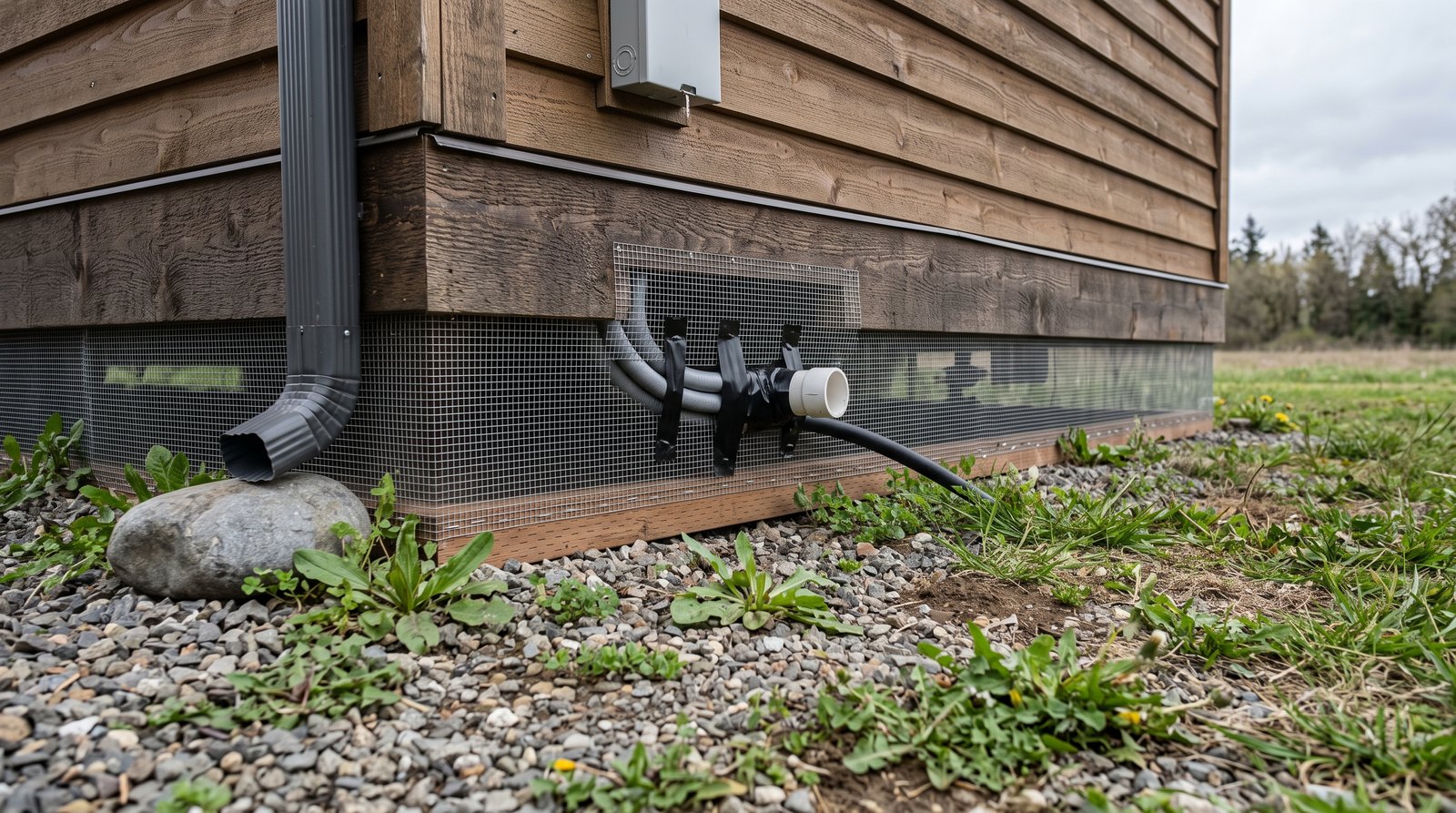
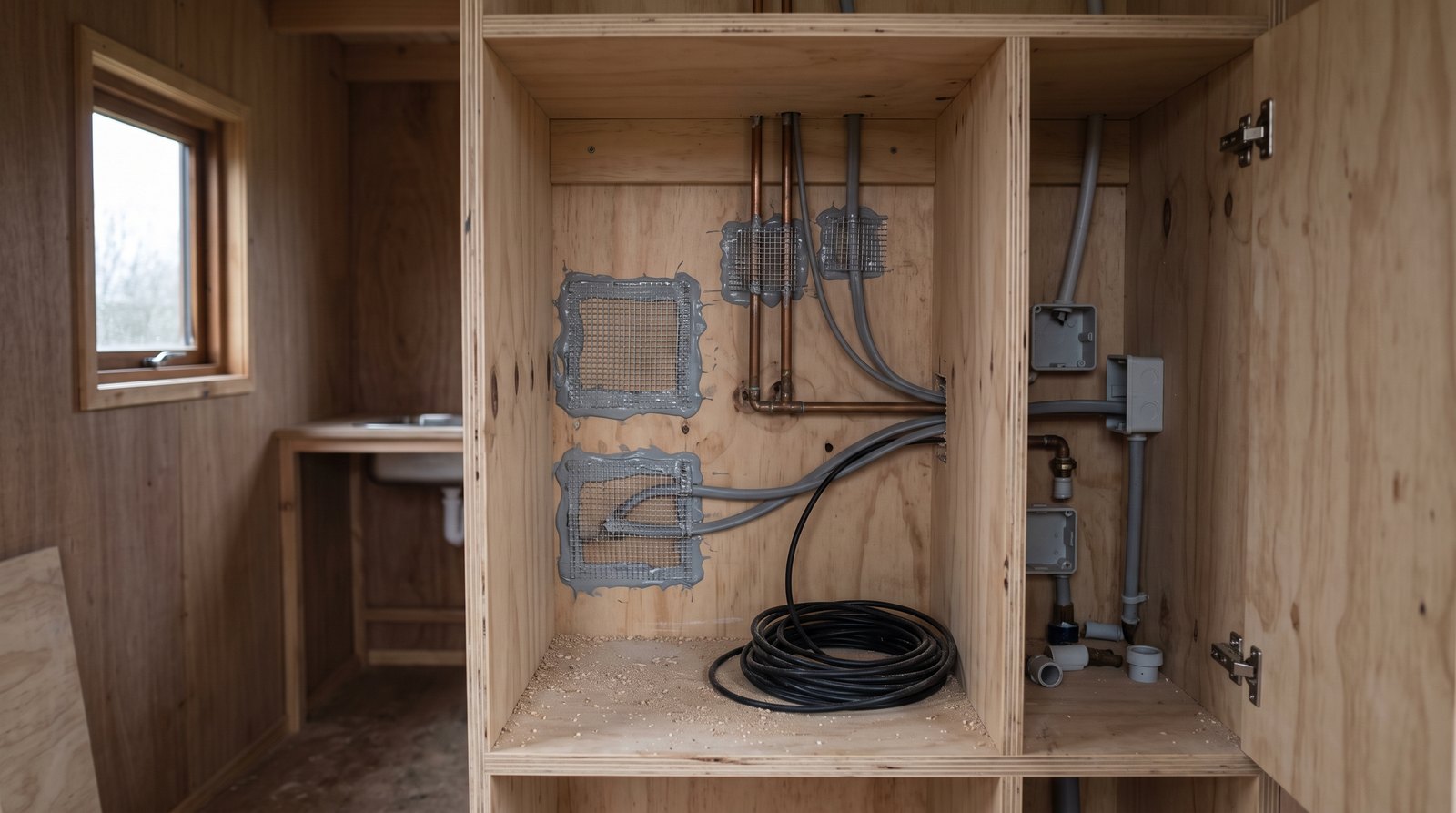
Exclusion is the highest-value repair because it keeps working after traps and sprays are gone. Inspect the sill, trailer frame, wheel wells, soffits, door corners, vents, and every pipe or cable penetration. The CDC notes that a mouse can enter through an opening only one quarter inch wide, about the width of a pencil.
Use materials that fit the opening and its environment. Caulk can hold steel wool in a small, dry gap. Larger openings need hardware cloth, lath screen, metal flashing, cement, or another chew-resistant repair. Do not pack a combustion vent, dryer vent, weep opening, or required drainage path. Fit approved pest screens without reducing necessary airflow.
Foam alone is easy for rodents to chew and can hide a poor joint. Around utilities, use a durable backing material and a compatible sealant. At doors, replace worn sweeps and weather stripping, then check the corners with the door closed. On a tiny house on wheels, inspect repairs after every move because vibration can reopen a joint.
The CDC provides a practical rodent exclusion checklist. Keep your own simple map of penetrations so you can recheck the same locations each season. Good envelope maintenance also helps a tiny home last longer, as explained in our tiny house longevity guide.
Control Food, Water, and Hiding Places
Sanitation will not eliminate an established nest by itself, but it makes every trap or bait program more effective. Store grains, pet food, birdseed, and snacks in hard containers with tight lids. Repair leaks, dry the shower, empty trash, and remove cardboard or paper bags that provide shelter in a very small space.
Vacuum ordinary crumbs promptly, wipe grease from the range and backsplash, and clean beneath the refrigerator. Do not leave pet bowls out overnight when pests are active. Outside, keep firewood, lumber, leaf piles, and spare building materials away from the siding and trailer skirt. Trim plants so branches do not bridge directly to the roof or walls.
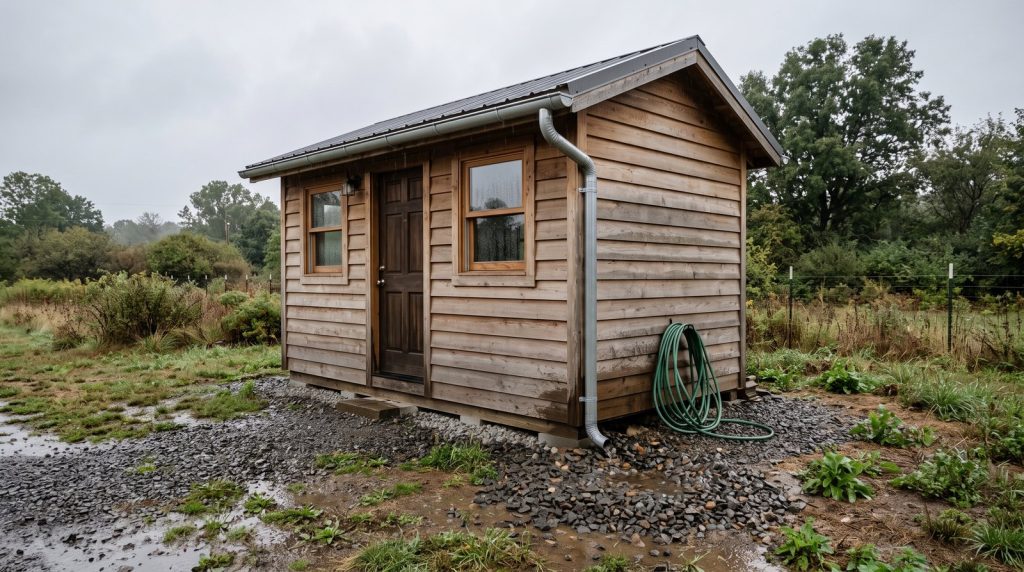
Moisture deserves special attention. A slow sink leak may feed ants, roaches, and wood-destroying organisms while remaining invisible behind a compact cabinet. Use a small leak alarm in crowded utility spaces and keep gutters, downspouts, grading, and splash areas working. Fix damp wood rather than repeatedly spraying the insects that are taking advantage of it.
Get Rid of Mice Without Creating a New Hazard
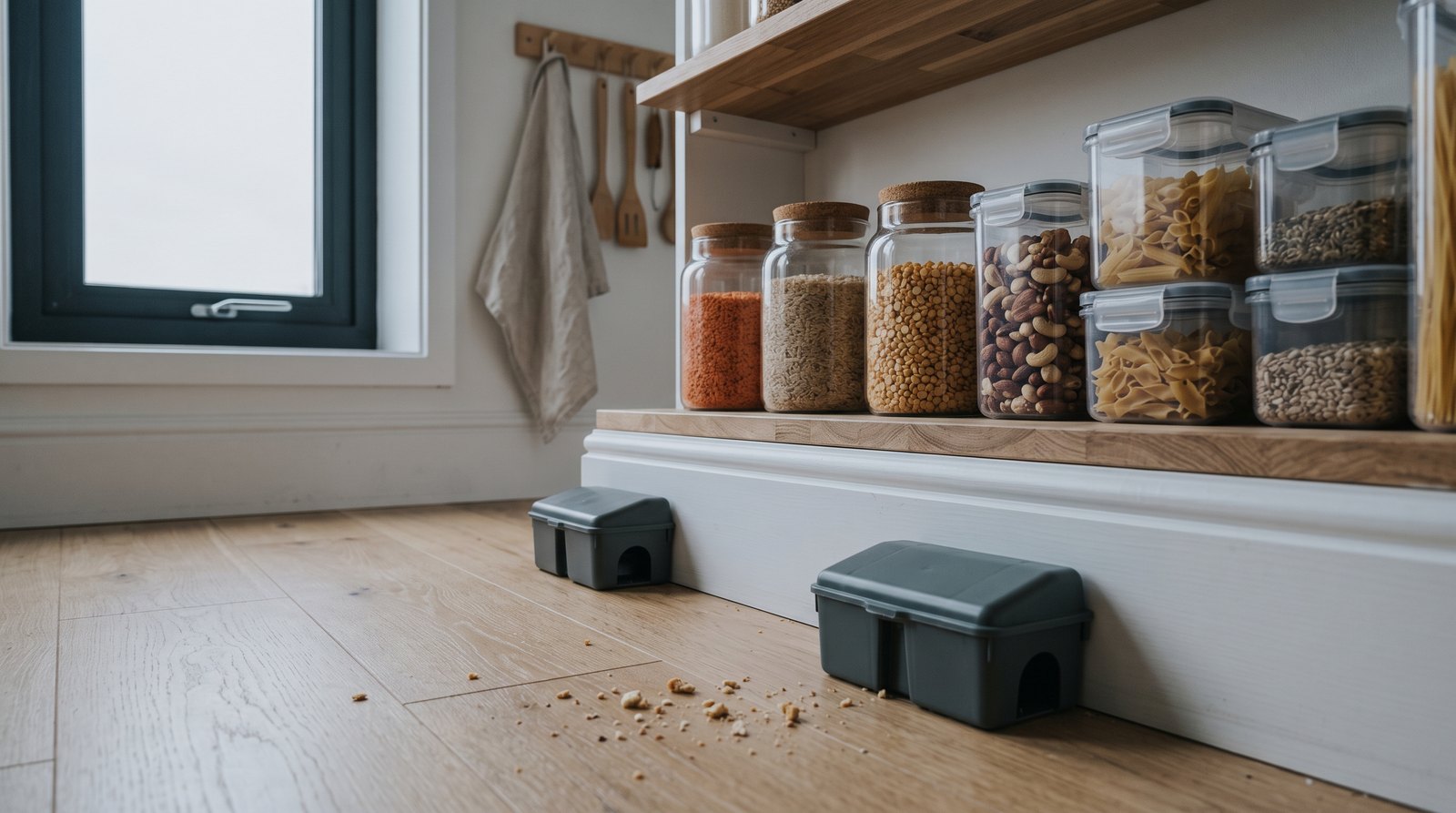
For a small indoor mouse problem, multiple snap traps plus exclusion are usually a better starting point than loose poison. Place traps perpendicular to the wall with the trigger toward the baseboard, or follow the trap maker’s directions. Put them behind cabinets and appliances where children and pets cannot reach them, then check them every day.
Use more than one trap because tiny houses offer many short travel routes. Wear gloves, reset successful locations, and keep trapping until activity stops. Then monitor with a few protected traps for another week or two. If catches continue after gaps are sealed, recheck plumbing chases, loft eaves, floor penetrations, and the underside of the trailer.
Rodenticide is not a casual substitute for exclusion. The EPA requires consumer rodent baits to be secured in ready-to-use stations and warns that poisons can harm children, pets, and wildlife. Follow the product label, use only where permitted, secure stations from access, store pesticides away from food, and promptly remove carcasses.
Clean droppings safely. The CDC says not to sweep or vacuum dry rodent waste because that can put contaminated particles into the air. Wear rubber or plastic gloves, wet droppings thoroughly with a disinfectant, allow the label’s contact time, wipe with paper towels, and disinfect the surface. Heavy infestations require additional precautions and professional cleanup.
Use Ant Baits Strategically, Not Randomly
Ant control begins with species, route, and moisture, not a broad indoor spray. Follow the trail to a door, pipe chase, window, wheel well, or damp cabinet. Remove other food, then use an enclosed bait labeled for that ant and location. Foraging ants must carry it back, so results may take several days.
Do not spray repellent directly around an ant bait because it can keep workers away from the treatment. Place bait where the label allows and where a child or pet cannot touch it. If the ants ignore one bait, the food formulation may not match what the colony is seeking at that time. Replace stale bait only as directed.
Large carpenter ants, sawdust-like debris, or activity around wet framing deserve a closer inspection. Carpenter ants often use moisture-damaged wood, but they do not eat wood the way termites do. Locate the leak and nest rather than relying on repeated surface treatments. A professional may need to treat an inaccessible wall or roof cavity.
Take Termites Seriously in Foundation Homes and THOWs
Termites are a professional-inspection problem because visible insects may represent only a small part of the colony. Watch for mud tubes, discarded equal-length wings, hollow or blistered wood, and damage near the sill or floor. Do not break every tube or spray the area before an inspector can document the activity and recommend a treatment.
A foundation tiny house can face the same subterranean termite pressure as any wood-framed home. Maintain clearance between soil and wood, keep the perimeter dry, direct downspouts away, fix leaks promptly, and avoid stacking firewood against the building. The EPA’s termite guidance also recommends keeping vents open and reducing cracks and utility openings.
A THOW is not automatically safe. Wood skirting, leveling blocks, a porch, stored lumber, and long-term parking over damp soil can create bridges. Inspect the trailer-to-house connection, subfloor edges, and any wood that touches the ground. Before buying a used tiny home, ask whether termite work was performed and request transferable treatment records when available.
Termiticides, bait systems, fumigation, and repair decisions vary by termite species, construction, climate, and state licensing rules. Get a written inspection report and scope. Confirm who will repair damaged wood, what follow-up is included, and whether moving a THOW affects a warranty. Check the applicator’s license with the relevant state agency.
Inspect a Tiny House on Wheels Before and After Travel
Road travel adds pest entry points and hitchhiking opportunities. Before departure, remove food waste, latch pantry containers, empty standing water, and inspect exterior storage. After arrival, check wheel wells, trailer wiring, plumbing connections, skirting, and anything stored underneath. A five-minute inspection is easier than finding a nest after the house is parked for weeks.
Seasonal homes need a shutdown routine. Remove perishable food, clean appliances, drain wet areas as appropriate, and leave only monitoring devices that can be used safely while the home is empty. Ask the property owner about local rodents, termites, fire ants, and wildlife. A treatment allowed in one state or campground may be restricted in another.
What Tiny House Pest Control Costs in 2026
Simple prevention is inexpensive, but labor, access, pest type, and structural repairs drive professional bills. A homeowner may spend under $100 on mesh, sealant, door sweeps, containers, and traps. Current national consumer estimates put many one-time general visits in the low hundreds, while rodent exclusion and termite work can cost substantially more.
As a planning range, a 2026 pest inspection commonly runs about $125 to $450, ant treatment about $80 to $500, and rodent removal about $200 to $2,500. Treat these as national reference points, not quotes. A tiny footprint may reduce product use, but difficult under-trailer access, travel, cleanup, and carpentry can erase that savings.
Termite prices vary too much for a responsible flat estimate. Species, treatment method, foundation type, linear footage, regional labor, and damaged framing all matter. Obtain at least two written proposals for a major job. Compare inspection findings, treatment area, included repairs, follow-up visits, renewal fees, warranty exclusions, and the rules for a home that may be relocated.
Insurance is not a substitute for prevention. Many policies limit or exclude damage tied to insects, rodents, wear, or maintenance, but contract language varies. Review exclusions before assuming a claim will pay. Our tiny house insurance cost guide explains the broader coverage questions to ask.
Follow a Simple Seasonal Pest Checklist
A short, repeatable inspection beats a cabinet full of products. Check traps weekly during an active problem and inspect the envelope at least each spring and fall. Add a check after severe weather, plumbing work, long storage, or road travel. Record repairs and treatment dates so recurring activity points you toward the real entry route.
- Monthly: inspect pantry containers, trash, pet-food storage, sink cabinets, and leak alarms.
- Spring: check ant trails, roof and gutter moisture, screens, door sweeps, and vegetation touching the home.
- Fall: seal rodent openings before cold weather and inspect skirting, soffits, vents, and utility penetrations.
- After every move: inspect trailer-frame joints, wheel wells, plumbing, cords, mesh, and stored gear.
- Every year in termite-prone areas: ask a qualified local professional how often your construction and risk level should be inspected.
Call a professional when you see termites, cannot identify the pest, keep catching rodents after exclusion, find heavy droppings, smell a dead animal in a wall, or need pesticide applied in an inaccessible cavity. Also call when children, pets, respiratory concerns, or local rules make a do-it-yourself treatment inappropriate.
Frequently Asked Questions
The safest plan is usually exclusion first, sanitation second, and targeted control third. Tiny-house construction makes details such as utility holes, trailer vibration, damp cabinets, and limited storage unusually important. These answers cover the common decisions, but product labels and local professional guidance control when a pesticide or regulated treatment is involved.
What is the best way to keep mice out of a tiny house?
Seal every opening about one quarter inch or larger with a chew-resistant repair, especially around utilities, doors, vents, wheel wells, and the trailer frame. Store food in hard containers and set several protected snap traps along walls. Recheck repairs after travel because vibration can reopen seams and loosen mesh.
Are rodent poisons safe around children and pets?
Rodenticides can harm children, pets, and wildlife, so exclusion and inaccessible traps are often the better first steps. If bait is necessary, use only an EPA-registered consumer product in its supplied secured station, follow every label direction, keep it inaccessible, store it away from food, and remove dead rodents promptly.
Should I spray ants or use bait?
Bait is often more useful for a colony because workers can carry it back to the nest, but the product must match the ant and be labeled for the location. Remove competing food and avoid spraying repellent around the bait. Persistent large ants or activity near damp wood needs professional identification.
Can a tiny house on wheels get termites?
Yes. A THOW can develop termite activity when wood skirting, blocks, steps, decks, stored lumber, or framing contacts damp soil. Long-term parking and leaks increase risk. Keep wood separated from soil, maintain drainage, inspect the subfloor and trailer connection, and obtain a professional assessment if you find wings, tubes, or damaged wood.
How much does professional tiny house pest control cost?
A basic inspection or general visit often costs a few hundred dollars, while rodent exclusion, sanitation, structural repairs, and termite treatment can reach the thousands. The tiny footprint may help, but difficult access can add labor. Get a written scope that separates inspection, treatment, exclusion, cleanup, repairs, follow-up, and warranty fees.