Tiny house fire safety depends on early warning, a clear exit, and controlling heat and fuel in a very small space. Install correctly placed smoke and carbon monoxide alarms, keep an accessible ABC extinguisher near an exit, maintain every fuel-burning appliance, and practice a loft escape plan before an emergency.
Table of Contents
Put Smoke and CO Alarms Where They Protect Sleepers
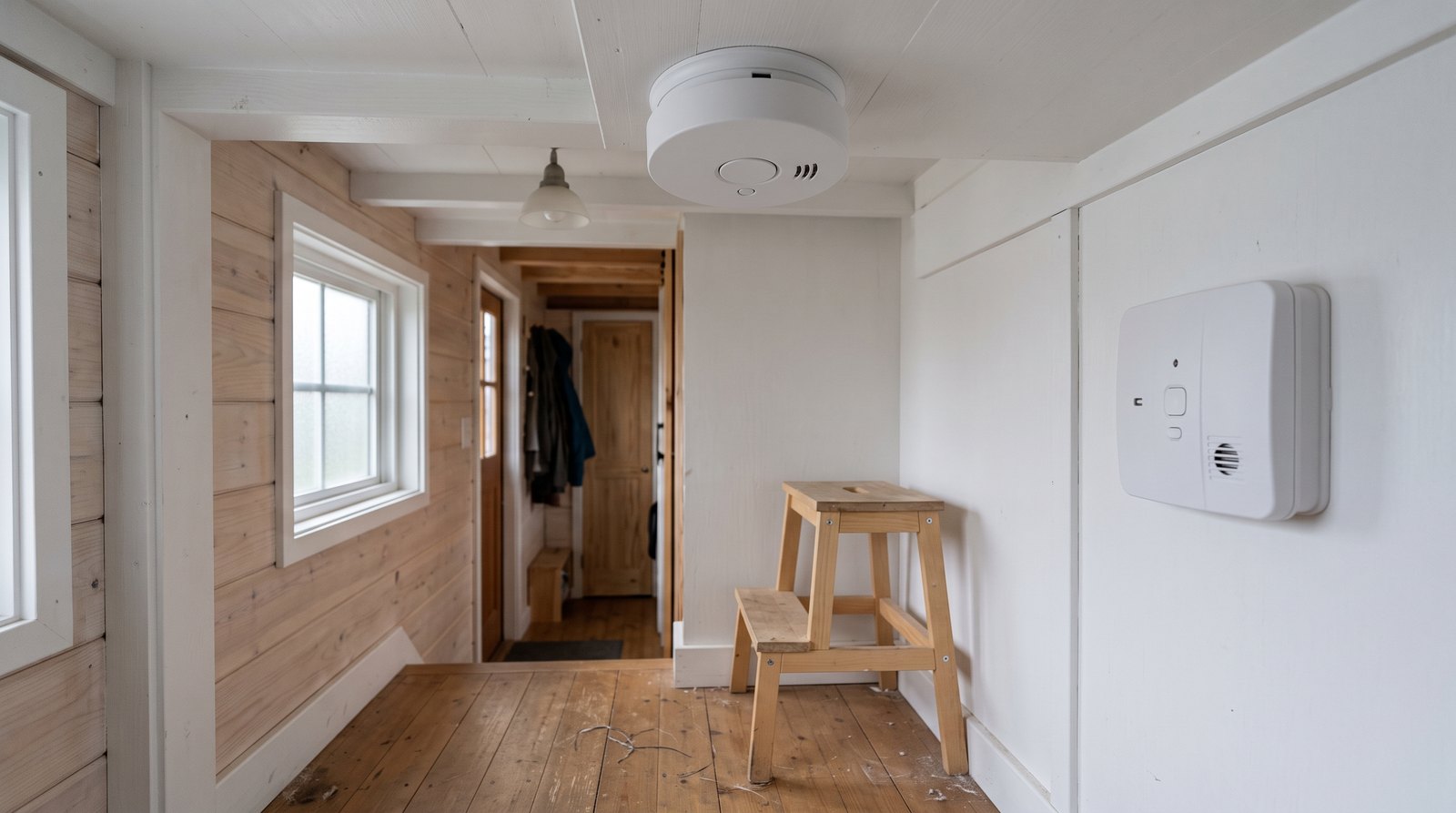
A tiny footprint does not justify fewer alarms. Put a smoke alarm inside every sleeping room, outside each separate sleeping area, and on every level. Put a carbon monoxide alarm on every level and outside sleeping areas. Follow the listed alarm’s instructions because ceiling, wall, and appliance clearances vary by model.
In a one-level tiny house with one loft, that usually means a smoke alarm in or immediately serving the loft, another in the main living area when needed for full coverage, and a CO alarm close enough to wake a sleeper. Your local code official or fire marshal has the final say.
Interconnected alarms are especially valuable. A stove incident at the opposite end of a tiny house may be close in feet, but a closed door, air conditioner, fan, or sleeping loft can mask the first sound. Wireless interconnection can simplify a retrofit when hardwiring is impractical.
Quick answer by situation
- All-electric foundation tiny house: install smoke alarms as required, plus CO alarms because a generator, vehicle, nearby combustion source, or future appliance can still create a hazard.
- Propane or wood heat: use both smoke and CO protection, maintain the appliance and vent, and never treat an alarm as a substitute for inspection.
- Sleeping loft: make sure the alarm can wake the sleeper and that the ladder and secondary escape opening remain usable.
- Tiny house on wheels: use equipment approved for the home’s classification and recheck mounting, batteries, wiring, and vents after travel.
- Hearing loss: ask about listed alarms with strobes, bed shakers, and low-frequency or voice notification that fit the occupant’s needs.
Choose Alarms You Can Maintain and Hear
The best alarm is listed, correctly located, loud enough for every sleeper, and simple enough that you will test it. Combination smoke and CO units save ceiling space, but separate units can make replacement and placement easier. Either approach can work when it meets local rules and the manufacturer’s instructions.
The U.S. Fire Administration recommends interconnected smoke alarms, monthly testing, and replacement of smoke alarms when they reach 10 years from the manufacture date. Replace backup batteries on the maker’s schedule. A sealed 10-year battery reduces routine battery changes, but it does not eliminate monthly testing or the need to replace a failed unit.
Carbon monoxide alarms have their own service life, which varies by product. Read the date and end-of-life instructions rather than assuming the smoke alarm’s 10-year rule applies. The CPSC advises installing CO alarms on every level and outside sleeping areas, with battery backup for hardwired or plug-in units. Do not place one above a fuel-burning appliance or where furniture or drapes can cover it.
If a CO alarm sounds, move everyone outside to fresh air, call 911 or the fire department, count occupants, and stay out until responders say it is safe. Do not silence the alarm and search a cramped house for the source. Headache, nausea, dizziness, confusion, or unusual fatigue can be signs of exposure.
Mount the Right Fire Extinguisher Near an Exit
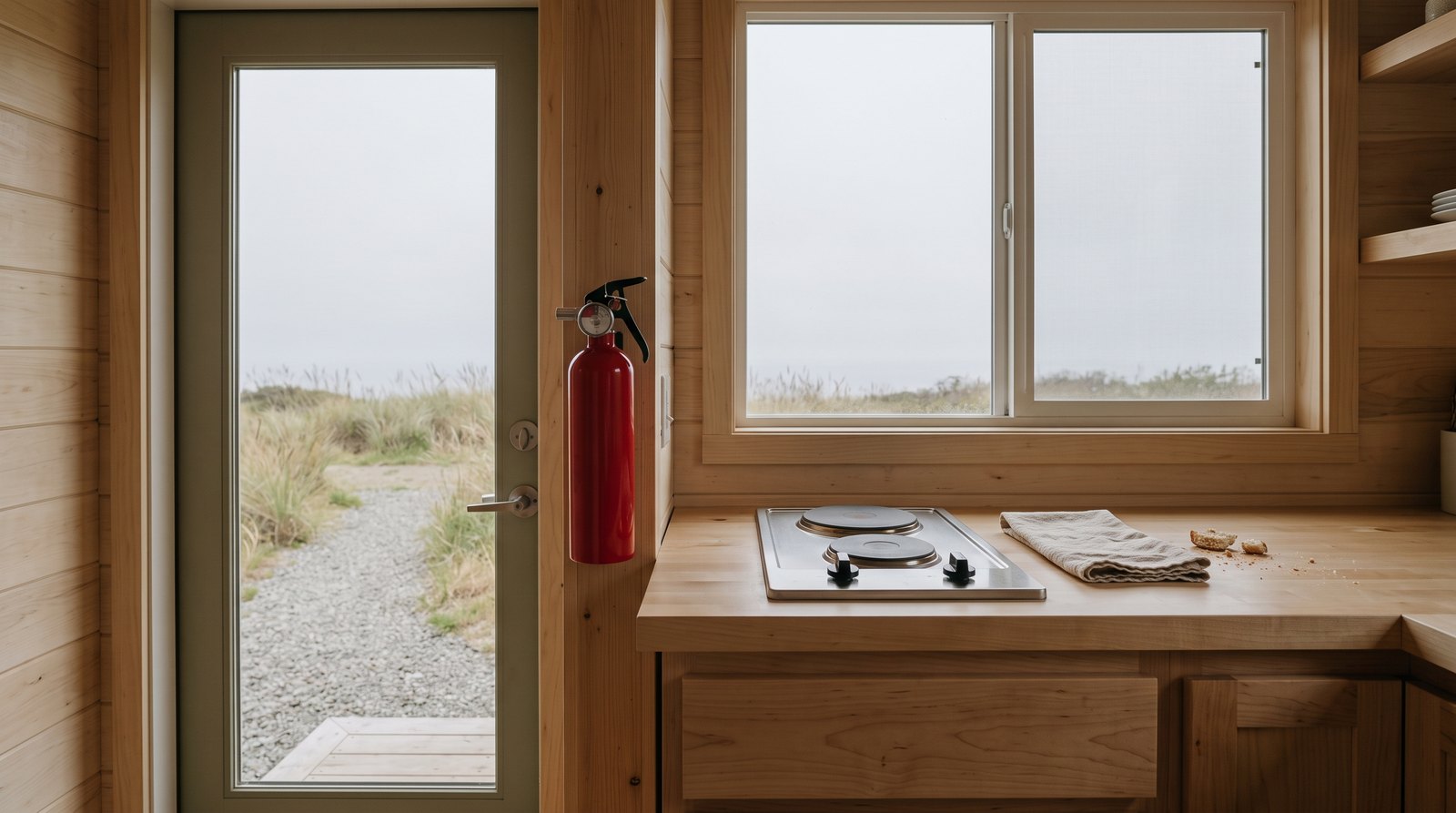
A multipurpose ABC extinguisher is a practical choice for many tiny homes because it covers ordinary combustibles, flammable liquids, and energized electrical equipment. Select a listed model that every capable adult can lift and operate. Mount it in plain view near an exit, not behind the stove or inside a crowded cabinet.
The location should let you fight a very small, contained fire while keeping your back toward a clear way out. Do not cross the flames to reach the extinguisher. In a narrow galley kitchen, the best mounting point may be beside the exterior door or just outside the cooking zone. Protect the bracket from road vibration in a THOW and verify that the pin, seal, hose, and gauge remain intact after moving.
The U.S. Fire Administration says to use an extinguisher only when others have been alerted, someone has called the fire department, the fire is small and contained, toxic smoke is not blocking you, and you have a clear escape route. Remember PASS: pull the pin, aim low, squeeze the lever, and sweep side to side.
Check the pressure indicator and condition monthly. Replace or service a unit with a damaged cylinder, broken seal, blocked hose, corrosion, leakage, or low pressure. Follow the label for recharge, hydrostatic testing, and disposal. Never delay evacuation to use an extinguisher.
Control Cooking Fires Before They Start
Cooking needs full attention because a tiny kitchen puts towels, wood cabinets, curtains, and the exit close to the burner. Stay in the kitchen when frying, boiling, grilling, or broiling. Keep combustibles away from the cooktop, turn pot handles inward, and keep a lid or baking sheet within reach.
Do not mount a smoke alarm so close to normal cooking that nuisance alarms lead you to disable it. Use the manufacturer’s siting directions and any local spacing rule. If normal cooking triggers an alarm, use its hush feature, ventilate, and have the placement reviewed. Never remove the battery. The right fix is better placement or an appropriate listed alarm.
For a small pan fire, turn off the burner if you can do so safely and slide a lid over the pan. Do not move the pan and never put water on a grease fire. If flames spread beyond the container, smoke thickens, or the exit is threatened, leave immediately, close the door behind you if practical, and call 911 outside.
Plug cooking appliances directly into suitable outlets, not lightweight extension cords or overloaded power strips. Clean grease and crumbs from burners, toaster ovens, range hoods, and wall surfaces. Induction still creates hot cookware and high electrical loads.
Manage Wood Stoves, Propane, and Electrical Loads
Fuel-burning appliances and overloaded circuits create the highest-consequence tiny-house risks. Install stoves, heaters, water heaters, cylinders, regulators, vents, and electrical equipment exactly as listed and permitted. Required clearances, shielding, combustion air, venting, and cylinder locations depend on the appliance and whether the home is a dwelling, RV, or movable structure.
For a wood stove, preserve every listed clearance even when floor area is scarce. The U.S. Fire Administration recommends keeping anything that can burn at least 3 feet from a fireplace or wood stove, having the chimney inspected and cleaned each year, and extinguishing the fire before sleeping or leaving. Put ashes in a lidded metal container outside, away from the home.
Propane work is not a casual space-saving project. Keep cylinders where the applicable code and product instructions allow, secure them upright, protect regulators and hoses, and provide required ventilation and clearances. Have leaks, soot, unusual odors, repeated pilot failures, or damaged fittings evaluated by a qualified technician. A CO alarm cannot detect every propane leak, and a propane alarm does not replace a CO alarm.
At the electrical panel, label circuits and keep the working space clear. High-draw appliances such as portable heaters, induction burners, microwaves, air conditioners, and water heaters may need dedicated circuits. Warm receptacles, discoloration, buzzing, recurring breaker trips, loose plugs, or damaged cords require prompt attention from a qualified electrician. Do not increase a breaker size to stop nuisance trips.
Combustion moisture, smoke, and heat also shorten finishes and building components. Routine appliance and envelope care supports the maintenance practices in our guide to how long tiny houses last. If you insure the home, disclose permanent heat sources and major electrical changes so the equipment and installation match the policy.
Build a Real Escape Plan for the Loft
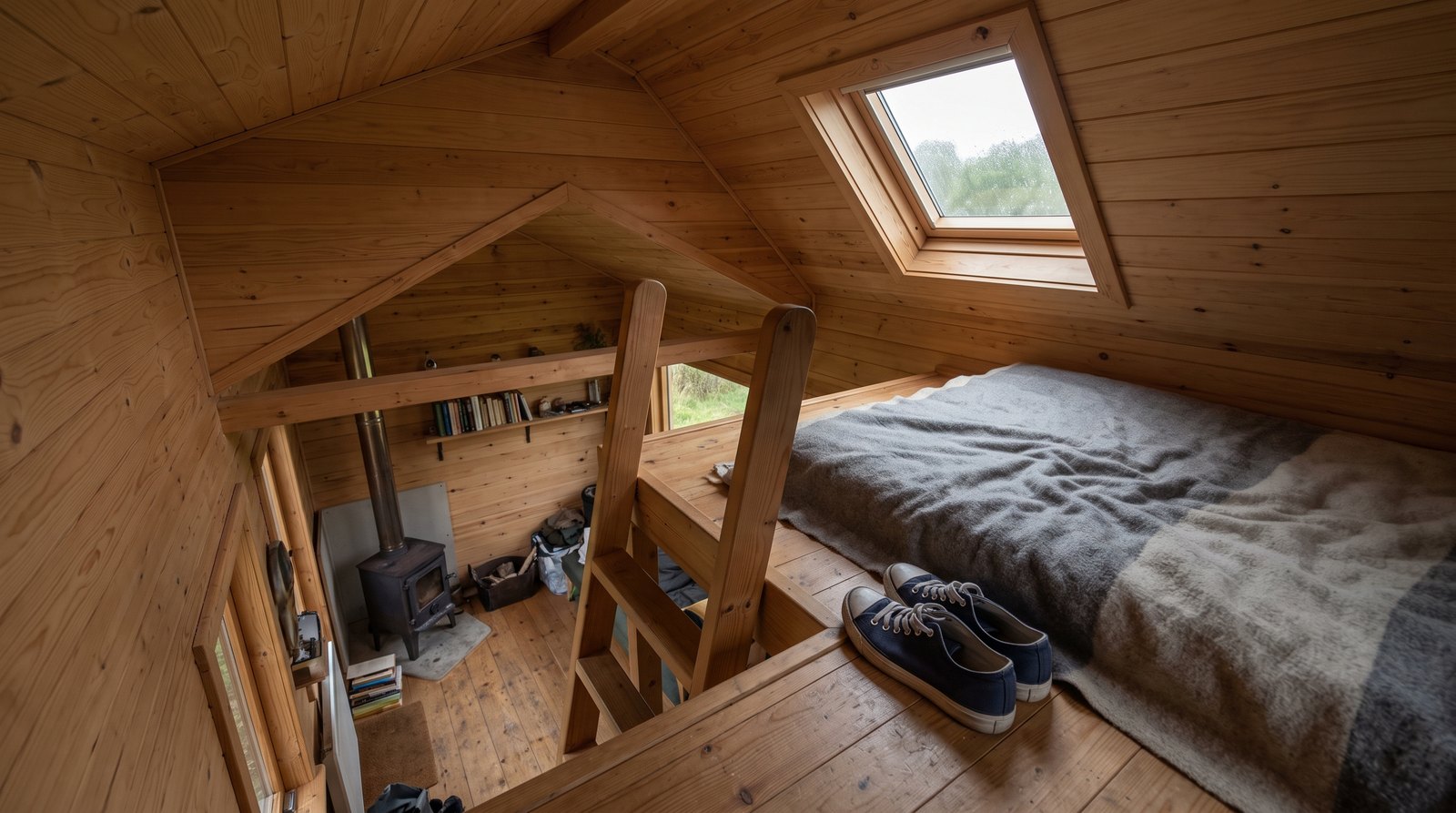
A sleeping loft needs two workable escape paths whenever the applicable code requires them, not just a ladder that looks good in photographs. Keep the primary stairs or ladder clear, make the secondary opening operable, and practice using both. Confirm the opening size, sill height, roof access, and landing conditions with the local authority.
Test the plan at night. Can the sleeper wake to the alarm, find the ladder, and reach the exterior door without turning on lights? Can the loft window or roof hatch open without tools? Is there a safe way down outside? Decorative storage, bedding, hooks, and movable furniture should never narrow the route or block the opening.
People with limited mobility, young children, pets, or a very steep ladder need a more conservative plan. Full stairs with a graspable handrail may be safer than a removable ladder. An escape ladder must be listed for its use, fit the opening, and reach a safe surface. Ask the fire department for local guidance.
Choose an outdoor meeting point that is far enough from the home, propane cylinders, tow vehicle, and access lane. Once outside, stay outside. Firefighters need the lane and a clear report of anyone missing. Owners comparing a THOW with an RV should also review the different safety and classification issues in our tiny house versus RV guide.
Inspect After Travel and Follow a Simple Schedule
Tiny house fire safety is a maintenance routine, not a one-time purchase. Test alarms monthly, inspect the extinguisher monthly, service fuel-burning equipment on schedule, and check exits every season. A THOW needs another inspection after every move because vibration can loosen brackets, wiring, flue parts, appliances, batteries, and stored objects.
- Every month: test smoke and CO alarms, check extinguisher pressure and access, and clear both exit routes.
- Every season: clean cooking grease, inspect cords and receptacles, check propane hoses and vents, and remove combustible storage around heat sources.
- Every year: arrange required chimney and fuel-appliance service, review alarm manufacture dates, practice the escape plan twice, and confirm local inspection rules.
- After every trip: inspect alarm mounts, the extinguisher bracket, stove and flue connections, propane restraints, breaker panel, shore-power cord, and loft ladder.
- After any alarm event: identify and correct the cause. Replace a damaged or contaminated alarm and have affected equipment inspected before using it again.
A practical 2026 budget is about $40 to $75 for each quality combination smoke and CO alarm and roughly $30 to $70 for a compact listed ABC extinguisher. A basic tiny-house setup may total $150 to $500 before labor. Hardwired interconnection, specialty notification, a second extinguisher, electrical repairs, or professional appliance service can raise the cost.
Do not buy solely by price. Check the listing, manufacture date, service life, interconnection method, battery requirements, recall status, and whether the device suits a dwelling or RV application. Our tiny house insurance cost guide explains why documented safety systems and disclosed appliances matter when comparing policies.
Ask the local building department or fire marshal to resolve conflicts among residential code, RV standards, campground rules, and manufacturer instructions. Requirements vary by jurisdiction and home classification. A professional inspection is especially worthwhile after a DIY build, major remodel, new wood stove, propane conversion, electrical upgrade, or purchase of a used tiny house.
Frequently Asked Questions
A safe tiny house needs the same core protections as a larger home, but tight clearances and loft access make placement more important. These answers cover the most common choices. Always follow the alarm, extinguisher, and appliance instructions, plus any stricter requirement from your building official, fire marshal, insurer, or RV authority.
How many smoke alarms does a tiny house need?
Install a smoke alarm inside every sleeping room, outside each separate sleeping area, and on every level. That can require more than one alarm even in a tiny house, especially with a loft or closed bedroom. Interconnect them when possible so every occupant hears the warning, and confirm the final layout locally.
Do I need a CO alarm in an all-electric tiny house?
Yes, it is a sensible protection and may be required. Carbon monoxide can enter from a portable generator, tow vehicle, nearby heater, attached space, or a future fuel-burning appliance. Install CO alarms on every level and outside sleeping areas according to the manufacturer’s directions, then test them monthly.
What size fire extinguisher is best for a tiny house?
Choose a listed multipurpose ABC extinguisher that the intended user can lift, aim, and operate safely. Mount it near a clear exit, not beside or behind the likely fire source. A larger unit provides more agent, but weight and cramped handling matter. Ask your fire department about suitable local choices.
Can a loft skylight count as a fire escape?
Only if the applicable code and local official accept it and the opening, sill height, access, exterior landing, and operating method meet their requirements. Many decorative or venting skylights are not emergency escape openings. Never assume. Verify the exact unit and keep the route clear, operable, and reachable without tools.
How often should tiny house fire equipment be checked?
Test smoke and CO alarms monthly, inspect extinguisher access and pressure monthly, and follow each product’s replacement schedule. Review exits seasonally and after rearranging furniture. Inspect a THOW after every move. Service chimneys and fuel-burning appliances at least as often as their instructions and local rules require.