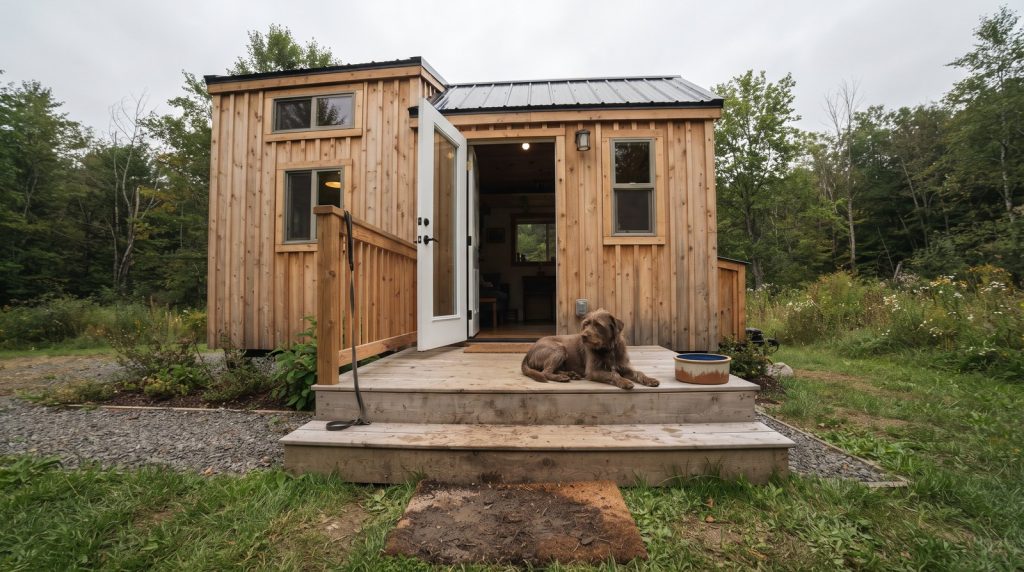
A year in a tiny house costs more than utilities alone. In the clearly labeled example below, a paid-off home on a rented lot needs $13,120 annually for housing bills and reserves. Adding an illustrative loan raises that to about $20,857. Your parking arrangement, climate, financing and maintenance needs determine the actual total.
Table of Contents
Quick answer by situation
Tiny house living costs depend first on whether you already own the house and its parking place. Separate those two decisions before comparing budgets. A small building can reduce some expenses, but lot rent, loan payments, insurance and service charges still arrive even when you use very little electricity or water.
- Paid-off house on rented land: Start with the full lease cost, then add every utility and service the lease excludes.
- Financed house on rented land: Combine the house payment and lot payment before calling the arrangement affordable.
- Paid-off house on owned land: Include property taxes, access maintenance, water and wastewater upkeep, and any association charges.
- House that moves regularly: Add hauling, setup, destination fees and coverage for travel.
- Off-grid house: Budget for equipment replacement and servicing alongside fuel or delivery charges.
These are housing budgets. Groceries, health care, personal transportation, laundry and other everyday spending still belong in your household plan. Keep them visible rather than assuming a smaller address makes them disappear.

Build your annual budget from recurring bills
Build a tiny house budget by listing monthly bills, annual renewals and money reserved for future repairs separately. Then convert each category into a monthly contribution. This prevents a quiet month from looking artificially cheap and keeps an insurance renewal or appliance failure from becoming an unplanned credit card balance.
The following amounts are illustrative planning inputs, not national averages or quotes. They describe a paid-off tiny house that stays on one rented site. Replace every allowance with a lease, bill, local fee schedule or written estimate for your own situation.
- Lot rent: $600 monthly, or $7,200 annually.
- Insurance allowance: $75 monthly, or $900 annually.
- Internet: $60 monthly, or $720 annually.
- Maintenance and replacement reserve: $150 monthly, or $1,800 annually.
- Water and wastewater service: $50 monthly, or $600 annually.
- Applicable local fees, taxes or registration allowance: $25 monthly, or $300 annually.
Those six lines total $960 a month, or $11,520 a year, before electricity and propane. This example assumes trash service is included in the lease. It does not include a land purchase, house purchase, initial installation, loan payment or relocation. Applicable taxes and registration depend on location and classification; $300 is only a placeholder.
A reserve contribution is money you set aside, not necessarily money spent that year. Track actual repairs against that reserve so you do not count both the saving and the same repair twice when reviewing expenses.
Price the parking arrangement before the house
Compare parking offers by their annual total and included services, not the advertised rent alone. Two similar lots can have different utility arrangements, lease lengths and home eligibility rules. Ask for the written agreement and a complete fee list before committing to a house that depends on that particular parking place.
Published operator prices checked in November 2026 show why this matters. La Bohemia Villas in Cumby, Texas lists $595 a month on a 12-month lease, including electricity, water and septic service. That advertised package totals $7,140 annually. The community specifies RVIA-certified tiny homes on wheels.
Poplar Creek Tiny Home Village in North Carolina lists $675 to $750 monthly, or $8,100 to $9,000 annually. Internet, trash, recycling and grounds maintenance are included, while water and electricity are separately metered. These are two published examples, not a nationwide price range. Confirm current availability, rates and any usage limits directly.
Owned land replaces rent with a different collection of obligations. Obtain the parcel tax bill, access-road obligations and quotes for any needed site work. If the house and land are already paid for, recurring cash costs may fall, but that comparison excludes the money used to acquire them.
Wheels versus a foundation does not settle the budget by itself. A stationary home avoids routine hauling costs; a movable home may require trailer servicing and registration. Confirm permitted occupancy, installation requirements and applicable fees with the city or county for the actual parcel.

Allow for seasonal utilities and waste service
Use twelve months of local bills whenever possible to estimate utilities. Heating, cooling, hot water and fixed service charges matter more than floor area alone. A well-insulated tiny house in mild weather can have very different bills from a drafty home facing long freezes or an extended air-conditioning season.
The U.S. Energy Information Administration reported a preliminary national residential average of 18.16 cents per kilowatt-hour for August 2026. It is a useful reference point, not your utility tariff. An illustrative 400 kWh multiplied by $0.1816 equals $72.64. Your actual bill follows local rates, fixed charges and any applicable taxes or adjustments.
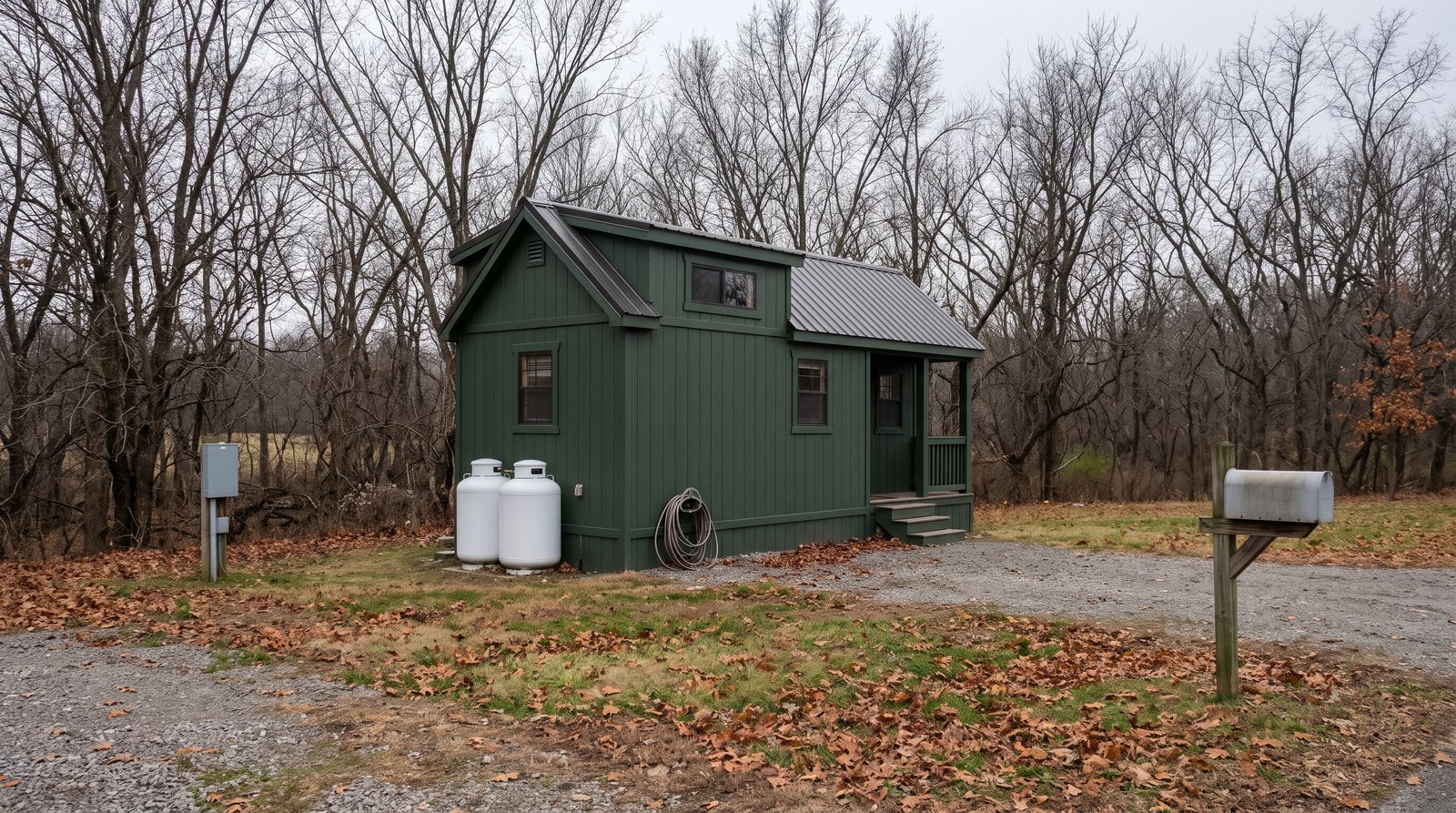
For propane, record how much fuel you purchase, what each refill costs and how often you refill during cold weather. Do not apply a summer cooking-only bill to a winter heating budget. Ask local suppliers about cylinder service, delivery minimums and fees. An all-electric house needs a different energy split.
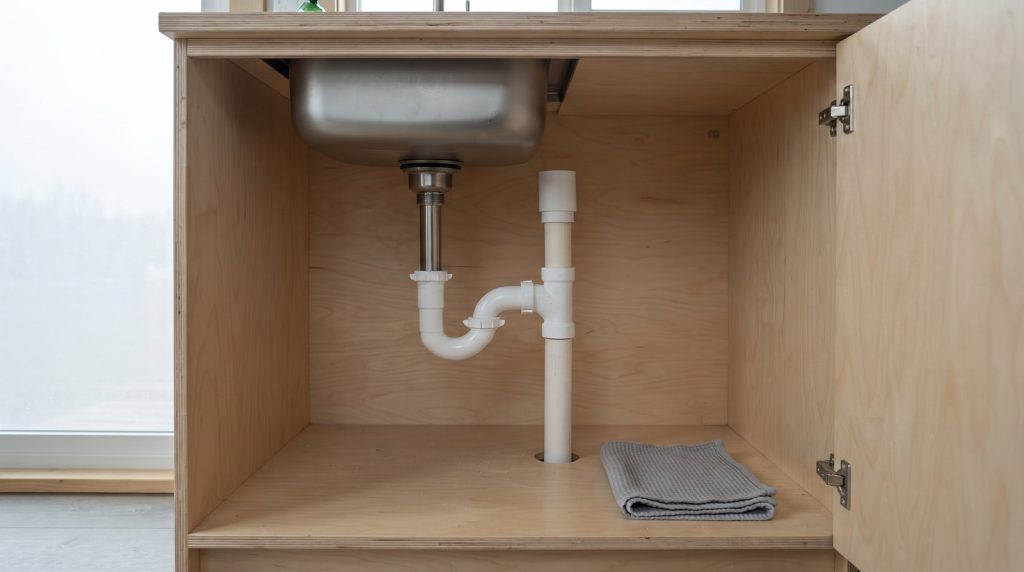
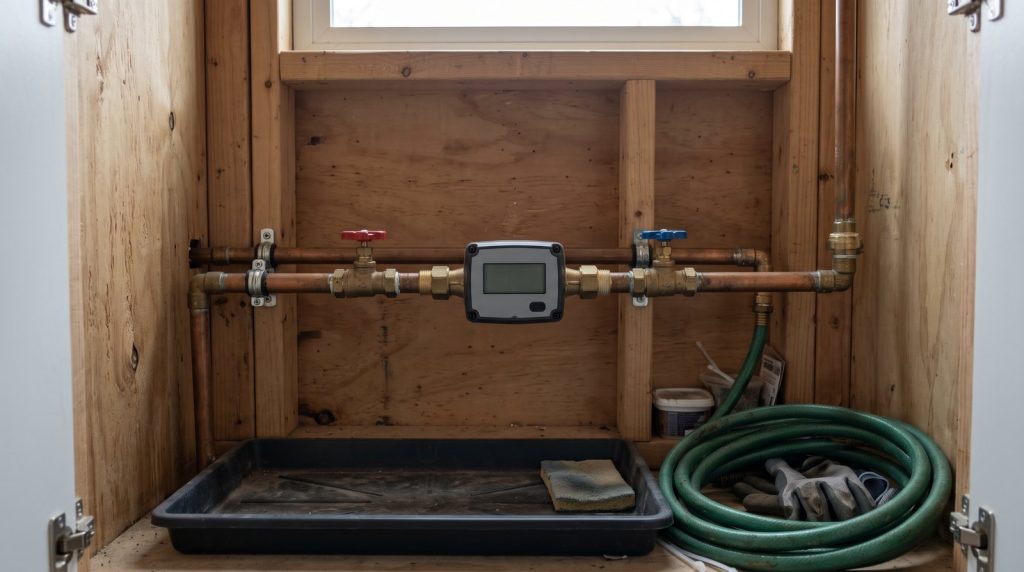
Water and waste need their own line even when consumption is low. Check minimum water charges, sewer charges, tank pumping, approved disposal access and any delivery expense. If those services are included in rent, remove the duplicate allowance from your worksheet.
For an owned septic system, the EPA recommends professional inspection at least every three years for an average household system; pumping is typically needed every three to five years. Mechanized alternative systems generally need more frequent inspection. Follow the actual system requirements and local rules rather than assuming tiny-house occupancy eliminates servicing.
A month-by-month example for one full year
This example adds a seasonal electricity-and-propane allowance to the $960 monthly base above. It assumes higher winter fuel spending and a smaller summer cooling increase. The numbers demonstrate budgeting arithmetic, not predicted bills for a particular house. They include reserve contributions but exclude financing and the one-time costs of moving in.
- January: $190 energy plus $960 base equals $1,150.
- February: $180 energy plus $960 base equals $1,140.
- March: $150 energy plus $960 base equals $1,110.
- April: $110 energy plus $960 base equals $1,070.
- May: $90 energy plus $960 base equals $1,050.
- June: $100 energy plus $960 base equals $1,060.
- July: $130 energy plus $960 base equals $1,090.
- August: $135 energy plus $960 base equals $1,095.
- September: $95 energy plus $960 base equals $1,055.
- October: $100 energy plus $960 base equals $1,060.
- November: $140 energy plus $960 base equals $1,100.
- December: $180 energy plus $960 base equals $1,140.
The energy allowances total $1,600. Added to the $11,520 base, the annual housing allocation is $13,120, averaging about $1,093 monthly. A fixed monthly transfer can smooth the changing bills, provided you begin with enough cash to cover expensive months before the cheaper ones arrive.
Test the assumptions individually. A $150 monthly rent increase adds $1,800 annually. An extra $50 of energy use each month adds $600. Neither change requires a larger house, which is why the parking agreement and local climate deserve careful attention.
Add financing and first-year cash separately
Financing can change the annual total more than small reductions in utility use. Add the actual scheduled payment to your operating budget, then keep the down payment and setup expenses in a separate first-year cash plan. A low advertised house price does not establish the amount required to move in.
For illustration, borrowing $60,000 at a fixed 10% annual interest rate over 15 years produces a payment of approximately $644.76 monthly, assuming monthly amortization and no additional fees. Twelve rounded payments add $7,737.12, raising this example to approximately $20,857 for the year. This is a calculation, not an available financing offer.
The payment includes principal and interest. Principal reduces the balance but still leaves your bank account, so include the whole payment when measuring affordability. Compare rates, fees, repayment terms and total repayment using the lender documents. Our tiny house financing guide explains the main routes to investigate.
The first-year list may include delivery, site preparation, foundations or anchoring, approved utility connections, inspections, deposits, steps and essential equipment. Get itemized quotes before setting a move-in date. For a movable home, review our tiny house moving cost guide and obtain a quote for the actual route and house.
Keep refundable deposits separate from nonrefundable spending. Both need cash upfront, but a deposit is not automatically a permanent expense. Also account for any overlap between your current housing payment and the date the tiny house becomes ready to occupy.
Protect the budget from repairs and coverage gaps
Keep accessible savings for repairs, insurance deductibles and disruption in addition to predictable monthly bills. A tiny house still has a roof, appliances and water connections that can fail. The right reserve depends on age, condition, equipment and access to qualified service, rather than a universal percentage of the purchase price.
List the equipment you actually own and obtain replacement estimates for the expensive items. Use inspection findings and maintenance schedules to prioritize the reserve. A roof repair, trailer service or specialized appliance replacement can exceed several months of planned savings, especially soon after purchasing a used home.
Insurance deserves a written quote for the exact home and use. Tell the insurer whether it is your full-time residence, how it was built, where it sits and whether it moves. Progressive notes that eligibility varies by insurer and state, and its own coverage does not accommodate regular moves. Verify transit and destination protection rather than assuming they follow automatically.
Use our tiny house insurance guide to organize the coverage questions. Replace the $900 example allowance with your quote and keep the deductible separate. Finally, compare your complete household spending before and after the move, including a longer commute or paid storage if either is necessary.
Frequently asked questions
The most useful annual cost estimate starts with an actual parking location and a specific house. These answers explain how to interpret the example, identify missing expenses and compare ownership arrangements. Treat published rates as starting points for verification, then replace assumptions with documents before deciding what you can afford.
How much does a year in a tiny house cost?
The example in this guide allocates $13,120 annually for a paid-off tiny house on rented land, including housing bills and reserves. An illustrative loan raises that to about $20,857. Neither figure is a national average. Your lease, financing, climate, insurance quote and repair needs determine your own annual total.
Can you live in a tiny house for under $1,000 a month?
It may be possible with a paid-off house, inexpensive permitted parking and modest service costs, but it is not a dependable assumption. Include annual insurance, local fees, repairs and seasonal utilities before comparing totals. A budget below $1,000 for housing also leaves groceries, transportation, health care and other personal expenses to cover.
Is a tiny house cheaper on owned land?
Owned land can reduce recurring cash payments when the parcel and house are paid off. It still brings taxes, access upkeep and responsibility for utilities and wastewater. Compare those annual obligations with rent, and show land acquisition and development separately. Confirm that the intended occupancy is permitted before buying the parcel.
Do tiny houses on wheels cost less than foundation homes?
Not automatically. A house on wheels may carry lot rent, trailer maintenance, registration and moving expenses. A foundation home may require more initial site work and different taxes or insurance. Compare complete quotes for two realistic locations and homes rather than assuming the presence of wheels decides the cheaper option.
What expenses are easiest to forget?
Common omissions include move-in deposits, delivery, utility connections, annual renewals, insurance deductibles and replacement savings. Water delivery or wastewater servicing can also matter where standard hookups are unavailable. Keep first-year setup cash separate from recurring housing costs, and retain room in the household budget for laundry, storage, transportation and emergencies.