Renting out a tiny house can produce income when the location attracts paying guests and the property is approved for short stays. Profit depends on booked nights, platform fees, cleaning, insurance, utilities, and financing. Confirm permission first, then test a conservative budget before spending money on furnishings or accepting reservations.
Table of Contents
Quick answer by situation
A tiny house rental works best when the site is already suitable for guests, the operating costs are understood, and someone can handle problems promptly. Your starting position matters more than the house size. A paid-off backyard cottage and a financed cabin on newly purchased land have very different break-even points.
- You already own an approved guest cottage: Price insurance, cleaning, and furnishings before estimating the extra income.
- You plan to buy land and a house: Include access, utility connections, site work, permits, and loan payments in the project budget.
- Your tiny house is on wheels: Ask the local authority how the unit and its proposed rental use are classified.
- You live several hours away: Obtain written cleaning and emergency-service quotes before opening your calendar.
- You need every month to pay the loan: Test a quiet-season loss before committing. A strong holiday weekend does not establish dependable annual income.
How much can a tiny house earn on Airbnb?
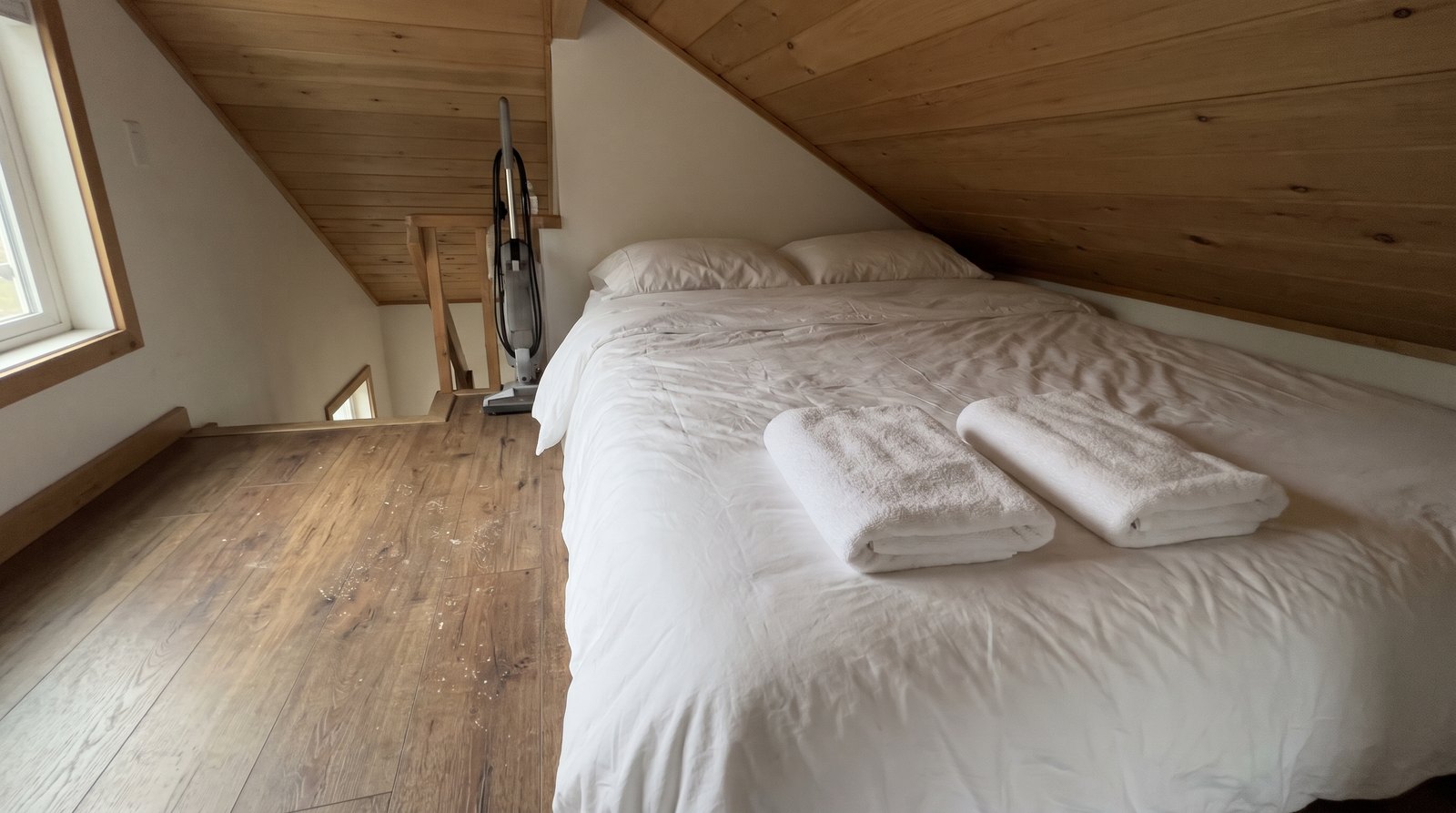
Estimate revenue from the nights you can realistically sell multiplied by the average nightly rate you actually receive. There is no single tiny-house income figure that fits every location. Separate peak weekends, ordinary weekdays, seasonal closures, and owner stays so a busy month does not disguise an expensive quiet season.
Start with comparable small cabins and cottages in the same travel market. Match the bathroom arrangement, privacy, driving distance to attractions, bed access, and outdoor space. A remote cabin with a private bathroom is a different product from a backyard unit sharing facilities.
Compare the total guest price for identical dates and lengths of stay. An advertised nightly rate does not reveal discounts, cleaning charges, or whether that property is actually being booked. A blocked calendar can also reflect owner use, repairs, or a closed season.
Illustrative revenue range, not a market forecast: At an assumed $150 average nightly rate, nine booked nights produce $1,350 in accommodation revenue, 15 produce $2,250, and 21 produce $3,150. In a 30-day month, those scenarios represent 30%, 50%, and 70% occupancy if all 30 nights are offered.
Use local comparable data to replace those assumptions. Keep cleaning-fee collections separate from accommodation revenue, and do not count lodging taxes collected for a government as money available to spend. Build the forecast month by month rather than multiplying your most optimistic month by 12.
What remains after fees and operating costs?
Your payout is only the starting point for calculating cash flow. Subtract cleaning labor, laundry, supplies, utilities, insurance, property costs, maintenance reserves, and debt payments. Include the value of your own work in a second version of the budget, because self-cleaning can make an unprofitable rental appear profitable on paper.
As checked in November 2026, Airbnb says it is transitioning home hosts to a single service fee. Most single-fee hosts pay 15.5%; remaining hosts typically pay 14% to 16%. Check your actual listing and reservation breakdown. Do not build a new business around the older 3% host-fee assumption without confirming it applies.
Example monthly budget: Assume 15 occupied nights at $150, five three-night bookings, and a $75 cleaning charge per booking. These are planning inputs, not quoted local prices. The calculation uses a 15.5% host service fee on accommodation and cleaning charges, excluding taxes.
- Accommodation revenue: $2,250.
- Cleaning fees collected: $375. Booking subtotal: $2,625.
- Platform fee, rounded: $406.88. Payout: $2,218.12.
- Cleaner and laundry: $375. Guest supplies: $90. Utilities and internet: $175.
- Insurance, property tax, and permit allowance: $350. Repair and replacement reserve: $150.
- Loan payment: $600. Remaining cash: $478.12.
That remainder excludes income tax, startup-cost recovery, and unpaid owner management time. It also assumes no land rent or separate property manager. Add those costs if they apply. At nine nights and three bookings, with the same fixed costs and proportionately lower cleaning and supplies, this example loses about $223.13.
Cash flow and taxable profit are different calculations. For purchase planning, review tiny house financing options and ask the lender whether the proposed rental use is permitted.
Which permissions should you confirm before listing?
Confirm that both the structure and its short-term rental use are allowed at the specific address. Approval to place a tiny house on a lot does not automatically settle permission to host paying guests. Ask the city or county which offices handle land use, building approval, rental licensing, and health requirements.
Bring the parcel address, unit type, proposed guest count, and description of the water and wastewater arrangements. Ask whether owner occupancy, minimum stays, annual rental-night limits, parking requirements, inspections, or a local contact apply. Request the applicable written guidance and retain the response with your records.
Check private restrictions separately, including deed covenants, an HOA, a land lease, and financing terms. If you rent the land or the house, obtain the owner’s permission where required. Airbnb’s responsible-hosting guidance also directs hosts to review contracts and local regulations.
For a wheeled unit, describe it accurately rather than assuming that a cabin listing category changes its legal classification. For an accessory dwelling, ask specifically about short stays. Delay nonrefundable purchases until the relevant offices confirm a workable route for your address and intended operation.
What insurance and taxes belong in the plan?
Arrange coverage for the actual rental activity and identify every tax obligation before the first guest arrives. Personal-use insurance, platform protections, lodging taxes, and income taxes serve different purposes. Have the insurer confirm the house type, site, guest use, and any business exclusions in writing rather than relying on a general quote.
The Insurance Information Institute’s March 2026 short-term rental report warns about uninsured commercial rental risks under homeowners coverage. Ask about property damage, liability, loss of rental income, deductibles, and exclusions. Disclose a loft, wood stove, hot tub, or mobile chassis when applicable.
Use our tiny house insurance guide to prepare questions, then obtain a rental-specific quote. Confirm how any Airbnb protection interacts with your policy, including periods between bookings.
Airbnb notes that automatic tax collection may leave other taxes for hosts to handle. Verify registration, filing, and payment duties with the relevant tax office. Keep payout reports, invoices, and a personal-use calendar. The IRS explains that personal use can affect rental expense deductions; ask a tax professional how your arrangement should be reported.
How much work does a small rental create?
A tiny house reduces floor area to clean, but every turnover still requires a complete bathroom, bed, kitchen, and guest-readiness check. Lofts and tight passages can slow the work. Obtain a quote based on the actual layout, then test how long cleaning, laundry, restocking, and inspection take between real arrival windows.
Keep spare linens available so a slow dryer does not delay check-in. Store supplies where the cleaner can reach them without moving guest furniture. Agree on who checks for leaks, missing items, odors, broken latches, and empty consumables. Set aside time for periodic deep cleaning as well as routine turnovers.
Price your checkout routine against current platform policy. Airbnb’s reasonable house rules policy applies to reservations booked on or after November 20, 2026. It generally disallows tasks normally performed by a cleaner, including stripping beds and washing and putting away dishes. Build cleaning labor into the budget instead of assuming guests will perform it.
Arrange a backup cleaner and a local person who can respond to a failed lock or heating problem. A key box handles access, but someone still needs to resolve failures. Track management hours during the first season, including messages, purchasing, travel, and coordinating repairs.
Can the house handle guest water and waste use?
Set the guest limit around the approved occupancy and the capacity of the whole property, including water, wastewater, hot water, ventilation, and safe sleeping access. The number of mattresses you can squeeze inside is not a reliable capacity measure. Guests may use a small home’s systems differently from its full-time owner.
Have the relevant professional check the proposed rental use against the existing system. A short shower habit that worked for one owner does not establish adequate supply for several guests. Where tanks or hauled water are involved, budget for dependable servicing and a response when a delivery is delayed.
The EPA explains that excess water and concentrated laundry loads can impair septic operation. Have a service professional determine the appropriate inspection and pumping schedule for the actual system and use. Show cleaners where supplies and waste belong, and give guests simple disposal instructions.
Inspect rails, steps, exits, and required safety equipment before hosting. Make low ceilings and sleeping access clear in the listing. Keep repair records and budget for wear on doors, finishes, and appliances. Our guide to how long tiny houses last explains why maintenance matters beyond the initial build.
How should you test the rental before expanding?
Launch with a limited, manageable calendar and review the actual results before adding another unit or expensive amenity. Measure net cash, owner hours, guest complaints, and maintenance downtime alongside revenue. A property that needs constant intervention may be a poor investment even when its booking calendar looks reasonably busy online.
Prepare an honest listing with the real sleeping arrangement, bathroom, parking, access route, and any shared spaces. Explain practical limitations before booking. Use accurate property photos when advertising your own rental, and avoid promising amenities that depend on an unreliable connection or seasonal service.
Test the arrival instructions after dark, check the internet where guests will use it, and arrange a clear emergency contact. Schedule a practice turnover with the cleaner. Review the first few bookings individually to find costs that your spreadsheet missed, such as replacement towels, extra trips, or longer laundry time.
After a full seasonal cycle, compare the rental with other uses of the property. Keep a reserve large enough for your actual fixed obligations and likely repairs. Expansion should follow documented demand and workable operations, not a few unusually profitable weekends.
Frequently asked questions
The most useful rental decisions come from matching the property, local permissions, and budget to the guests you intend to serve. These answers address common starting questions, but your final numbers should use written quotes and the rules for your address. Recheck platform terms whenever you change the listing or booking setup.
Is renting out a tiny house profitable?
It can be, especially when the property has low fixed costs and reliable local demand. Calculate profit after platform fees, turnover costs, insurance, utilities, repairs, and financing. Include owner labor and quiet months. High nightly prices alone do not show whether the business earns an acceptable return on the money invested.
Can I rent a tiny house in my backyard?
Possibly, but confirm the specific address and unit with the city or county before listing it. Ask about the dwelling’s approval and the separate rules for short-term rentals. Also check private restrictions, insurance, parking, wastewater capacity, and any owner-occupancy requirement. A neighbor’s existing listing is not proof that yours qualifies.
Does Airbnb insurance replace a rental policy?
Do not assume platform protections replace insurance arranged for your property and rental business. Ask your insurer to review the proposed use and identify coverage gaps, exclusions, deductibles, and periods outside guest stays. Get the answer in writing, particularly for a tiny house on wheels or one with unusual guest amenities.
Should I charge a separate cleaning fee?
Choose a pricing structure that covers the actual turnover cost while remaining competitive at the total guest price. Compare two-night and longer stays because a fixed cleaning charge affects them differently. Account for the platform fee on that charge, and pay for cleaning even when you decide to bundle it into nightly rates.
How many nights should I expect to book?
Use comparable local properties and a seasonal forecast rather than a universal occupancy target. Separate nights offered from nights blocked for your own use or repairs. Test low, middle, and high booking scenarios, then compare them with your break-even costs. Update the forecast with actual paid stays once you begin hosting.